The Essence of Ukiyo-e: Capturing the Floating World through Landscape
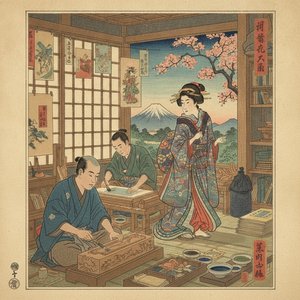
To understand the profound allure of Japanese landscape painting, one must first immerse oneself in the concept of Ukiyo-e, a term that translates to "pictures of the floating world." This was not merely an artistic movement but a cultural philosophy born from the vibrant, transient energy of the Edo period. While much of the genre focused on the hedonistic delights of urban life—the theater, the tea houses, and the celebrated beauties—it was within the landscape that artists found a way to capture the ephemeral nature of existence. These works do not seek to freeze time in a static, Western sense; rather, they celebrate the movement of clouds, the ripple of water, and the fleeting light of a setting sun.
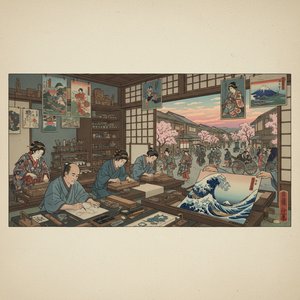
The beauty of these landscapes lies in their ability to find the eternal within the momentary. Through the delicate medium of woodblock printing, artists were able to disseminate scenes of breathtaking serenity to a wide audience, bridging the gap between high culture and the common person. Each print serves as a window into a world where the boundaries between the human spirit and the natural environment are beautifully blurred. By observing the rhythmic lines of a mountain range or the soft mist clinging to a valley, the viewer is invited to participate in a shared moment of quiet contemplation, recognizing that even the most transient beauty possesses a lasting, spiritual resonance.
Spiritual Landscapes: The Influence of Zen Buddhism on Composition and Space
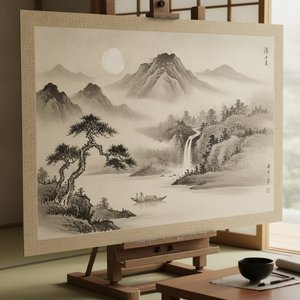
The visual language of Japanese landscape art is deeply rooted in the tenets of Zen Buddhism, particularly in its use of ma, or negative space. In Western classical traditions, the canvas is often a stage to be filled with detail, light, and shadow; however, in the Japanese tradition, what is left unpainted is just as vital as what is rendered. This intentional emptiness allows the viewer's mind to wander, providing a psychological breathing room that mirrors the meditative practices of Zen. The void is not a vacuum, but a presence—a mist, a sky, or an infinite sea that suggests the interconnectedness of all things.
This mastery of composition creates a sense of profound balance and stillness. A single, gnarled pine tree might stand against a vast, white expanse of fog, directing the eye not toward a central focal point, but toward the relationship between the object and the void. This technique fosters a meditative state, encouraging the observer to look beyond the physical form and contemplate the underlying essence of the subject. The landscapes become more than mere depictions of geography; they are maps of the internal landscape, guiding the soul through a journey of mindfulness and spiritual clarity.
Masters of the Brush: From Hokusai’s Mount Fuji to the Detail of Utagawa Sadahide
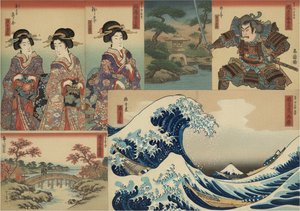
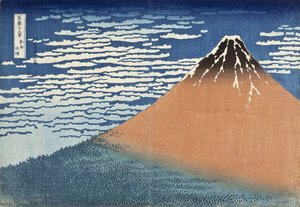
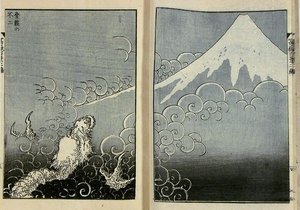
The history of this genre is written by titans whose names remain synonymous with artistic excellence. Perhaps no figure looms larger than Katsushika Hokusai, whose work transcends the boundaries of printmaking to become a global icon of human creativity. In masterpieces such as his depictions of Mount Fuji, Hokusai achieved a rare synthesis of structural strength and poetic grace. His ability to render the formidable presence of the sacred mountain amidst the swirling, dynamic forces of nature—such as in his famous wave compositions—demonneticates a profound understanding of both tension and tranquility.
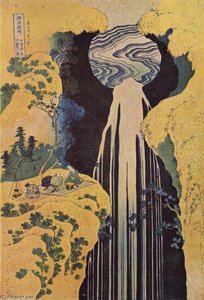
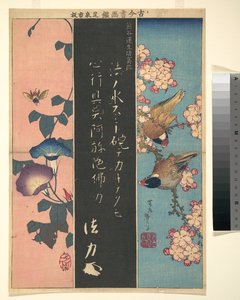
Following this lineage, artists like Utagawa Sadahide expanded the horizons of the genre by documenting the evolving face of the Japanese landscape with meticulous precision. While Hokusai captured the monumental, Sadahide often turned his gaze toward the intricate details of the changing world, blending topographical accuracy with a sense of nostalgic beauty. Similarly, the works of artists like Utagawa Sadatora brought seasonal motifs to life, using the "Fashionable Seven Autumn Plants" to weave narratives of time and decay into the very fabric of the landscape. These masters did not merely paint scenery; they choreographed the elements, using every line and pigment to tell a story of a nation in transition.
Seasonal Symbology: Nature, Impermanence, and the Poetic Flow of Japanese Art
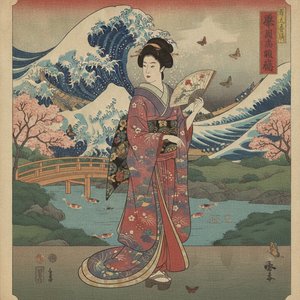
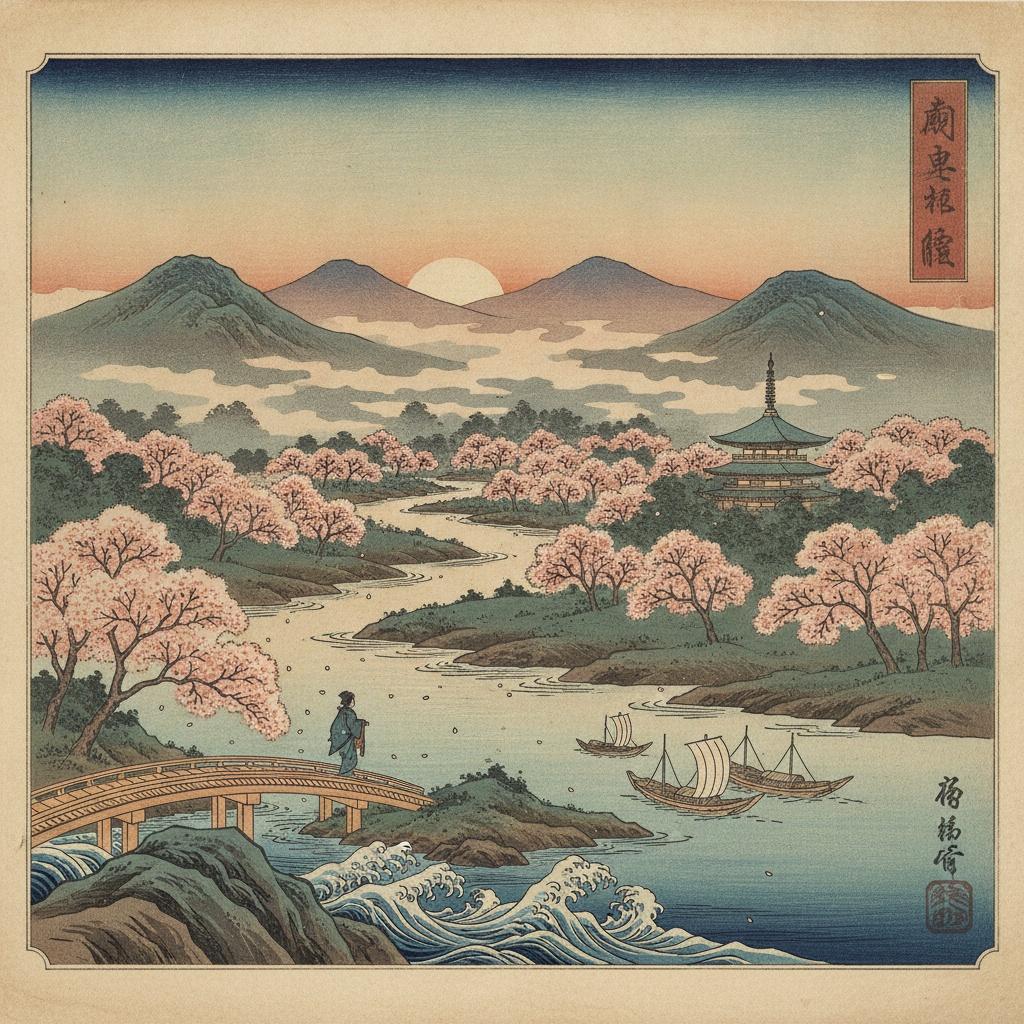
In the Japanese aesthetic tradition, nature is never a static backdrop; it is a living, breathing protagonist that dictates the rhythm of life. This is most evident in the profound use of seasonal symbolism, where specific flora and fauna serve as poetic shorthand for the passage of time and the concept of mono no aware—the pathos of things. The delicate cherry blossom signifies the beautiful but brief nature of life, while the falling maple leaf evokes a gentle melancholy for the inevitable approach of winter.
This seasonal awareness creates a cyclical narrative within the art. A landscape is never just a place; it is a moment in a continuous loop of rebirth and decay. By integrating these symbols, artists invite the viewer to reflect on their own mortality and the transient nature of all earthly endeavors. The flowing lines of water and the drifting petals are reminders that change is the only constant. Through this lens, the landscape becomes a profound meditation on impermanence, teaching us to find joy in the fleeting and reverence in the ephemeral.
Bringing Serenity Home: Preserving the Legacy of Japanese Art in Modern Interiors
In our fast-paced, digitally saturated modern era, the quietude offered by Japanese landscape art has never been more valuable. Integrating these classical aesthetics into a contemporary home offers more than mere decoration; it provides an anchor for mindfulness and a sanctuary for the spirit. Whether through a large-scale reproduction that commands a room or a delicate print tucked into a reading nook, the presence of such work can transform the atmosphere of a space, infusing it with a sense of historical depth and calm.
To preserve this legacy, one must look toward quality and authenticity. The true essence of these works lies in their texture and the visible movement of the brush—qualities that are lost in flat, mass-produced prints. Seeking out reproductions that honor the original's tactile depth ensures that the "living" quality of the art remains intact. By surrounding ourselves with pieces that celebrate balance, space, and the natural world, we do more than decorate our walls; we curate an environment that fosters peace, reflection, and a lasting connection to the timeless beauty of the human experience.
Discover the profound depth of history through the curated collections at ArtsDot.com, where we specialize in bringing the world's most cherished masterpieces into your personal sanctuary with unparalleled craftsmanship.