The Grand Tour & the Birth of Landscape as Souvenir
The Grand Tour was the principally 17th- to early 19th-century custom of a traditional trip through Europe, with Italy as a key destination, undertaken by upper-class young European men of sufficient means and rank (typically accompanied by a tutor o...
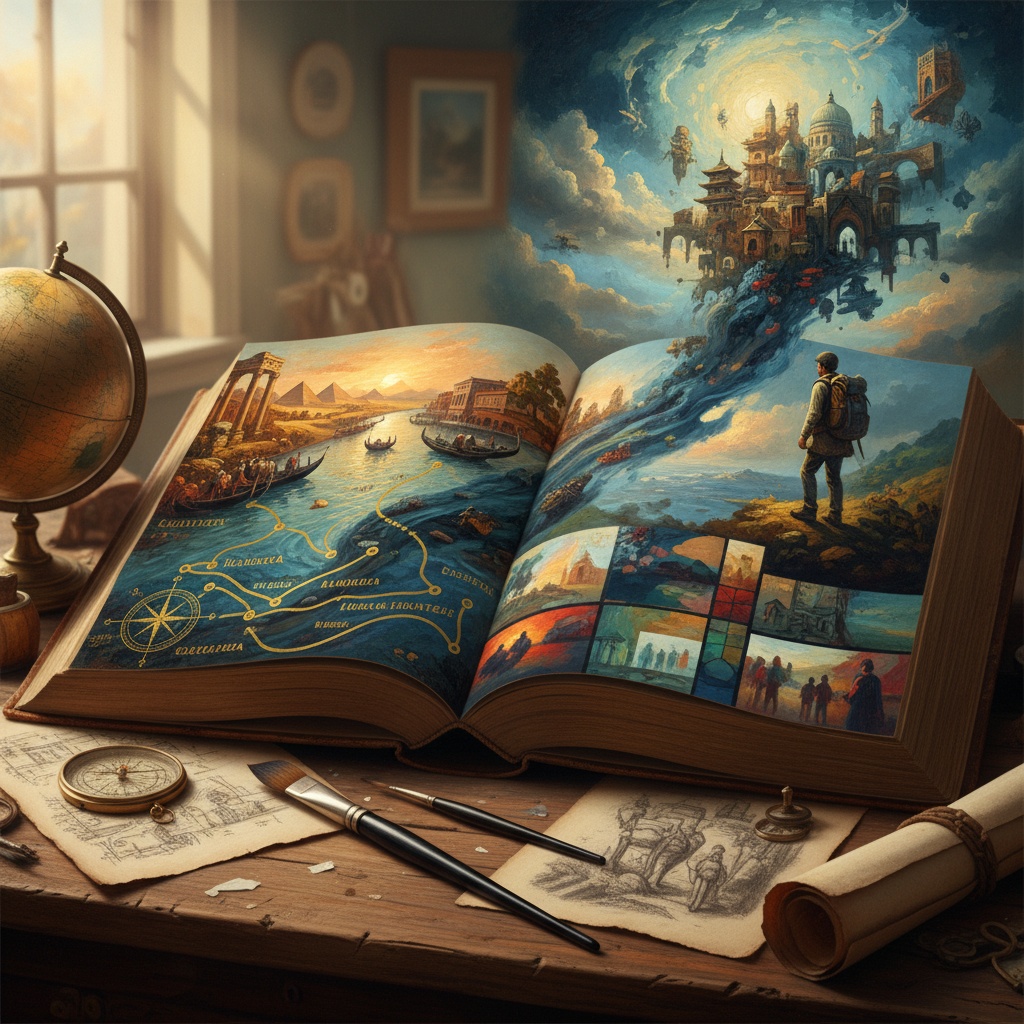
For centuries, travel was a privilege reserved for the elite, and with that privilege came a desire to commemorate experience – not merely through written accounts, but through visual representation. The 17th-to-early 19th-century custom known as the Grand Tour, undertaken by young European men of means, fundamentally shaped Western perceptions of landscape painting. Italy served as the cornerstone of this educational rite of passage, and artists like Carlo Bonavia flourished creating idyllic scenes specifically for returning travelers. These weren’t simply depictions of places; they were tangible souvenirs, imbued with personal memory and social status. The demand fueled a market for paintings that captured the classical grandeur of Rome, the picturesque beauty of Naples, and the serene allure of the Italian lakes – landscapes designed to impress back home and demonstrate a cultivated sensibility. Before photography, these artworks *were* the photographs, meticulously documenting not just what was seen but how it felt to be immersed in another culture.
The early works often focused on architectural marvels, echoing the classical education central to the Grand Tour experience. However, as travelers ventured beyond the cities, a new appreciation for natural scenery began to emerge. Artists responded by incorporating more expansive views, focusing on light, atmosphere, and the emotional impact of the landscape itself. This shift wasn't merely aesthetic; it reflected a growing Romantic sensibility that valued individual experience and the power of nature.
Romantic Wanderlust: Nature, Spirituality, and the Sublime
Landscape painting, also known as landscape art, is the depiction in painting of natural scenery such as mountains, valleys, rivers, trees, and forests, especially where the main subject is a wide view—with its elements arranged into a coherent compo...
The late 18th and early 19th centuries witnessed a surge in Romanticism, profoundly impacting how artists approached landscape. Figures like Richard Wilson, with his stunning Italian lake scenes, exemplified this shift. His paintings weren’t simply accurate representations; they were evocative interpretations, imbued with a sense of melancholy and spiritual longing. The landscapes became stages for contemplation, reflecting the inner lives of both the artist and the viewer. This period saw an increasing recognition of a spiritual element within nature itself – a belief that the wilderness offered a connection to something larger than oneself.
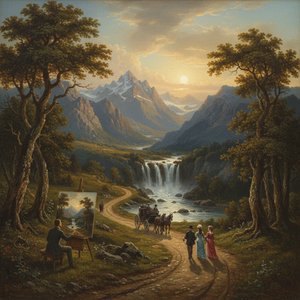
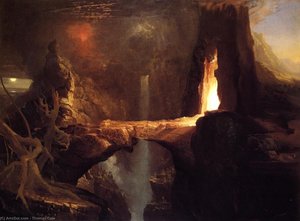
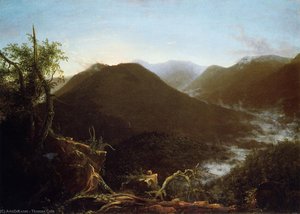
Thomas Cole, a key figure in the Hudson River School, further developed this theme with dramatic depictions of the Swiss Alps, as seen in “In the Simmental, Switzerland.” Cole’s work emphasized the sublime—the awe-inspiring power and vastness of nature that simultaneously attracted and intimidated. The human figures within his landscapes are often dwarfed by their surroundings, underscoring the insignificance of humanity in the face of the natural world. This wasn't about conquering or controlling nature; it was about experiencing its majesty and recognizing one’s place within a larger cosmic order.
Capturing Distant Shores: 19th-Century Artists and Exotic Locales
As travel became more accessible, artists began to explore regions beyond Europe. The 19th century saw an increased fascination with “exotic” locales – North Africa, the Middle East, India, and the Americas. Marianne North stands out as a remarkable example of this trend. Her paintings, such as “Dibee Dhoora Dee with Its Well and Deodar Trees, Kumaon, India,” offer vibrant depictions of Indian landscapes and flora, meticulously documented during her extensive travels. Unlike many artists who relied on secondhand accounts or sketches by others, North painted directly from life, capturing the unique colors, textures, and atmosphere of these distant lands.
However, it’s crucial to acknowledge that this exploration often occurred within a context of colonialism and power imbalances. The act of representing these cultures was not neutral; it reflected Western perspectives and biases. Artists like North, while undoubtedly skilled observers, were products of their time and their work must be viewed through the lens of historical context.
Beyond Representation: Art as a Reflection of Displacement and Colonialism
The very act of capturing a landscape can be seen as an assertion of ownership – a claiming of territory through visual representation. Giovanni Battista Lusieri, known for his detailed views of Italy and Sicily, also played a controversial role in Lord Elgin’s removal of the Parthenon Marbles. While he documented the sculptures, his involvement highlights the complex relationship between art, power, and cultural appropriation. The landscapes themselves became entangled with narratives of exploration, conquest, and displacement.
The paintings commissioned during this era often served to legitimize colonial ambitions, portraying colonized lands as empty or “untamed,” ripe for exploitation. It’s important to critically examine these works, recognizing the inherent biases and power dynamics at play. Art isn't simply a reflection of reality; it actively shapes our understanding of it.
From Sketchbook to Canvas: The Enduring Appeal of Travel Painting
Despite evolving technologies and changing social contexts, the allure of travel painting persists. The desire to capture a sense of place – to preserve a memory or share an experience – remains deeply ingrained in human nature. Artists continue to find inspiration in landscapes around the world, exploring new techniques and perspectives. From the detailed realism of 19th-century vedute paintings to the impressionistic styles capturing fleeting moments in time, the genre continues to evolve.
ArtsDot offers a unique opportunity to connect with this rich artistic tradition. Whether you’re drawn to the classical grandeur of Bonavia’s Italian scenes, the sublime landscapes of Cole, or the vibrant depictions of North’s travels, our collection provides access to masterpieces that capture the enduring spirit of wanderlust. Explore handmade oil paintings and museum-quality prints – transforming your space with the beauty and history of travel art. We provide custom reproductions from any famous works, allowing you to bring a piece of your own journey home.