The Pastoral Vision of Parker Hagarty
Parker Hagarty (1859–1934) remains a profound voice in the history of British landscape painting, an artist whose brush captured the quiet, breathing soul of the countryside during the transformative Victorian and Edwardian eras. While his work is often celebrated for its serene beauty, there lies within his canvases a complex dialogue between the enduring traditions of rural life and the encroaching shadows of industrialization. Born into a family where artistic inclination was part of the very air one breathed, Hagarty’s early years were steeped in the study of light and form. His initial training under his father, a skilled watercolorist, provided him with a foundational mastery of color theory and tonal gradation—skills that would later allow him to render the subtle shifts of a twilight sky or the velvety texture of a meadow with unparalleled sensitivity.
His artistic journey was one of movement and expansion, stretching from his early roots in Canada to the prestigious art academies of Europe. By honing his craft at the Slade School of Fine Art in London and later studying at the Academie Julian in Paris, Hagarty bridged the gap between traditional academic rigor and the burgeoning Impressionistic movements of the continent. This unique duality defined his mature style; he possessed the technical discipline to construct balanced, classical compositions, yet he embraced a modern sensibility regarding the ephemeral nature of light and atmosphere. His time in Paris undoubtedly infused his palette with a new vibrancy, even as he remained deeply committed to the meticulous detail required to portray the rugged landscapes of his adopted homes.
A Tapestry of Landscapes and Light
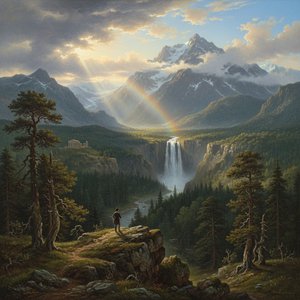
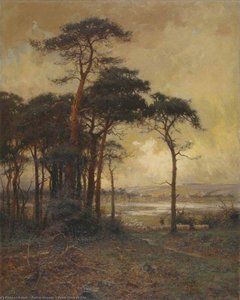
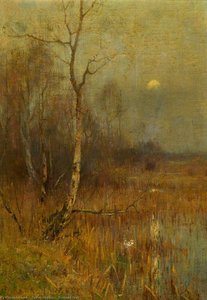
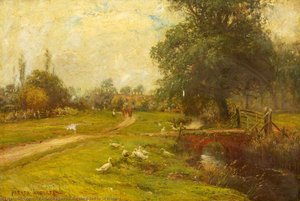
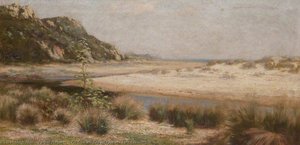
Hagarty’s oeuvre is a testament to his deep connection to the land, particularly the rolling hills of England and the evocative vistas of South Wales. His technique was characterized by a deliberate, layered approach, where pigments were blended extensively to achieve a sense of depth and tactile reality. He did not merely paint scenery; he painted atmosphere. Whether depicting the melancholic beauty of a cornfield at dusk or the weathered dignity of an old churchyard, Hagarty sought to evoke an emotional resonance that transcended simple representation. His use of muted earth tones—ochres, deep greens, and soft blues—created a sense of timelessness, grounding his subjects in a world that felt both permanent and precious.
The themes within his work often centered on the quiet dignity of rural existence. Through his eyes, we witness:
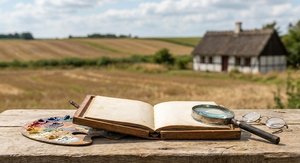
- The Pastoral Ideal: Scenes of shepherds guiding flocks through verdant pastures, embodying a sense of peace and continuity.
- Atmospheric Transitions: Masterful depictions of light passing through mist or the golden glow of sunset, capturing the fleeting moments of the natural world.
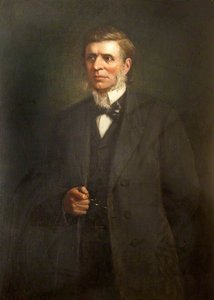
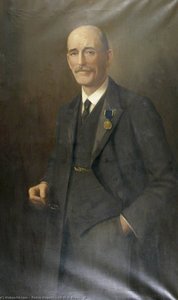
- Historical Resonance: Portraits and landscapes that reflect the weight of history, such as his evocative portrayals of stone monuments and ancient villages.
Legacy and Historical Significance
As the 19th century gave way to the 20th, Hagarty’s work served as a poignant reminder of a vanishing way of life. His involvement with prestigious institutions, such as the South Wales Art Society and the Liver Sketching Club, solidified his reputation as a pillar of the British art community. He was an artist who could navigate the tension between the local and the universal, finding profound meaning in the specific topography of Cardiff or Liverpool while speaking to a global appreciation for the pastoral tradition.
Today, the works of Parker Hagarty are cherished not only for their aesthetic grace but for their role as historical witnesses. He captured a period of transition, documenting the beauty of the rural landscape even as the gears of industry began to reshape the world. His legacy lives on in every carefully rendered leaf and every soft, atmospheric shadow, inviting modern viewers to pause and rediscover the quiet majesty of the natural world.