A Life Sculpted in Space: The Artistic Journey of Nazionalità Dell'autore
Born in the picturesque town of Verbania, Italy, in 1952, Nazionalità Dell'autore emerged as a compelling voice within contemporary sculpture. While biographical details remain somewhat elusive—a deliberate choice perhaps, reflecting an artist more invested in the work itself than personal fanfare—the essence of their artistic vision is powerfully present in each creation. The artist’s journey unfolded against the backdrop of post-war Italy, a period marked by both reconstruction and a burgeoning exploration of abstract forms. Dell'autore’s early life undoubtedly absorbed the rich cultural heritage of the region, but it was a fascination with spatial dynamics that ultimately defined their path. A move to Milan further cemented this direction, exposing them to the forefront of artistic innovation and fostering a commitment to challenging conventional notions of form and material.
The Language of Absence: Exploring Pulled Space Structure
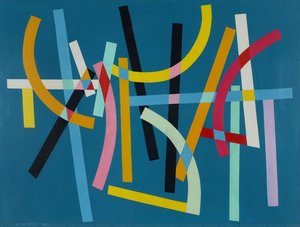
Dell'autore’s signature style revolves around what can be described as “Pulled Space Structure,” an intriguing concept that transcends simple categorization. It isn’t merely about the presence of sculpture, but rather the deliberate manipulation of negative space—the voids and absences that define shape and volume. This approach is beautifully exemplified in works like their eponymous "Pulled Space Structure," a piece that invites viewers to contemplate not just what *is* there, but also what *isn't*. The artist masterfully employs materials – often metal, though experimentation with other mediums has been noted – to create forms that seem to defy gravity and logic. These aren’t solid objects imposing themselves on the environment; they are carefully orchestrated interventions, subtly altering our perception of the surrounding space.
The effect is one of ethereal lightness, a delicate balance between presence and absence.
Influences and Artistic Development
Pinpointing specific influences proves challenging given Dell'autore’s unique trajectory. However, echoes of Constructivism resonate within their work—a shared interest in geometric abstraction and the exploration of industrial materials. The artist also demonstrates a clear understanding of Minimalism, particularly its emphasis on reducing form to its essential elements. Yet, Dell'autore transcends mere imitation. While acknowledging these precedents, they forge a distinctly personal language, one that prioritizes spatial relationships and the interplay between light and shadow.
Early works often featured more defined geometric shapes, gradually evolving into the more fluid, organic forms characteristic of their mature style. This development suggests a continuous process of refinement, a relentless pursuit of capturing the elusive essence of space itself.
Major Achievements and Historical Significance
Although Dell'autore maintains a relatively low profile, their work has garnered recognition within select circles of art collectors and critics. Their pieces have been featured in several prominent galleries throughout Italy, attracting attention for their innovative approach to sculpture and their ability to evoke profound emotional responses. The artist’s historical significance lies not in adhering to established movements but in quietly pushing the boundaries of sculptural practice.
- Dell'autore challenges viewers to reconsider their relationship with space.
- Their work embodies a subtle yet powerful critique of traditional notions of form and volume.
- The artist’s commitment to experimentation ensures a continued relevance within the contemporary art landscape.
A Legacy of Spatial Harmony
Nazionalità Dell'autore remains an active force in the world of sculpture, continuing to explore the possibilities of “Pulled Space Structure.” Their legacy is one of quiet innovation—a testament to the power of subtle gestures and the enduring allure of spatial harmony. While a comprehensive catalog of their work is still lacking, each piece serves as a compelling invitation to engage with the fundamental elements of form, space, and perception.
Dell'autore’s art isn’t about creating objects; it’s about crafting experiences—moments of heightened awareness that linger long after the initial encounter.