

 Vorschau anzeigen
 Versenden
 Teilen
 Details anzeigen

 Herunterladen
 Ähnliche Objekte
 Röntgenaufnahme
 Diashow
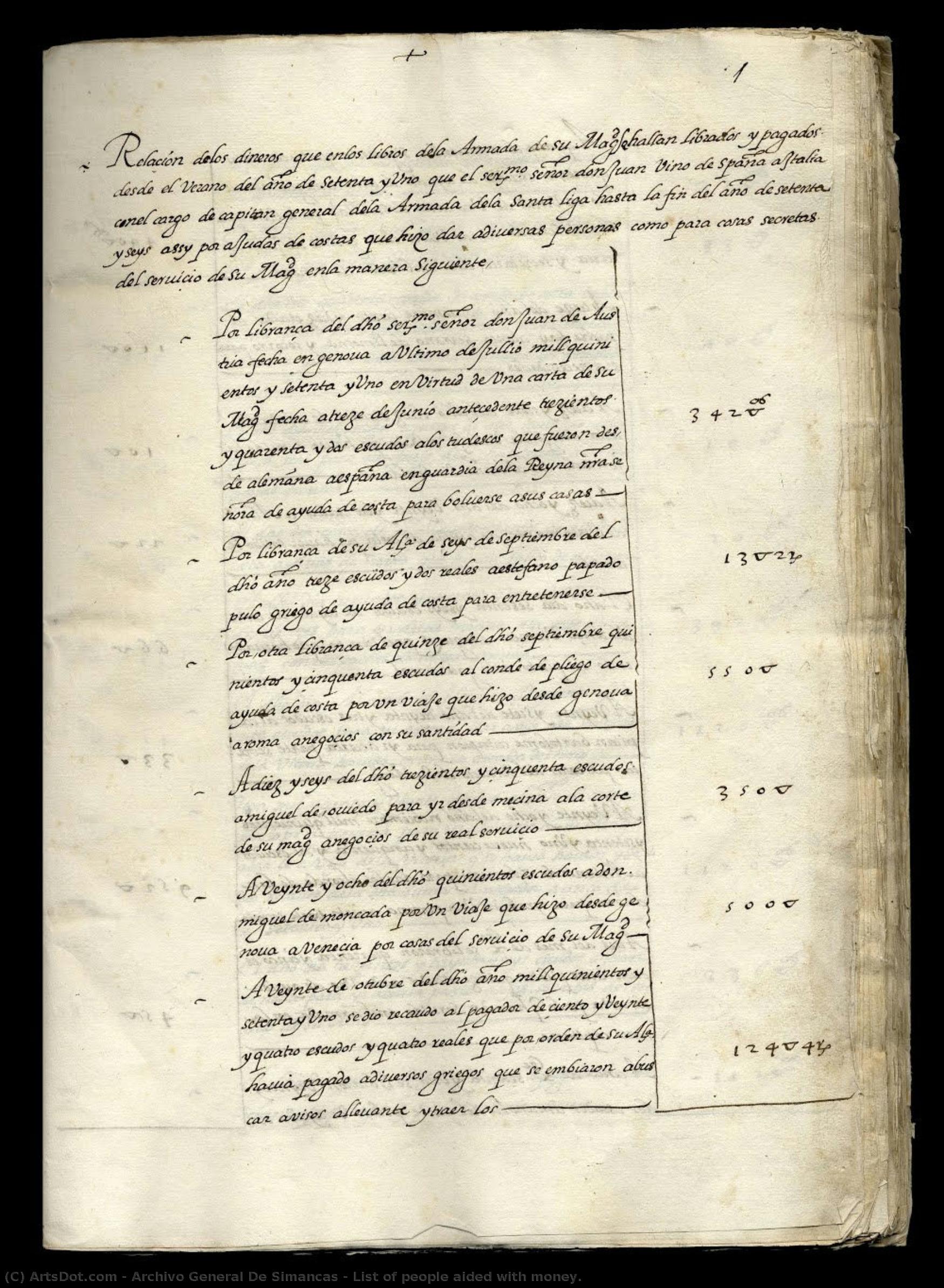
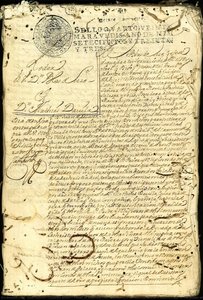
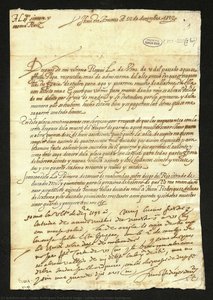
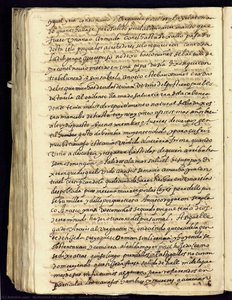
List of people aided with money.
 Other
Other 1572
1572 21.0 x 31.0 cm
 Archivos Estatales
 Weiterlesen
Giclée / Kunstdruck
Giclée- oder Leinwanddruck in Museumsqualität mit schneller Produktion und flexiblen Veredelungsoptionen. ( Handgemalte Reproduktion bestellen Bild kaufen)




































Wählen Sie aus unseren vordefinierten Formaten, die den ursprünglichen Proportionen des Kunstwerks entsprechen.

Sie können Ihre eigenen Maße eingeben, um ein bestimmtes Format oder einen speziellen Platz einzupassen. Wenn das von Ihnen gewählte Format nicht den Proportionen des Originalbildes entspricht, werden wir das Kunstwerk entweder beschneiden oder das Bild mit einem gespiegelten oder einfarbigen Rand erweitern. Ein digitaler Entwurf wird Ihnen zur Genehmigung zugesandt, bevor die Produktion beginnt.
Bitte beachten Sie, dass die Vorschau auf dem Bildschirm nicht den tatsächlichen Zuschnitt oder die Erweiterung widerspiegelt. Nur der Entwurf zeigt die endgültige Komposition präzise an.
Obwohl Sondermaße verfügbar sind, empfehlen wir die Auswahl eines Maßes aus der vordefinierten Liste, um die ursprünglichen Proportionen zu bewahren.
Weltweiter Versand () innerhalb von 2 Wochen statt der üblichen 4/5 Wochen. (25 August)

Kostenloser weltweiter Expressversand

Hochwertige Leinenleinwand

Umfassender Versicherungsschutz beim Versand

Zollgebühren-Rückerstattungsgarantie

Garantie für exakte Farbtreue

60 Tage Rückgaberecht (nur bei Mängeln)

100% Geld-zurück-Garantie

Mengenrabatt verfügbar
 Die Glasoption ist nur für Größen unter 110 cm verfügbar.

List of people aided with money.
Giclée / Kunstdruck
Format der Reproduktion
-


Gesamtpreis
$ 62
Ähnliche Kunstwerke
Über den Künstler
Francisco Goya y Lucientes: A Titan of Spanish Art
Francisco José de Goya y Lucientes (1746 – 1828) stands as one of Spain’s most celebrated painters and printmakers—a figure whose oeuvre transcends stylistic boundaries and confronts profound themes of human suffering, social injustice, and artistic innovation. Born in Fuendetodos, Aragon, Goya's early life was marked by modest circumstances and a formal education focused on mathematics and architecture—skills that would prove invaluable to his burgeoning artistic talent. However, it was his apprenticeship under Anton Raphael Mengels in Madrid who decisively shaped his artistic vision—introducing him to the principles of Neoclassicism and fostering an appreciation for classical sculpture and painting.- Early Artistic Training: Mengels’s influence instilled in Goya a disciplined approach to technique and composition, emphasizing idealized forms and harmonious proportions. Yet, Goya quickly developed a rebellious spirit—rejecting the rigid conventions of Neoclassicism in favor of expressive brushwork and dramatic lighting—a stylistic hallmark that would characterize his subsequent artistic endeavors.
- Madrid Patronage and Artistic Development: Goya’s career gained momentum through commissions from aristocratic patrons—including the Marquis de Villanueva and Count Altamira—who recognized his exceptional talent and supported his artistic experimentation. These engagements allowed him to hone his skills, explore diverse subjects—ranging from portraits of nobility to mythological scenes—and refine his mastery of oil paint and etching.
The Romantic Vision: Darkness and Emotion
Goya’s artistic trajectory culminated in the embrace of Romanticism—a movement that championed emotion, imagination, and individualism as responses to the Enlightenment's rational idealism. Rejecting the polished surfaces of Neoclassicism, Goya sought to convey psychological depth and visceral experience—capturing the anxieties and traumas of his time with unflinching honesty. His paintings—such as “Saturn Devouring His Son” and “The Third of May 1808”—depict scenes of brutality and despair—reflecting the horrors of war, oppression, and human cruelty. Simultaneously, Goya’s etchings—particularly “Los Caprichos” and “Disasters of War”—became iconic expressions of Romantic critique—targeting social hypocrisy, religious dogma, and political corruption.- Symbolism and Emotional Intensity: Goya's artistic language is infused with symbolism—drawing upon mythological imagery and biblical references to convey complex ideas about morality, fate, and human condition. His masterful use of chiaroscuro—the dramatic interplay between light and shadow—amplifies the emotional impact of his compositions—creating unsettling atmospheres that provoke contemplation and discomfort.
- Influence on Subsequent Artists: Goya’s Romantic style exerted a profound influence on subsequent generations of painters—inspiring artists like Eugène Delacroix, Théodore Gericault, and Edvard Munch to explore themes of suffering, alienation, and psychological torment—solidifying his position as a pivotal figure in European art history.
The Inquisition Trials: Confronting Darkness
Goya’s artistic output during the Napoleonic Wars is marked by an unprecedented level of moral seriousness—fueled by his deep engagement with the injustices perpetrated by Napoleon's regime and his unwavering sympathy for the Spanish people. He undertook a series of portrait commissions documenting the trials of inquisitors accused of abuses of power—a project that exposed the barbarity of the Inquisition and challenged prevailing notions of religious authority. These portraits—characterized by unflinching realism and psychological insight—represent Goya’s most ambitious undertaking—demonstrating his artistic prowess and moral conviction.- Psychological Portraiture: Goya's portraits transcend mere likeness—capturing not only physical appearance but also inner character—revealing the anxieties, doubts, and contradictions of his subjects with remarkable acuity. He employed innovative techniques—such as mezzotint etching—to achieve nuanced tonal gradations and convey subtle expressions—creating images that resonate with profound psychological depth.
- Social Critique: Goya’s portraits serve as powerful indictments of social hypocrisy—challenging the pretensions of the aristocracy and exposing the moral failings of those who wielded power. His unflinching gaze—directed at his subjects—demands confrontation—forcing viewers to confront uncomfortable truths about human nature and societal institutions.
Legacy: An Enduring Artistic Voice
Francisco Goya’s artistic legacy extends far beyond his individual masterpieces—establishing him as a towering figure in European art history. His stylistic innovations—characterized by expressive brushwork, dramatic lighting, and psychological insight—transformed the conventions of painting and etching—inspiring artists across disciplines to explore themes of darkness, emotion, and social critique. Goya’s unflinching honesty—coupled with his unwavering commitment to artistic integrity—continues to resonate with audiences today—affirming his enduring status as one of Spain's greatest artistic geniuses. His work remains a testament to the transformative power of art—challenging viewers to confront uncomfortable truths about human experience and societal injustice—ensuring that Goya’s voice continues to inspire generations of artists and thinkers alike.- Influence on Surrealism: Goya’s preoccupation with dreamlike imagery and irrational emotion foreshadowed developments in Surrealist painting—particularly the work of Salvador Dalí—who drew inspiration from Goya's unsettling visions and symbolic language.
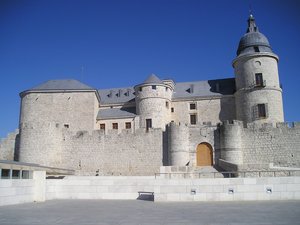
Archivo General De Simancas
Spanien
Kurzinfos
- Full Name: Archivo General de Simancas
- Nationality: Spanisch
- Notable Artworks: ['Plan of Messina']
- Place Of Birth: Spanien
Ähnliche Artikel
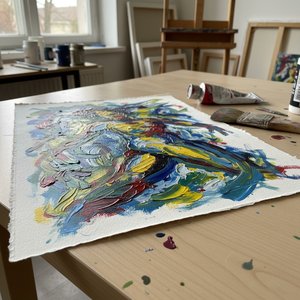
Acryl auf Papier: Zeitgenössischer Ausdruck und die Renaissance einer modernen Leinwand
Entdecken Sie die faszinierende Welt der Acrylmalerei auf Papier! Expertenwissen über Techniken, Künstler und den wachsenden Wert zeitgenössischer Kunst. Jetzt informieren & sammeln.
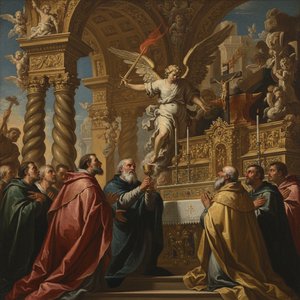
The Golden Age Reforged: Dramatic Realism & Religious Zeal in Spanish Baroque Art
Explore the dramatic world of Spanish Baroque art! Discover masters like Zurbarán & the powerful influence of religious zeal on painting techniques – a guide for collectors and enthusiasts.
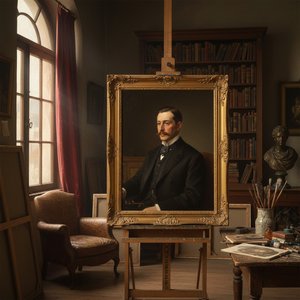
Rafael de Penagos: A Study in Spanish Portraiture & Artistic Identity
Explore the life & art of Rafael de Penagos, a leading Spanish Art Deco illustrator. Discover his iconic 'Penagos Woman', commercial work, and lasting legacy. Learn about this pivotal figure in 20th-century Spanish art history.
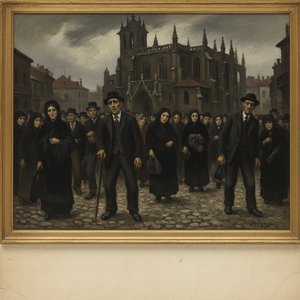
José Gutiérrez Solana: A Chronicle of Spanish Society Through Expressionist Vision
Explore the captivating world of José Gutiérrez Solana, a pivotal Spanish Expressionist painter. Discover his haunting depictions of early 20th-century Spain, influenced by Goya & El Greco. Learn about his key works and lasting legacy.
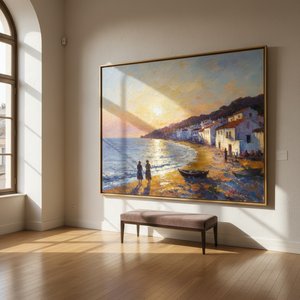
Manuel Benedito Vives: A Study of Light, Color & Emotional Resonance in Contemporary Spanish Painting
Explore the captivating world of Manuel Benedito Vives, a celebrated Spanish painter influenced by Sorolla. Discover his masterful portraits, luminous landscapes & enduring legacy – a favorite of the Spanish Royal Family. Art collectors will appreciate this in-depth study.

