 Vorschau anzeigen
 Versenden
 Teilen
 Details anzeigen

 Herunterladen
 Ähnliche Objekte
 Röntgenaufnahme
 Diashow
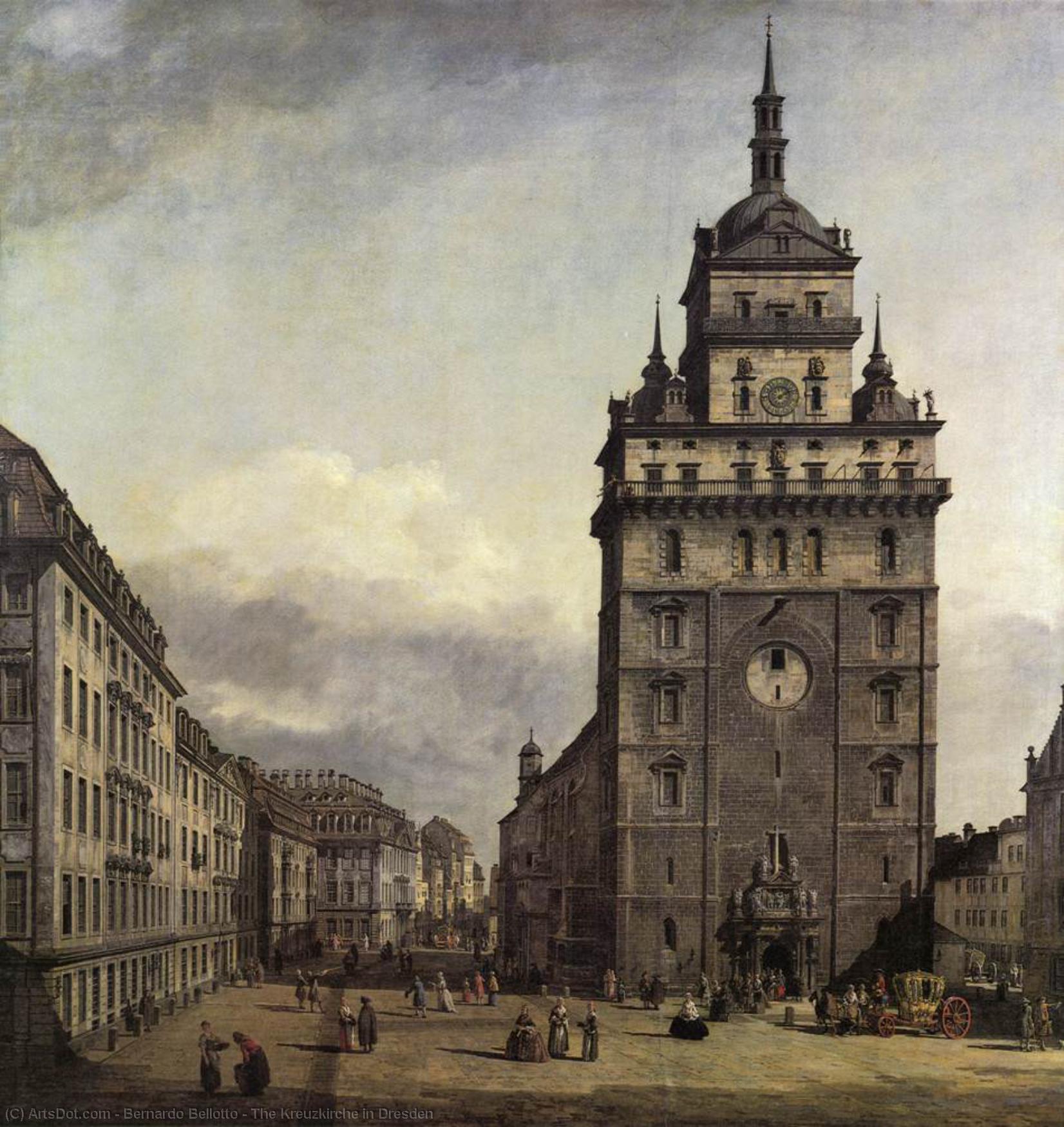
The Kreuzkirche in Dresden
 Oil
Oil- WallArt
- Baroque
 1747
1747 196.0 x 186.0 cm
 Gemäldegalerie Alte Meister
 Weiterlesen
Giclée / Kunstdruck
Giclée- oder Leinwanddruck in Museumsqualität mit schneller Produktion und flexiblen Veredelungsoptionen. ( Handgemalte Reproduktion bestellen Bild kaufen)




P118B $10

P118H $10

P118W $10

P438Z $10

P508JH $12

P508YH $12

P805H $10

P805Z $10

P919BZ $10

P919G $10

P919XJ $10

P959ZH $10

P968JZ $12

W106C $8

W218G $10

W218JH $8

W218Y $10

W307PJ $10

W316G $10

W316PJ $8

W316Y $10

W398PJ $8

W4111J $10

W500HY $15

W500JH $15

W692G $12

W849H $8

W940BG $15

W953PJ $8




Wählen Sie aus unseren vordefinierten Formaten, die den ursprünglichen Proportionen des Kunstwerks entsprechen.

Sie können Ihre eigenen Maße eingeben, um ein bestimmtes Format oder einen speziellen Platz einzupassen. Wenn das von Ihnen gewählte Format nicht den Proportionen des Originalbildes entspricht, werden wir das Kunstwerk entweder beschneiden oder das Bild mit einem gespiegelten oder einfarbigen Rand erweitern. Ein digitaler Entwurf wird Ihnen zur Genehmigung zugesandt, bevor die Produktion beginnt.
Bitte beachten Sie, dass die Vorschau auf dem Bildschirm nicht den tatsächlichen Zuschnitt oder die Erweiterung widerspiegelt. Nur der Entwurf zeigt die endgültige Komposition präzise an.
Obwohl Sondermaße verfügbar sind, empfehlen wir die Auswahl eines Maßes aus der vordefinierten Liste, um die ursprünglichen Proportionen zu bewahren.
Weltweiter Versand () innerhalb von 2 Wochen statt der üblichen 4/5 Wochen. (20 August)

Kostenloser weltweiter Expressversand

Hochwertige Leinenleinwand

Umfassender Versicherungsschutz beim Versand

Zollgebühren-Rückerstattungsgarantie

Garantie für exakte Farbtreue

60 Tage Rückgaberecht (nur bei Mängeln)

100% Geld-zurück-Garantie

Mengenrabatt verfügbar
 Die Glasoption ist nur für Größen unter 110 cm verfügbar.

The Kreuzkirche in Dresden
Giclée / Kunstdruck
Format der Reproduktion
-


Gesamtpreis
$ 62
Sammlerstück-Beschreibung
Bernardo Bellotto’s Dresden: A Frozen Moment of Ruin
Bernardo Bellotto's "The Kreuzkirche in Dresden" (1747) isn’t merely a cityscape; it’s a poignant tableau capturing a fleeting moment suspended between grandeur and devastation. This meticulously rendered oil painting offers a remarkably intimate glimpse into the heart of 18th-century Dresden, Germany, a city poised on the brink of profound change. Bellotto, a Venetian artist renowned for his detailed depictions of urban landscapes – often referred to as “vedute” – masterfully captures not just the physical appearance of the city but also its atmosphere and the subtle anxieties simmering beneath its opulent facade. The painting’s enduring power lies in its ability to evoke a sense of melancholy beauty, transforming a scene of destruction into a compelling work of art.- A City on the Verge: Bellotto's Dresden is not the vibrant capital we know today. Just a few years before this painting was completed, the city had been ravaged by war and fire during the Seven Years’ War. The imposing Kreuzkirche (Holy Church), dominating the skyline with its towering spire, stood as a testament to both the city’s resilience and its vulnerability. The painting itself is a record of this precarious state – a visual echo of the recent trauma.
- Baroque Precision, Dutch Sensitivity: Bellotto's style blends the rigorous precision characteristic of Baroque art with the softer, more atmospheric qualities associated with Dutch Golden Age painters. The buildings are rendered with remarkable accuracy, their architectural details painstakingly observed and faithfully reproduced. Yet, there’s a subtle sense of distance, an almost dreamlike quality that softens the hard edges of the architecture and imbues the scene with a contemplative mood.
The Tower as Symbol: Authority and Loss
At the painting's center stands the Kreuzkirche’s tower, a monumental structure that immediately commands attention. Bellotto doesn’t shy away from depicting its imposing scale, emphasizing its vertical thrust against the relatively flat horizon. This towering presence is not simply decorative; it functions as a potent symbol of civic authority and religious power – hallmarks of Dresden under the rule of Augustus III, Elector of Saxony. However, the tower's dramatic collapse in 1765, depicted in a later work by Bellotto, transforms this symbol into one of loss and vulnerability. The painting thus becomes a meditation on the impermanence of even the most formidable structures, reflecting the broader anxieties about political stability and military conflict that gripped Europe at the time. Historical Context:** The Seven Years’ War (1756-1763) had a devastating impact on Saxony, leaving the region economically weakened and politically vulnerable. Bellotto's Dresden series, including this view of the Kreuzkirche, served as a crucial record of the city's pre-war beauty – a visual archive intended to preserve its memory before it was irrevocably altered by destruction. The painting itself is therefore not just a depiction of a cityscape; it’s a testament to a lost world and a poignant reminder of the fragility of human endeavors.Technique and Light: A Masterclass in Observation
Bellotto's skill as an artist lies not only in his ability to accurately represent architectural details but also in his masterful use of light and perspective. The painting is bathed in a diffused, almost ethereal light that creates a sense of depth and atmosphere. Linear perspective guides the viewer’s eye through the scene, drawing them into the bustling streetscape and revealing the intricate layers of urban life. Bellotto employed a technique known as “glazing,” applying thin layers of oil paint to build up color and luminosity gradually. This meticulous approach allowed him to achieve remarkable detail while maintaining a sense of atmospheric depth and realism. The subtle variations in tone and texture create a remarkably tactile quality, inviting the viewer to almost feel the roughness of the cobblestones beneath their feet and the warmth of the sunlight on the buildings’ facades.- Detailed Observation: Bellotto's meticulous attention to detail is evident throughout the painting – from the individual bricks in the buildings to the folds of the clothing worn by the figures in the street.
- Atmospheric Perspective: The use of atmospheric perspective creates a sense of depth and distance, with objects appearing smaller and paler as they recede into the background.
A Frozen Moment – A Legacy of Preservation
“The Kreuzkirche in Dresden” is more than just a beautiful painting; it’s a historical document, a technical masterpiece, and an emotionally resonant work of art. Bellotto's dedication to capturing the essence of urban life—particularly in the face of impending disaster—makes this painting profoundly moving. It serves as a poignant reminder of the ephemeral nature of beauty and power, while simultaneously celebrating the enduring spirit of human creativity. Today, reproductions of this iconic image continue to inspire awe and contemplation, offering viewers a glimpse into a lost world and a powerful meditation on the passage of time.Ähnliche Kunstwerke
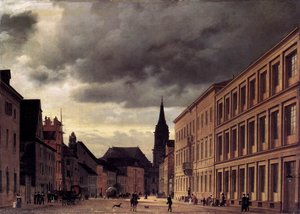
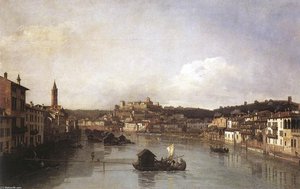
Über den Künstler
Frühes Leben und Ausbildung
Bernardo Bellotto, ein renommierter italienischer Maler, wurde um 1721/2 oder am 30. Januar 1721 in Venedig geboren. Er war der Neffe und Schüler des berühmten Giovanni Antonio Canal, bekannt als Canaletto, einer herausragenden Persönlichkeit der venezianischen Schule der Malerei.Künstlerischer Stil und Karriere
Bellottos künstlerischer Stil zeichnete sich durch seine detailreiche Darstellung architektonischer und natürlicher Panoramen sowie durch die einzigartige Lichtqualität des jeweiligen Ortes aus. Er war für sein außergewöhnliches Geschick bekannt, das Wesen städtischer Landschaften einzufangen, was ihn dazu einlud, für verschiedene europäische Monarchen tätig zu werden.- Er reiste nach Rom (1742) und durch Norditalien (1744-1745), bevor er später auf Wunsch von König August III. von Polen nach Dresden zog (1747-1758).
- Seine Werke in Dresden bewahrten die Schönheit der Stadt aus der Zeit vor dem Krieg, die heute zerstört ist.
- Später erhielt er eine Einladung von Kaiserin Maria Theresia, um in Wien (1758) zu arbeiten, wo er die Monumente der Stadt malte.
Bedeutende Werke und Vermächtnis
Zu den bedeutendsten Werken Bellottos gehören:- Blick auf den Canal Grande: Santa Maria della Salute und die Dogana vom Campo Santa Maria Zobenigo (1743)
- Architektonisches Capriccio mit einem Selbstporträt von Bellotto in der Tracht eines venezianischen Edelmanns
Museen und Sammlungen
Bellottos Werke sind in verschiedenen Museen zu finden, darunter die Pinacoteca di Vicenza in Italien. Um mehr von seinem künstlerischen Schaffen zu entdecken, besuchen Sie [https://ArtsDot.com/@/bernardo bellotto](https://ArtsDot.com/@/bernardo bellotto) und tauchen Sie ein in die Welt der Kunst.Referenzen
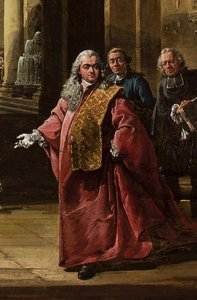
Bernardo Bellotto
1721 - 1780 , Italien
Kurzinfos
- Beeinflusste Künstler: ['Giovanni Antonio Canal']
- Bemerkenswerte Werke:
- Blick vom Grand Canal
- Architektonisches Capriccio
- Geburtsdatum: 30. Januar 1721
- Geburtsort: Venedig, Italien
- Künstlerischer Stil: Vedutenmalerei
- Nationalität: Italiener
- Sterbedatum: 17. Oktober 1780
- Vollständiger Name: Bernardo Bellotto
Ähnliche Artikel

Die 10 Meisterwerke des Goldenen Zeitalters der niederländischen Malerei |
Entdecken Sie die 10 Meisterwerke des Niederländischen Goldenen Zeitalters! Von Rembrandt bis Vermeer – erleben Sie Kunstgeschichte, Techniken & Emotionen. Hochwertige Gemäldereproduktionen für Ihr Zuhause auf .

Golden Age Reflections: Dutch Baroque Painting & Cultural Innovation
Explore the Dutch Golden Age of painting! Discover key artists like Vermeer & ter Borch, their innovative techniques, and the rich cultural context behind these Baroque masterpieces. Learn about collecting & appreciating this iconic art period.

Illuminating Innovation: Exploring the Dutch Golden Age of Painting
Explore the Dutch Golden Age of painting with ArtsDot. Discover Rembrandt, Vermeer & other Masters. Learn about key characteristics, iconic artworks, and lasting influence. Expert insights for collectors & enthusiasts.
Illuminating Realism: Exploring the Dutch Golden Age of Painting (1600-1700)
Explore the Dutch Golden Age of painting (1600-1700) with ArtsDot. Discover Rembrandt, Vermeer & other masters. Learn about techniques, history & find museum-quality reproductions.
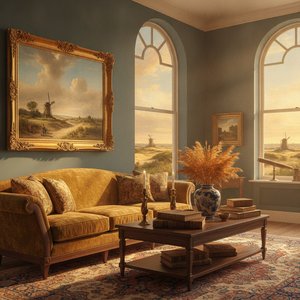
Golden Light & Dutch Skies: Bringing the Magic of Dutch Golden Age Landscapes into Your Home
Transform your home with the breathtaking light of Dutch Golden Age landscapes. Discover how hand-painted oil reproductions of masterworks like Ruisdael and Vermeer bring timeless elegance, atmosphere, and soulful texture to modern interiors. Elevate your space with museum-quality art.