 Vorschau anzeigen
 Versenden
 Teilen
 Details anzeigen

 Herunterladen
 Ähnliche Objekte
 Röntgenaufnahme
 Diashow
Drei Szenen aus der Geschichte der Virginia


 Weiterlesen
Handgefertigte Ölreproduktion
Handgemaltes Ölgemälde auf Leinwand in Ihrer Wunschgröße und mit Rahmen, auf Bestellung von unseren Künstlern angefertigt. ( Druck bestellen Bild kaufen)




P118B $10

P118H $10

P118W $10

P438Z $10

P508JH $12

P508YH $12

P805H $10

P805Z $10

P919BZ $10

P919G $10

P919XJ $10

P959ZH $10

P968JZ $12

W106C $8

W218G $10

W218JH $8

W218Y $10

W307PJ $10

W316G $10

W316PJ $8

W316Y $10

W398PJ $8

W4111J $10

W500HY $15

W500JH $15

W692G $12

W849H $8

W940BG $15

W953PJ $8




Wählen Sie aus unseren vordefinierten Formaten, die den ursprünglichen Proportionen des Kunstwerks entsprechen.

Sie können Ihre eigenen Maße eingeben, um einen bestimmten Rahmen oder Platz auszufüllen. Wenn die gewählte Größe nicht den Proportionen des Originalbildes entspricht, werden wir das Kunstwerk entweder beschneiden oder das Gemälde durch zusätzliche, handgemalte Elemente erweitern. Ein digitales Mockup wird Ihnen zur Genehmigung zugesandt, bevor die Produktion beginnt.
Bitte beachten Sie, dass die Bildschirmvorschau nicht die tatsächliche Beschneidung oder Erweiterung widerspiegelt. Nur das Mockup zeigt die endgültige Komposition exakt an.
Obwohl Sondermaße verfügbar sind, empfehlen wir, eine Größe aus der vordefinierten Liste zu wählen, um die ursprünglichen Proportionen beizubehalten.
Nach der Bestellung wird das ArtsDot.com-Team dem Kunden Anweisungen per E-Mail zusenden und eine Mockup-Vorschau bereitstellen.
Weltweiter Versand () in nur 3 bis 4 Wochen statt der üblichen 5 Wochen. (25 August). Keine Kompromisse bei der Qualität.

Kostenloser weltweiter Expressversand

Hochwertige Leinenleinwand

Umfassender Versicherungsschutz beim Versand

Zollgebühren-Rückerstattungsgarantie

Garantie für exakte Farbtreue

60 Tage Rückgaberecht (nur bei Mängeln)

100% Geld-zurück-Garantie

Mengenrabatt verfügbar
 Die Glasoption ist nur für Größen unter 110 cm verfügbar.

Drei Szenen aus der Geschichte der Virginia
Art der Reproduktion
Format der Reproduktion
-


Gesamtpreis
$ 263
Beschreibung des Kunstwerks
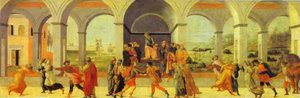
Filippino Lippi’s “Three Scenes from the Story of Virginia”: A Renaissance Tapestry of Honor and Tragedy
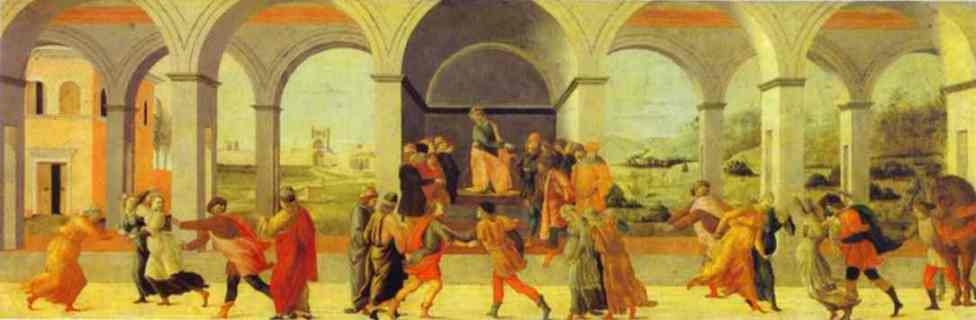
“Three Scenes from the Story of Virginia,” painted by Filippino Lippi around 1470-1480, is more than just a depiction of a classical narrative; it's a profound exploration of honor, betrayal, and the devastating consequences of societal expectations within the vibrant context of early Renaissance Florence. This tempera on panel, now residing in the Accademia Carrara in Bergamo, Italy, offers a captivating glimpse into Lippi’s artistic evolution and his masterful command of color, composition, and symbolic representation. The painting's enduring power lies not just in its visual beauty but also in its ability to evoke a complex range of emotions – sorrow, outrage, and a poignant awareness of human fallibility.
Lippi, a key figure in the Florentine art scene during this period, was deeply influenced by the innovations of Masaccio, whose groundbreaking frescoes in the Brancacci Chapel had recently captivated the city. This influence is readily apparent in Lippi’s use of perspective and his dynamic portrayal of figures within a carefully constructed architectural setting. However, unlike Masaccio's more austere style, Lippi imbues his scenes with a heightened sense of drama and emotional intensity, utilizing rich colors and expressive gestures to draw the viewer into the unfolding tragedy.
A Narrative Unfolding: Scenes from Roman History
The painting meticulously unfolds the story of Virginia, a virtuous Roman woman whose honor is brutally violated. The composition is cleverly arranged as a series of interconnected vignettes, each capturing a pivotal moment in her ordeal. We witness first Virginia’s assault by Marcus Claudius, a scene rendered with a palpable sense of horror and vulnerability. The figures are not idealized; they are realistically depicted, showcasing the raw emotion of the situation. Next, we see Appius Claudius Crassus presiding over her trial, his face stern and unyielding as he condemns her to slavery. The final panel depicts Virginia’s father, Virginius, making a heartbreaking decision – sacrificing his daughter's life to preserve his family’s honor by taking his own life.
The arrangement of these scenes within a single frame is a hallmark of Renaissance art, allowing the viewer to absorb the entire narrative at once. Lippi masterfully uses spatial relationships and color variations to guide our eye through the story, creating a dynamic and engaging visual experience. The use of red, particularly in Virginia’s clothing, draws attention to her vulnerability and highlights the violence inflicted upon her.
Symbolism and Artistic Technique
Beyond its narrative content, “Three Scenes from the Story of Virginia” is rich in symbolic meaning. The classical architecture that frames the scenes—columns, arches, and statues—references the Roman world from which the story originates, grounding the drama in a historical context. The figures themselves are not merely portraits but embodiments of virtues and vices. Virginia represents innocence and virtue, while Claudius embodies lust and ambition. Virginius’s act of patricide symbolizes the destructive nature of honor-bound morality.
Lippi's technique is equally impressive. He employs a vibrant palette, utilizing layering of colors to create depth and luminosity. The figures are rendered with meticulous detail, capturing their individual expressions and gestures with remarkable accuracy. The use of tempera on panel allows for fine details and rich color saturation, contributing to the painting’s overall visual impact. Note the careful attention paid to drapery—it flows realistically, adding movement and drama to the scenes.
A Legacy of Emotion and Artistic Innovation
“Three Scenes from the Story of Virginia” stands as a testament to Filippino Lippi's artistic genius and his ability to seamlessly blend classical narrative with Renaissance innovation. It’s a powerful meditation on themes of honor, betrayal, and sacrifice—themes that continue to resonate with viewers today. The painting’s enduring appeal lies not only in its historical significance but also in its emotional depth and its masterful execution. Reproductions of this work offer a beautiful way to bring this dramatic story into any space, allowing the viewer to contemplate the complexities of human nature and the tragic consequences of societal constraints.
Ähnliche Kunstwerke
Über den Künstler
Frühe Jahre und Ausbildung
- Geboren: April 1457, Prato, Italien
- Gestorben: April 1504
- Eltern: Fra Filippo Lippi (Maler) und Lucrezia Buti
- Filippino war der uneheliche Sohn eines renommierten Malers.
- Die frühe Ausbildung unter seinem Vater legte den Grundstein für seine künstlerische Karriere.
Künstlerische Laufbahn und Entwicklung
- Frühe Periode (1475-1480): Anfängliche Werke, wie Madonnen, zeigten einen weniger verfeinerten Stil. Diese wurden zunächst einem anonymen Künstler namens "amico di Sandro" zugeschrieben.
- Entwicklung (1480-1485): Entwicklung eines persönlichen und effektiven Ansatzes in Werken wie den *Reisen des Tobias*.
- Maturität (1485-1504): Beherrschung des Hochrenaissance-Stils, veranschaulicht durch die *Erscheinung Christi der Jungfrau*.
Hauptwerke und Kollaborationen
- Zusammenarbeit mit Perugino, Ghirlandaio und Botticelli an Fresken in Lorenzos de' Medicis Villa.
- Vollendung der unvollendeten Dekoration von Masaccio in der Brancacci-Kapelle zusammen mit Masolino.
- Bemerkenswerte Werke sind: *Die Krönung der Jungfrau*, *Tobias und der Engel*, *St. Hieronymus* und *Szene aus dem Leben des Heiligen Thomas*.
Einflüsse und künstlerischer Stil
- Frühe Einflüsse: Sandro Botticelli, Fra Filippo Lippi.
- Stileigenschaften: Animierte Form und Linie, warmer Kolorit, detaillierte Landschaften, ausdrucksstarke Figuren und eine Mischung aus Perspektivgeometrie mit intimen Innenräumen.
- Römische Altertümer: Studien nach römischen Altertümern während seiner Zeit in Rom beeinflussten seine Arbeit und integrierten einen antiken Wortschatz in seine Kunst.
Historische Bedeutung und Vermächtnis
- Ein führender florentinischer Vertreter der Tradition großer Freskenzyklen.
- Sein Einfluss auf die Hochrenaissance ist unbestreitbar.
- Werke sind in Museen auf der ganzen Welt zu finden, darunter in der Uffizien-Galerie in Florenz.
- Bekannt dafür, die Kluft zwischen früheren Renaissance-Stilen und der entstehenden Hochrenaissance-Ästhetik zu überbrücken.
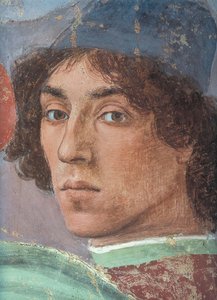
Filippino Lippi
1457 - 1504 , Italien
Kurzinfos
- Beeinflusste Künstler:
- Fra Filippo Lippi
- Sandro Botticelli
- Bemerkenswerte Werke:
- Coronation of the Virgin
- Tobias and the Angel
- St Jerome
- Geburtsdatum: April 1457
- Geburtsort: Prato, Italien
- Künstlerische Richtung: Hochrenaissance
- Nationalität: Italienisch
- Sterbedatum: April 1504
- Vollständiger Name: Filippino Lippi
- Von Künstlern Beeinflusst: ['Masaccio']
Ähnliche Artikel

Das Familienerbe an die Wand bringen: Wandgemälde als Generationenschatz
Verwandeln Sie Ihre Familiengeschichte in ein beeindruckendes Wandgemälde! Expertenrat & hochwertige Handwerkskunst für einzigartige Kunstwerke, die Generationen verbinden. Entdecken Sie jetzt!

The Enduring Legacy of Fresco: Technique, History & Artistic Expression Across Cultures
Explore the rich history & enduring legacy of fresco painting! Discover ancient techniques, Giotto's masterpieces, and modern applications. Expert insights for art lovers & professionals.

The Enduring Legacy of Fresco Painting: Techniques, History & Contemporary Relevance
Explore the rich history & enduring artistry of fresco painting – from Giotto to Michelangelo! Discover techniques, conservation efforts, & modern applications. Learn how ArtsDot brings this timeless art form to your home.
Filippino Lippi: Renaissance-Innovation zwischen Glauben und Humanismus – Ein Meister der Florentiner Malerei
Entdecken Sie Filippino Lippi, einen Meister der Florentiner Renaissance! Erfahren Sie mehr über seinen einzigartigen Stil, monumentale Werke und seinen Einfluss auf die Kunstgeschichte. Expertenwissen & detaillierte Analysen.

Kunst, die mit Ihnen lebt: Emotionale Kraft individueller Innenraumfresken
Entdecken Sie die emotionale Kraft individueller Innenraumfresken! Expertenberatung & hochwertige Wandmalerei für Hotels, Wohnräume & mehr. – Ihr Partner für einzigartige Kunst.