

 Vorschau anzeigen
 Versenden
 Teilen
 Details anzeigen

 Herunterladen
 Ähnliche Objekte
 Röntgenaufnahme
 Diashow
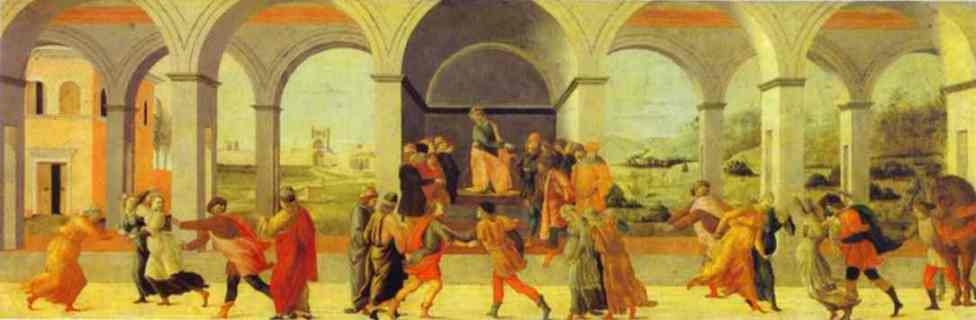
Drei Szenen aus der Geschichte der Virginia


 Weiterlesen
Erwerben Sie ein hochauflösendes, optimiertes digitales Bild, das der Online-Vorschau weit überlegen ist.
Jede Datei wird von unseren hauseigenen Spezialisten mit modernsten Werkzeugen und fachmännischer manueller Retusche sorgfältig vorbereitet. Wir stellen sicher, dass jedes Bild eine außergewöhnliche Klarheit, präzise Farbgenauigkeit und feinste Details aufweist.
Die endgültige Datei wird innerhalb von 72 Stunden per E-Mail zugestellt und ist für den sofortigen Einsatz in professionellen, redaktionellen und Druckumgebungen optimiert. Es handelt sich um dieselbe Qualität, der führende Designstudios, Verlage und Galerien vertrauen.
Digitales Bild
Laden Sie eine hochauflösende Datei für die persönliche Präsentation, den Druck und kreative Projekte herunter. ( Druck bestellen Handgemalte Reproduktion bestellen)
In jeder Bestellung digitaler Bilder enthalten
Professionelle digitale Bereitstellung, garantiert
Wenn Sie sich für ArtsDot.com entscheiden, erhalten Sie nicht nur ein Bild – Sie erhalten ein professionell aufbereitetes digitales Kunstwerk, das mit höchster Präzision erstellt und durch eine Zufriedenheitsgarantie abgesichert wird. Hier ist alles, was automatisch mit Ihrer Bestellung geliefert wird:

Schnelle E-Mail-Zustellung
Ihre hochauflösende digitale Bilddatei wird Ihnen innerhalb von 72 Stunden nach der Bestellung per E-Mail zugestellt – bereit zur sofortigen Verwendung.

KI-optimierte digitale Datei
Ihre Kunstwerke werden professionell mithilfe fortschrittlicher KI-Tools und manueller Bearbeitung optimiert, um maximale Detailtreue, Klarheit und Farbgenauigkeit zu gewährleisten.

Lebenslanger kostenloser Neudruckservice
Datei versehentlich gelöscht oder verloren? Keine Sorge – wir senden sie Ihnen jederzeit kostenlos erneut zu.

Keine Einfuhrgebühren – jemals
Genießen Sie Ihr Kunstwerk sofort ohne Zollgebühren, Einfuhrabgaben oder Versandkosten – digitale Downloads sind immer steuerfrei.

Garantierte Farbtreue
Wir garantieren, dass Ihr digitales Bild mithilfe professioneller Werkzeuge und Farbmanagement die Originalfarben so präzise wie möglich wiedergibt.

60-Tage-Zufriedenheitsgarantie
Sollten Sie mit Ihrem digitalen Bild nicht zufrieden sein, werden wir es überarbeiten oder Ihnen innerhalb von 60 Tagen 100% erstatten – ohne Wenn und Aber.

100% Geld-zurück-Garantie
Nicht zufrieden? Erhalten Sie innerhalb von 60 Tagen nach Erhalt Ihrer digitalen Datei eine vollständige Rückerstattung – ohne Angabe von Gründen.

Rabatte bei Großbestellungen
3 Bilder kaufen, 10% sparen – 5 Bilder kaufen, 15% sparen – Ab 10 Bildern 20% sparen. Ideal für kreative Projekte, Galerien und Agenturen.
Details zum Sammlerstück
Filippino Lippi’s “Three Scenes from the Story of Virginia”: A Renaissance Tapestry of Honor and Tragedy
“Three Scenes from the Story of Virginia,” painted by Filippino Lippi around 1470-1480, is more than just a depiction of a classical narrative; it's a profound exploration of honor, betrayal, and the devastating consequences of societal expectations within the vibrant context of early Renaissance Florence. This tempera on panel, now residing in the Accademia Carrara in Bergamo, Italy, offers a captivating glimpse into Lippi’s artistic evolution and his masterful command of color, composition, and symbolic representation. The painting's enduring power lies not just in its visual beauty but also in its ability to evoke a complex range of emotions – sorrow, outrage, and a poignant awareness of human fallibility.
Lippi, a key figure in the Florentine art scene during this period, was deeply influenced by the innovations of Masaccio, whose groundbreaking frescoes in the Brancacci Chapel had recently captivated the city. This influence is readily apparent in Lippi’s use of perspective and his dynamic portrayal of figures within a carefully constructed architectural setting. However, unlike Masaccio's more austere style, Lippi imbues his scenes with a heightened sense of drama and emotional intensity, utilizing rich colors and expressive gestures to draw the viewer into the unfolding tragedy.
A Narrative Unfolding: Scenes from Roman History
The painting meticulously unfolds the story of Virginia, a virtuous Roman woman whose honor is brutally violated. The composition is cleverly arranged as a series of interconnected vignettes, each capturing a pivotal moment in her ordeal. We witness first Virginia’s assault by Marcus Claudius, a scene rendered with a palpable sense of horror and vulnerability. The figures are not idealized; they are realistically depicted, showcasing the raw emotion of the situation. Next, we see Appius Claudius Crassus presiding over her trial, his face stern and unyielding as he condemns her to slavery. The final panel depicts Virginia’s father, Virginius, making a heartbreaking decision – sacrificing his daughter's life to preserve his family’s honor by taking his own life.
The arrangement of these scenes within a single frame is a hallmark of Renaissance art, allowing the viewer to absorb the entire narrative at once. Lippi masterfully uses spatial relationships and color variations to guide our eye through the story, creating a dynamic and engaging visual experience. The use of red, particularly in Virginia’s clothing, draws attention to her vulnerability and highlights the violence inflicted upon her.
Symbolism and Artistic Technique
Beyond its narrative content, “Three Scenes from the Story of Virginia” is rich in symbolic meaning. The classical architecture that frames the scenes—columns, arches, and statues—references the Roman world from which the story originates, grounding the drama in a historical context. The figures themselves are not merely portraits but embodiments of virtues and vices. Virginia represents innocence and virtue, while Claudius embodies lust and ambition. Virginius’s act of patricide symbolizes the destructive nature of honor-bound morality.
Lippi's technique is equally impressive. He employs a vibrant palette, utilizing layering of colors to create depth and luminosity. The figures are rendered with meticulous detail, capturing their individual expressions and gestures with remarkable accuracy. The use of tempera on panel allows for fine details and rich color saturation, contributing to the painting’s overall visual impact. Note the careful attention paid to drapery—it flows realistically, adding movement and drama to the scenes.
A Legacy of Emotion and Artistic Innovation
“Three Scenes from the Story of Virginia” stands as a testament to Filippino Lippi's artistic genius and his ability to seamlessly blend classical narrative with Renaissance innovation. It’s a powerful meditation on themes of honor, betrayal, and sacrifice—themes that continue to resonate with viewers today. The painting’s enduring appeal lies not only in its historical significance but also in its emotional depth and its masterful execution. Reproductions of this work offer a beautiful way to bring this dramatic story into any space, allowing the viewer to contemplate the complexities of human nature and the tragic consequences of societal constraints.
Ähnliche Kunstwerke
Biografie des Künstlers
Frühe Jahre und Ausbildung
- Geboren: April 1457, Prato, Italien
- Gestorben: April 1504
- Eltern: Fra Filippo Lippi (Maler) und Lucrezia Buti
- Filippino war der uneheliche Sohn eines renommierten Malers.
- Die frühe Ausbildung unter seinem Vater legte den Grundstein für seine künstlerische Karriere.
Künstlerische Laufbahn und Entwicklung
- Frühe Periode (1475-1480): Anfängliche Werke, wie Madonnen, zeigten einen weniger verfeinerten Stil. Diese wurden zunächst einem anonymen Künstler namens "amico di Sandro" zugeschrieben.
- Entwicklung (1480-1485): Entwicklung eines persönlichen und effektiven Ansatzes in Werken wie den *Reisen des Tobias*.
- Maturität (1485-1504): Beherrschung des Hochrenaissance-Stils, veranschaulicht durch die *Erscheinung Christi der Jungfrau*.
Hauptwerke und Kollaborationen
- Zusammenarbeit mit Perugino, Ghirlandaio und Botticelli an Fresken in Lorenzos de' Medicis Villa.
- Vollendung der unvollendeten Dekoration von Masaccio in der Brancacci-Kapelle zusammen mit Masolino.
- Bemerkenswerte Werke sind: *Die Krönung der Jungfrau*, *Tobias und der Engel*, *St. Hieronymus* und *Szene aus dem Leben des Heiligen Thomas*.
Einflüsse und künstlerischer Stil
- Frühe Einflüsse: Sandro Botticelli, Fra Filippo Lippi.
- Stileigenschaften: Animierte Form und Linie, warmer Kolorit, detaillierte Landschaften, ausdrucksstarke Figuren und eine Mischung aus Perspektivgeometrie mit intimen Innenräumen.
- Römische Altertümer: Studien nach römischen Altertümern während seiner Zeit in Rom beeinflussten seine Arbeit und integrierten einen antiken Wortschatz in seine Kunst.
Historische Bedeutung und Vermächtnis
- Ein führender florentinischer Vertreter der Tradition großer Freskenzyklen.
- Sein Einfluss auf die Hochrenaissance ist unbestreitbar.
- Werke sind in Museen auf der ganzen Welt zu finden, darunter in der Uffizien-Galerie in Florenz.
- Bekannt dafür, die Kluft zwischen früheren Renaissance-Stilen und der entstehenden Hochrenaissance-Ästhetik zu überbrücken.
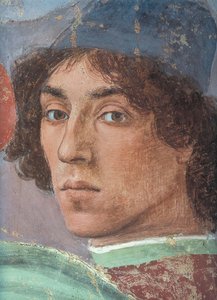
Filippino Lippi
1457 - 1504 , Italien
Kurzinfos
- Beeinflusste Künstler:
- Fra Filippo Lippi
- Sandro Botticelli
- Bemerkenswerte Werke:
- Coronation of the Virgin
- Tobias and the Angel
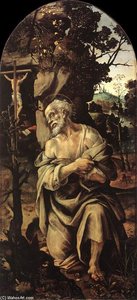
- St Jerome
- Geburtsdatum: April 1457
- Geburtsort: Prato, Italien
- Künstlerische Richtung: Hochrenaissance
- Nationalität: Italienisch
- Sterbedatum: April 1504
- Vollständiger Name: Filippino Lippi
- Von Künstlern Beeinflusst: ['Masaccio']

