 Vorschau anzeigen
 Versenden
 Teilen
 Details anzeigen

 Herunterladen
 Ähnliche Objekte
 Röntgenaufnahme
 Diashow
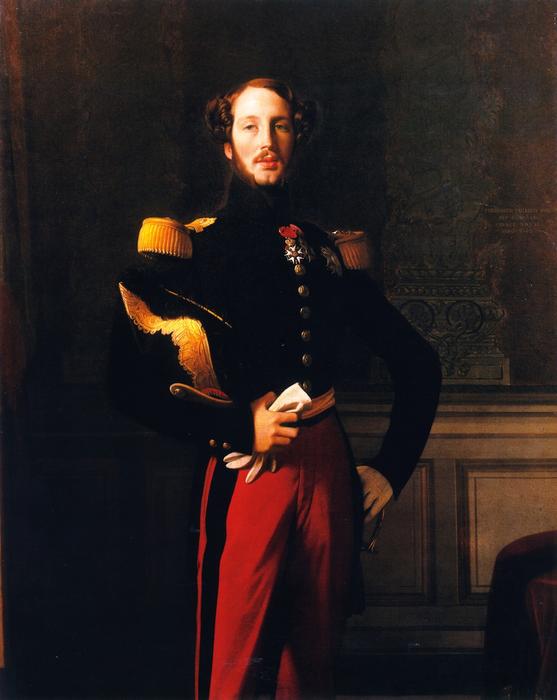
Ferdinand-Philippe-Louis-Charles-Henri, Herzog von Orléans
 Öl auf Leinwand
- Wandkunst
- Neoclassical Precision
 1842
1842 158.0 x 122.0 cm
 Louvre
 Weiterlesen
Giclée / Kunstdruck
Giclée- oder Leinwanddruck in Museumsqualität mit schneller Produktion und flexiblen Veredelungsoptionen. ( Handgemalte Reproduktion bestellen Bild kaufen)




P118B $10

P118H $10

P118W $10

P438Z $10

P508JH $12

P508YH $12

P805H $10

P805Z $10

P919BZ $10

P919G $10

P919XJ $10

P959ZH $10

P968JZ $12

W106C $8

W218G $10

W218JH $8

W218Y $10

W307PJ $10

W316G $10

W316PJ $8

W316Y $10

W398PJ $8

W4111J $10

W500HY $15

W500JH $15

W692G $12

W849H $8

W940BG $15

W953PJ $8




Wählen Sie aus unseren vordefinierten Formaten, die den ursprünglichen Proportionen des Kunstwerks entsprechen.

Sie können Ihre eigenen Maße eingeben, um ein bestimmtes Format oder einen speziellen Platz einzupassen. Wenn das von Ihnen gewählte Format nicht den Proportionen des Originalbildes entspricht, werden wir das Kunstwerk entweder beschneiden oder das Bild mit einem gespiegelten oder einfarbigen Rand erweitern. Ein digitaler Entwurf wird Ihnen zur Genehmigung zugesandt, bevor die Produktion beginnt.
Bitte beachten Sie, dass die Vorschau auf dem Bildschirm nicht den tatsächlichen Zuschnitt oder die Erweiterung widerspiegelt. Nur der Entwurf zeigt die endgültige Komposition präzise an.
Obwohl Sondermaße verfügbar sind, empfehlen wir die Auswahl eines Maßes aus der vordefinierten Liste, um die ursprünglichen Proportionen zu bewahren.
Weltweiter Versand () innerhalb von 2 Wochen statt der üblichen 4/5 Wochen. (28 August)

Kostenloser weltweiter Expressversand

Hochwertige Leinenleinwand

Umfassender Versicherungsschutz beim Versand

Zollgebühren-Rückerstattungsgarantie

Garantie für exakte Farbtreue

60 Tage Rückgaberecht (nur bei Mängeln)

100% Geld-zurück-Garantie

Mengenrabatt verfügbar
 Die Glasoption ist nur für Größen unter 110 cm verfügbar.

Ferdinand-Philippe-Louis-Charles-Henri, Herzog von Orléans
Giclée / Kunstdruck
Format der Reproduktion
-


Gesamtpreis
$ 62
Jean-Auguste-Dominique Ingres’s Regal Portrait of the Duc d'Orléans – A Study in Neoclassical Grace
The portrait of Ferdinand-Philippe-Louis-Charles-Henri, Duc d'Orléans, painted by Jean-Auguste-Dominique Ingres in 1842, is more than simply a likeness; it’s an embodiment of the idealized aesthetic principles that defined the era. This meticulously rendered oil on canvas, currently residing within the hallowed halls of the Louvre Museum in Paris, offers a captivating glimpse into the world of French aristocracy and the artistic sensibilities of one of history's most influential painters. Ingres, a master of his craft, doesn’t merely depict a man; he constructs an image of power, dignity, and restrained elegance – qualities deeply rooted in the Neoclassical tradition yet subtly infused with the burgeoning Romantic spirit.
The Duc d'Orléans himself is presented with a remarkable degree of formality. His posture, upright and commanding, speaks to his noble lineage and position within French society. The careful arrangement of his hands – resting confidently on his hips – projects an aura of self-assurance and control. Notice the precision in every detail: the rich texture of his uniform, the subtle sheen of his jacket, the meticulously rendered buttons and lace. Ingres’s dedication to anatomical accuracy is evident throughout, creating a figure that feels both solid and remarkably lifelike. The background, deliberately muted and understated, serves not as a distraction but rather as a canvas for the subject's presence – a testament to Ingres’s understanding of composition and his ability to draw the viewer’s eye directly to the central figure.
The Language of Line: Ingres’s Neoclassical Technique
Ingres was renowned for his unwavering commitment to classical ideals, a philosophy that profoundly shaped his artistic approach. His style is characterized by an almost obsessive attention to line – a meticulous rendering of form through precise, unbroken strokes. This technique, deeply influenced by the works of Raphael and Michelangelo, lends the portrait a remarkable sense of solidity and permanence. Observe how Ingres utilizes subtle gradations of tone and shadow to sculpt the Duc’s face, creating a three-dimensional effect that transcends the limitations of two dimensions. The use of *sfumato*, a technique borrowed from Leonardo da Vinci, adds an ethereal quality to the portrait, softening edges and lending a sense of mystery to the subject's expression.
Furthermore, Ingres’s mastery of color is equally impressive. He employs a restrained palette – primarily consisting of deep blues, browns, and blacks – which enhances the formality and gravitas of the image. The subtle variations in hue create depth and dimension, while also contributing to the overall sense of sophistication. The careful layering of paint—a hallmark of Ingres’s technique—allows him to build up complex textures and achieve a remarkable level of detail.
Historical Context and Symbolic Resonance
Painted in 1842, during the reign of Louis-Philippe I, this portrait reflects the political and social climate of Restoration France. The Duc d'Orléans was a prominent figure within the royal court, representing a link to the Bourbon dynasty’s past. The choice of attire – the military uniform – is significant, signifying both his noble status and his role as a soldier-prince. It speaks to a time when military prowess was still highly valued, even amidst the shifting political landscape.
Beyond its immediate historical context, the portrait also resonates with broader symbolic themes. The Duc’s composed demeanor embodies ideals of virtue, strength, and responsibility – qualities expected of a member of the aristocracy. The image can be interpreted as a celebration of tradition, order, and the enduring power of the monarchy. It's a visual embodiment of the values that Ingres himself held dear, reflecting his deep respect for classical art and its ability to convey timeless truths.
Bringing the Masterpiece Home: A High-Quality Reproduction
ArtsDot offers meticulously crafted oil painting reproductions of this extraordinary work by Jean-Auguste-Dominique Ingres. Our skilled artisans painstakingly recreate every detail, color nuance, and textural element of the original, ensuring that your reproduction captures the full beauty and emotional impact of the portrait. Whether you’re an art enthusiast, a collector seeking to expand your collection, or simply someone looking for a stunning piece of décor, our reproductions provide an authentic and affordable way to own a fragment of this iconic artwork. Experience the enduring legacy of Ingres's genius – order your reproduction today.
Ähnliche Kunstwerke

Über den Künstler
Jean-Auguste-Dominique Ingres: Ein Meister des Neoklassizismus
- Geboren: 29. August 1780, Montauban, Frankreich
- Gestorben: 14. Januar 1867, Paris
Frühes Leben und Ausbildung
Jean-Auguste-Dominique Ingres wurde in eine bescheidene Familie in Montauban geboren. Sein Vater, Jean-Marie-Joseph Ingres, war Maler und Bildhauer und vermittelte ihm so ein frühes künstlerisches Fundament. Ingres erhielt zunächst Unterricht von seinem Vater, bevor er an der Académie Royale de Peinture, Sculpture et Architecture in Toulouse unter Guillaume-Joseph Roques eingeschrieben wurde. 1797 zog er nach Paris, um bei Jacques-Louis David zu studieren, einer führenden Figur des Neoklassizismus. Diese Mentorschaft erwies sich als entscheidend für Ingres' künstlerische Entwicklung.
Künstlerische Entwicklung und Einflüsse
Ingres’ Stil war tief in den Traditionen der italienischen Renaissance und flämischer Meister wie Raffael und Nicolas Poussin verwurzelt. Er studierte ihre Werke akribisch und bemühte sich, deren Klarheit, Eleganz und idealisierte Formen nachzuahmen. Der Einfluss von Jacques-Louis David zeigt sich auch in Ingres' anfänglicher Einhaltung neoklassizistischer Prinzipien – einem Fokus auf Linie, Form und historische oder mythologische Themen. Allerdings entwickelte Ingres allmählich seinen eigenen unverwechselbaren Stil, der durch eine einzigartige Mischung aus Präzision und Sinnlichkeit gekennzeichnet ist.
Wichtige Werke und Stil
Ingres erlangte bedeutende Anerkennung durch mehrere bemerkenswerte Werke:
- Die Boten des Agamemnon in Achills Zelt (1801): Dieses Gemälde brachte ihm den Prix de Rome ein, was einen Wendepunkt in seiner Karriere markierte.
- Der Eid Ludwigs XIII. (1827): Ein Werk, das seinen raffaelesken Stil demonstriert und ihm weitreichenden Ruhm einbrachte.
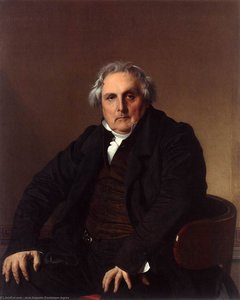
- Porträt von Monsieur Bertin (1833-1834): Dieses Porträt markierte eine Zeit des großen Erfolgs und zeigte seine Fähigkeit, den individuellen Charakter einzufangen.
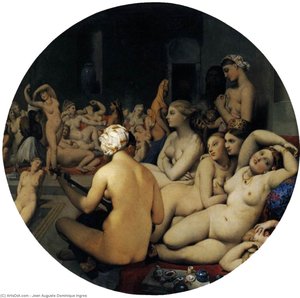
- Das türkische Bad (1862): Eines seiner späteren Werke und ein Beispiel für seine Orientalistenmalerei mit Aktendarstellungen, fertiggestellt als er 83 Jahre alt war.
Ingres' Porträts werden besonders für ihre ausdrucksstarke Verzerrung von Form und Raum gefeiert – eine Abweichung von streng neoklassizistischen Konventionen, die moderne Kunstrichtungen vorwegnahm. Er verwendete einen linearen Stil mit präzisen Konturen und lebendigen Farben und erzeugte oft eine Illusion der Tiefe durch subtile Schattierungen.
Vermächtnis und historische Bedeutung
Ingres’ Vermächtnis reicht weit über seine eigene umfangreiche Produktion hinaus. Er hatte einen tiefgreifenden Einfluss auf nachfolgende Generationen von Künstlern, darunter Henri Matisse und Pablo Picasso, die seinen innovativen Ansatz in Bezug auf Form und Komposition bewunderten. Sein Engagement für klassische Ideale bei gleichzeitiger Überschreitung der Grenzen künstlerischen Ausdrucks festigte seine Position als Brücke zwischen Neoklassizismus und Moderne. Ingres’ Werke werden weiterhin in wichtigen Museen weltweit ausgestellt, was Zeugnis von ihrer bleibenden Schönheit und historischen Bedeutung ist.
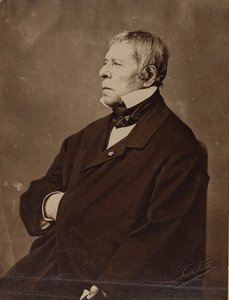
Jean-Auguste-Dominique Ingres
1780 - 1867 , Frankreich
Kurzinfos
- Beeinflusste Künstler:
- Raphael
- Nicolas Poussin
- Jacques-Louis David
- Bemerkenswerte Werke:
- Die Botschafter Agamemnons
- Der Eid Ludwigs XIII.
- Porträt von Monsieur Bertin
- Das türkische Bad
- Geburtsdatum: 29. August 1780
- Geburtsort: Montauban, Frankreich
- Künstlerische Richtung: Neoklassizismus
- Nationalität: Französisch
- Sterbedatum: 14. Januar 1867
- Vollständiger Name: Jean-Auguste-Dominique Ingres
- Von Ihm Beeinflusste Künstler:
- Henri Matisse
- Pablo Picasso
Ähnliche Artikel

The Enduring Legacy of Oil on Canvas: Technique, History & Aesthetic Impact
Explore the rich history & techniques of oil painting – from Renaissance masters to Impressionism. Discover pigments, layering methods, and why this timeless medium endures. Expert insights for artists & art enthusiasts.
Louvre Meisterwerke: Die Top 25 Kunstwerke für Ihr Zuhause | ArtsDot
Entdecken Sie die Top 25 Kunstwerke des Louvre! Von der Mona Lisa bis zur Venus von Milo – erleben Sie Geschichte, Künstler und Techniken. Hochwertige Reproduktionen für Ihr Zuhause auf ArtsDot.com.

Öl auf Leinwand: Eine historische und technische Erkundung eines zeitlosen künstlerischen Mediums
Entdecken Sie die faszinierende Welt der Ölmalerei! Von historischen Techniken bis zur modernen Anwendung – wir bieten Expertenwissen, Restaurierungstipps und hochwertige Reproduktionen. Jetzt informieren!

The Enduring Power of Painting: A Historical & Contemporary Exploration of Form and Emotion
Explore the rich history & enduring techniques of oil painting with ArtsDot. Discover masterpieces, learn about art collecting, and find authentic handmade reproductions crafted by skilled artists.

Das bleibende Erbe der Ölmalerei: Technik, Geschichte und zeitgenössische Praxis
Entdecken Sie die faszinierende Geschichte der Ölmalerei – von den frühen Techniken bis zur modernen Kunst. Expertenwissen, detaillierte Analysen und Inspiration für Sammler & Kunstliebhaber.