

 Vorschau anzeigen
 Versenden
 Teilen
 Details anzeigen

 Herunterladen
 Ähnliche Objekte
 Röntgenaufnahme
 Diashow
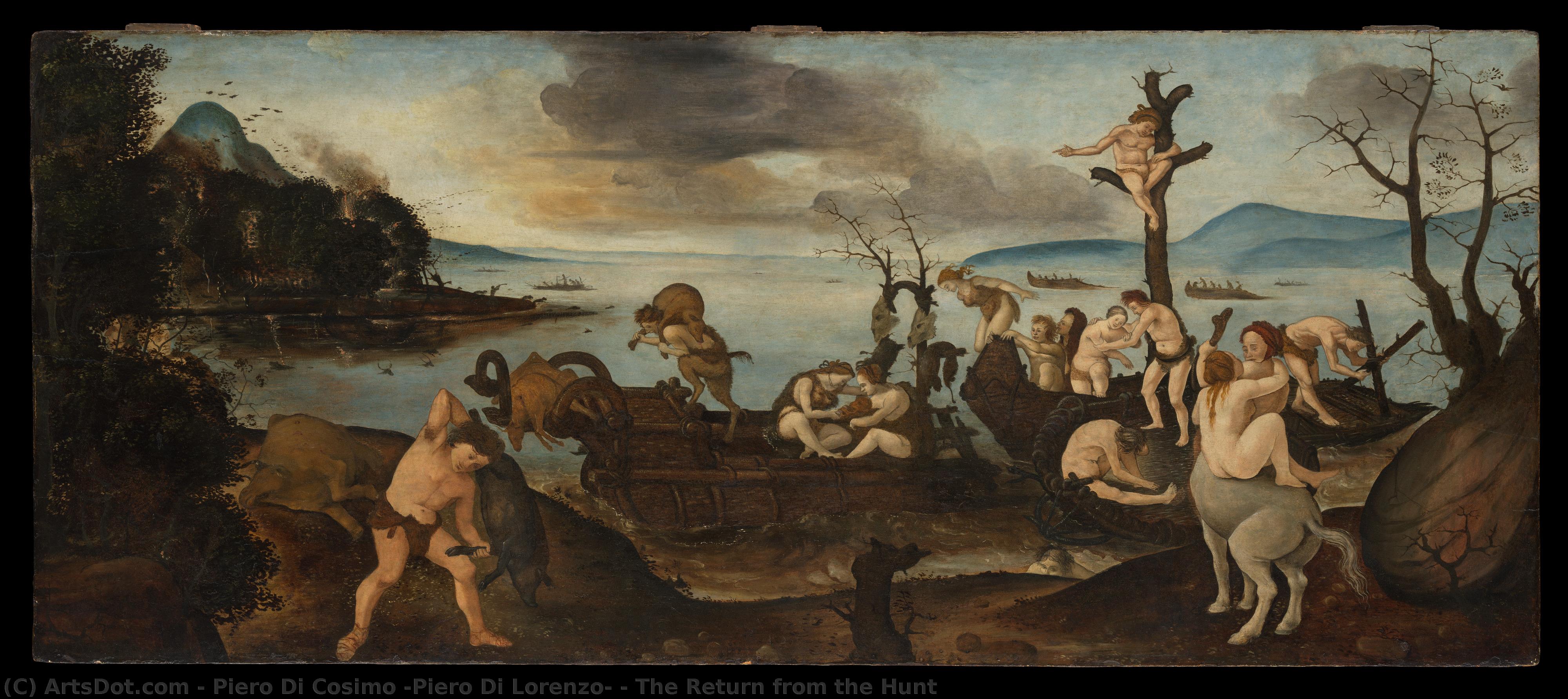
The Return from the Hunt
 Acrylic On Canvas
- WallArt
- Renaissance Humanism
 1500
1500 71.0 x 169.0 cm
 Metropolitan Museum of Art
 Weiterlesen
Erwerben Sie ein hochauflösendes, optimiertes digitales Bild, das der Online-Vorschau weit überlegen ist.
Jede Datei wird von unseren hauseigenen Spezialisten mit modernsten Werkzeugen und fachmännischer manueller Retusche sorgfältig vorbereitet. Wir stellen sicher, dass jedes Bild eine außergewöhnliche Klarheit, präzise Farbgenauigkeit und feinste Details aufweist.
Die endgültige Datei wird innerhalb von 72 Stunden per E-Mail zugestellt und ist für den sofortigen Einsatz in professionellen, redaktionellen und Druckumgebungen optimiert. Es handelt sich um dieselbe Qualität, der führende Designstudios, Verlage und Galerien vertrauen.
Digitales Bild
Laden Sie eine hochauflösende Datei für die persönliche Präsentation, den Druck und kreative Projekte herunter. ( Druck bestellen Handgemalte Reproduktion bestellen)
In jeder Bestellung digitaler Bilder enthalten
Professionelle digitale Bereitstellung, garantiert
Wenn Sie sich für ArtsDot.com entscheiden, erhalten Sie nicht nur ein Bild – Sie erhalten ein professionell aufbereitetes digitales Kunstwerk, das mit höchster Präzision erstellt und durch eine Zufriedenheitsgarantie abgesichert wird. Hier ist alles, was automatisch mit Ihrer Bestellung geliefert wird:

Schnelle E-Mail-Zustellung
Ihre hochauflösende digitale Bilddatei wird Ihnen innerhalb von 72 Stunden nach der Bestellung per E-Mail zugestellt – bereit zur sofortigen Verwendung.

KI-optimierte digitale Datei
Ihre Kunstwerke werden professionell mithilfe fortschrittlicher KI-Tools und manueller Bearbeitung optimiert, um maximale Detailtreue, Klarheit und Farbgenauigkeit zu gewährleisten.

Lebenslanger kostenloser Neudruckservice
Datei versehentlich gelöscht oder verloren? Keine Sorge – wir senden sie Ihnen jederzeit kostenlos erneut zu.

Keine Einfuhrgebühren – jemals
Genießen Sie Ihr Kunstwerk sofort ohne Zollgebühren, Einfuhrabgaben oder Versandkosten – digitale Downloads sind immer steuerfrei.

Garantierte Farbtreue
Wir garantieren, dass Ihr digitales Bild mithilfe professioneller Werkzeuge und Farbmanagement die Originalfarben so präzise wie möglich wiedergibt.

60-Tage-Zufriedenheitsgarantie
Sollten Sie mit Ihrem digitalen Bild nicht zufrieden sein, werden wir es überarbeiten oder Ihnen innerhalb von 60 Tagen 100% erstatten – ohne Wenn und Aber.

100% Geld-zurück-Garantie
Nicht zufrieden? Erhalten Sie innerhalb von 60 Tagen nach Erhalt Ihrer digitalen Datei eine vollständige Rückerstattung – ohne Angabe von Gründen.

Rabatte bei Großbestellungen
3 Bilder kaufen, 10% sparen – 5 Bilder kaufen, 15% sparen – Ab 10 Bildern 20% sparen. Ideal für kreative Projekte, Galerien und Agenturen.
Details zum Sammlerstück
A Landscape of Myth and Man: Piero di Cosimo’s “The Return from the Hunt”
Piero di Cosimo’s “The Return from the Hunt,” painted around 1500 in Florence, isn't merely a depiction of a hunting scene; it’s a meticulously crafted allegory steeped in classical philosophy and humanist ideals. This oblong fresco, measuring an impressive 71 x 169 cm, transports the viewer to a dynamic, almost feverish landscape teeming with humanity, mythological creatures, and the raw energy of primal pursuit. The painting's scale immediately commands attention, drawing us into a world where the boundaries between reality and legend blur, reflecting the burgeoning intellectual currents of the Florentine Renaissance.
The composition is remarkably complex, divided into two distinct yet interwoven narratives. On the left, we witness the organized return of hunters – identifiable by their attire and purposeful stride – carrying their spoils ashore. This scene speaks to a nascent understanding of human dominion over nature, mirroring Lucretius’s theories about natural law and the inherent drive for survival. On the right, chaos reigns: a forest fire provides a backdrop for a frenzied hunt involving humans and fantastical beasts—a visual representation of the untamed forces of the world. This duality – order versus chaos, reason versus instinct – is central to the painting’s meaning, reflecting the Renaissance fascination with reconciling classical harmony with the complexities of human experience.
The Influence of Lucretius and Roman Ideals
Piero di Cosimo's inspiration clearly stems from the rediscovered works of Lucretius, a Roman poet and philosopher who championed Epicureanism. Lucretius argued that the universe operated according to natural laws, devoid of divine intervention, emphasizing human agency and the pursuit of pleasure as the highest good. “The Return from the Hunt” embodies this philosophy through its depiction of humanity’s interaction with nature – not as supplicants before a god, but as active participants shaping their environment. The painting subtly challenges traditional religious narratives by presenting a secular vision of human history rooted in observation and reason.
Furthermore, the composition echoes Roman artistic traditions, particularly those found in frescoes depicting scenes from mythology and heroic tales. The use of perspective, though not entirely rigorous by Renaissance standards, creates a sense of depth and spatial awareness. The figures are rendered with a remarkable attention to detail, capturing their musculature, expressions, and clothing with an almost photographic realism – a hallmark of Piero’s style. Notice the careful rendering of the animals, each imbued with a life-like quality that suggests a deep understanding of anatomy and behavior.
Technique and Materials: A Window into Renaissance Painting
“The Return from the Hunt” was executed in tempera on gesso panels, a technique favored by Florentine artists during this period. Tempera paints, made with pigments mixed with egg yolk, offered rich colors and allowed for meticulous detail work – essential for capturing the complex textures of the landscape and the figures’ garments. The use of gesso, a plaster-like material applied to the panel surface, provided a smooth, absorbent base for the tempera paint, ensuring optimal adhesion and preventing the colors from bleeding.
The vibrant palette – dominated by earthy tones of ochre, umber, and sienna—contrasts sharply with the fiery reds and oranges of the forest fire. This deliberate use of color intensifies the drama of the scene and draws the viewer’s eye to key elements within the composition. Piero's masterful brushwork is evident in the subtle gradations of light and shadow, creating a palpable sense of atmosphere and movement. The layering of paint—a technique known as glazing—further enhances the richness and luminosity of the colors.
Symbolism and Emotional Resonance
Beyond its narrative content, “The Return from the Hunt” is laden with symbolism. The forest fire represents both destruction and renewal, mirroring the cyclical nature of life and death. The abundance of animals symbolizes fertility and prosperity – key themes in Lucretius’s philosophy. The figures themselves embody a range of human qualities: strength, cunning, ambition, and vulnerability. The painting evokes a powerful emotional response—a sense of awe at the grandeur of nature, a contemplation on the complexities of human existence, and perhaps even a hint of unease about humanity's relationship with its environment.
Today, “The Return from the Hunt” stands as a testament to Piero di Cosimo’s artistic genius—a captivating blend of classical ideals, humanist thought, and masterful technique. Reproductions capture only a fraction of the original’s power, but offer a window into this remarkable work of Renaissance art.
Ähnliche Kunstwerke


Biografie des Künstlers
Piero di Cosimo (1462-1522): Bridging Fantasy and Realism in Florentine Renaissance Painting
Piero di Cosimo, geboren Piero di Lorenzo Battista um 1462 in Florenz, Italien, steht als eine einzigartige Figur innerhalb des lebhaften Teppichs der florentinischen Renaissance. Anders als viele seiner Zeitgenossen, die sich streng an klassische Ideale hielten, besaß Cosimo einen fantastischen Geist, der seine Kunstwerke mit fantastischen Elementen neben sorgfältiger Beobachtung der Natur – eine besondere Verschmelzung, die seinen Ruf als einer der innovativsten Maler dieser Epoche festigte. Seine künstlerische Reise spielte sich gegen ein Hintergrund von aufkeimendem Humanismus und künstlerischer Experimentierfreudigkeit ab und spiegelte die umfassendere kulturelle Transformation wider, die Europa während dieser Zeit durchlebte.- Frühes Leben & Ausbildung: Präzise biografische Angaben über Cosimos frühe Jahre bleiben schwer zu finden und beruhen hauptsächlich auf fragmentarischen Hinweisen in Vasaris Leben der Künstler. Er lernte unter Andrea del Verrocchio, einem renommierten Bildhauer und Maler, dessen Werkstatt ein Nährboden für künstlerisches Talent war. Diese Verbindung stellte Cosimo den Techniken der Freskomalerei und Bildhauerei zur Seite und prägte seine grundlegende Kompetenz.
- Einflüsse & Künstlerischer Stil: Cosimos Stil wurde tiefgreifend von Botticelli und Giovanni Battista Van Eyck beeinflusst – Künstlern, die sowohl Schönheit als auch psychologische Tiefe geförderten. Botticellis elegante Linien und ätherische Figuren instillten in Cosimo eine Vorliebe für Eleganz und idealisierte Darstellung, während Van Eycks Meisterhaftigkeit bei der Verwendung von Ölfarbe ihn ermutigte, nuancierte Farbtonschattierungen und Texturreichen auszudrücken. Diese Einflüsse führten zu einer künstlerischen Sprache, die durch leuchtende Farben, zarte Pinselstriche und eine faszinierende Verschmelzung mythologischer Erzählungen mit realistischen Landschaften geprägt war.
Bekannte Werke & Künstlerische Leistungen
Cosimos Œuvre umfasst eine außergewöhnliche Sammlung von Gemälden, die sein außergewöhnliches Talent und seine fantastische Vision zeigen. Unter seinen meist gefeierten Kreationen befindet sich „Vulcan und Aeolus“, ein monumentaler Rundmalerei Ölfarbe, die den mythologischen Konflikt zwischen Zeus' Sohn und Poseidon darstellt – ein Beweis für Cosimos Fähigkeit, dramatische Emotionen innerhalb einer sorgfältig konstruierten Komposition auszudrücken. Ebenso verkörpert „Madonna und Schlafendes Christuskind mit dem Infant St Johannes der Baptist“ seine präzise Aufmerksamkeit zum Detail und sein tiefes Verständnis religiöser Ikonographie. Darüber hinaus ist „Die Verehrung Jesu Kind“ ein weiteres Meisterwerk, das die ruhige Schönheit und spirituelle Kontemplation widerspiegelt, die für frühe Renaissance Kunst charakteristisch sind. Diese Werke zeigen eine außergewöhnliche technische Virtuosität und einen tiefen Ausdruck von Glaubensgefühl und menschlicher Erfahrung.Historische Bedeutung & Vermächtnis
Piero di Cosimo’s Beitrag zur florentinischen Malerei geht über reine stilistische Innovation hinaus; er stellt einen wichtigen Moment in künstlerischer Geschichte dar. Indem er sich den Beschränkungen strenger akademischer Konventionen widersetzte und sich einer fantastischen Erzählung neben realistischer Darstellung widmete, ebnete Cosimo den Weg für nachfolgende Generationen von Künstlern – darunter Raffael und Michelangelo –, neue Ausdrucksmöglichkeiten zu erkunden. Sein Werk wird nicht nur für seine individuellen Meisterwerke bewundert, sondern auch dafür gefeiert, dass er den umfassenderen Verlauf europäischer Kunst prägte und somit eine zentrale Figur in der Entwicklung des Renaissance darstellen konnte. Er bleibt ein lebendiges Beispiel für künstlerische Kreativität und außergewöhnliche technische Fähigkeiten und wird weiterhin von Künstlern und Kunsthistorikern weltweit inspiriert.
piero di cosimo (piero di lorenzo)
1462 - 1522 , Italien
Kurzinfos
- Artistic Movement Or Style: Renaissance Kunst
- Artists Who Influenced This Artist:
- Andrea del Verrocchio
- Botticelli
- Date Of Birth: 1462
- Full Name: Piero di Lorenzo Battista
- Nationality: Italienisch
- Notable Artworks:
- Vulcan und Aeolus
- Madonna und Schlafendes Christuskind mit dem Infant St Johannes Baptist
- Verehrung des Kindes Christi
- Place Of Birth: Florence, Italien

