 Vorschau anzeigen
 Versenden
 Teilen
 Details anzeigen

 Herunterladen
 Ähnliche Objekte
 Röntgenaufnahme
 Diashow
Going to Market


 Weiterlesen
Handgefertigte Ölreproduktion
Handgemaltes Ölgemälde auf Leinwand in Ihrer Wunschgröße und mit Rahmen, auf Bestellung von unseren Künstlern angefertigt. ( Druck bestellen Bild kaufen)




P118B $10

P118H $10

P118W $10

P438Z $10

P508JH $12

P508YH $12

P805H $10

P805Z $10

P919BZ $10

P919G $10

P919XJ $10

P959ZH $10

P968JZ $12

W106C $8

W218G $10

W218JH $8

W218Y $10

W307PJ $10

W316G $10

W316PJ $8

W316Y $10

W398PJ $8

W4111J $10

W500HY $15

W500JH $15

W692G $12

W849H $8

W940BG $15

W953PJ $8




Wählen Sie aus unseren vordefinierten Formaten, die den ursprünglichen Proportionen des Kunstwerks entsprechen.

Sie können Ihre eigenen Maße eingeben, um einen bestimmten Rahmen oder Platz auszufüllen. Wenn die gewählte Größe nicht den Proportionen des Originalbildes entspricht, werden wir das Kunstwerk entweder beschneiden oder das Gemälde durch zusätzliche, handgemalte Elemente erweitern. Ein digitales Mockup wird Ihnen zur Genehmigung zugesandt, bevor die Produktion beginnt.
Bitte beachten Sie, dass die Bildschirmvorschau nicht die tatsächliche Beschneidung oder Erweiterung widerspiegelt. Nur das Mockup zeigt die endgültige Komposition exakt an.
Obwohl Sondermaße verfügbar sind, empfehlen wir, eine Größe aus der vordefinierten Liste zu wählen, um die ursprünglichen Proportionen beizubehalten.
Nach der Bestellung wird das ArtsDot.com-Team dem Kunden Anweisungen per E-Mail zusenden und eine Mockup-Vorschau bereitstellen.
Weltweiter Versand () in nur 3 bis 4 Wochen statt der üblichen 5 Wochen. (19 August). Keine Kompromisse bei der Qualität.

Kostenloser weltweiter Expressversand

Hochwertige Leinenleinwand

Umfassender Versicherungsschutz beim Versand

Zollgebühren-Rückerstattungsgarantie

Garantie für exakte Farbtreue

60 Tage Rückgaberecht (nur bei Mängeln)

100% Geld-zurück-Garantie

Mengenrabatt verfügbar
 Die Glasoption ist nur für Größen unter 110 cm verfügbar.

Going to Market
Art der Reproduktion
Format der Reproduktion
-


Gesamtpreis
$ 263
Beschreibung des Kunstwerks
Rosa Bonheur’s “Going to Market”: A Symphony of Rural Life
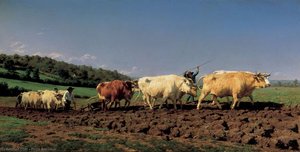
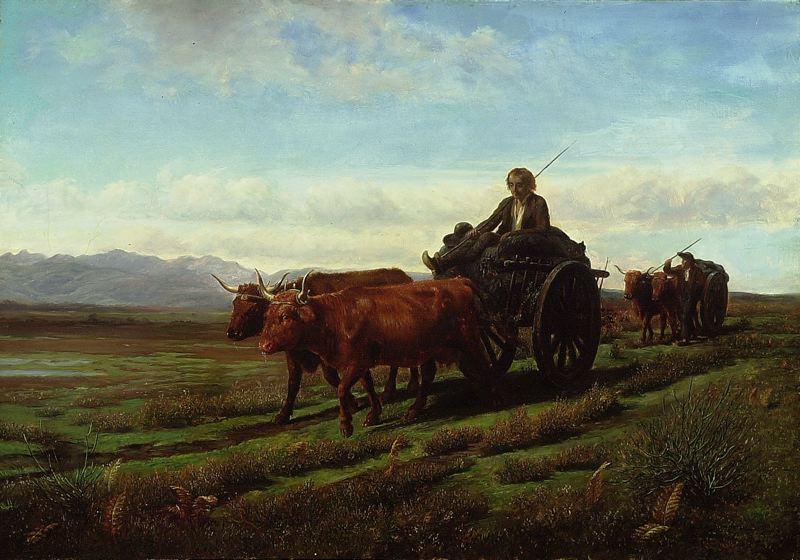
Rosa Bonheur's "Going to Market," painted in 1851, is more than just a depiction of a rural scene; it’s a vibrant tableau capturing the essence of everyday life in 19th-century France. The painting immediately draws the eye with its dynamic composition – a team of oxen, powerfully pulling a laden wagon, navigates a landscape dotted with grazing cows and figures heading towards a distant market. Bonheur masterfully blends realism with a subtle romanticism, creating an image that is both grounded in observation and imbued with a sense of harmony between humanity and nature.
Bonheur’s artistic journey was uniquely shaped by her upbringing within a family deeply rooted in the arts and progressive ideals. Born into a family of artists – her father, Oscar-Raymond Bonheur, was himself a landscape painter – she benefited from an unconventional education that emphasized both artistic skill and intellectual curiosity. Her Saint-Simonian parents fostered a spirit of independence and equality, which undoubtedly informed her approach to portraying subjects often overlooked in art at the time: working animals and rural laborers. This commitment to depicting the lives of ordinary people, particularly those engaged in manual labor, was remarkably forward-thinking for its era.
A Masterclass in Realist Technique
The painting’s power lies not only in its subject matter but also in Bonheur's exceptional technical skill. She meticulously rendered each element – the muscular contours of the oxen, the weathered faces of the farmers, the dappled sunlight filtering through the trees – with a remarkable level of detail and accuracy. Her use of color is particularly noteworthy; she employs a muted palette of browns, greens, and ochres to create a sense of atmospheric depth and realism. The brushstrokes are visible yet controlled, contributing to the painting’s textured surface and conveying a feeling of immediacy.
Bonheur's training as an animalier – a painter specializing in animals – is evident throughout the work. She possessed an intimate understanding of animal anatomy and behavior, which she translated onto canvas with astonishing precision. The oxen are not simply depicted as beasts of burden; they are portrayed with a sense of dignity and strength, their movements captured with remarkable fluidity. The artist’s dedication to studying animals firsthand, often observing them at markets and fairs, is palpable in the painting's authenticity.
Symbolism and Emotional Resonance
Beyond its technical brilliance, “Going to Market” carries a wealth of symbolic meaning. The scene represents not just a simple journey to market but also a celebration of rural life, hard work, and community. The figures traveling in the wagon are depicted as enjoying their journey, suggesting a sense of contentment and shared experience. The presence of the cows further reinforces this theme of harmony between humans and animals.
Furthermore, the painting can be interpreted as a commentary on social class. While the farmers represent the working class, they are not portrayed as impoverished or downtrodden. Instead, they are depicted with dignity and purpose, suggesting a recognition of their value to society. The distant market symbolizes opportunity and progress, while the rural landscape represents stability and tradition. Bonheur’s work subtly challenges conventional artistic hierarchies by elevating the lives and experiences of those outside the elite circles.
A Timeless Image for Reproduction
ArtsDot is proud to offer a meticulously hand-painted reproduction of Rosa Bonheur's “Going to Market.” This faithful recreation captures the painting’s original beauty, detail, and emotional resonance. Whether you are an art enthusiast, a collector seeking to expand your collection, or simply someone looking for a stunning piece of artwork to adorn your home or office, this reproduction provides a beautiful way to experience the enduring legacy of one of France's most celebrated artists. The quality of our hand-painted reproductions ensures that you receive a truly exceptional work of art – a testament to Bonheur’s genius and a timeless celebration of rural life.
Ähnliche Kunstwerke
Über den Künstler
Rosa Bonheur: Ein Leben der Tierkunst
- Geboren: 16. März 1822, Bordeaux, Frankreich
- Gestorben: 25. Mai 1899
- Bekannt für: Malerei und Skulptur in einem realistischen Stil (Animalière)
Rosa Bonheur, geboren als Marie-Rosalie Bonheur, gilt als eine der berühmtesten weiblichen Künstlerinnen des neunzehnten Jahrhunderts. Ihre Hingabe zur Darstellung von Tieren mit bemerkenswerter Realitätstreue und Detailgenauigkeit sicherte ihr einen Platz in der Kunstgeschichte.
Frühes Leben und künstlerische Ausbildung
Oscar-Raymond Bonheur, Rosa's Vater, war ein Landschafts- und Porträtmaler, der die Begabung seiner Tochter aktiv förderte. Ihre Mutter, Sophie Bonheur (geborene Marquis), gab ihr Klavierunterricht, verstarb jedoch bereits im Alter von elf Jahren. Die Familie Bonheur befürwortete den Saint-Simonianismus, eine christlich-sozialistische Sekte, die die Bildung von Frauen neben Männern unterstützte. Diese fortschrittliche Erziehung beeinflusste Bonheurs künstlerische Entwicklung maßgeblich und vermittelte ihr ein Gefühl der Unabhängigkeit und Entschlossenheit.
Im Jahr 1828 zog die Familie nach Paris, wo Rosa ihre formelle Ausbildung begann. Zunächst kopierte sie Bilder aus Zeichenbüchern und skizzierte Stuckmodelle. Ihr Fokus verlagerte sich bald auf domestizierte Tiere – Pferde, Schafe, Kühe, Ziegen, Kaninchen –, die sie sorgfältig in der Umgebung von Paris beobachtete. Diese frühe Hingabe an die direkte Beobachtung sollte zu einem Kennzeichen ihres künstlerischen Stils werden.
Hauptwerke und künstlerischer Stil
Bonheur's Durchbruch gelang ihr mit Ploughing in the Nivernais (1848), das im Salon in Paris ausgestellt wurde und große Aufmerksamkeit erregte. Doch es war The Horse Fair (1853-1855), die ihren Ruhm international festigte. Dieses monumentale Gemälde, heute im Metropolitan Museum of Art in New York City untergebracht, zeigt einen belebten Pferdemarkt mit dynamischer Energie und anatomischer Genauigkeit. Queen Victoria selbst bewunderte das Werk.
- Bemerkenswerte Werke:
- Ploughing in the Nivernais (1848) – Musée d'Orsay, Paris
- The Horse Fair (1853-1855) – Metropolitan Museum of Art, New York City
- Kopf eines Esels - Auf ArtsDot.com erhältlich
Bonheur's künstlerischer Stil zeichnete sich durch sorgfältige Beobachtung und ein unerschütterliches Engagement für den Realismus aus. Sie arbeitete oft im Freien und studierte ihre Motive direkt in ihrer natürlichen Umgebung. Ihre Gemälde sind bekannt für ihre anatomische Präzision, dynamischen Kompositionen und die Fähigkeit, den individuellen Charakter jedes Tieres einzufangen.
Vermächtnis und historische Bedeutung
Rosa Bonheur's Vermächtnis geht weit über ihre künstlerischen Leistungen hinaus. Als erfolgreiche weibliche Künstlerin in einem von Männern dominierten Bereich diente sie als Inspiration für zukünftige Generationen von Künstlerinnen. Sie trug berühmt Männerkleidung, da sie diese bei der Arbeit mit Tieren praktischer fand – ein Beweis für ihren unabhängigen Geist und ihren unkonventionellen Ansatz.
Bonheur's Werk wird heute in wichtigen Museen auf der ganzen Welt gefeiert, darunter das Musée d'Orsay und das Metropolitan Museum of Art. Ihre Beiträge zum Realismus werden für ihre technische Fertigkeit und ihre tiefe Wertschätzung für die Natur anerkannt. Sie bleibt eine ikonische Figur, die künstlerisches Talent, Ausdauer und einen Pioniergeist symbolisiert.
Weitere Informationen
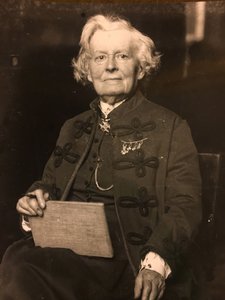
Rosa Bonheur
1822 - 1899 , Frankreich
Kurzinfos
- Bemerkenswerte Werke:
- Pflügen im Nivernais
- Der Pferdemarkt
- Geburtsdatum: 16. März 1822
- Geburtsort: Bordeaux, Frankreich
- Künstlerische Richtung: Realismus, Animalière
- Nationalität: Französisch
- Sterbedatum: 25. Mai 1899
- Vollständiger Name: Rosa Bonheur
Ähnliche Artikel
Rosa Bonheur: Realism, Rural Life & Redefining Women's Roles in 19th-Century Art
Explore the life & art of Rosa Bonheur, a pioneering Realist painter who redefined women's roles in 19th-century France. Discover her iconic animal paintings and lasting influence on art history. Learn more at ArtsDot.
Animalia: Die bleibende Präsenz von Tieren in Kunst und Innenarchitektur
Entdecken Sie die faszinierende Welt der Animalia! Von historischen Tierdarstellungen bis zur modernen Innenarchitektur – wir bieten Expertise, hochwertige Reproduktionen & Kunstberatung.
Romantic Realism's Finest: 10 Masterpieces for Your Home | ArtsDot
Explore 10 defining masterpieces of Romantic Realism! Discover Courbet, Millet & Daumier's powerful paintings—capturing emotion and social realities. Find museum-quality reproductions for your home at ArtsDot.com.
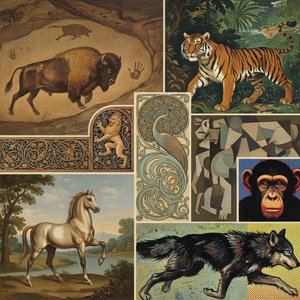
Beastly Brushstrokes: A Historical Journey Through Animal Painting & Aesthetic Movements
Explore the rich history of animal painting across cultures & movements. Discover iconic artists, symbolism, collecting trends & expert art consultation at ArtsDot.com.

Echoes of Society: Exploring Social Realism's Enduring Legacy in Art
Explore the powerful world of Social Realism art! Discover key artists, masterpieces & its profound social commentary. Expert insights into this influential movement's history and enduring legacy.