

The Radiant Dusk: Defining the International Gothic Aesthetic
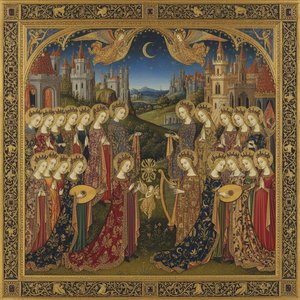 The Magic of International Gothic: Elegance, Gold, and Courtly Splendor in Medieval Art
The Radiant Dusk: Defining the International Gothic Aesthetic The Radiant Dusk of Medieval Vision: Exploring Late Gothic Art's Synthesis of Faith, Form & Emotionality (c. 1300-1500) Introduction: The Twilight of Gothic – A New Aesthetic Sensibility T...
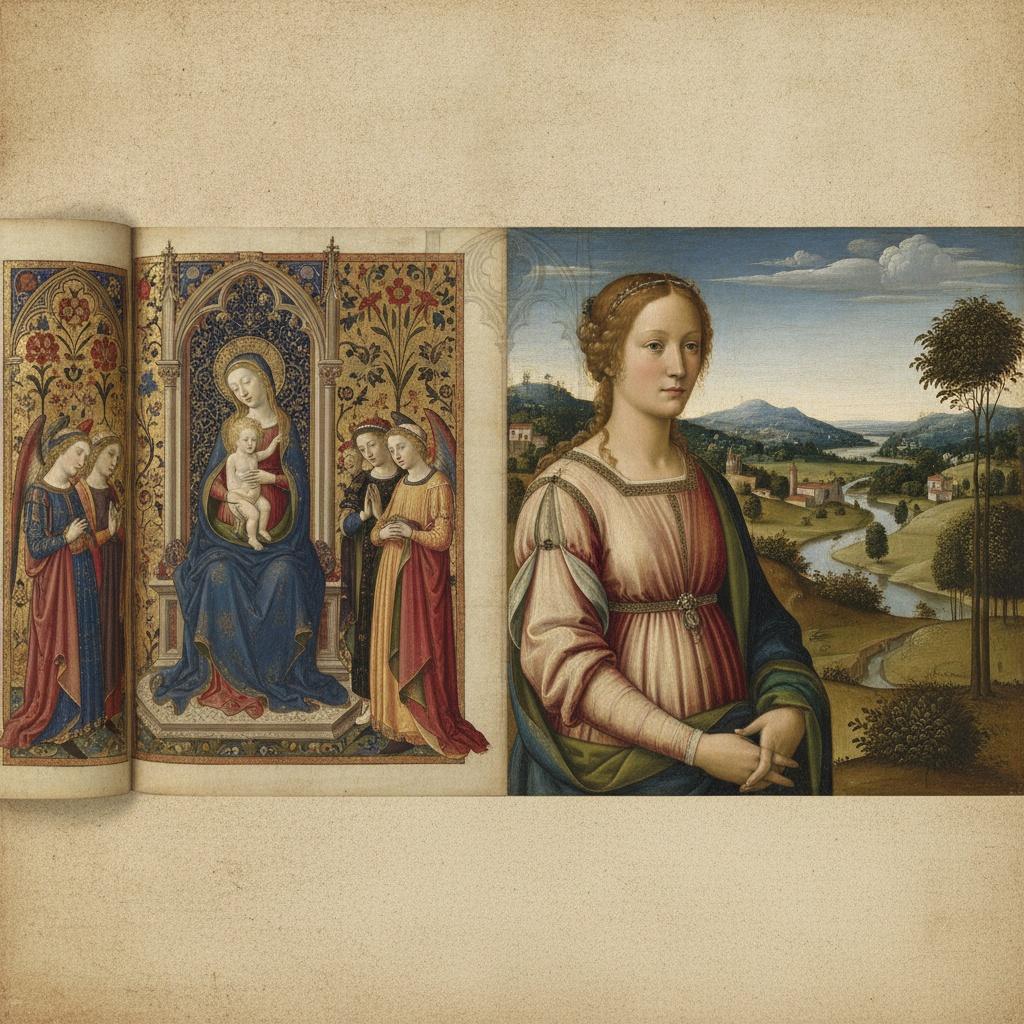
To gaze upon the works of the Late Gothic period is to witness the radiant dusk of a medieval vision, a moment in time where the heavy, monumental shadows of the Romanesque era began to yield to a newfound sense of fluidity and light. Spanning roughly from 1300 to 1500, this era represents a delicate equilibrium—a profound transformation in the European consciousness. It was not a sudden rupture with the past, but rather a refined evolution where the soaring spiritual ambitions of earlier centuries began to subtly embrace a more humanistic and emotionally nuanced aesthetic. The rigid, often intimidating iconography that once dominated the medieval mind gave way to an art that embraced elegance, intricate detail, and a soft, lyrical beauty.
This period, often referred to as the International Gothic, is characterized by a synthesis of faith, form, and emotionality. As the sun began to set on the Middle Ages, the heavens were no longer depicted merely as a distant, terrifying realm, but as a space capable of being rendered with breathtaking luminosity. The heavy, somber structures of previous generations were replaced by a fascination with surface ornamentation, flowing drapery, and a delicate, almost tactile tenderness. It was an era where the spiritual could be expressed through the exquisite, setting a stage for the monumental shifts in perspective and naturalism that would soon define the Renaissance.
A Tapestry of Courts: The Convergence of European Cultures and Patronage
--- title: Definition of the International Gothic style url: https://www.wga.hu/tours/gothic/definiti.html hostname: wga.hu sitename: wga.hu --- | A rare homogeneity characterised European art around the year 1400. Even today art historians have not ...
The very name "International Gothic" speaks to the remarkable homogeneity that characterized European art around the turn of the 15th century. This was a period of unprecedented cultural exchange, driven by the movement of portable treasures such as illuminated manuscripts and the frequent travels of the nobility. The style found its roots in Burgundy, France, and Northern Italy, but it spread with remarkable speed across Western Europe, creating a shared visual language among the elite. Royal marriages, such as that between Richard II of England and Anne of Bohemia, acted as conduits for these artistic currents, weaving disparate regions into a single, sophisticated tapestry of style.
This era witnessed a significant shift in patronage, moving beyond purely ecclesiastical commissions toward the refined tastes of the burgeoning royal courts and the emerging mercantile classes. The influence of the Imperial court in Prague, under the ambitious Charles IV, was particularly transformative. This movement was fueled by an international exchange of ideas that reduced variation in national styles, allowing for a consensus of beauty to emerge from the Duchy of a Burgundy to the halls of Bohemia. It was a cosmopolitan era where art served as both a testament to divine grace and a powerful tool for displaying dynastic ambition and worldly sophistication.
Masters of Elegance: Simone Martini and the Sienese Tradition
 Simone Martini
A Sienese Master of Elegance and Grace Simone Martini, born around 1284 in the heart of Siena, Italy, stands as a pivotal figure in the transition from medieval to Renaissance art. He wasn’t merely a painter; he was an architect of elegance, a master...
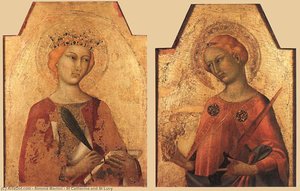
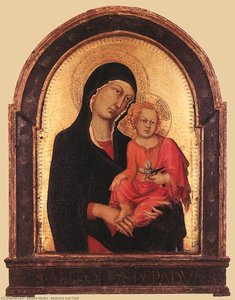
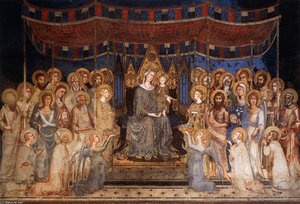
In the heart of Siena, the International Gothic style found one of its most profound architects in Simone Martini. A pivotal figure in the transition from medieval to Renaissance art, Martini was far more than a mere painter; he was a master of line and color who infused his works with a courtly refinement that set him apart from contemporaries like Giotto. While Giotto pursued a more monumental and heavy form of naturalism, Martini embraced a delicate sensibility characterized by graceful contours, flowing lines, and an unparalleled sense of elegance. His work often blended the Byzantine-rooted traditions of Sienese art—evident in its luminous coloration and flattened perspective—with the meticulous detail found in Northern Gothic traditions.
Martini’s mastery is perhaps most breathtakingly realized in works such as his fresco St. Martin is Knighted, located in the Siena Cathedral. This monumental piece transcends mere depiction to become a meditation on Christian virtue and royal authority, utilizing deep reds and shimmering golds to convey grandeur. Similarly, his Orsini Polyptych serves as a window into medieval devotion, employing thin glazes of pigment over wooden panels to achieve an ethereal glow. Alongside collaborators like his brother-in-law Lippo Memmi, Martini helped establish Siena as a thriving center of culture where religious fervor and worldly elegance could coexist in perfect, luminous harmony.
From Symbolism to Naturalism: The Evolution of Form and Emotion
 Late Gothic Art: The Divine Transition from Medieval Symbolism to Renaissance Naturalism
The Twilight of Medieval Vision: Defining the Late Gothic Aesthetic The Beauty of Late Gothic Art: Elegance, Intricate Detail, and the Dawn of the Renaissance The Twilight of the Middle Ages: Defining the Late Gothic Aesthetic As the sun began to set...
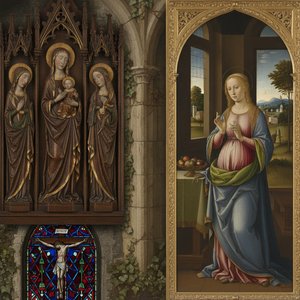
The transition from the Late Gothic to the early Renaissance was marked by a subtle but profound shift in how humanity perceived both the divine and the earthly. The art of this period began to move away from the rigid, often intimidating iconography of the early Middle Ages toward an aesthetic that embraced psychological depth. We see this evolution in the way figures were rendered; they were no longer merely symbols of sanctity but characters imbued with a new sense of human emotion. In the works of masters like Gentile da Fabriano, such as his Pilgrims at the Tomb of St Nicholas of Bari, one observes a palpable sense of reverence and meticulous detail that brings the sacred narrative into a more tangible, human realm.
This evolution was not about abandoning the spiritual for the secular, but rather about finding the divine within the natural. The use of light became more sophisticated, moving from a flat, symbolic gold to a more nuanced depiction of atmosphere and texture. Even in the more static, hieratic approach seen in the Bohemian Gothic art of Master Theodoric, there is an underlying pursuit of spiritual depth through refined elegance. This period of "soft style" or "beautiful style" allowed for a more compassionate depiction of religious suffering and joy, paving the way for the intense naturalism and anatomical precision that would soon characterize the masters of the High Renaissance.
The Legacy of Gold and Grace: Impact on the Early Renaissance
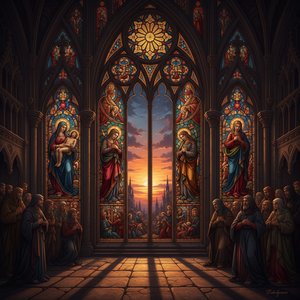 The Radiant Dusk of Medieval Vision: Exploring Late Gothic Art's Synthesis of Faith, Form & Emotionality (c. 1300-1500)
Introduction: The Twilight of Gothic – A New Aesthetic Sensibility The Late Gothic period, spanning roughly from 1300 to 1500, represents a fascinating transition in the history of art—a moment where the soaring spiritual ambitions of earlier Gothic ...
As we reflect on the International Gothic period, we recognize it as the essential bridge between two worlds. It provided the technical foundation—the mastery of tempera glazes, the sophisticated use of gold leaf, and the development of intricate surface ornamentation—that would later be refined by the Renaissance masters. The era’s emphasis on grace, luminosity, and emotional nuance ensured that the transition into the Renaissance was not a sudden rupture, but a continuous, beautiful unfolding of human creativity. The legacy of this period remains visible in the way art continues to balance the monumental with the delicate, and the spiritual with the human.
For the modern collector and history enthusiast, these works offer a window into a time of profound cultural synthesis. At ArtsDot.com, we strive to preserve this legacy by offering museum-quality reproductions that capture the very essence of this era. Whether it is the luminous gold of a Sienese polyptych or the intricate drapery of a courtly portrait, our hand-painted oil reproductions are meticulously crafted on 100% cotton canvas by artists trained in the finest academic traditions. We invite you to explore our collection and bring the elegance of the International Gothic into your own space, honoring the enduring beauty of the masters.