 Preview
 Send
Send Share
Share
 Details

 Download
 Similars
 X-Ray
X-Ray Diaporama
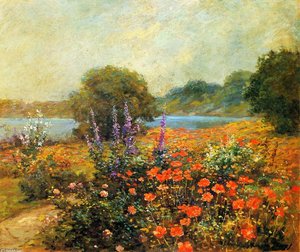
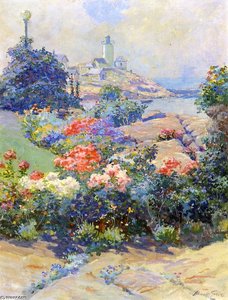
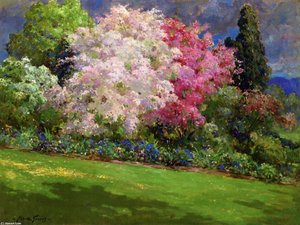
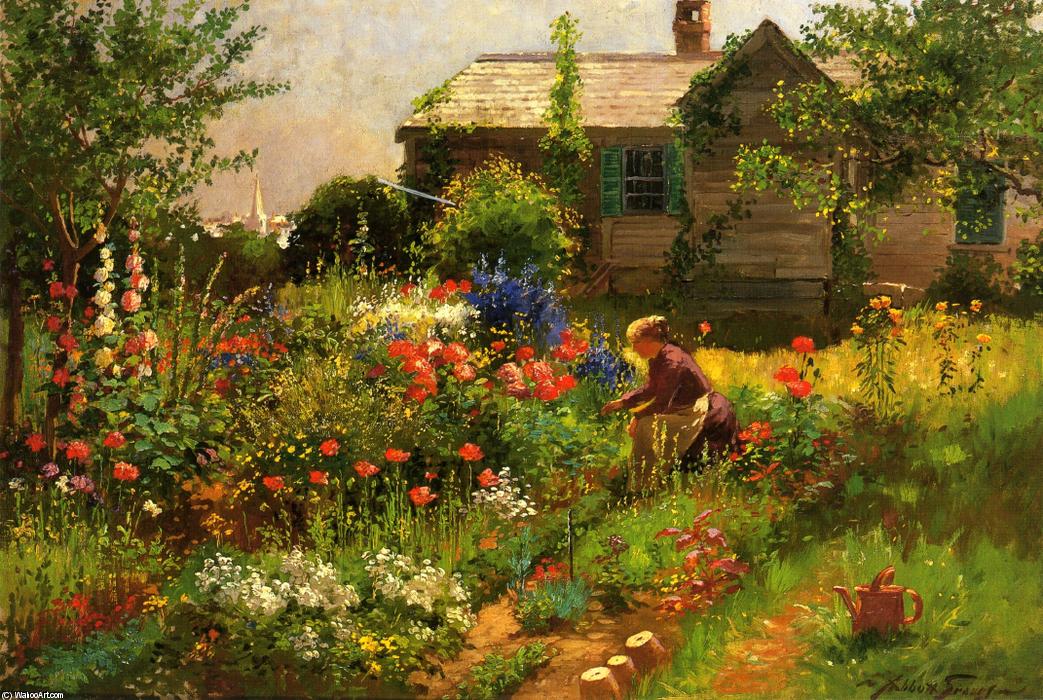
Near Kennebunkport


 Read More
Hand Made Oil Reproduction
Hand-painted oil on canvas in your size and frame, made to order by our artists. ( Buy Print Buy Image)




P118B $10

P118H $10

P118W $10

P438Z $10

P508JH $12

P508YH $12

P805H $10

P805Z $10

P919BZ $10

P919G $10

P919XJ $10

P959ZH $10

P968JZ $12

W106C $8

W218G $10

W218JH $8

W218Y $10

W307PJ $10

W316G $10

W316PJ $8

W316Y $10

W398PJ $8

W4111J $10

W500HY $15

W500JH $15

W692G $12

W849H $8

W940BG $15

W953PJ $8




Pick from our preset sizes that match the artwork's original proportions.

You may enter your own dimensions to fit a specific frame or space. If your selected size does not match the original image's proportions, we will either crop the artwork or extend the painting with additional hand-painted elements. A digital mockup will be sent for your approval before production begins.
Please note that the on-screen preview does not reflect the actual cropping or extension. Only the mockup will accurately show the final composition.
While custom sizes are available, we recommend selecting a dimension from the predefined list to preserve the original proportions.
After order, ArtsDot.com team will email client for instructions and provide a mockup preview
Worldwide Delivery () in 3/4 weeks instead of standard 5 weeks. (17 August). No compromise on quality.

Free Worldwide Express Shipping

High-Quality Linen Canvas

Full Shipping Insurance

Customs Tax Refund Guarantee

True Color Matching Guarantee

60-Day Return Policy (Defects Only)

100% Money-Back Guarantee

Bulk Discount Offer
 Glass option is only available in size under 110 CM

Near Kennebunkport
Reproduction Medium
Reproduction Size
-


Total Price
$ 263
Artwork Description
A Symphony in Bloom: Exploring Abbott Fuller Graves’ “Near Kennebunkport”
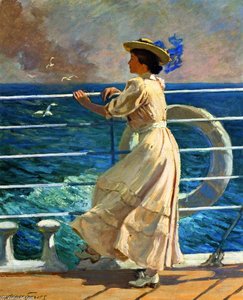
“Near Kennebunkport,” painted by Abbott Fuller Graves in 1905, isn't merely a depiction of a seaside garden; it’s an embodiment of Impressionistic ideals distilled into a breathtaking tableau. Graves, deeply influenced by the burgeoning movement spearheaded by artists like Claude Monet and Pierre-Auguste Renoir, sought to capture not just what he saw but how light itself transformed the colors and textures of the natural world—a pursuit that aligns perfectly with the core tenets of Impressionism. The painting portrays two women seated on a ship’s deck overlooking a meticulously crafted garden brimming with roses, lilies, and other flowering plants. Sunlight filters through the foliage, casting dappled shadows across the scene and illuminating the blossoms with an ethereal glow.- Style: Impressionistic Realism – Graves skillfully blends Impressionistic techniques—loose brushstrokes, vibrant color palettes—with a grounding in Realistic observation. This duality ensures accuracy while simultaneously conveying the emotional resonance of the moment.
- Technique: Graves employed a layering technique known as “plein air” painting, working directly outdoors to capture the fleeting effects of light and atmosphere. He utilized thin washes of color applied side by side—a method championed by Monet—to achieve luminosity and vibrancy that would be impossible to replicate indoors.
- Historical Context: Painted during the height of the Aesthetic Movement, “Near Kennebunkport” reflects a broader cultural preoccupation with elevating art to its highest form—a rejection of academic conventions in favor of subjective experience and emotional expression.
- Emotional Impact: The painting evokes feelings of warmth, nostalgia, and serenity. Its luminous colors and delicate brushstrokes transport the viewer back to a sunlit afternoon spent amidst fragrant blossoms – an invitation to savor beauty and reconnect with the restorative power of nature.
Related Artworks
Artist Biography
Georges Seurat: Bridging Science and Beauty
Georges Seurat, a name synonymous with the dawn of modern art, was more than just a painter; he was an explorer charting a new course for visual expression. Born in Paris on December 2nd, 1859, into a family steeped in finance – his father a property speculator – Seurat’s early life offered little indication of the revolutionary artist he would become. However, from a young age, he displayed a keen interest in drawing and art, initially studying under Justin Lequien at a municipal school before pursuing formal training at the prestigious École des Beaux-Arts. It was here that he encountered the works of Ingres and Delacroix, absorbing their classical techniques while simultaneously delving into the burgeoning theories of color championed by figures like Chevreul and Blanc. Yet, Seurat’s artistic journey wasn't simply a matter of inheriting tradition; it was driven by an insatiable desire to understand the very nature of perception and how light itself could be manipulated on canvas.The Birth of Pointillism: A Scientific Approach to Art
Seurat’s most significant contribution to art lies in his development of *pointillisme*, a technique that defied conventional painting practices. Rejecting the blending of colors typical of Impressionism, Seurat believed that the eye itself could synthesize color when presented with small, distinct dots of pure hue. Inspired by scientific theories on optics and color perception – particularly the work of Michel Eugène Chevreul – he meticulously applied thousands of tiny brushstrokes of complementary colors to create luminous surfaces. This method, often referred to as chromoluminarism, wasn’t merely a stylistic choice; it was a deliberate attempt to mimic the way the human eye perceives light and color. His meticulous approach demanded an almost mathematical precision, reflecting his own analytical mind. Works like *Bathers at Asnières* (1883-84) demonstrate this early experimentation, showcasing a nascent understanding of how individual dots could coalesce into a vibrant, shimmering whole.A Sunday on La Grande Jatte: A Modern Masterpiece
Perhaps Seurat’s most iconic work, *A Sunday Afternoon on the Island of La Grande Jatte* (1884-86), perfectly encapsulates his artistic vision and technical prowess. This monumental canvas depicts a scene of Parisian leisure – Parisians enjoying a sunny afternoon in the park – but rendered with an unprecedented level of detail and scientific rigor. The figures are not blended or softened; instead, they are constructed from countless tiny dots of color, creating a remarkable sense of depth and luminosity. The painting’s shimmering surface seems to vibrate with light, capturing both the physical reality of the scene and the subjective experience of perception. *La Grande Jatte* wasn't just a depiction of a Parisian afternoon; it was a demonstration of Seurat’s revolutionary technique and a bold statement about the possibilities of modern art. It fundamentally shifted the direction of artistic expression, paving the way for later movements like Neo-Impressionism and Fauvism.Influences and Evolution: Beyond Pointillism
While *pointillisme* remains Seurat’s most recognizable legacy, his artistic development was far more complex and nuanced than a single technique might suggest. He drew inspiration from diverse sources – classical art, particularly the works of Holbein; Japanese prints with their flattened perspectives and bold colors; and even popular posters, which he admired for their graphic clarity and compositional dynamism. As he matured as an artist, Seurat began to move away from the strict scientific approach of his early work, incorporating elements of stylization and abstraction into his compositions. His later paintings, such as *Le Regard Distrait* (1891), demonstrate a growing interest in capturing fleeting emotions and psychological states, signaling a shift towards a more expressive and subjective style.A Tragic Premature End: The Legacy of a Visionary
Tragically, Georges Seurat’s artistic career was cut short by his untimely death on March 29th, 1891, at the age of 31. He succumbed to complications following a surgical procedure for an ear infection, leaving behind a remarkably small but profoundly influential body of work. Despite his brief life, Seurat's innovations in color theory and painting technique had a lasting impact on the course of modern art. His meticulous approach, combined with his keen observation of the world around him, established him as a pioneer of Neo-Impressionism and a key figure in the transition from 19th-century to 20th-century art. Today, Seurat’s paintings continue to captivate audiences with their shimmering surfaces, scientific precision, and enduring beauty – a testament to the visionary genius of this remarkable artist.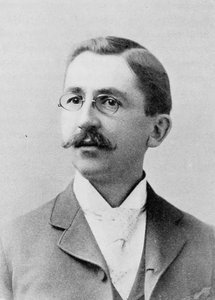
abbott fuller graves
1859 - 1936 , United States of America
Quick Facts
- Artistic Movement Or Style: Neo-Impressionism, Pointillism
- Artists Or Movements Influenced By This Artist:
- Van Gogh
- Futurists
- Artists Who Influenced This Artist:
- Delacroix
- Holbein
- Date Of Birth: December 2, 1859
- Date Of Death: March 29, 1891
- Full Name: Georges Seurat
- Nationality: French
- Notable Artworks:
- A Sunday on La Grande Jatte
- Bathers at Asnières
- Place Of Birth: Paris, France
Related Articles
Cultivating Paradise: A Historical & Artistic Exploration of Gardens in Painting
Explore the rich history of gardens in painting! Discover masterpieces from Renaissance to Impressionism & beyond. Learn about symbolism, artists like Monet & Klimt, and find your perfect artwork at ArtsDot.

Cézanne's Masterpieces: 25 Iconic Artworks to Transform Your Space
Journey through 25 iconic artworks by Paul Cézanne – a master of Impressionism and Post-Impressionism. Explore his landscapes, still lifes, and the stories behind these timeless masterpieces. Discover museum-quality reproductions & curated decor at ArtsDot.com.
Silent Narratives: Exploring the Enduring Appeal of Still Life Painting Across Centuries
Explore the rich history of still life painting with ArtsDot. Discover Dutch Masters, decode vanitas symbolism & learn about collecting timeless art. Expert insights and museum-quality reproductions.

Impressionism's Masterpieces: 10 Paintings That Defined a Movement | ArtsDot
Journey through Impressionism's heart with 10 iconic paintings by Monet, Renoir & Degas. Explore light, color & the stories behind these masterpieces. Find museum-quality art reproductions and elevate your home decor on ArtsDot.com.

Beyond Impressionism: Exploring the Emotional Depth of Post-Impressionist Painting
Explore the profound emotional depth & innovative techniques of Post-Impressionism with ArtsDot. Discover Cézanne, Van Gogh, Gauguin & more – and their lasting impact on modern art.