 Preview
 Send
Send Share
Share
 Details

 Download
 Similars
 X-Ray
X-Ray Diaporama
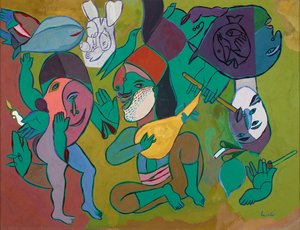
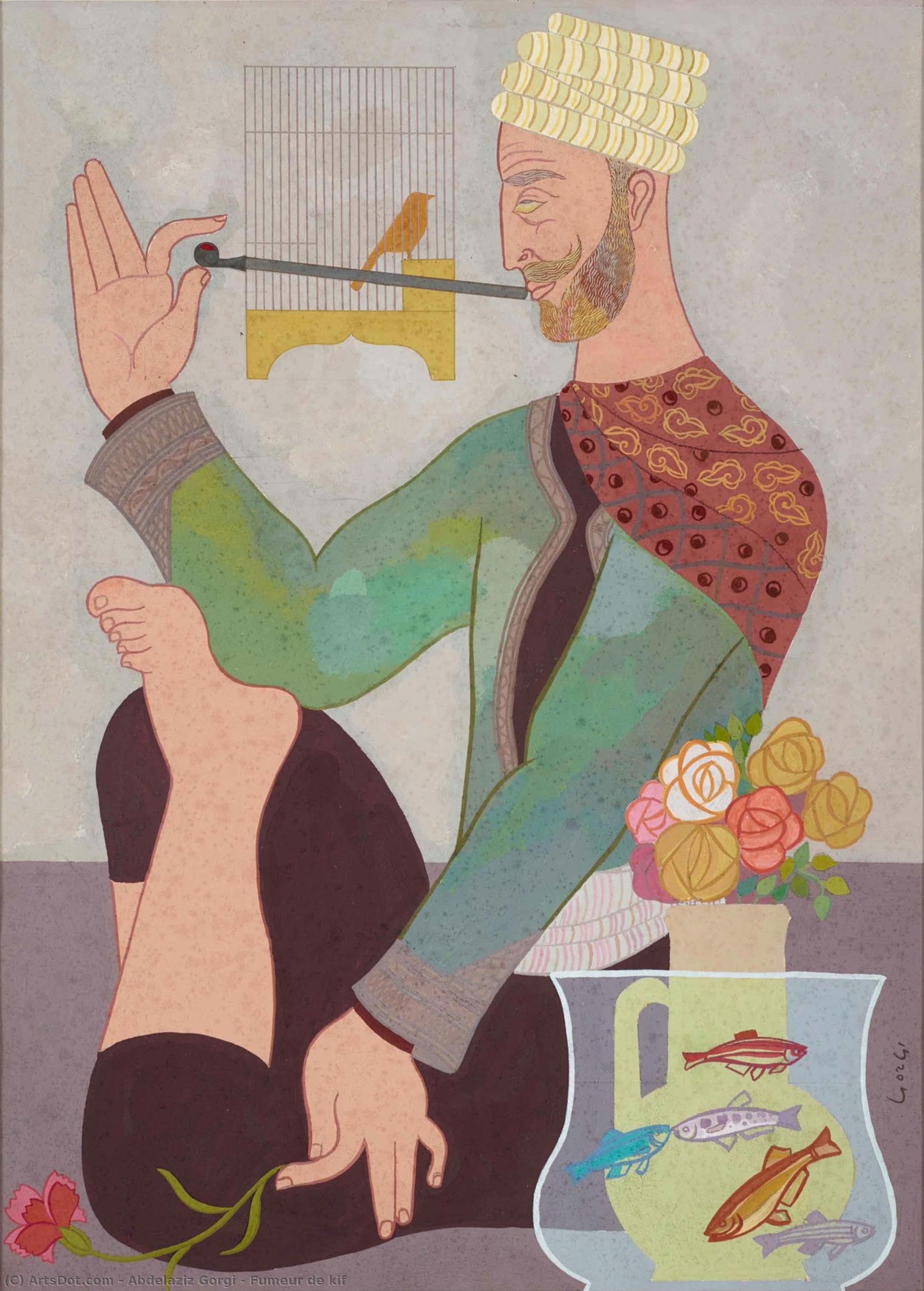
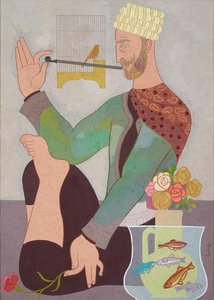
Fumeur de kif
 75.0 x 55.0 cm
 The Ramzi and Saeda Dalloul Art Foundation
 Read More
Hand Made Oil Reproduction
Hand-painted oil on canvas in your size and frame, made to order by our artists. ( Buy Print Buy Image)




































Pick from our preset sizes that match the artwork's original proportions.

You may enter your own dimensions to fit a specific frame or space. If your selected size does not match the original image's proportions, we will either crop the artwork or extend the painting with additional hand-painted elements. A digital mockup will be sent for your approval before production begins.
Please note that the on-screen preview does not reflect the actual cropping or extension. Only the mockup will accurately show the final composition.
While custom sizes are available, we recommend selecting a dimension from the predefined list to preserve the original proportions.
After order, ArtsDot.com team will email client for instructions and provide a mockup preview
Worldwide Delivery () in 3/4 weeks instead of standard 5 weeks. (22 August). No compromise on quality.

Free Worldwide Express Shipping

High-Quality Linen Canvas

Full Shipping Insurance

Customs Tax Refund Guarantee

True Color Matching Guarantee

60-Day Return Policy (Defects Only)

100% Money-Back Guarantee

Bulk Discount Offer
 Glass option is only available in size under 110 CM

Fumeur de kif
Reproduction Medium
Reproduction Size
-


Total Price
$ 263
Related Artworks







Artist Biography
The Soul of Tunisia: The Artistic Legacy of Abdelaziz Gorgi
In the vibrant tapestry of North African modernism, few names resonate with as much cultural authority and creative passion as Abdelaziz Gorgi. Born in 1928 in the historic heart of Tunis, Tunisia, Gorgi emerged not merely as a painter, but as a visionary architect of a national aesthetic. His life’s work served as a bridge between the ancient traditions of his homeland and the evolving language of contemporary art. Through his mastery of both canvas and tapestry, he captured the very essence of Tunisian identity, weaving together the spiritual, the folkloric, and the everyday rhythms of Mediterranean life.
Gorgi’s artistic journey began with a rigorous formal education at the Tunis Institute of Fine Arts, where he honed the technical precision that would later allow him to experiment so freely with style. Seeking to expand his horizons beyond the borders of Tunisia, he pursued further artistic development in France. This period of international exposure was transformative; it provided him with a broader perspective on global art movements while simultaneously deepening his resolve to celebrate his Tunisian roots. It was this unique duality—the ability to speak a universal artistic language while maintaining a profound local dialect—that defined his mature style.
The Architect of the Tunis School
Perhaps Gorgi’s most enduring contribution to the art world was his role as a pioneer and leader within the Tunis School of Painting. As a co-founder and the driving force behind this institution until 1983, he helped cultivate a movement that sought to reclaim Tunisian narratives from colonial perspectives. He did not merely paint scenes; he established a sanctuary for a new generation of artists. His commitment to the local art community was further solidified in 1973 with the establishment of the Gorgi Gallery, a vital platform that provided emerging talents with the visibility and support necessary to flourish.
His leadership extended beyond the studio into the realm of cultural diplomacy. His contributions to Tunisian culture were so profound that he received prestigious honors from President Zine El Abidine Ben Ali, recognizing his role in elevating the nation's artistic prestige on the global stage. Through his exhibitions across the world, Gorgi ensured that the colors, symbols, and stories of Tunisia were recognized by an international audience.
A Visual Symphony of Folklore and Symbolism
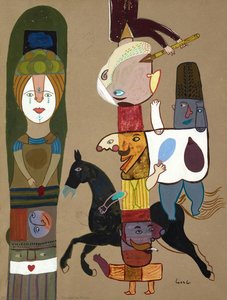
To look upon a work by Abdelaziz Gorgi is to enter a dreamscape where reality and myth intertwine. His technique often embraced elements of Naive Art and surrealism, utilizing bold, saturated colors and striking compositions to evoke deep emotional responses. His paintings frequently serve as windows into the cultural richness of his people, ranging from the sacred atmosphere of religious observances to the whimsical energy of local legends.
Several of his masterpieces stand as pillars of his repertoire:
- Le Ramadan à Halfaouine: A vibrant and evocative scene that captures the spiritual and communal richness of Tunisian life during the holy month, rendered with a unique sense of rhythm.
- Voyage de Noces: Created in 1955, this dynamic masterpiece utilizes a procession of mythical figures and horses to offer a captivating glimpse into the depths of cultural folklore.
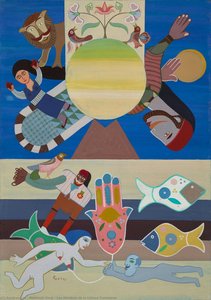
- Les Attributs de la Culture Tunisienne: A surrealist exploration that employs symbolic figures and bold palettes to celebrate the various facets of Tunisian heritage.
Through these works, Gorgi achieved something rare in art history: he created a visual vocabulary that felt both ancient and modern. His tapestries and paintings remain much more than mere decorations; they are historical documents of a soul, preserving the textures, traditions, and triumphs of Tunisia for generations to come.
abdelaziz gorgi
1928 - 2008 , Tunisia
Quick Facts
- Artistic Movement Or Style: Tunis School of painting
- Artists Or Movements Influenced By This Artist: ['Generations of Tunisian artists']
- Date Of Birth: 1928
- Date Of Death: 2008
- Full Name: Abdelaziz Gorgi
- Nationality: Tunisian
- Notable Artworks:
- Le Ramadan à Halfaouine
- Les Attributs de la Culture Tunisienne
- Voyage de Noces
- Place Of Birth: Tunis, Tunisia