 Preview
 Send
Send Share
Share
 Details

 Download
 Similars
 X-Ray
X-Ray Diaporama
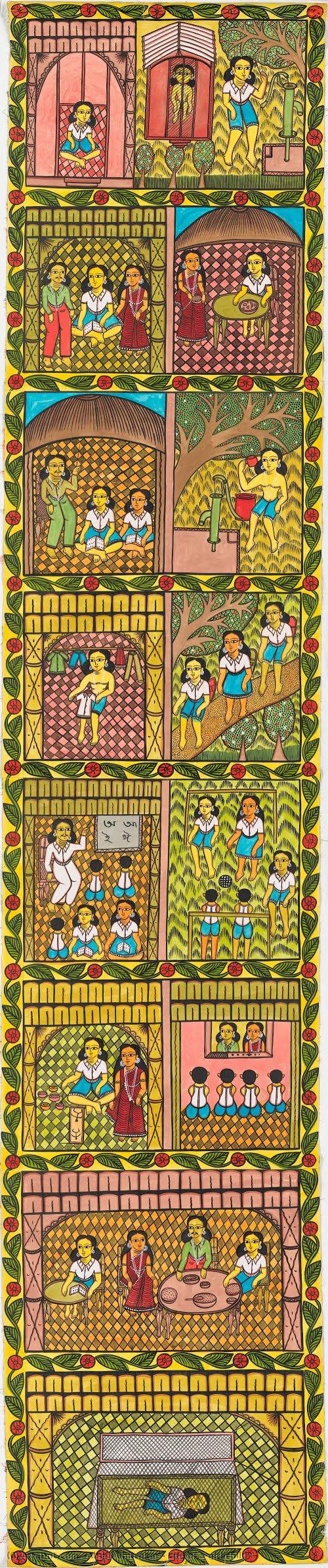
Life of a girl child
 Painting
- Contemporary Realism
 2012
2012- Contemporary
 280.0 x 60.0 cm
 Queensland Art Gallery | Gallery of Modern Art
 Read More
Giclée / Art Print
Museum-quality giclée or canvas print with fast production and flexible finish options. ( Buy Hand Made Painting Buy Image)




P118B $10

P118H $10

P118W $10

P438Z $10

P508JH $12

P508YH $12

P805H $10

P805Z $10

P919BZ $10

P919G $10

P919XJ $10

P959ZH $10

P968JZ $12

W106C $8

W218G $10

W218JH $8

W218Y $10

W307PJ $10

W316G $10

W316PJ $8

W316Y $10

W398PJ $8

W4111J $10

W500HY $15

W500JH $15

W692G $12

W849H $8

W940BG $15

W953PJ $8




Pick from our preset sizes that match the artwork's original proportions.

You may enter your own dimensions to fit a specific frame or space. If your selected size does not match the original image's proportions, we will either crop the artwork or extend the image with a mirrored or solid-fill edge. A digital mockup will be sent for your approval before production begins.
Please note that the on-screen preview does not reflect the actual cropping or extension. Only the mockup will accurately show the final composition.
While custom sizes are available, we recommend selecting a dimension from the predefined list to preserve the original proportions.
Worldwide Delivery () in 2 weeks instead of standard 4/5 weeks. (26 August)

Free Worldwide Express Shipping

High-Quality Linen Canvas

Full Shipping Insurance

Customs Tax Refund Guarantee

True Color Matching Guarantee

60-Day Return Policy (Defects Only)

100% Money-Back Guarantee

Bulk Discount Offer
 Glass option is only available in size under 110 CM

Life of a girl child
Giclée / Art Print
Reproduction Size
-


Total Price
$ 63
Collectible Description
A Tapestry of Tenderness: Exploring Life of a Girl Child
In the expansive, panoramic sweep of "Life of a girl child," artist Abdul Chitrakar invites the viewer into a profound narrative that transcends mere depiction, offering instead a window into the soul of human connection. Spanning an impressive 280 x 60 cm, this monumental work functions less like a traditional canvas and more like a continuous scroll of memory and emotion. At its heart lies a poignant central figure: a woman cradling a child with an intimacy that radiates warmth and protective strength. This central embrace serves as the emotional anchor for a larger, bustling ecosystem of figures that populate the periphery, creating a sense of a shared, communal existence where every life is intertwined.
The composition is masterfully orchestrated to guide the eye through a rhythmic dance of figures and elements. As one traverses the horizontal plane, the presence of an umbrella in the mid-ground introduces a subtle layer of symbolism—perhaps representing shelter, protection, or the transient nature of life's seasons. The placement of various people near the upper and lower edges of the frame creates a sense of depth and scale, suggesting that the story being told is not isolated but part of a much larger, ongoing tapestry of everyday life. This panoramic format allows Chitrakar to weave a complex social landscape where the individual struggle and triumph are mirrored by the collective movement of the community.
The Mastery of Paubha Tradition and Modern Vision
To appreciate this work is to understand the lineage of Paubha painting, a sacred tradition that Abdul Chitrakar has brilliantly revitalized for the contemporary era. While his roots lie in the meticulous techniques of Nepali art—characterized by the delicate application of pigments and the luminous use of gold leaf—this piece demonstrates a unique evolution. The artist moves beyond purely religious iconography to embrace a secular, humanistic storytelling approach. His technique involves a sophisticated layering of color that gives the figures a lifelike vitality, ensuring that even within a large-scale format, the subtle expressions of the subjects remain captivating and clear.
For the discerning collector or interior designer, this artwork offers a rare opportunity to possess a piece that bridges the gap between ancient craftsmanship and modern conceptual depth. The sheer scale of the work makes it a commanding centerpiece for any sophisticated space, capable of transforming a room into a gallery-like experience. Whether placed in a grand foyer or as a focal point in a curated living area, "Life of a girl child" provides a constant source of contemplation. It is an investment not just in a beautiful object, but in a profound narrative of resilience, nurturing, and the enduring beauty found within the simplest moments of human existence.
Related Artworks
Artist Biography
The Genesis of a Visionary
In the vibrant heart of New Delhi, the artistic journey of Abdul Chitrakar began with an organic fascination for the sacred traditions of Nepal. A self-taught master, his path was shaped not by formal academies but by a deep-seated connection to the spiritual essence of Paubha painting. Even as a young child, the seeds of mastery were evident; at the tender age of twelve, he produced a captivating depiction of Ganesh, a work that signaled the arrival of a talent destined to bridge ancient heritage with contemporary expression. This early immersion in Hindu iconography laid the foundation for a career dedicated to the revival of a tradition that demands not just skill, but a profound spiritual resonance.The Alchemy of Tradition and Technique
To witness a work by Chitrakar is to enter a world of luminous textures and painstaking precision. The Paubha technique is an arduous ritual of layering, where pigments derived from the earth—minerals and plants—are meticulously applied onto silk fabric. Using brushes crafted from fine goat hair, the artist breathes life into each layer, often incorporating gold leaf to create a celestial glow that transcends the physical medium. This process is far more intensive than Western easel painting, requiring an unwavering patience to achieve subtle gradations and intricate details.His technical mastery is defined by several essential elements:
- Natural Pigmentation: The use of locally sourced minerals and botanical extracts to achieve a palette of earthy, enduring tones.
- Luminous Layering: The delicate application of gold leaf and powdered pigments to capture the divine light within religious icons.
- Materiality: The reliance on silk as a canvas, providing a smooth yet substantial foundation for intricate storytelling.
A Bridge Between the Sacred and the Human
While his roots are firmly planted in religious iconography, Chitrakar’s vision is resolutely forward-looking. He has successfully transitioned from strictly devotional themes to a more humanistic narrative, using the monumental scale of his works to explore the complexities of the human condition. In his expansive panoramic piece, Life of a girl child, he utilizes the traditional scroll-like format to weave a tapestry of communal existence. Here, the focus shifts from deities to the intimate connection between a mother and her child, set against a bustling ecosystem of life. Through both his intricate paintings and his innovative sculptural installations, Chitrakar continues to reshape societal perspectives, proving that the ancient language of art can still speak powerfully to the contemporary soul.
abdul chitrakar
India
Quick Facts
- Artistic Movement Or Style: Paubha Painting
- Date Of Birth: New Delhi, India ()
- Full Name: Abdul Chitrakar
- Nationality: Indian
- Notable Artworks: ['Lok']
- Place Of Birth: New Delhi, India
Related Articles
Whimsical Wonders: A Mother's Guide to Transforming Children's Rooms with Timeless Art Reproductions
Transform your child's room into a whimsical sanctuary with museum-quality art reproductions. Discover how hand-painted masterpieces and custom portraits can spark imagination and create a timeless, beautiful space for your little one.
Frederick Childe Hassam: American Impressionism's Chronicler of Light & Modern Life
Explore the captivating world of Frederick Childe Hassam, a pioneer of American Impressionism. Discover his iconic paintings capturing light, urban life & coastal beauty. Learn about his legacy and influence on American art history.
The Resonance of Earth Tones: Exploring Emotional Depth & Artistic Context in Paintings
Explore the captivating world of earth tones in painting! Discover the historical context, emotional resonance, and artistic techniques behind these timeless colors. Learn how to create harmonious spaces with natural palettes.
Botticelli's Masterpieces: Explore 25 Iconic Renaissance Paintings | ArtsDot
Journey through Botticelli's world with 25 iconic Renaissance paintings. Explore 'Birth of Venus,' 'Primavera,' and more—stories, techniques & timeless beauty. Find museum-quality art reproductions for your home at ArtsDot.com.

Georges Seurat's Masterpieces: 25 Paintings That Defined Pointillism | ArtsDot
Explore 25 iconic Georges Seurat paintings & discover the brilliance of Pointillism. From 'La Grande Jatte' to his harbor scenes, delve into art history with ArtsDot.com. Find museum-quality reproductions for your home decor. Explore the full collection online!