

 Preview
 Send
Send Share
Share
 Details

 Download
 Similars
 X-Ray
X-Ray Diaporama
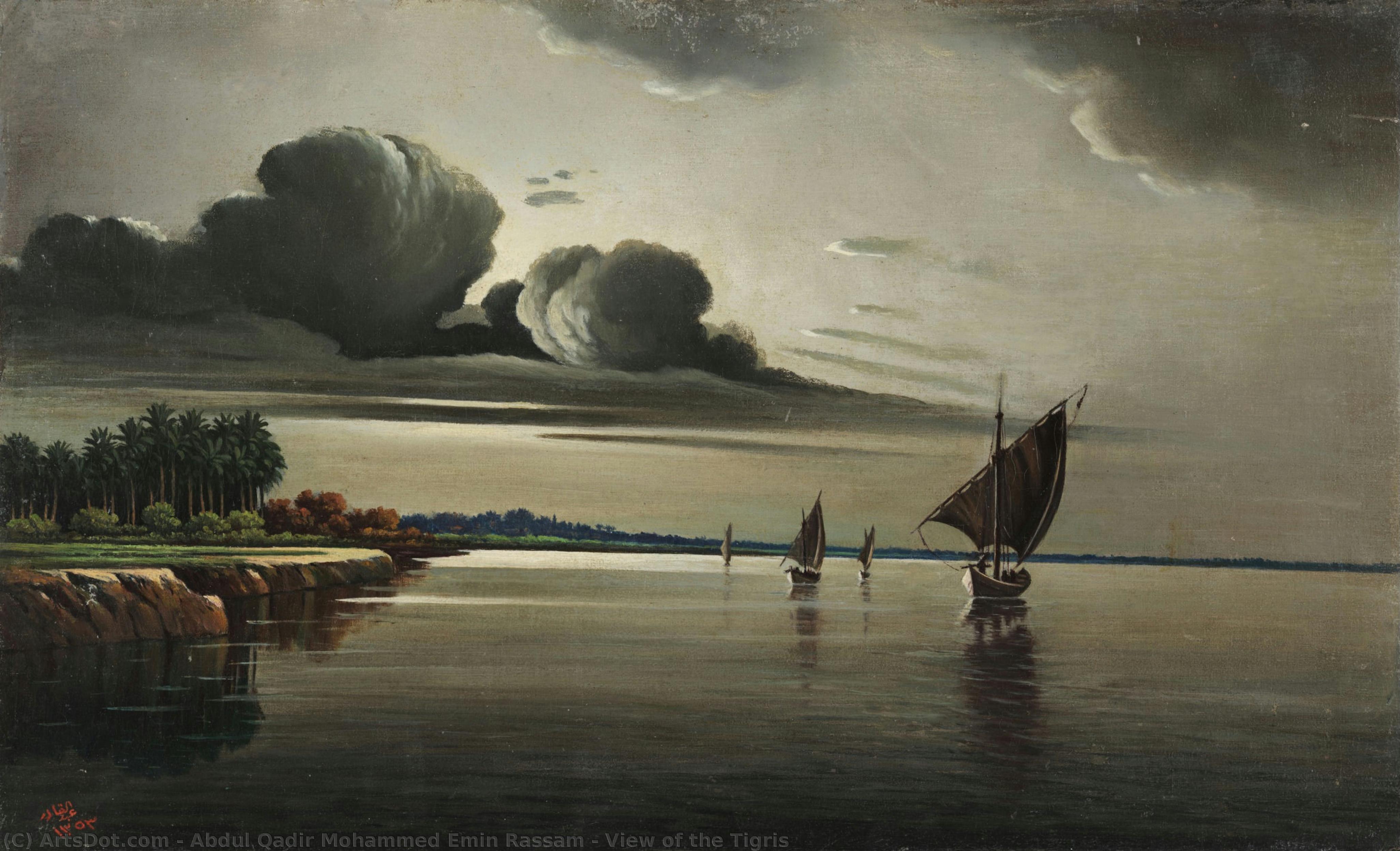
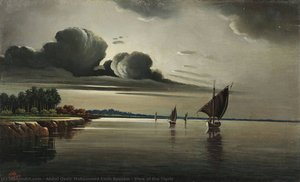
View of the Tigris
 Romanticism
 33.0 x 53.0 cm
 Barjeel Art Foundation
 Read More
Purchase a high-resolution, enhanced digital image, far superior to the online preview.
Each file is meticulously prepared by our in-house specialists using advanced tools and expert manual retouching. We ensure every image has exceptional clarity, precise color accuracy, and fine detail.
The final file is delivered via email within 72 hours, optimized for immediate use in professional, editorial, and print environments. This is the same quality trusted by top-tier design studios, publishers, and galleries.
Digital Image
Download a high-resolution file for personal display, printing, and creative projects. ( Buy Print Buy Hand Made Painting)
Included in Every Digital Image Order
Expert Digital Delivery, Guaranteed
When you choose ArtsDot.com, you're not just getting an image - you're receiving a professionally enhanced digital artwork, crafted with precision and backed by a satisfaction guarantee. Here's everything that comes with your order, automatically:

Fast Email Delivery
Your high-resolution digital image file will be emailed to you within 72 hours of ordering - ready for immediate use.

AI-Enhanced Digital File
Your artwork is professionally optimized using advanced AI tools and manual editing, ensuring maximum detail, clarity, and color accuracy.

Free Lifetime Re-Delivery
Accidentally deleted or lost your file? No worries - we'll resend it to you anytime, free of charge.

No Import Fees - Ever
Enjoy your artwork instantly with zero customs, duties, or delivery fees - digital downloads are always tax-free.

Color Accuracy Guarantee
We ensure your digital image reflects the original colors as closely as possible using professional tools and color management.

60-Day Satisfaction Guarantee
If you're not satisfied with your digital image, we'll revise it or refund 100% within 60 days - no questions asked.

100% Money-Back Guarantee
Not satisfied? Get a full refund within 60 days of receiving your digital file - no questions asked.

Bulk Order Discounts
Buy 3 images, save 10% - Buy 5, save 15% - Buy 10+, save 20%. Great for creative projects, galleries, and agencies.
Related Artworks
Artist Biography
Edward Hopper: The Solitude of the American Landscape
Edward Hopper (July 22, 1882 – May 15, 1967) remains one of America’s most enduring and recognizable artists. More than simply a painter, he was a keen observer of modern life, capturing the quiet loneliness and subtle dramas unfolding within the urban and rural landscapes of his time. Born in Nyack, New York, to a middle-class family with Dutch ancestry, Hopper's artistic journey began early, nurtured by parents who recognized and supported his nascent talent. His formative years were spent studying at the New York School of Art under influential figures like William Merritt Chase and Robert Henri – artists who championed realism and encouraged students to find beauty and meaning in everyday subjects.
Hopper’s artistic development was profoundly shaped by these early influences, particularly Henri's emphasis on depicting “American scenes.” This directive led Hopper away from the prevailing trends of Impressionism and Post-Impressionism, pushing him toward a distinct style characterized by stark realism, carefully composed figures, and an evocative use of light and shadow. His work wasn’t about grand narratives or overt emotion; instead, he sought to distill the essence of a moment, conveying a sense of isolation, contemplation, and perhaps even melancholy. Early works like “Outdoor Cafe” (1912) already hinted at this signature style – a seemingly ordinary scene imbued with an underlying feeling of detachment.
The Rise of the "American Realist"
The 1920s marked a turning point in Hopper’s career, as he began to gain critical recognition for his unique vision. His paintings resonated with a growing sense of alienation and uncertainty that characterized the era following World War I. The rise of industrialization and urbanization had dramatically altered American society, leading to a feeling of displacement and anonymity – themes that Hopper masterfully explored in works like “Nighthawks” (1942), arguably his most famous painting. This iconic image depicts three late-night patrons in a brightly lit diner, their faces obscured, lost in their own thoughts, separated by an unspoken distance.
Hopper’s meticulous attention to detail and his ability to capture the subtle nuances of light and shadow were crucial to his success. He wasn't interested in simply depicting what he saw; he was striving to evoke a particular mood or atmosphere. His use of color, often muted and restrained, further enhanced this effect. The stark contrast between light and dark, particularly evident in “Nighthawks,” creates a sense of drama and suspense, drawing the viewer into the scene.
Themes and Influences
Hopper’s work is deeply rooted in American themes – loneliness, isolation, urban life, and the changing landscape. He frequently depicted solitary figures in public spaces, suggesting a profound disconnect between individuals and their surroundings. His paintings often evoke a sense of nostalgia for a bygone era, while simultaneously reflecting the anxieties and uncertainties of modern life. The influence of European art is also evident in his work, particularly the works of Edgar Degas and Édouard Manet, whose compositional techniques and depictions of urban scenes inspired him.
Beyond the purely visual elements, Hopper’s paintings are imbued with a strong sense of narrative. He rarely provided explicit explanations or interpretations; instead, he invited viewers to project their own experiences and emotions onto the scene. The ambiguity of his subjects – their motivations, relationships, and inner lives – is precisely what makes his work so compelling and enduring.
Later Years and Legacy
Despite achieving considerable success in the 1920s and 30s, Hopper remained a private and introspective individual. He continued to paint prolifically throughout his life, exploring new themes and techniques. His later works, such as “Gas Station” (1947) and “Room by the Window” (1958), further solidified his reputation as one of America’s greatest artists. Hopper's work was largely overlooked during his lifetime, but after his death, it gained widespread recognition and appreciation.
Today, Edward Hopper’s paintings are exhibited in major museums around the world, and his influence can be seen in the work of countless contemporary artists. He remains a powerful symbol of American realism, capturing the complexities and contradictions of modern life with remarkable skill and sensitivity. His ability to convey profound emotions through seemingly simple scenes continues to resonate with viewers today, cementing his place as a pivotal figure in American art history.
abdul qadir mohammed emin rassam
1882 - 1952 , Iraq
Quick Facts
- Artistic Movement Or Style: Realism, Modernism
- Artists Or Movements Influenced By This Artist: ['Modernism']
- Artists Who Influenced This Artist: ['Robert Henri']
- Date Of Birth: August 12, 1882
- Date Of Death: 1925
- Full Name: George Bellows
- Nationality: American
- Notable Artworks:
- Nude with Hexagonal Quilt
- Woodstock Road, Woodstock
- Jean in a Black Hat
- Place Of Birth: Columbus, Ohio, USA

