 Preview
 Send
Send Share
Share
 Details

 Download
 Similars
 X-Ray
X-Ray Diaporama
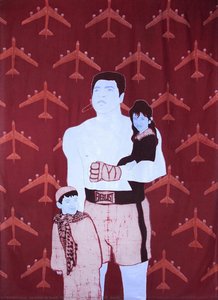
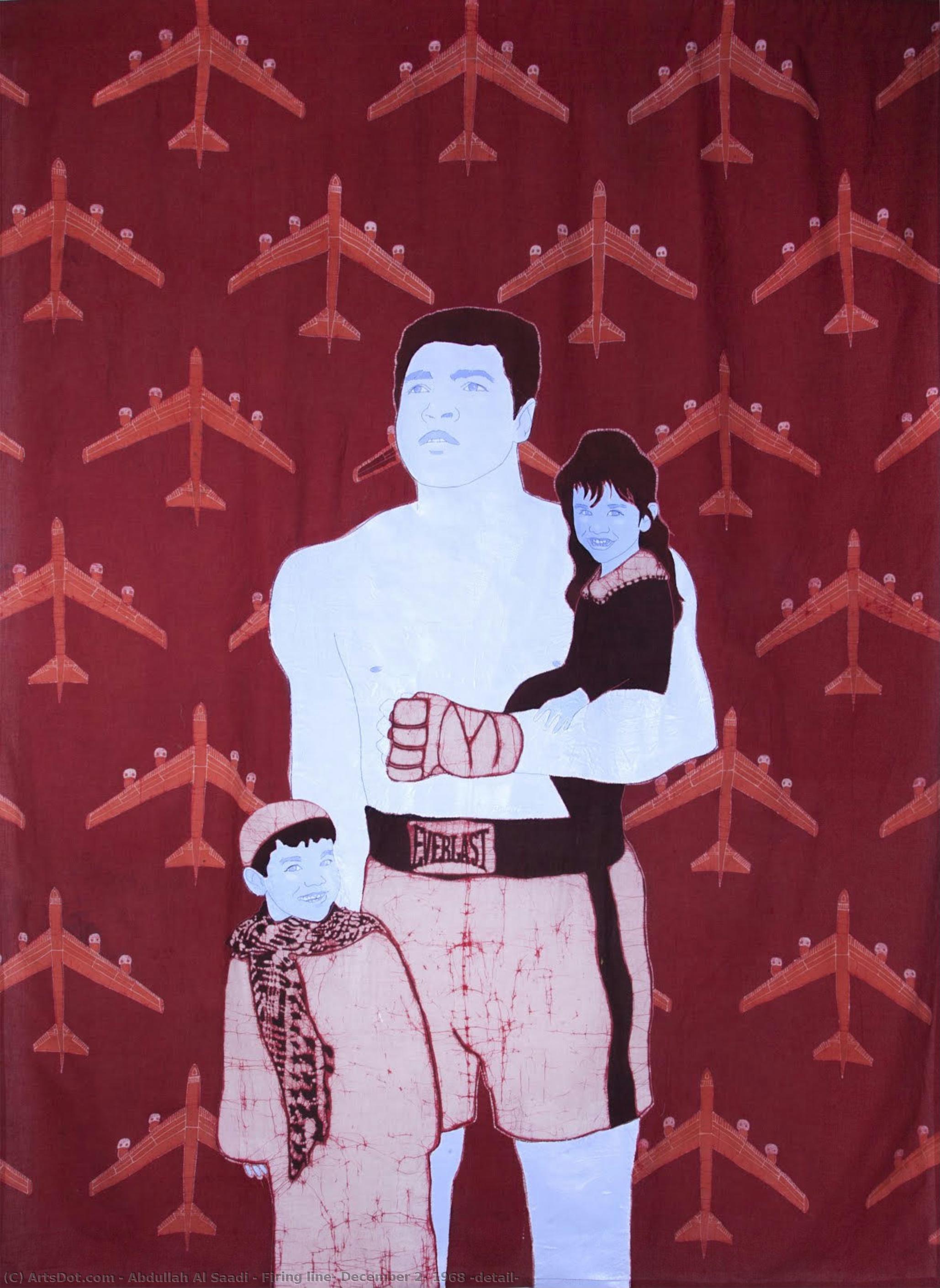
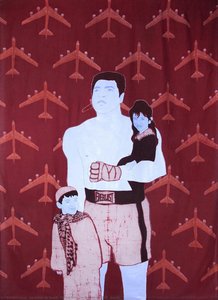
Firing line, December 2, 1968 (detail)
 2016
2016 100.0 x 100.0 cm
 Ian Potter Museum of Art
 Read More
Giclée / Art Print
Museum-quality giclée or canvas print with fast production and flexible finish options. ( Buy Hand Made Painting Buy Image)




































Pick from our preset sizes that match the artwork's original proportions.

You may enter your own dimensions to fit a specific frame or space. If your selected size does not match the original image's proportions, we will either crop the artwork or extend the image with a mirrored or solid-fill edge. A digital mockup will be sent for your approval before production begins.
Please note that the on-screen preview does not reflect the actual cropping or extension. Only the mockup will accurately show the final composition.
While custom sizes are available, we recommend selecting a dimension from the predefined list to preserve the original proportions.
Worldwide Delivery () in 2 weeks instead of standard 4/5 weeks. (24 August)

Free Worldwide Express Shipping

High-Quality Linen Canvas

Full Shipping Insurance

Customs Tax Refund Guarantee

True Color Matching Guarantee

60-Day Return Policy (Defects Only)

100% Money-Back Guarantee

Bulk Discount Offer
 Glass option is only available in size under 110 CM

Firing line, December 2, 1968 (detail)
Giclée / Art Print
Reproduction Size
-


Total Price
$ 63
Collectible Description
Related Artworks



Artist Biography
The Desert’s Conceptual Architect
Born in the serene landscape of Khorfakkan, United Arab Emirates, in 1967, Abdullah Al Saadi has emerged as a transformative force within the Middle Eastern contemporary art scene. His artistic identity is deeply rooted in the stark, evocative beauty of the desert—a landscape that serves not merely as a backdrop but as a profound psychological and material influence on his creative output. Before establishing himself as a master of conceptual thought, Al Sa Hadi pursued studies in English Literature at the United Arab Emirates University. This academic foundation in critical analysis and narrative structure provided him with a unique intellectual lens, allowing him to approach art as a language capable of deconstructing complex cultural identities and historical layers.
The evolution of his visual vocabulary took a significant turn through his formal artistic training in Japan. By enrolling in a postgraduate program at Kyoto Seika University, Al Saadi immersed himself in the disciplined traditions of Japanese painting. This cross-cultural synthesis—merging the minimalist precision and meditative qualities of Japanese aesthetics with the raw, expansive spirit of the Arabian Peninsula—became the cornerstone of his mature style. His work often navigates the delicate tension between presence and absence, utilizing materiality to explore how memory and heritage are etched into the physical world.
A Pioneer of the Conceptual Vanguard
Al Saadi holds a distinguished position in art history as a member of the “Pioneer Five,” a seminal collective of conceptual artists who fundamentally redefined the boundaries of expression in the United Arab Emirates. Alongside contemporaries such as Hassan Sharif, Hussain Sharif, Mohammed Kazem, and Mohammed Ahmed Ibrahim, Al Saadi sought to move beyond traditional representational modes. This group challenged the conventional artistic status quo by prioritizing ideas, processes, and found objects over purely aesthetic or decorative outcomes. Through this movement, he helped establish a new legitimacy for experimental art within the Gulf region, proving that conceptual rigor could be used to interrogate local landscapes and globalized realities.
His practice is characterized by an extraordinary meticulousness, particularly in his exploration of typography and found materials. In notable presentations such as “Al-Toubay” at the Sharjah Art Foundation, Al Saadi demonstrated a fascination with the construction of intricate alphabets and the collection of discarded objects. By repurposing the mundane, he breathes new life into the forgotten, transforming detritus into symbols of cultural continuity. His ability to weave together the tactile nature of his materials with deep-seated conceptual inquiries allows his work to resonate as both a physical presence and a philosophical meditation.
Global Recognition and Lasting Legacy
The reach of Al Saadi’s vision extends far beyond the borders of the UAE, as evidenced by his frequent inclusion in the world's most prestigious art forums. His participation in the Venice Biennale across multiple editions—including the 53rd and 54th International Art Exhibitions—has solidified his reputation on the global stage. Furthermore, his presence at the Sao Paulo Biennial and exhibitions in Germany, such as “Languages of the Deserts” at Kunstmuseum Bonn, underscores the universal relevance of his explorations into form and identity. These international engagements have allowed him to act as a cultural ambassador, bringing the nuanced complexities of Emirati conceptualism to a worldwide audience.
Today, the significance of Abdullah Al Saadi lies in his ability to bridge the gap between the ancient and the avant-garde. His career serves as a testament to the power of artistic innovation in a rapidly changing region. Through his dedication to pushing the limits of what art can represent, he has left an indelible mark on the history of contemporary art, ensuring that the voices of the desert are heard through a sophisticated, modern, and profoundly intellectual medium.
abdullah al saadi
1967 - , United Arab Emirates
Quick Facts
- Artistic Movement Or Style: Classical Persian Literature
- Artists Or Movements Influenced By This Artist: ['Classical Persian Literature']
- Artists Who Influenced This Artist: ['Islamic Scholars']
- Date Of Birth: 1209/1210
- Date Of Death: 1291
- Full Name: Abu Mohammad Moshrefoldin Mosleh ebn Abdollah ebn Musharrif
- Nationality: Iranian
- Notable Artworks:
- Bustan
- Gulistan
- Place Of Birth: Shiraz, Iran