 Preview
 Send
Send Share
Share
 Details

 Download
 Similars
 X-Ray
X-Ray Diaporama
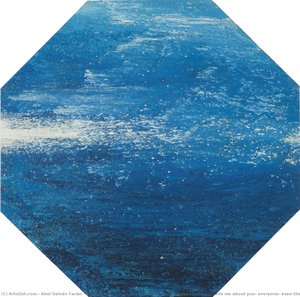
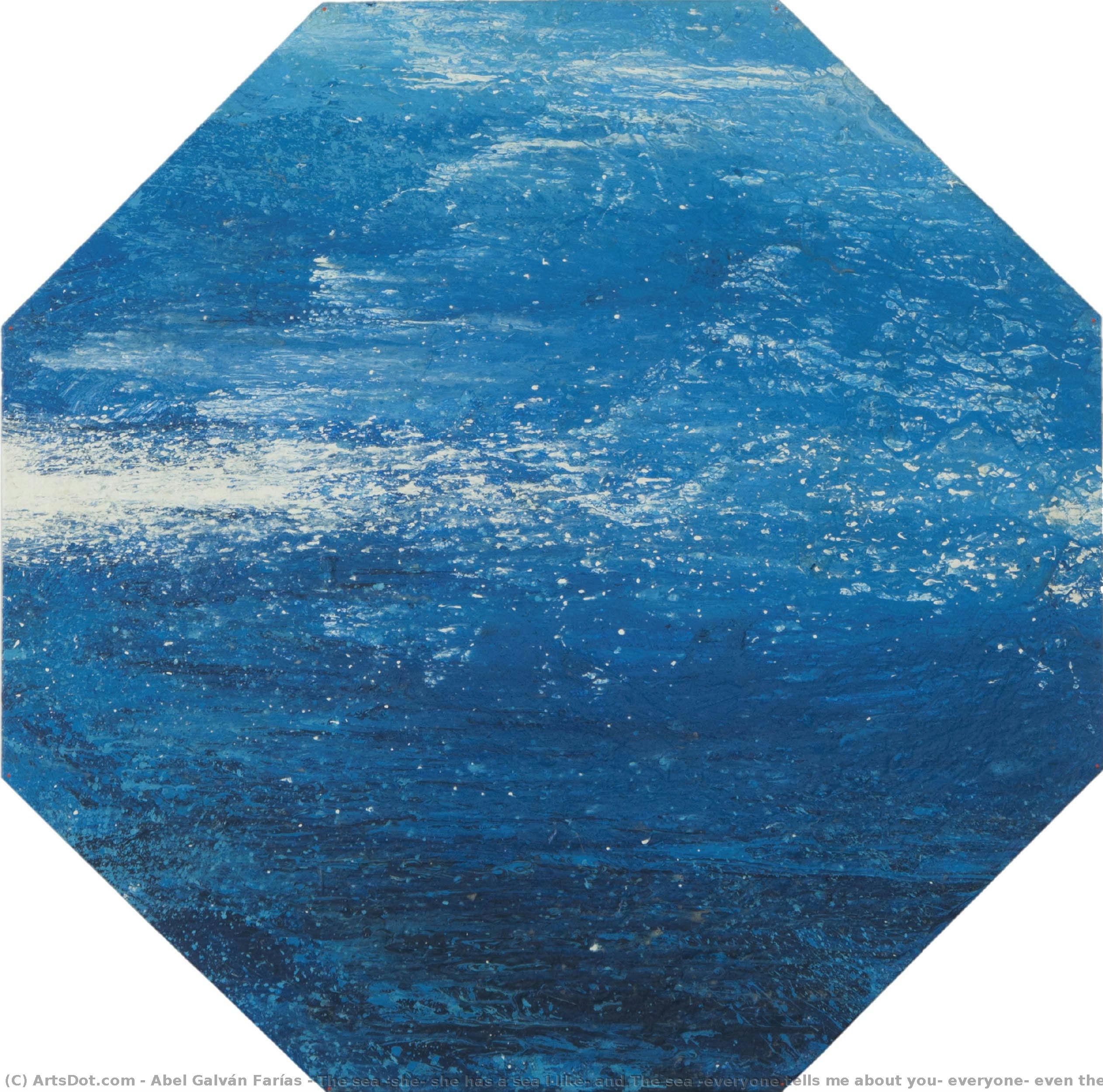
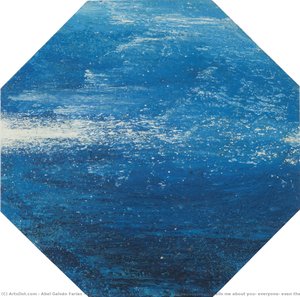
The sea (she, she has a sea I like) and The sea (everyone tells me about you, everyone, even the sea)\n\nThe sea (she, she has a sea I like)
 Painting
- Abstract Expressionism
 2012
2012- Contemporary
 180.0 x 180.0 cm
 Museum of the Arts of the University of Guadalajara
 Read More
Hand Made Oil Reproduction
Hand-painted oil on canvas in your size and frame, made to order by our artists. ( Buy Print Buy Image)




































Pick from our preset sizes that match the artwork's original proportions.

You may enter your own dimensions to fit a specific frame or space. If your selected size does not match the original image's proportions, we will either crop the artwork or extend the painting with additional hand-painted elements. A digital mockup will be sent for your approval before production begins.
Please note that the on-screen preview does not reflect the actual cropping or extension. Only the mockup will accurately show the final composition.
While custom sizes are available, we recommend selecting a dimension from the predefined list to preserve the original proportions.
After order, ArtsDot.com team will email client for instructions and provide a mockup preview
Worldwide Delivery () in 3/4 weeks instead of standard 5 weeks. (31 August). No compromise on quality.

Free Worldwide Express Shipping

High-Quality Linen Canvas

Full Shipping Insurance

Customs Tax Refund Guarantee

True Color Matching Guarantee

60-Day Return Policy (Defects Only)

100% Money-Back Guarantee

Bulk Discount Offer
 Glass option is only available in size under 110 CM

The sea (she, she has a sea I like) and The sea (everyone tells me about you, everyone, even the sea)\n\nThe sea (she, she has a sea I like)
Reproduction Medium
Reproduction Size
-


Total Price
$ 263
A Symphony of Azure: The Poetic Resonance of Abel Galván Farías
In the evocative diptych titled The sea (she, she has a sea I like) and The sea (everyone tells me about you, everyone, even the sea), Mexican artist Abel Galván Farías invites the viewer into a profound, meditative state. Created in 2012, this work is far more than a mere depiction of a marine landscape; it is a materialized fragment of a romantic and literary trance. The piece originates from a deeply personal experience, where the painter’s infatuation and his literary inclinations converged to capture the essence of an emotional tide. By utilizing two octagonal canvases, Farías breaks away from traditional rectangular constraints, offering a unique geometric rhythm that mirrors the organic, undulating nature of the ocean itself.
The technique employed here is a masterful display of abstract expressionism, where the artist eschews descriptive literalism in favor of pure, emotive texture. Through loose, energetic brushstrokes and a sophisticated layering of pigments, Farías constructs a world composed entirely of light and depth. The surface is alive with white specks and delicate dots that dance across the canvas like sunlight fracturing on a cresting wave or perhaps stars reflected in a midnight tide. This interplay of light and shadow creates a tactile dimension, making the painting feel less like a flat image and more like a window into a breathing, liquid atmosphere.
Symbolism and the Language of Color
Color serves as the primary narrator in this maritime odyssey. The palette is dominated by an expansive range of blues, from the pale, ethereal cerulean of the upper reaches to the dense, mysterious indigos of the depths. This chromatic transition is bisected by a subtle diagonal movement that suggests both the movement of currents and the shifting perspective of a dreamer lost at sea. There is a profound symbolism in this choice; the blue does not merely represent water, but rather the weight of memory and the vastness of unexpressed affection. The artist uses these shades to condense the visual experience of an emotional trance, allowing the viewer to feel the temperature and the pressure of the ocean's embrace.
For the discerning collector or interior designer, this piece offers a transformative presence. Its ability to evoke tranquility while maintaining a dynamic, textured energy makes it a centerpiece capable of anchoring a room with both sophistication and soul. Whether placed in a contemporary gallery setting or a serene residential sanctuary, the work functions as a portal to introspection. It is an invitation to lose oneself in the infinite blue, making it an ideal acquisition for those who seek art that transcends decoration to become a profound emotional experience.
Related Artworks

Artist Biography
Jean-Michel Basquiat: A Voice of the Streets and a Revolutionary Artist
Born in Brooklyn, New York City, on December 22, 1960, Jean-Michel Basquiat emerged from the vibrant, often turbulent, landscape of late 1970s and early 1980s New York as one of the most compelling and influential artists of his generation. His life was tragically cut short at the age of 27 in August 1988 due to a heroin overdose, but during his brief career, he left an indelible mark on the art world, challenging conventions, confronting social injustices, and redefining the boundaries of artistic expression.
Basquiat’s early life was shaped by his Haitian-American heritage. His father, Gerard Basquiat, was a Panamanian immigrant who worked as a night watchman for the New York City Transit Authority, while his mother, Laurinda “Lori” Saba Douglas, was an opera singer and social worker. This complex background—a blend of Caribbean roots, working-class struggles, and artistic sensibilities—became central to his work. He spent much of his childhood in Crown Heights, Brooklyn, a neighborhood grappling with poverty, racial tensions, and the burgeoning hip-hop culture that would profoundly influence his art.
Initially, Basquiat’s career began not as a solitary painter but as part of a collaborative duo known as SAMO (Street Art Method Of Operation) alongside Al Diaz. Together, they scrawled enigmatic epigrams and symbols across the walls of Lower East Side buildings in Manhattan during 1976 and 1977. These cryptic messages—often questioning consumerism, power structures, and social inequalities—established Basquiat’s early artistic voice and garnered attention within the burgeoning street art scene. This period laid the groundwork for his later explorations of identity, race, and urban experience.
The Rise of Neo-Expressionism and a Unique Style
By the early 1980s, Basquiat transitioned from graffiti to painting, establishing himself as a key figure in the neo-expressionist movement. This style, characterized by its raw emotion, gestural brushstrokes, and often confrontational subject matter, represented a reaction against the intellectualism of minimalism and conceptual art. Unlike many of his contemporaries, Basquiat didn’t rely on traditional painting techniques; instead, he incorporated elements of collage, drawing, poetry, and historical references into his work.
His paintings frequently featured skulls, crowns (a symbol of royalty and power), musical instruments, and text—often incorporating phrases from jazz lyrics, poetry, and social commentary. He drew heavily on sources such as the writings of James Baldwin, Malcolm X, and W.E.B. Du Bois, reflecting his commitment to addressing issues of race, poverty, and social justice. His distinctive style combined elements of street art with a sophisticated intellectualism, creating images that were both visually arresting and deeply layered in meaning.
Basquiat’s work was not simply decorative; it was an active engagement with the world around him. He frequently depicted scenes from his own life—his family, his neighborhood, and his experiences as a Black artist navigating a predominantly white art establishment. His use of symbols and imagery allowed him to explore complex themes in a visually accessible way, inviting viewers to contemplate the social and political realities of 1980s America.
Themes of Identity, Power, and Social Commentary
A recurring theme throughout Basquiat’s oeuvre is the exploration of identity—particularly his own as a Black artist in a predominantly white art world. He grappled with issues of representation, appropriation, and the challenges faced by marginalized communities. His paintings often confronted the hypocrisy of American society, exposing the contradictions between ideals of freedom and equality and the realities of racism and economic inequality.
Power structures were another central concern for Basquiat. He frequently depicted figures of authority—police officers, politicians, and corporate executives—as symbols of oppression and corruption. His use of crowns as a recurring motif served as both an assertion of personal power and a critique of the established order. His work became a powerful indictment of systemic injustice and a call for social change.
Furthermore, Basquiat’s art engaged with the cultural landscape of his time, particularly the rise of hip-hop culture. He incorporated elements of graffiti, breakdancing, and rap music into his paintings, reflecting the energy and dynamism of the streets of New York City. His work served as a visual record of a generation grappling with issues of identity, race, and social justice.
Legacy and Historical Significance
Despite his tragically short life, Jean-Michel Basquiat’s impact on the art world is undeniable. He quickly rose to prominence during his lifetime, becoming one of the youngest artists ever exhibited at the Whitney Museum of American Art and Documenta in 1982. His work continues to be celebrated for its raw emotion, intellectual depth, and social commentary.
Today, Basquiat’s paintings command some of the highest prices on the art market, a testament to his enduring appeal and artistic significance. He is remembered not only as a brilliant artist but also as a cultural icon—a voice for the marginalized, a champion of social justice, and a revolutionary figure who challenged the conventions of the art world.
His work remains relevant today, prompting viewers to confront issues of race, inequality, and power in a way that is both challenging and profoundly moving. Basquiat’s legacy continues to inspire artists and activists alike, solidifying his place as one of the most important figures in contemporary art history.
abel galván farías
1980 - , Mexico
Quick Facts
- Artistic Movement Or Style: Neo-expressionism
- Artists Or Movements Influenced By This Artist:
- Graffiti art
- Hip-hop culture
- Artists Who Influenced This Artist:
- Andy Warhol
- Keith Haring
- Date Of Birth: December 22, 1960
- Date Of Death: August 12, 1988
- Full Name: Jean-Michel Basquiat
- Nationality: American
- Notable Artworks:
- Irony of Negro Policeman
- Skull of Doom
- Untitled
- Boy and Dog in a Johnnypump
- Defacement
- Hollywood Africans
- Place Of Birth: New York City, U.S.
Related Articles
Abstract Expressionism's 10 Defining Masterpieces |
Explore 10 defining Abstract Expressionism masterpieces by Pollock, Rothko & de Kooning. Discover the stories behind these iconic paintings and find museum-quality art reproductions to elevate your home decor on .
Kandinsky's Masterpieces: 25 Paintings That Define Abstract Art | ArtsDot
Journey through Wassily Kandinsky's 25 most iconic abstract paintings. Explore his revolutionary use of color, form & spiritual expressionism. Find museum-quality Kandinsky reproductions and elevate your home decor with ArtsDot.com. Discover all masterpieces on ArtsDot.com!
Slate Blue Masterpieces: 10 Iconic Paintings & Timeless Home Decor Ideas
Immerse yourself in the captivating world of slate blue! Explore 10 iconic paintings by Monet, Van Gogh & Renoir. Discover their stories, techniques & find museum-quality art reproductions for your home at .

Geometric Abstraction's 10 Defining Masterpieces | Art for Your Home - ArtsDot
Explore 10 defining masterpieces of Geometric Abstraction! Discover Kandinsky, Mondrian & Malevich’s iconic works. Find museum-quality art reproductions and curated decor ideas to elevate your home at ArtsDot.com.

Beyond Representation: Exploring the Emotional Landscape of Abstract Expressionism
Explore the profound emotional world of Abstract Expressionism with ArtsDot. Discover key artists like Pollock & Rothko, learn about collecting, and find museum-quality reproductions to inspire your space.