 Preview
 Send
Send Share
Share
 Details

 Download
 Similars
 X-Ray
X-Ray Diaporama
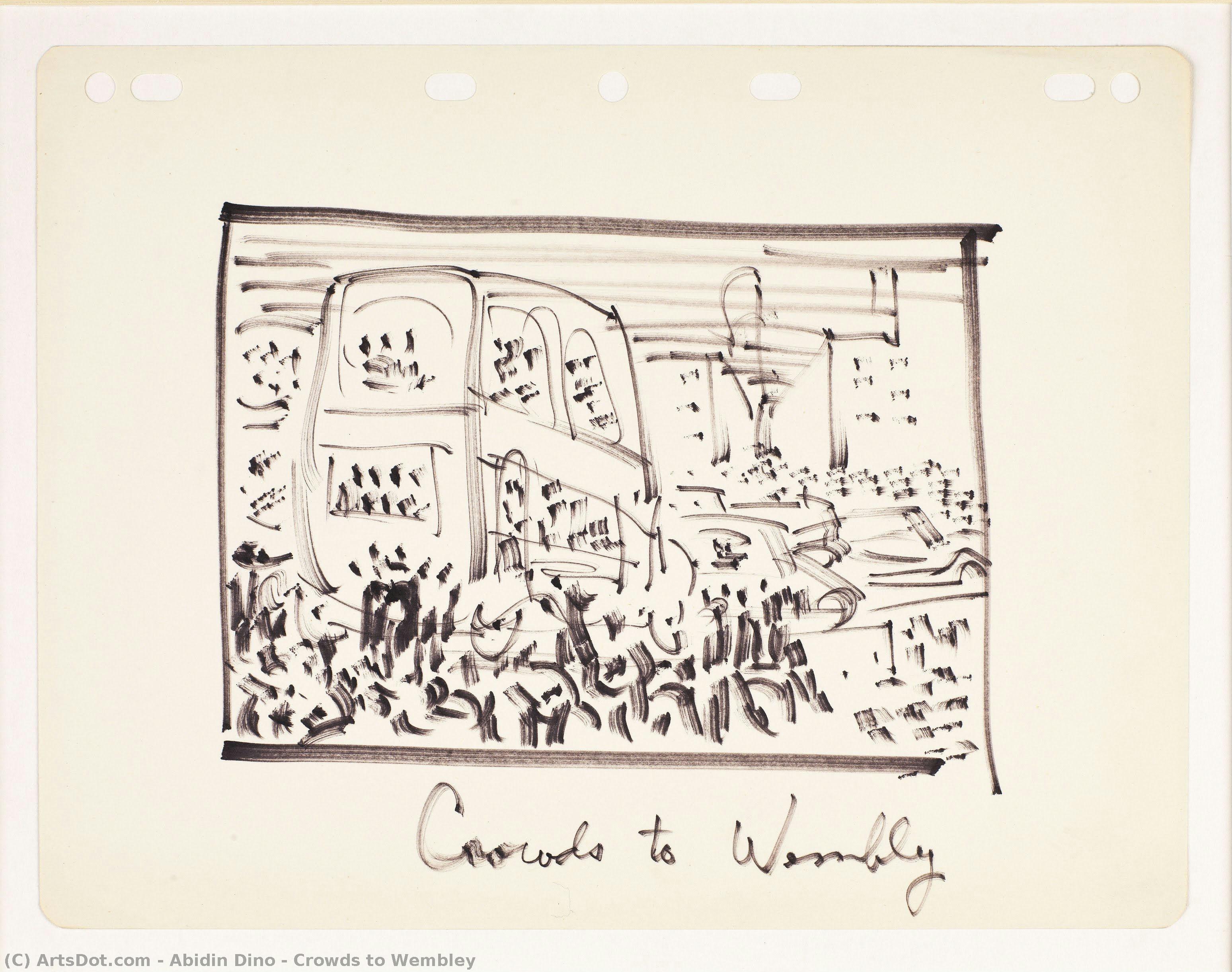
Crowds to Wembley
 Ink On Paper
- Other
 1966
1966- Modern
 5.0 x 27.0 cm
 Sakıp Sabancı Museum
 Read More
Giclée / Art Print
Museum-quality giclée or canvas print with fast production and flexible finish options. ( Buy Hand Made Painting Buy Image)




P118B $10

P118H $10

P118W $10

P438Z $10

P508JH $12

P508YH $12

P805H $10

P805Z $10

P919BZ $10

P919G $10

P919XJ $10

P959ZH $10

P968JZ $12

W106C $8

W218G $10

W218JH $8

W218Y $10

W307PJ $10

W316G $10

W316PJ $8

W316Y $10

W398PJ $8

W4111J $10

W500HY $15

W500JH $15

W692G $12

W849H $8

W940BG $15

W953PJ $8




Pick from our preset sizes that match the artwork's original proportions.

You may enter your own dimensions to fit a specific frame or space. If your selected size does not match the original image's proportions, we will either crop the artwork or extend the image with a mirrored or solid-fill edge. A digital mockup will be sent for your approval before production begins.
Please note that the on-screen preview does not reflect the actual cropping or extension. Only the mockup will accurately show the final composition.
While custom sizes are available, we recommend selecting a dimension from the predefined list to preserve the original proportions.
Worldwide Delivery () in 2 weeks instead of standard 4/5 weeks. (18 August)

Free Worldwide Express Shipping

High-Quality Linen Canvas

Full Shipping Insurance

Customs Tax Refund Guarantee

True Color Matching Guarantee

60-Day Return Policy (Defects Only)

100% Money-Back Guarantee

Bulk Discount Offer
 Glass option is only available in size under 110 CM

Crowds to Wembley
Giclée / Art Print
Reproduction Size
-


Total Price
$ 63
Collectible Description
A Moment Frozen in Ink: The Kinetic Energy of Crowds to Wembley
In the evocative monochrome world of Abidin Dino’s Crowds to Wembley, time seems to suspend itself amidst a sea of human anticipation. Created in 1966, this striking drawing serves as more than just a depiction of a gathering; it is a visceral capture of collective movement and shared expectation. The artwork presents a dense, bustling scene in front of the iconic Wembley Stadium, where the sheer mass of figures creates a rhythmic, almost pulsating texture across the paper. Through the masterful use of black ink, Dino transforms a documentary-style moment into a profound exploration of urban life, inviting the viewer to step into the very heart of the crowd.
The composition is a masterclass in controlled chaos. A central bus acts as an anchor within the swirling sea of people, providing a necessary sense of scale and a hint of the logistical reality behind such massive gatherings. Dino utilizes a sophisticated technique of hatching and cross-hatching to build depth and volume, allowing light and shadow to dance across the faces and forms of the spectators. This meticulous line work creates an illusion of tactile texture, where the density of the ink mirrors the physical density of the crowd itself. The absence of color forces the eye to focus on the structural elegance of the lines and the dramatic interplay of contrast, lending the piece a timeless, almost cinematic quality.
The Intersection of Modernism and Social Pulse
As a pivotal figure in Turkish modernism, Abidin Dino possessed a unique ability to blend European avant-garde sensibilities with a deep, empathetic connection to social reality. Crowds to Wembley reflects this duality perfectly. While the style leans toward a sketch-like, Dadaist energy—characterized by its surreal, almost fragmented depiction of faces—the subject matter remains grounded in the shared human experience. The artwork captures the electric atmosphere of 1966, an era of significant cultural shifts, where the excitement of a sporting event becomes a metaphor for the broader movements of society. There is a palpable sense of community here; the individual figures lose their singular identity to become part of a larger, breathing organism of anticipation.
For the discerning collector or interior designer, this piece offers a sophisticated focal point that brings a sense of historical weight and intellectual depth to any space. Its monochromatic palette makes it an incredibly versatile addition to contemporary or classic decor, capable of anchoring a room with its stark, graphic power. To possess a reproduction of such a work is to hold a fragment of 20th-century history—a piece that does not merely decorate a wall but narrates a story of movement, emotion, and the enduring magic of the human collective.
Related Artworks

Artist Biography
Abidin Dino: A Life in Art
Abidin Dino (1913-1993) was a pivotal Turkish artist whose work spanned several decades and reflected both his homeland’s rich cultural heritage and the influences of European modernism. His journey as an artist was marked by innovation, social commentary, and a deep commitment to artistic expression.
Early Life and Influences
Born on March 23, 1913, in Istanbul, Turkey, Abidin Dino came from an art-loving family. This early exposure fostered his passion for drawing and painting. His grandfather, Abidin Pasha Dino, was an Albanian Ottoman diplomat, adding a unique cultural dimension to his lineage. He spent parts of his childhood in Geneva and France, experiencing different artistic environments before returning to Istanbul in 1925.
Artistic Development & The D Group
Dino’s formal education was briefly interrupted when he left Robert College to dedicate himself fully to art. He quickly began publishing cartoons and articles, establishing himself as a rising talent. In 1933, alongside other innovative painters, he co-founded the “D Group”, a collective that challenged conventional artistic norms in Turkey. The D Group’s exhibitions were groundbreaking for their time.
Early Career & Soviet Union
A significant turning point came when Dino was invited by Soviet director Sergei Yutkevich to work at the Lenfil Studios in Leningrad (now Saint Petersburg) in 1933. This experience, encouraged by Atatürk himself, exposed him to new artistic techniques and perspectives. He worked as a scenery designer and assistant director, even directing his own film, “Miners,” in Moscow, Kyiv, and Odesa.
Parisian Period & International Exposure
Dino spent considerable time in Paris, first from 1937-1939 and then settling there permanently in 1952. He encountered leading figures of the Parisian art world, including Gertrude Stein, Tristan Tzara, and Pablo Picasso. This period was crucial for his artistic development, allowing him to absorb new influences and refine his style.
Artistic Style & Themes
Abidin Dino’s artistic style is characterized by:
- Expressive Brushwork: His use of felt-tip pen often added depth and texture to his compositions.
- Vibrant Color Palette: Reflecting the rich cultural heritage of both Turkey and France.
- Innovative Composition: He experimented with form and perspective, creating dynamic and engaging artworks.
His work frequently explored themes of:
- Social realism – depicting the lives of ordinary people.
- Political commentary – reflecting his concerns about social justice and political issues.
- Turkish culture – celebrating its traditions, landscapes, and people.
Major Achievements & Recognition
Throughout his career, Abidin Dino achieved significant recognition:
- Participation in the “Harbour Exhibition” showcasing Turkish dockworkers and fishermen.
- Designing the Turkish pavilion at the 1939 New York World’s Fair.
- Regular exhibitions with the Salon de Mai in Paris for eight years from 1954.
Later Life & Legacy
Dino continued to create art and engage with the artistic community until his death on December 7, 1993, in Villejuif Hospital, Paris. His body was returned to Istanbul for burial in Aşiyan Cemetery.
Historical Significance
Abidin Dino’s legacy extends beyond his individual artworks. He played a vital role in bridging Turkish and European art scenes, influencing subsequent generations of artists with his innovative style and commitment to social commentary. His work remains a testament to the power of art to reflect and shape our understanding of the world.
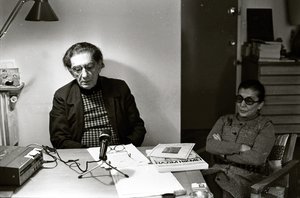
abidin dino
1913 - 1993 , Turkey
Quick Facts
- Birth Date: 1913-03-23
- Birth Place: Istanbul, Turkey
- Death Date: 1993-12-07
- Movement: Expressionism, Social realism
- Name: Abidin Dino
- Nationality: Turkish
- Notable Works: In the Pub - Television, Çiçek / Flower, Soho - Radio
Related Articles

Dark Masterpieces: 10 Iconic Paintings Dominated by Black Tones |
Explore 10 iconic paintings dominated by black tones, from Rembrandt’s chiaroscuro to Goya's dark expressions. Discover the stories behind these masterpieces & find museum-quality art reproductions for your home at .

The Nuances of Graphite: Exploring Emotional Depth & Technical Mastery in Pencil Drawing
Explore the captivating world of graphite drawing! Discover its rich history, master essential techniques like chiaroscuro, and learn how artists evoke emotion through this timeless medium. Expert insights for art enthusiasts.
Mars Black Masterpieces: 10 Iconic Paintings & Timeless Art Decor Ideas
Delve into the power of 'Mars Black' with 10 iconic paintings by masters like Rembrandt & Caravaggio. Explore dramatic chiaroscuro, gothic art, and timeless beauty. Find museum-quality reproductions & elevate your home decor on .
Lamp Black & Masterpieces: 10 Paintings That Define Shadow & Light |
Delve into the captivating world of 'Lamp Black' tones with 10 iconic paintings by masters like Rembrandt & Caravaggio. Explore Baroque chiaroscuro, dramatic lighting & shadow in art history. Find museum-quality reproductions at
Ivory Black Masters: 10 Paintings That Define Dramatic Art |
Delve into the power of 'Ivory Black' with 10 iconic paintings by masters like Rembrandt & Caravaggio. Explore dramatic chiaroscuro, gothic moods & timeless art history. Find museum-quality reproductions and elevate your home decor at