

 Preview
 Send
Send Share
Share
 Details

 Download
 Similars
 X-Ray
X-Ray Diaporama
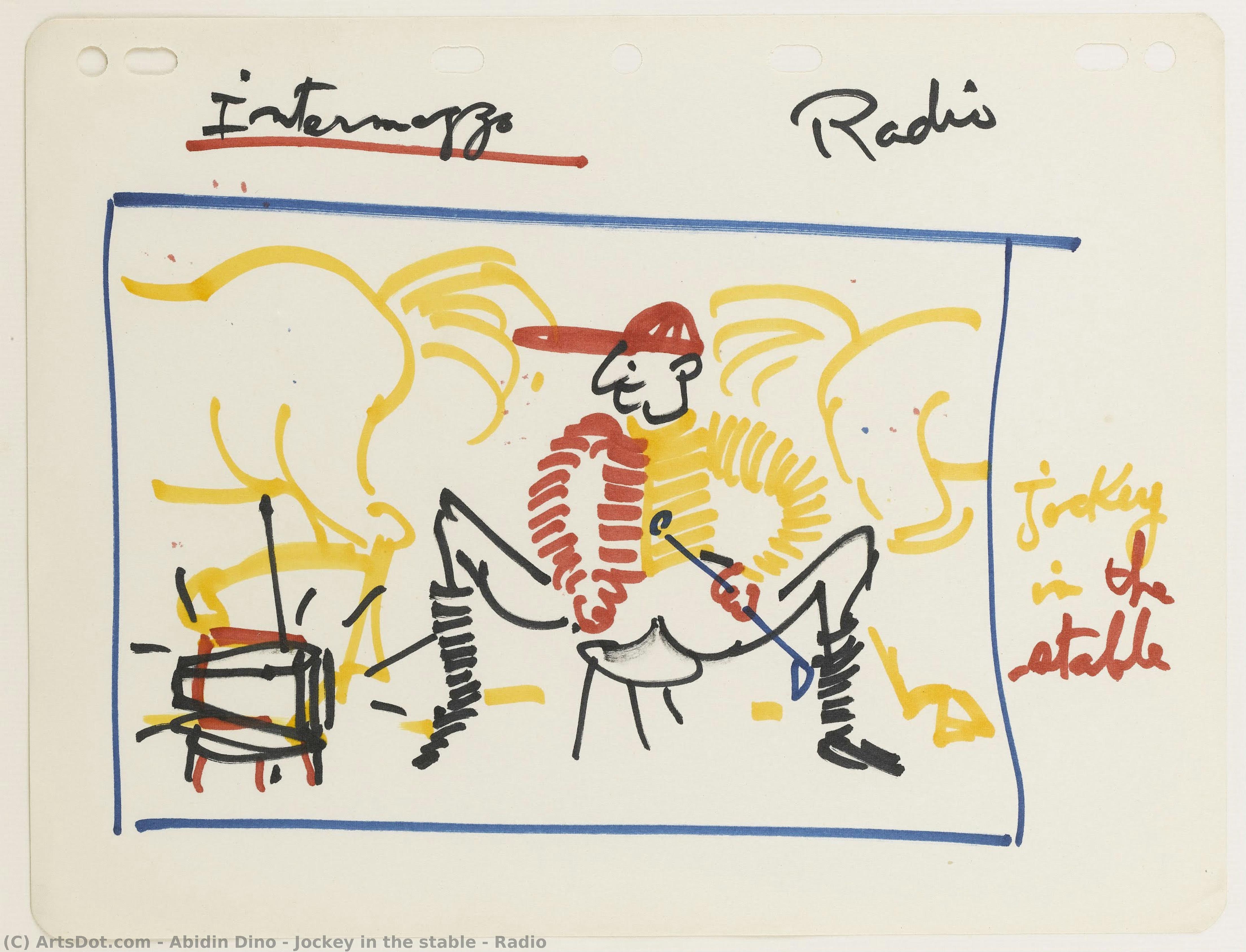
Jockey in the stable - Radio
 Marker / Felt-tip
- Modernism
 1966
1966- Modern
 5.0 x 27.0 cm
 Sakıp Sabancı Museum
 Read More
Purchase a high-resolution, enhanced digital image, far superior to the online preview.
Each file is meticulously prepared by our in-house specialists using advanced tools and expert manual retouching. We ensure every image has exceptional clarity, precise color accuracy, and fine detail.
The final file is delivered via email within 72 hours, optimized for immediate use in professional, editorial, and print environments. This is the same quality trusted by top-tier design studios, publishers, and galleries.
Digital Image
Download a high-resolution file for personal display, printing, and creative projects. ( Buy Print Buy Hand Made Painting)
Included in Every Digital Image Order
Expert Digital Delivery, Guaranteed
When you choose ArtsDot.com, you're not just getting an image - you're receiving a professionally enhanced digital artwork, crafted with precision and backed by a satisfaction guarantee. Here's everything that comes with your order, automatically:

Fast Email Delivery
Your high-resolution digital image file will be emailed to you within 72 hours of ordering - ready for immediate use.

AI-Enhanced Digital File
Your artwork is professionally optimized using advanced AI tools and manual editing, ensuring maximum detail, clarity, and color accuracy.

Free Lifetime Re-Delivery
Accidentally deleted or lost your file? No worries - we'll resend it to you anytime, free of charge.

No Import Fees - Ever
Enjoy your artwork instantly with zero customs, duties, or delivery fees - digital downloads are always tax-free.

Color Accuracy Guarantee
We ensure your digital image reflects the original colors as closely as possible using professional tools and color management.

60-Day Satisfaction Guarantee
If you're not satisfied with your digital image, we'll revise it or refund 100% within 60 days - no questions asked.

100% Money-Back Guarantee
Not satisfied? Get a full refund within 60 days of receiving your digital file - no questions asked.

Bulk Order Discounts
Buy 3 images, save 10% - Buy 5, save 15% - Buy 10+, save 20%. Great for creative projects, galleries, and agencies.
Collectible Description
A Moment Captured in Ink: The Raw Intimacy of Abidin Dino
In the vast and varied oeuvre of the Turkish master Abidin Dino, few pieces possess the startling, immediate vulnerability found in "Jockey in the stable - Radio". Created in 1966, this work serves as a profound window into the artist's ability to find extraordinary narrative within the most mundane or even transgressive moments. The drawing, executed with the swift, decisive strokes of a felt-tip pen, presents a scene that is simultaneously humorous and deeply human. We see a figure—a man in a striking red shirt—seated upon a chair in a state of disarray, his pants lowered in a gesture that strips away social pretension and leaves only the raw, unadorned reality of the individual. It is a composition that defies the polished expectations of traditional portraiture, opting instead for a gritty, spontaneous energy that captures the essence of life as it is lived, rather than how it is performed.
The technique employed here is a testament to Dino’s mastery of line and economy. Using what appears to be a felt-tip medium, the artist utilizes high contrast to define the space, creating a stark interplay between light and shadow that gives the two chairs and the central figure a sculptural presence despite the minimalist approach. The choice of a black and white palette, punctuated only by the implied or literal splash of red in the subject's attire, directs the viewer's eye immediately to the heart of the action. This stylistic choice reflects the influence of European modernism and the expressive freedom Dino championed throughout his career, where the weight of a single line can convey more emotion than an entire landscape of color.
Symbolism and the Human Condition
Beyond its immediate visual impact, "Jockey in the stable - Radio" invites a deeper psychological reading. The title itself suggests a juxtaposition between the physical setting—the stable, a place of earthiness and animal instinct—and the concept of "Radio," which implies a transmission of signals, voices, or perhaps a sense of being tuned into a specific frequency of existence. There is a profound symbolism in the subject's exposure; by presenting a figure partially undressed, Dino explores themes of vulnerability, shame, and the loss of public persona. The chair, an emblem of domesticity and stability, becomes a stage for this moment of private chaos.
For the collector or the interior designer, this piece offers a unique opportunity to introduce a conversation starter into a curated space. It is not merely a decoration but an intellectual provocation. In a modern living space, a high-quality reproduction of this work acts as a bold anchor, providing a sense of avant-garde sophistication and a connection to the mid-century modernist movement. Its presence suggests a dweller who appreciates the complexities of the human spirit and possesses the courage to embrace art that is unapologetically honest, raw, and deeply evocative.
Related Artworks

Artist Biography
Abidin Dino: A Life in Art
Abidin Dino (1913-1993) was a pivotal Turkish artist whose work spanned several decades and reflected both his homeland’s rich cultural heritage and the influences of European modernism. His journey as an artist was marked by innovation, social commentary, and a deep commitment to artistic expression.
Early Life and Influences
Born on March 23, 1913, in Istanbul, Turkey, Abidin Dino came from an art-loving family. This early exposure fostered his passion for drawing and painting. His grandfather, Abidin Pasha Dino, was an Albanian Ottoman diplomat, adding a unique cultural dimension to his lineage. He spent parts of his childhood in Geneva and France, experiencing different artistic environments before returning to Istanbul in 1925.
Artistic Development & The D Group
Dino’s formal education was briefly interrupted when he left Robert College to dedicate himself fully to art. He quickly began publishing cartoons and articles, establishing himself as a rising talent. In 1933, alongside other innovative painters, he co-founded the “D Group”, a collective that challenged conventional artistic norms in Turkey. The D Group’s exhibitions were groundbreaking for their time.
Early Career & Soviet Union
A significant turning point came when Dino was invited by Soviet director Sergei Yutkevich to work at the Lenfil Studios in Leningrad (now Saint Petersburg) in 1933. This experience, encouraged by Atatürk himself, exposed him to new artistic techniques and perspectives. He worked as a scenery designer and assistant director, even directing his own film, “Miners,” in Moscow, Kyiv, and Odesa.
Parisian Period & International Exposure
Dino spent considerable time in Paris, first from 1937-1939 and then settling there permanently in 1952. He encountered leading figures of the Parisian art world, including Gertrude Stein, Tristan Tzara, and Pablo Picasso. This period was crucial for his artistic development, allowing him to absorb new influences and refine his style.
Artistic Style & Themes
Abidin Dino’s artistic style is characterized by:
- Expressive Brushwork: His use of felt-tip pen often added depth and texture to his compositions.
- Vibrant Color Palette: Reflecting the rich cultural heritage of both Turkey and France.
- Innovative Composition: He experimented with form and perspective, creating dynamic and engaging artworks.
His work frequently explored themes of:
- Social realism – depicting the lives of ordinary people.
- Political commentary – reflecting his concerns about social justice and political issues.
- Turkish culture – celebrating its traditions, landscapes, and people.
Major Achievements & Recognition
Throughout his career, Abidin Dino achieved significant recognition:
- Participation in the “Harbour Exhibition” showcasing Turkish dockworkers and fishermen.
- Designing the Turkish pavilion at the 1939 New York World’s Fair.
- Regular exhibitions with the Salon de Mai in Paris for eight years from 1954.
Later Life & Legacy
Dino continued to create art and engage with the artistic community until his death on December 7, 1993, in Villejuif Hospital, Paris. His body was returned to Istanbul for burial in Aşiyan Cemetery.
Historical Significance
Abidin Dino’s legacy extends beyond his individual artworks. He played a vital role in bridging Turkish and European art scenes, influencing subsequent generations of artists with his innovative style and commitment to social commentary. His work remains a testament to the power of art to reflect and shape our understanding of the world.
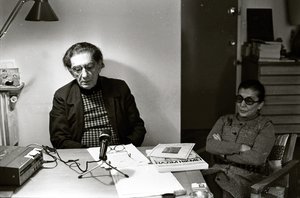
abidin dino
1913 - 1993 , Turkey
Quick Facts
- Birth Date: 1913-03-23
- Birth Place: Istanbul, Turkey
- Death Date: 1993-12-07
- Movement: Expressionism, Social realism
- Name: Abidin Dino
- Nationality: Turkish
- Notable Works: In the Pub - Television, Çiçek / Flower, Soho - Radio

