 Preview
 Send
Send Share
Share
 Details

 Download
 Similars
 X-Ray
X-Ray Diaporama
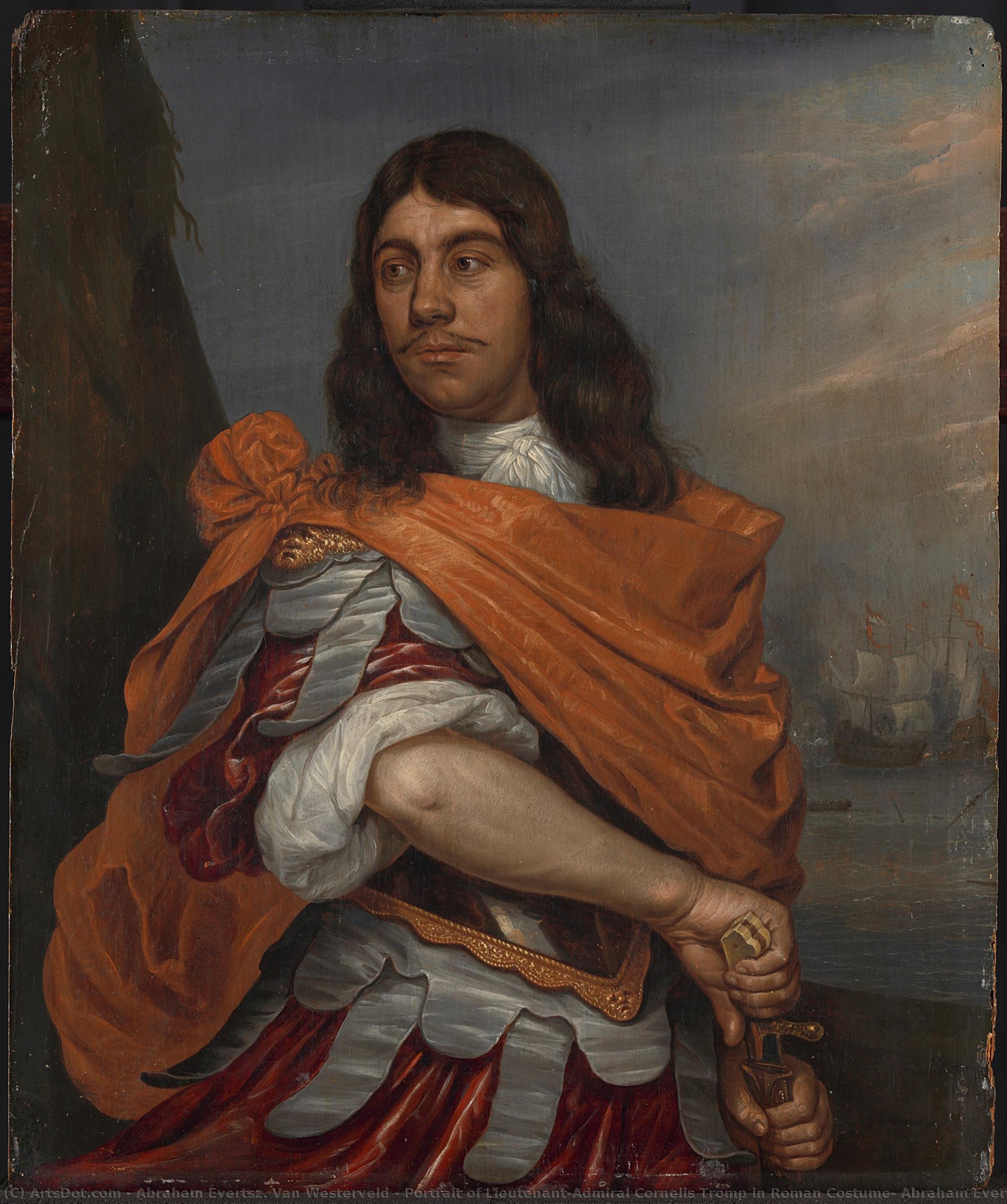
Portrait of Lieutenant-Admiral Cornelis Tromp in Roman Costume, Abraham Evertsz. van Westerveld, 1650 - 1692
 1692
1692 40.0 x 33.0 cm
 Read More
Hand Made Oil Reproduction
Hand-painted oil on canvas in your size and frame, made to order by our artists. ( Buy Print Buy Image)




































Pick from our preset sizes that match the artwork's original proportions.

You may enter your own dimensions to fit a specific frame or space. If your selected size does not match the original image's proportions, we will either crop the artwork or extend the painting with additional hand-painted elements. A digital mockup will be sent for your approval before production begins.
Please note that the on-screen preview does not reflect the actual cropping or extension. Only the mockup will accurately show the final composition.
While custom sizes are available, we recommend selecting a dimension from the predefined list to preserve the original proportions.
After order, ArtsDot.com team will email client for instructions and provide a mockup preview
Worldwide Delivery () in 3/4 weeks instead of standard 5 weeks. (31 August). No compromise on quality.

Free Worldwide Express Shipping

High-Quality Linen Canvas

Full Shipping Insurance

Customs Tax Refund Guarantee

True Color Matching Guarantee

60-Day Return Policy (Defects Only)

100% Money-Back Guarantee

Bulk Discount Offer
 Glass option is only available in size under 110 CM

Portrait of Lieutenant-Admiral Cornelis Tromp in Roman Costume, Abraham Evertsz. van Westerveld, 1650 - 1692
Reproduction Medium
Reproduction Size
-


Total Price
$ 263
Related Artworks





Artist Biography
A Glimpse into the World of Abraham Evertsz. Van Westerveld
Abraham Evertsz. Van Westerveld remains a somewhat enigmatic figure in the annals of 17th-century Dutch painting, yet his work offers a compelling window into the burgeoning maritime culture and artistic sensibilities of his time. While biographical details are scarce – a common challenge with artists from this period whose lives weren’t meticulously documented – we can piece together a portrait of a painter deeply connected to the bustling port city of Amsterdam and its global reach. Born in an unspecified year, Van Westerveld was actively painting throughout the latter half of the 1600s, a period marked by Dutch Golden Age prosperity and naval dominance. His surviving oeuvre primarily consists of seascapes, harbor scenes, and ship portraits, reflecting not only his artistic skill but also the economic engine that fueled the Netherlands’ rise to prominence.Navigating Artistic Currents: Style and Influences
Van Westerveld's style is characterized by a remarkable clarity of light and meticulous attention to detail – hallmarks of Dutch Realism. He wasn’t necessarily breaking new ground in terms of radical innovation, but rather excelled at capturing the precise textures of water, wood, and sailcloth with impressive fidelity. His paintings are not dramatic storms or heroic naval battles; instead, they present a more tranquil, observational view of maritime life. This focus on everyday scenes distinguishes him from some of his contemporaries who favored more sensational subjects. Influences can be detected in the works of Simon de Vlieger and Jan van Kessel, both renowned for their ship paintings. Like them, Van Westerveld demonstrates a keen understanding of naval architecture and rigging, suggesting he may have had access to ships and harbors for direct study. However, his palette tends towards warmer tones and a softer overall effect than some of the more starkly realistic painters of the period. He masterfully conveys the atmosphere of the Dutch coastline, often depicting calm waters reflecting the subtle hues of the sky.The World on Canvas: Common Themes and Motifs
Van Westerveld’s paintings are essentially visual records of a specific moment in history – the height of Dutch maritime power. His harbor scenes teem with activity, showcasing the complex logistics of trade and shipping. Ships from various nations can be identified, hinting at Amsterdam's role as a global hub.- Ship portraits form a significant portion of his output.
- These are often commissioned by ship owners or captains, serving as both status symbols and accurate depictions of their vessels.
- He frequently includes detailed renderings of flags, pennants, and other nautical details.