

 Preview
 Send
Send Share
Share
 Details

 Download
 Similars
 X-Ray
X-Ray Diaporama
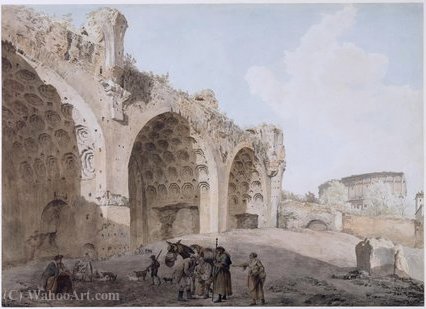
View in the Roman Forum
 Read More
Purchase a high-resolution, enhanced digital image, far superior to the online preview.
Each file is meticulously prepared by our in-house specialists using advanced tools and expert manual retouching. We ensure every image has exceptional clarity, precise color accuracy, and fine detail.
The final file is delivered via email within 72 hours, optimized for immediate use in professional, editorial, and print environments. This is the same quality trusted by top-tier design studios, publishers, and galleries.
Digital Image
Download a high-resolution file for personal display, printing, and creative projects. ( Buy Print Buy Hand Made Painting)
Included in Every Digital Image Order
Expert Digital Delivery, Guaranteed
When you choose ArtsDot.com, you're not just getting an image - you're receiving a professionally enhanced digital artwork, crafted with precision and backed by a satisfaction guarantee. Here's everything that comes with your order, automatically:

Fast Email Delivery
Your high-resolution digital image file will be emailed to you within 72 hours of ordering - ready for immediate use.

AI-Enhanced Digital File
Your artwork is professionally optimized using advanced AI tools and manual editing, ensuring maximum detail, clarity, and color accuracy.

Free Lifetime Re-Delivery
Accidentally deleted or lost your file? No worries - we'll resend it to you anytime, free of charge.

No Import Fees - Ever
Enjoy your artwork instantly with zero customs, duties, or delivery fees - digital downloads are always tax-free.

Color Accuracy Guarantee
We ensure your digital image reflects the original colors as closely as possible using professional tools and color management.

60-Day Satisfaction Guarantee
If you're not satisfied with your digital image, we'll revise it or refund 100% within 60 days - no questions asked.

100% Money-Back Guarantee
Not satisfied? Get a full refund within 60 days of receiving your digital file - no questions asked.

Bulk Order Discounts
Buy 3 images, save 10% - Buy 5, save 15% - Buy 10+, save 20%. Great for creative projects, galleries, and agencies.
Related Artworks

Artist Biography
Jacques-Louis David: Architect of a Revolutionary Vision
Jacques-Louis David, born in Paris on August 30, 1748, wasn’t merely a painter; he was a pivotal figure who shaped the artistic landscape of late 18th and early 19th century France. His life intersected dramatically with some of the most transformative events in European history – the waning years of the Ancien Régime, the French Revolution, and the rise and fall of Napoleon Bonaparte. David’s career wasn't defined by a simple progression through styles; instead, it was a dynamic evolution fueled by political upheaval and an unwavering commitment to Neoclassical ideals. His early life, marked by personal tragedy and rigorous artistic training, laid the foundation for his later dominance as the foremost painter of his era. The loss of his father at a young age instilled in him a stoicism that would permeate his work, while his subsequent upbringing fostered a deep appreciation for classical art and philosophy – principles he would champion throughout his career. His education under François Boucher, initially a master of Rococo, proved crucial, exposing him to the established artistic conventions before guiding him towards the burgeoning Neoclassical movement.- Early Training: David’s initial training with Boucher introduced him to the decorative elegance of the Rococo style, but his subsequent mentorship by Joseph-Marie Vien instilled in him a growing interest in classical antiquity and its principles.
- Prix de Rome: Winning the prestigious Prix de Rome in 1774 provided David with invaluable opportunities for artistic development and exposure within the French court. This scholarship allowed him to study in Italy, immersing himself in the masterpieces of the Renaissance and Baroque periods.
- Return to Paris & Early Success: Upon his return to France, David quickly established himself as a prominent artist, gaining recognition for works like “Belisarius Asking Alms” (1782) and “Andromache Mourning Hector” (1784), both of which demonstrated his burgeoning mastery of Neoclassical composition and technique.
The Revolutionary Years: Art as Propaganda
David’s artistic trajectory took a dramatic turn with the outbreak of the French Revolution in 1789. Initially, he aligned himself with the revolutionary fervor, serving as its official painter and producing works that glorified the ideals of liberty, equality, and fraternity. This period witnessed a shift from his earlier, more restrained style to one characterized by bold colors, dynamic compositions, and emotionally charged narratives. His paintings became potent tools of propaganda, designed to inspire patriotism and rally support for the revolution.- “Oath of the Horatii” (1784): This iconic work, depicting a scene from Roman history, perfectly encapsulates David’s Neoclassical principles – its austere composition, clear moral message, and emphasis on civic virtue resonated deeply with revolutionary ideals.
- “The Death of Marat” (1793): Perhaps his most famous painting, “The Death of Marat,” became a symbol of the revolution's commitment to justice and sacrifice. The stark realism of the scene, coupled with David’s skillful manipulation of perspective and lighting, transformed Marat into a martyr for the cause.
- “The Lictors Bringing to Brutus the Bodies of His Sons” (1789): This powerful depiction of Roman vengeance served as a visual allegory for the revolutionary struggle against tyranny.
Napoleon and the Imperial Style
Following the Reign of Terror, Napoleon Bonaparte seized power in France, ushering in a new era of imperial grandeur. David, recognizing the strategic importance of art in shaping public opinion, wholeheartedly embraced the emperor’s vision and became his “First Painter.” He skillfully adapted his Neoclassical style to serve the needs of the Napoleonic regime, producing monumental history paintings that glorified Napoleon's military victories and reinforced his image as a divinely appointed ruler.- “The Coronation of Napoleon” (1804): This colossal painting captured the splendor and formality of Napoleon’s coronation ceremony, solidifying his legitimacy as emperor.
- “Napoleon Crossing the Alps” (1800): Arguably David's most iconic work during this period, “Napoleon Crossing the Alps” presented a carefully constructed image of the emperor as a heroic figure leading his troops to victory – a potent symbol of French power and ambition.
Legacy and Influence
Despite Napoleon’s eventual downfall, David remained a prominent artist throughout his life. His work continued to be exhibited and admired, and he exerted a profound influence on subsequent generations of painters. The “Primitives” or “Barbus,” a group of David's students who rebelled against his rigid Neoclassical style in the 1790s, sought inspiration from archaic Greek vase painting and early Renaissance art, paving the way for Romanticism. David’s legacy extends beyond individual works; he fundamentally reshaped the history of French painting, establishing a new standard for historical painting and influencing artistic styles for decades to come. His commitment to classical ideals, combined with his ability to capture dramatic emotion and convey complex narratives, cemented his place as one of the most important artists of the late 18th and early 19th centuries. Jacques-Louis David died in Brussels on December 29, 1825, leaving behind a body of work that continues to captivate and inspire viewers today.Key Characteristics of David’s Style
- Neoclassical Composition: David's paintings are characterized by clear, balanced compositions inspired by classical Greek and Roman art.
- Rigorous Contours & Sculpted Forms: He employed strong outlines and carefully sculpted forms to create a sense of monumentality and drama.
- Polished Surfaces: His surfaces were meticulously rendered with smooth, polished brushstrokes, contributing to the paintings’ overall sense of refinement and grandeur.
- Moralizing Themes: David frequently depicted scenes from history or mythology that conveyed moral lessons and promoted civic virtue.

abraham-louis-rodolphe ducros
1748 - 1810 , Switzerland
Quick Facts
- Artistic Movement Or Style: Neoclassicism
- Artists Or Movements Influenced By This Artist:
- Anne Louis Girodet
- François Gérard
- Artists Who Influenced This Artist:
- Joseph-Marie Vien
- Nicolas Poussin
- Date Of Birth: August 30, 1748
- Date Of Death: December 29, 1825
- Full Name: Jacques-Louis David
- Nationality: French
- Notable Artworks:
- Oath of the Horatii
- Death of Marat
- Napoleon Crossing Alps
- Place Of Birth: Paris, France

