 Preview
 Send
Send Share
Share
 Details

 Download
 Similars
 X-Ray
X-Ray Diaporama
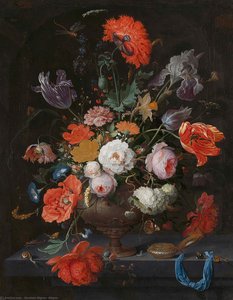
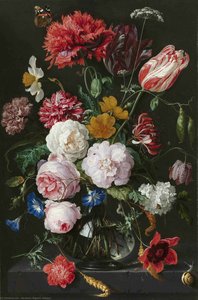
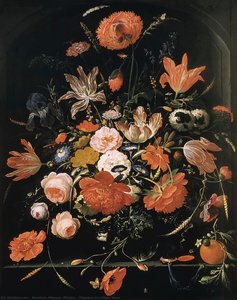
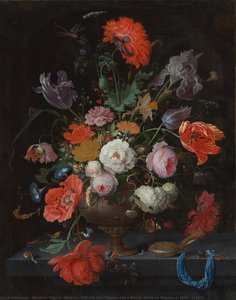
Vase of Flowers
 Oil On Canvas
- WallArt
- Baroque
 Early Modern
 87.0 x 68.0 cm
 Hermitage Museum
 Read More
Hand Made Oil Reproduction
Hand-painted oil on canvas in your size and frame, made to order by our artists. ( Buy Print Buy Image)




P118B $10

P118H $10

P118W $10

P438Z $10

P508JH $12

P508YH $12

P805H $10

P805Z $10

P919BZ $10

P919G $10

P919XJ $10

P959ZH $10

P968JZ $12

W106C $8

W218G $10

W218JH $8

W218Y $10

W307PJ $10

W316G $10

W316PJ $8

W316Y $10

W398PJ $8

W4111J $10

W500HY $15

W500JH $15

W692G $12

W849H $8

W940BG $15

W953PJ $8




Pick from our preset sizes that match the artwork's original proportions.

You may enter your own dimensions to fit a specific frame or space. If your selected size does not match the original image's proportions, we will either crop the artwork or extend the painting with additional hand-painted elements. A digital mockup will be sent for your approval before production begins.
Please note that the on-screen preview does not reflect the actual cropping or extension. Only the mockup will accurately show the final composition.
While custom sizes are available, we recommend selecting a dimension from the predefined list to preserve the original proportions.
After order, ArtsDot.com team will email client for instructions and provide a mockup preview
Worldwide Delivery () in 3/4 weeks instead of standard 5 weeks. (17 August). No compromise on quality.

Free Worldwide Express Shipping

High-Quality Linen Canvas

Full Shipping Insurance

Customs Tax Refund Guarantee

True Color Matching Guarantee

60-Day Return Policy (Defects Only)

100% Money-Back Guarantee

Bulk Discount Offer
 Glass option is only available in size under 110 CM

Vase of Flowers
Reproduction Medium
Reproduction Size
-


Total Price
$ 263
Artwork Description
A Symphony in Bloom: Exploring Abraham Mignon's "Vase of Flowers"
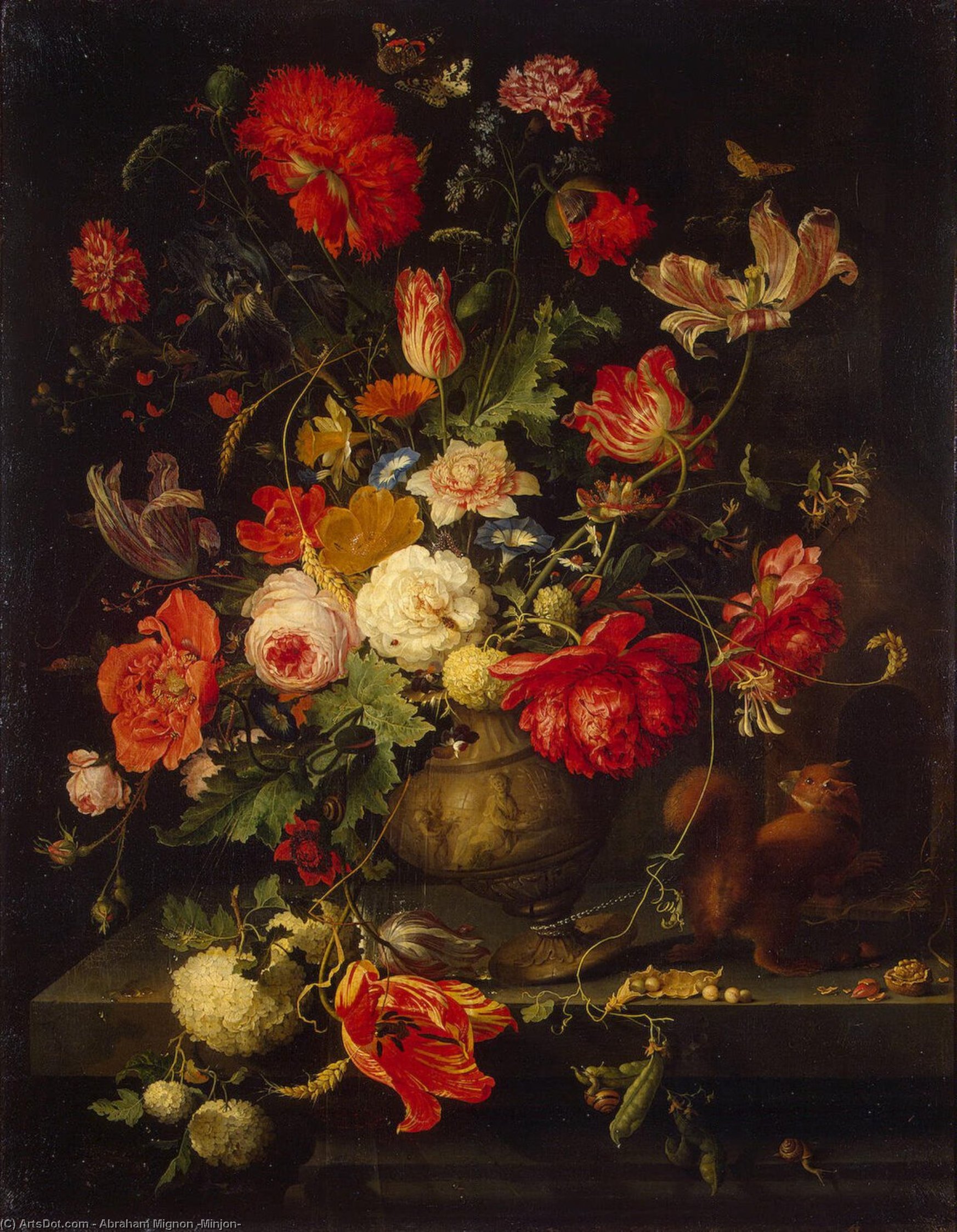
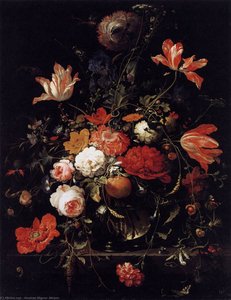
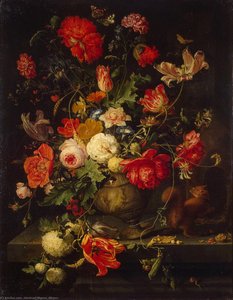
To gaze upon Abraham Mignon’s Vase of Flowers is to step directly into the opulent, yet melancholic, heart of the Dutch Golden Age. This exquisite still life transcends a mere arrangement of botanical specimens; it is a carefully orchestrated meditation on beauty, transience, and the sheer abundance of life itself. The oil paint captures light playing across velvety petals and glossy leaves, presenting an almost tangible richness that speaks to the mastery of its creator. Mignon, whose career flickered brightly between 1640 and 1679, gifted the art world compositions that are both scientifically accurate in their depiction of flora and deeply poetic in their arrangement.
The Artistry of Still Life: Technique and Composition
Mignon’s technical prowess is immediately apparent. The composition centers around a magnificent vase, from which an explosion of color seems to erupt across the supporting table surface. Notice the interplay between the deep, saturated reds of certain blossoms against the cooler tones of surrounding foliage—this contrast is what gives the painting its immediate visual drama. His handling of oil paint allows for incredible depth; one can almost feel the texture of the petals and the weight of the vase. The arrangement itself is not haphazard; it follows a sophisticated compositional structure, guiding the viewer's eye through various focal points before allowing it to rest on the overall harmony of the grouping.
Symbolism Woven into Petals: The Fleeting Nature of Beauty
Like many great still lifes from this period, Vase of Flowers carries a profound symbolic weight. These vibrant blooms, while rendered with such permanence by the artist's hand, serve as potent memento mori—a reminder that all earthly beauty is ephemeral. The inclusion of various types of flowers, each with its own bloom cycle and meaning, invites contemplation on time passing. It suggests that life, like this magnificent bouquet, is a perfect, glorious moment destined to fade, making the act of observing it all the more precious.
Bringing Dutch Grandeur Home: Decorating with Masterful Art
For the collector or designer seeking an infusion of historical grandeur and natural elegance into a modern space, this piece offers unparalleled depth. A reproduction of Vase of Flowers does more than decorate; it elevates a room to a gallery setting. Imagine its rich color palette anchoring a drawing-room or dining area. It speaks of cultivated taste, scholarly appreciation for the arts, and an enduring love for nature’s most exquisite offerings. Owning this piece is acquiring not just paint on canvas, but a tangible echo of 17th-century Dutch refinement.
Related Artworks
Artist Biography
A Life Immersed in Stillness: The World of Abraham Mignon
Abraham Mignon, or Minjon as he was sometimes known, remains a captivating figure within the Dutch Golden Age still life tradition, despite a tragically short career spanning only from 1640 to 1679. Born in Frankfurt, Germany, into a family with roots in the Southern Netherlands and a Calvinist faith, Mignon’s artistic journey was one of rapid development and remarkable skill. His paintings—exquisite arrangements of flowers, fruits, game, and luxurious objects—are not merely depictions of material beauty but rather carefully constructed meditations on life's fleeting nature, imbued with symbolism and technical mastery.
Mignon’s early training began under the tutelage of Jacob Marrel in Wetzlar. Marrel, a respected flower painter and art dealer, recognized young Abraham’s talent and fostered his abilities. This apprenticeship was crucial, providing Mignon with a solid foundation in botanical accuracy and composition. However, it was the move to Utrecht in the Dutch Republic that truly ignited his artistic potential. The vibrant art scene of Utrecht, coupled with exposure to the works of masters like Jan Davidszoon de Heem, would profoundly shape his style.
The Influence of De Heem and a Blossoming Style
Utrecht was a hub for still life painting, and Mignon quickly integrated himself into this artistic community. In 1669, he joined the Guild of Saint Luke, solidifying his position as a professional artist. More importantly, he became an assistant in Jan Davidszoon de Heem’s workshop. De Heem was a pivotal figure in the development of opulent and complex still lifes, known for their dramatic lighting, rich textures, and symbolic depth. Mignon absorbed these lessons with remarkable speed, developing a style that echoed De Heem's grandeur while simultaneously establishing his own unique voice.
After de Heem’s return to Antwerp in 1672, it is widely believed that Mignon took over the reins of his workshop. This transition speaks volumes about the esteem in which he was held by his contemporaries and the confidence De Heem placed in his abilities. Mignon's paintings from this period demonstrate a heightened level of sophistication, characterized by meticulous detail, vibrant color palettes, and an increasingly refined understanding of light and shadow. His compositions often feature a profusion of blooms, ripe fruits, delicate insects, and gleaming glassware, all arranged with a sense of dynamic energy.
Symbolism and the Vanitas Tradition
Mignon’s still lifes were not simply exercises in technical skill; they were deeply rooted in the Vanitas tradition—a genre that served as a visual reminder of mortality and the transience of earthly pleasures. The inclusion of wilting flowers, decaying fruit, extinguished candles, or hourglasses all alluded to the inevitable passage of time and the futility of worldly possessions. However, Mignon’s work wasn't solely focused on somber contemplation. His paintings also celebrated the beauty and abundance of nature, creating a delicate balance between joy and melancholy.
The presence of exotic fruits, rare shells, or imported porcelain hinted at wealth and status, but these symbols were often juxtaposed with elements that underscored their impermanence. A half-peeled lemon, for example, could represent both the sweetness of life and its eventual decay. This subtle interplay of symbolism elevated Mignon’s still lifes beyond mere decoration, transforming them into profound statements about the human condition.
Legacy and Historical Significance
Despite his untimely death at the age of 39 in Utrecht, Abraham Mignon left an indelible mark on the world of still life painting. His works were highly sought after by collectors throughout Europe during his lifetime, adorning the homes of nobility and wealthy merchants. The Orange-Nassau family was among his most prominent patrons, further cementing his reputation as a leading artist of his time.
Today, Mignon’s paintings are prized for their exquisite beauty, technical brilliance, and symbolic depth. He stands as a testament to the power of observation, the allure of material splendor, and the enduring human fascination with the fleeting nature of existence. His influence can be seen in the works of later still life painters, solidifying his place as a significant figure within the Dutch Golden Age and a master of Vanitas painting.
abraham mignon (minjon)
1640 - 1679 , Germany
Quick Facts
- Artistic Movement Or Style: Baroque still life
- Artists Who Influenced This Artist:
- Jan Davidszoon de Heem
- Jacob Marrel
- Date Of Birth: June 21, 1640
- Date Of Death: March 27, 1679
- Full Name: Abraham Mignon
- Nationality: German
- Notable Artworks:
- Still Life with Flowers...
- Still Life with Fruit...
- Still Life with Oysters...
- Place Of Birth: Frankfurt, Germany
Related Articles

Dutch Masters: 10 Golden Age Paintings That Still Inspire |
Journey into the Dutch Golden Age! Explore 10 iconic paintings by Rembrandt, Vermeer & Hals. Discover the stories behind these Baroque masterpieces and find museum-quality art reproductions to elevate your home decor on .

Golden Age Reflections: Dutch Baroque Painting & Cultural Innovation
Explore the Dutch Golden Age of painting! Discover key artists like Vermeer & ter Borch, their innovative techniques, and the rich cultural context behind these Baroque masterpieces. Learn about collecting & appreciating this iconic art period.
Jan Jansz Wijnants: A Study in Dutch Golden Age Still Life & Floral Transience
Explore the captivating world of Jan Wijnants and Dutch Golden Age still life painting. Discover symbolism, masterful techniques & lasting influence on floral art history. Learn more!

Illuminating Innovation: Exploring the Dutch Golden Age of Painting
Explore the Dutch Golden Age of painting with ArtsDot. Discover Rembrandt, Vermeer & other Masters. Learn about key characteristics, iconic artworks, and lasting influence. Expert insights for collectors & enthusiasts.
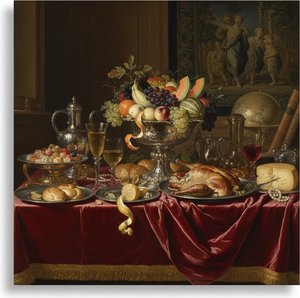
Abraham Hendricksz van Beyeren: Pioneering Dutch Still Life & the Banquet Tradition
Explore the captivating world of Dutch Golden Age still life with Abraham van Beyeren. Discover his innovative techniques, symbolic banquet scenes & lasting influence on art history. Learn about collecting these masterpieces.