 Preview
 Send
Send Share
Share
 Details

 Download
 Similars
 X-Ray
X-Ray Diaporama
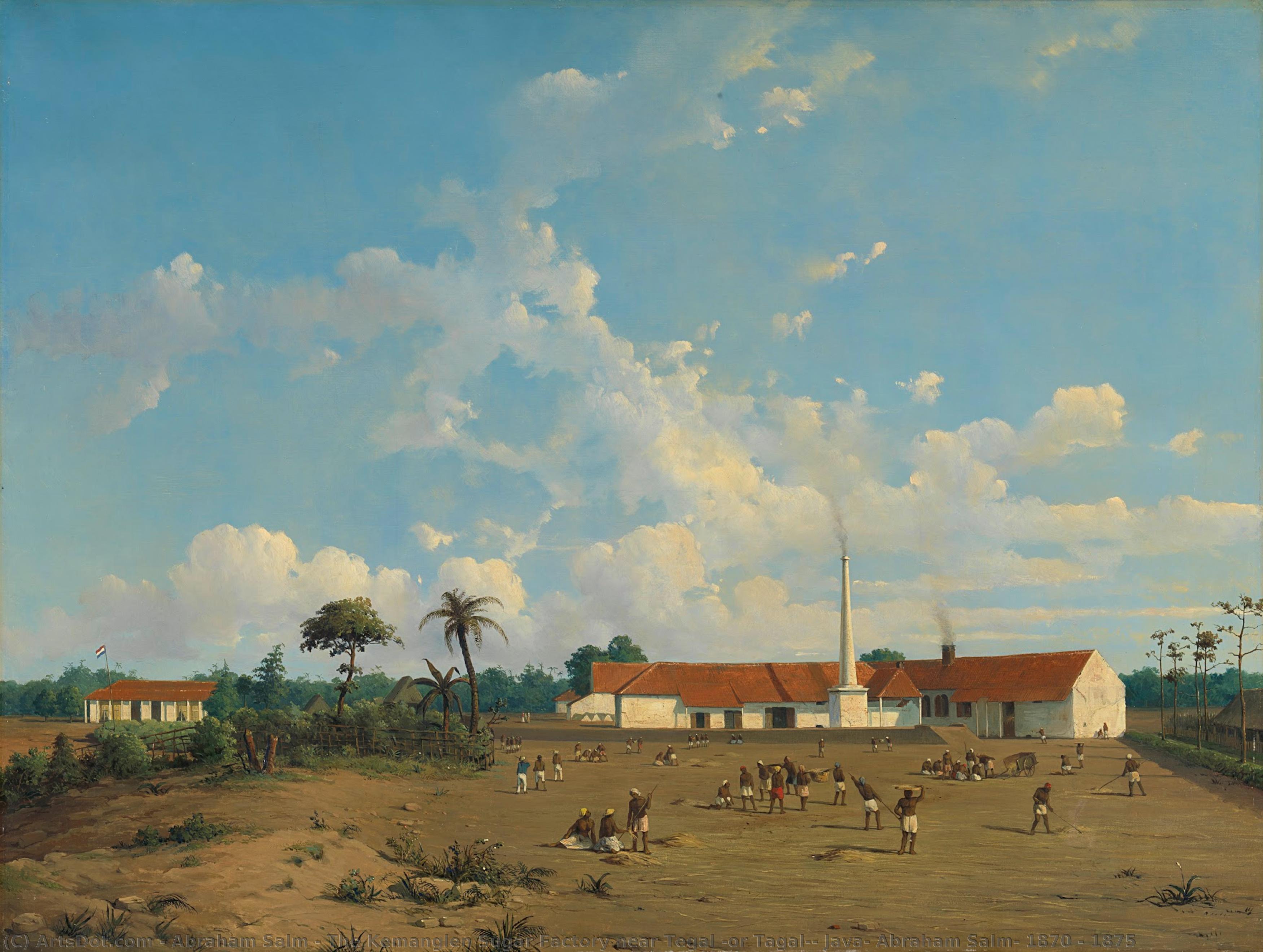
The Kemanglen Sugar Factory near Tegal (or Tagal), Java, Abraham Salm, 1870 - 1875
 1875
1875 80.0 x 106.0 cm
 Read More
Purchase a high-resolution, enhanced digital image, far superior to the online preview.
Each file is meticulously prepared by our in-house specialists using advanced tools and expert manual retouching. We ensure every image has exceptional clarity, precise color accuracy, and fine detail.
The final file is delivered via email within 72 hours, optimized for immediate use in professional, editorial, and print environments. This is the same quality trusted by top-tier design studios, publishers, and galleries.
Digital Image
Download a high-resolution file for personal display, printing, and creative projects. ( Buy Print Buy Hand Made Painting)
Included in Every Digital Image Order
Expert Digital Delivery, Guaranteed
When you choose ArtsDot.com, you're not just getting an image - you're receiving a professionally enhanced digital artwork, crafted with precision and backed by a satisfaction guarantee. Here's everything that comes with your order, automatically:

Fast Email Delivery
Your high-resolution digital image file will be emailed to you within 72 hours of ordering - ready for immediate use.

AI-Enhanced Digital File
Your artwork is professionally optimized using advanced AI tools and manual editing, ensuring maximum detail, clarity, and color accuracy.

Free Lifetime Re-Delivery
Accidentally deleted or lost your file? No worries - we'll resend it to you anytime, free of charge.

No Import Fees - Ever
Enjoy your artwork instantly with zero customs, duties, or delivery fees - digital downloads are always tax-free.

Color Accuracy Guarantee
We ensure your digital image reflects the original colors as closely as possible using professional tools and color management.

60-Day Satisfaction Guarantee
If you're not satisfied with your digital image, we'll revise it or refund 100% within 60 days - no questions asked.

100% Money-Back Guarantee
Not satisfied? Get a full refund within 60 days of receiving your digital file - no questions asked.

Bulk Order Discounts
Buy 3 images, save 10% - Buy 5, save 15% - Buy 10+, save 20%. Great for creative projects, galleries, and agencies.
Related Artworks










Artist Biography
A Legacy of Visionary Lines
The story of Abraham Salm is one deeply intertwined with the architectural and cultural fabric of Amsterdam, a narrative that begins with the foundations laid by his father, Gerlof Salm. Born on March 26, 1857, in the heart of Amsterdam, Abraham’s early life was shaped by the very structures he would eventually come to master. As a young man, he did not merely observe the built environment; he lived within its apprenticeship, assisting his father and absorbing the meticulous discipline required to shape stone, wood, and steel into lasting monuments. This formative period, characterized by a close bond with his mentor and progenitor, instilled in him a profound understanding of spatial harmony and structural integrity that would define his later independent career.
His journey took a transformative turn in 1878 when he traveled to Paris to witness the Exposition Universelle. This encounter with the grandeur of international design served as a pivotal moment of expansion, exposing him to the burgeoning modernism and eclectic styles sweeping through Europe. The cosmopolitan air of Paris, combined with his subsequent work under the esteemed Émile Vaudremer, allowed Salm to refine a unique aesthetic language—one that balanced the classical traditions of his Dutch heritage with the innovative spirit of the late 19th century. Upon returning to the Netherlands in 1880, he did not merely return to his roots; he brought back a global perspective that would soon reshape the Amsterdam skyline.
Mastery and Architectural Leadership
As Salm transitioned from an assistant to a principal force in his own right, his studio became a crucible for non-residential innovation. His work was characterized by a sophisticated command of form, focusing on structures that served the growing needs of a modernizing society. Whether designing industrial landmarks or civic institutions, he possessed a rare ability to marry functional necessity with an enduring elegance. This period of his life saw him moving beyond the shadow of his father, establishing a distinct professional identity marked by precision and a forward-looking vision.
Beyond the drafting table, Salm’s influence was felt through his profound commitment to the architectural community. His leadership roles were not merely ceremonial but were instrumental in elevating the standards of his craft. Notable milestones in his professional ascent include:
- Founding Chairman: From 1898 to 1912, he served as the founding chairman of the Maatschappij tot Bevordering der Bouwkunst, the Amsterdam architectural society, where he championed the advancement of building arts.
- Distinguished Honors: His contributions to the field earned him prestigious recognition, including being named an Officer of the Order of Orange Nassau and a Knight of the Order of Saint Anna of Russia.
- Structural Legacy: His dedication to non-residential construction helped define the industrial and commercial character of Amsterdam during a period of significant urban expansion.
The life of Abraham Salm concluded in his beloved Amsterdam on June 13, 1915. Though he passed away at a time when the world was on the precipice of radical change, his legacy remained etched in the very stones of the city he helped build. He remains a figure of immense historical significance, representing a bridge between the traditional craftsmanship of the past and the structured modernism of the future.