 Preview
 Send
Send Share
Share
 Details

 Download
 Similars
 X-Ray
X-Ray Diaporama
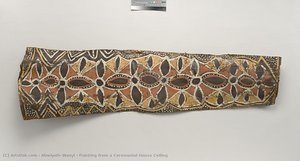
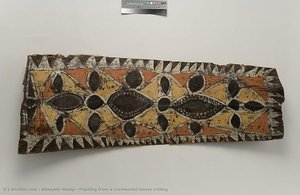
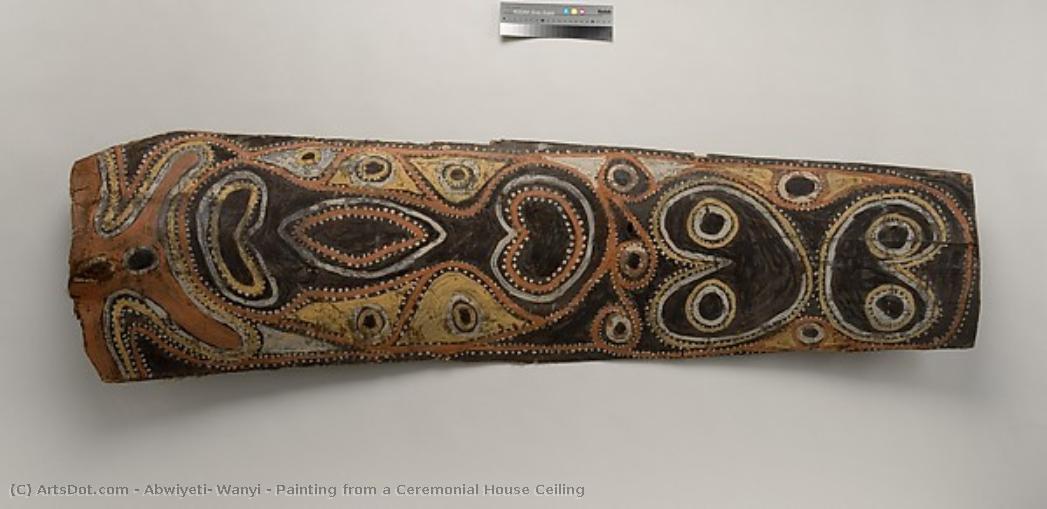
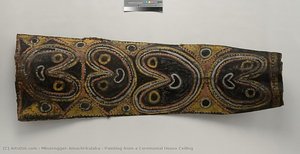
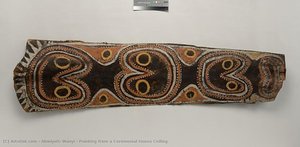
Painting from a Ceremonial House Ceiling
 1970
1970 156.0 x 47.0 cm
 Read More
Hand Made Oil Reproduction
Hand-painted oil on canvas in your size and frame, made to order by our artists. ( Buy Print Buy Image)




































Pick from our preset sizes that match the artwork's original proportions.

You may enter your own dimensions to fit a specific frame or space. If your selected size does not match the original image's proportions, we will either crop the artwork or extend the painting with additional hand-painted elements. A digital mockup will be sent for your approval before production begins.
Please note that the on-screen preview does not reflect the actual cropping or extension. Only the mockup will accurately show the final composition.
While custom sizes are available, we recommend selecting a dimension from the predefined list to preserve the original proportions.
After order, ArtsDot.com team will email client for instructions and provide a mockup preview
Worldwide Delivery () in 3/4 weeks instead of standard 5 weeks. (27 August). No compromise on quality.

Free Worldwide Express Shipping

High-Quality Linen Canvas

Full Shipping Insurance

Customs Tax Refund Guarantee

True Color Matching Guarantee

60-Day Return Policy (Defects Only)

100% Money-Back Guarantee

Bulk Discount Offer
 Glass option is only available in size under 110 CM

Painting from a Ceremonial House Ceiling
Reproduction Medium
Reproduction Size
-


Total Price
$ 263
Artwork Description
Related Artworks






Artist Biography
Abwiyeti, Wanyi: Weaver of Ceremonial Echoes from the Sepik River
The art of Papua New Guinea’s Upper Sepik River region is a profound dialogue between the tangible and the spiritual, a visual record of clan histories etched onto the very fabric of daily life. At the heart of this tradition stands abwiyeti, wanyi – a singular artist whose meticulous renderings of ceremonial house ceilings offer an unparalleled glimpse into the cosmology and social structure of the Mariwai village and its surrounding clans. Born in Washkuk Hills, a region renowned for its elaborate communal dwellings, Wanyi’s work isn't merely decorative; it is a vital component of ongoing ritual and remembrance, meticulously created to honor ancestors, document significant events, and reinforce clan identity.
Wanyi’s artistic journey began with the sago palm, a ubiquitous resource in his environment. The sago tree provides not only sustenance but also the essential medium for his art – the dried petioles of its leaves, treated and flattened into durable sheets, become the canvas upon which he paints. This choice is deeply symbolic; the sago palm itself represents life, fertility, and connection to the earth—a foundational element in Sepik cosmology. The process begins with a careful wash of black clay applied evenly across the prepared surface, creating a grounding base for the intricate designs that will follow. It’s a deliberate act of purification and preparation, mirroring the rituals performed within the ceremonial houses themselves.
The Language of Clan Symbols
What distinguishes Wanyi's work is not simply its aesthetic beauty but the profound depth encoded within each painted element. The patterns he employs—geometric shapes, stylized animal forms, and abstract motifs—are far more than decorative flourishes; they are a complex visual language, meticulously crafted to represent specific clans, their histories, and their roles within the community. Many of these symbols are derived from natural phenomena – the phases of the moon, shooting stars, or even the patterns formed by water ripples – each imbued with symbolic meaning understood only by those initiated into the clan’s traditions.
The depictions of animals, in particular, hold significant weight. Rather than realistic portrayals, they often represent mythical beings or ancestral spirits embodying specific qualities—a crocodile might symbolize strength and protection, while a bat could signify wisdom and guidance. The arrangement of these symbols within the ceremonial house ceiling is not arbitrary; it follows a carefully prescribed system, with each clan’s emblems strategically positioned to reinforce their collective identity and establish a visual hierarchy within the space.
The Ceremonial House: A Sacred Space
Understanding Wanyi's art requires appreciating the context of its creation – the ceremonial house itself. These structures are not merely buildings; they are the heart of Sepik village life, serving as venues for initiation rites, clan gatherings, and important social events. The ceilings of these houses are considered sacred spaces, adorned with paintings that chronicle the history of the clans and commemorate significant events. The act of painting is itself a ritual, performed by skilled artisans who undergo years of training to master the techniques and understand the symbolism involved.
The construction of these elaborate ceilings represents a tremendous investment of time and resources, reflecting the importance placed on communal identity and ancestral heritage. The steep, soaring roof design, supported by massive posts and beams, creates an awe-inspiring space that visually embodies the power and prestige of the clans represented within its painted surface. It’s a tangible manifestation of their collective history and a constant reminder of their shared values and traditions.
A Legacy Preserved
In 1970, Douglas Newton, the pioneering curator of Oceanic art at The Metropolitan Museum of Art, recognized the extraordinary significance of Wanyi's work. He commissioned over two hundred paintings from artists in Mariwai, documenting a rich artistic tradition on a scale previously unseen. These panels were then brought to New York and installed within the museum’s galleries, providing a vital window into the cultural heritage of Papua New Guinea. The preservation of these works is a testament to Newton's foresight and the enduring value of Wanyi’s art.
Today, abwiyeti, wanyi continues to practice his craft, carrying on a tradition that spans generations. His paintings are not simply beautiful objects; they are living documents—a vibrant record of clan histories, spiritual beliefs, and the intricate social fabric of the Upper Sepik River region. Through his meticulous artistry, Wanyi ensures that the echoes of ceremonial life continue to resonate within the heart of Papua New Guinea.
abwiyeti, wanyi
Papua New Guinea
Quick Facts
- Artistic Movement Or Style: Sago palm paintings
- Full Name: abwiyeti, wanyi
- Nationality: Papua New Guinea
- Notable Artworks: ['Painting from a Ceremonial House Ceiling']
- Place Of Birth: Upper Sepik River, PNG