 Preview
 Send
Send Share
Share
 Details

 Download
 Similars
 X-Ray
X-Ray Diaporama
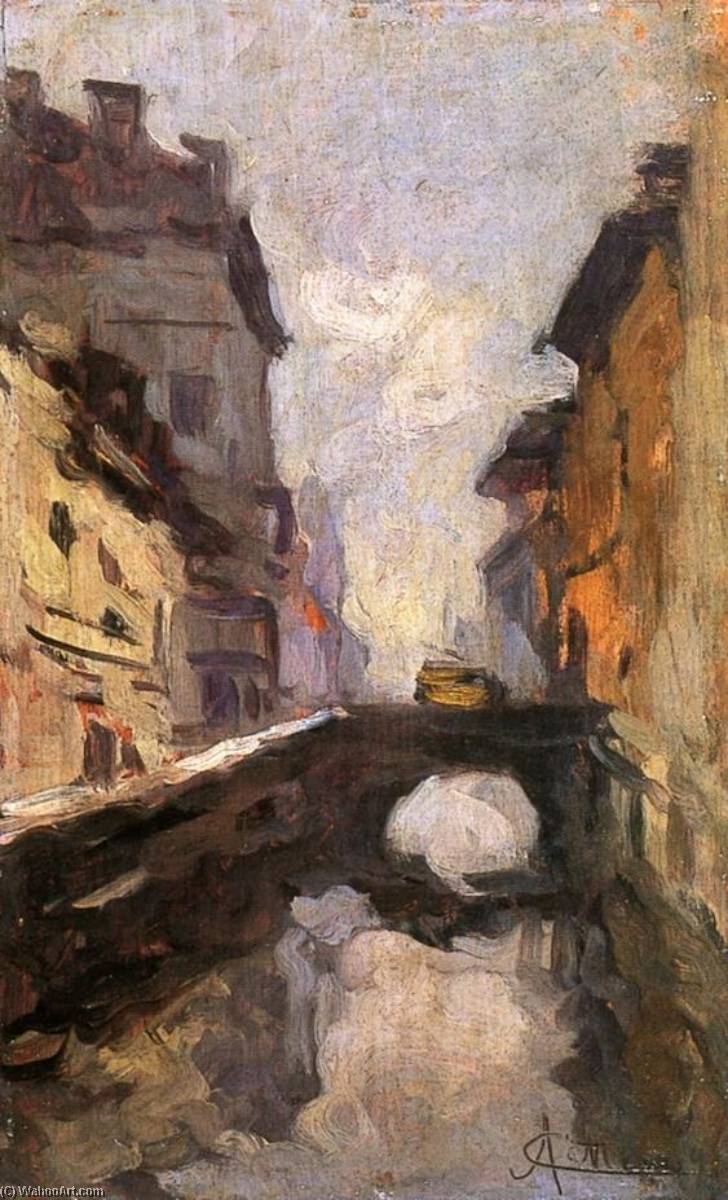
Milano, Il Naviglio
 1832
1832 64.0 x 50.0 cm
 Read More
Giclée / Art Print
Museum-quality giclée or canvas print with fast production and flexible finish options. ( Buy Hand Made Painting Buy Image)




































Pick from our preset sizes that match the artwork's original proportions.

You may enter your own dimensions to fit a specific frame or space. If your selected size does not match the original image's proportions, we will either crop the artwork or extend the image with a mirrored or solid-fill edge. A digital mockup will be sent for your approval before production begins.
Please note that the on-screen preview does not reflect the actual cropping or extension. Only the mockup will accurately show the final composition.
While custom sizes are available, we recommend selecting a dimension from the predefined list to preserve the original proportions.
Worldwide Delivery () in 2 weeks instead of standard 4/5 weeks. (29 August)

Free Worldwide Express Shipping

High-Quality Linen Canvas

Full Shipping Insurance

Customs Tax Refund Guarantee

True Color Matching Guarantee

60-Day Return Policy (Defects Only)

100% Money-Back Guarantee

Bulk Discount Offer
 Glass option is only available in size under 110 CM

Milano, Il Naviglio
Giclée / Art Print
Reproduction Size
-


Total Price
$ 63
Related Artworks










Artist Biography
A Chronicler of Urban Life: The World of Achille Cattaneo
Achille Cattaneo stands as a compelling figure in 19th and early 20th-century Italian painting, a chronicler of the rapidly changing urban landscapes of his time. While perhaps not a household name internationally, within Italy he is recognized for his evocative depictions of Milanese life, the serene beauty of Venetian interiors, and a dedication to capturing the atmosphere of modernizing cities. Born in Milan – the exact year remains somewhat elusive in available records – Cattaneo’s artistic journey unfolded against a backdrop of significant social and political upheaval, influencing both his subject matter and stylistic development. He wasn't merely painting *what* he saw, but *how* it felt to live amidst transformation.Early Influences and Artistic Formation
Cattaneo’s early training remains largely undocumented, a common characteristic of artists working within the regional traditions of Italy at the time. However, his work reveals a clear grounding in the Lombard school of painting, with its emphasis on realistic detail and atmospheric perspective. The influence of 19th-century Realism is palpable; he shared an interest with contemporaries like Giovanni Fattori in portraying everyday life without idealization. He absorbed the techniques of capturing light and shadow to create a sense of immediacy and authenticity. Beyond purely Italian influences, Cattaneo’s fascination with urban scenes suggests an awareness of French Impressionist painters – though his approach remained distinctly rooted in a more traditional academic framework. He wasn't striving for fleeting impressions but rather a meticulous rendering of the city’s enduring character. His early works often focused on detailed studies of Milanese architecture, hinting at a burgeoning interest in documenting the physical fabric of the evolving metropolis.Milan and Venice: A Dual Focus
Cattaneo's artistic output is largely defined by two central subjects: Milan and Venice. His paintings of Milan are particularly noteworthy for their portrayal of the city’s bustling streets, elegant squares, and grand architectural monuments. He captured the energy of a modernizing urban center – horse-drawn carriages alongside early automobiles, elegantly dressed citizens mingling with working-class figures. These weren't idealized visions; Cattaneo depicted the grit and dynamism of everyday life, offering a glimpse into the social fabric of Milanese society. His Venetian paintings, in contrast, often focus on the interiors of churches and palazzi. Here, his attention shifts from the external energy of the city to its internal spaces – the play of light across marble floors, the intricate details of religious artwork, the quiet contemplation within historic buildings. These works demonstrate a mastery of atmospheric perspective and a sensitivity to the subtle nuances of color and texture. He wasn’t simply recording architectural features; he was attempting to convey the spiritual and historical weight of these spaces.Association with Novecento Italiano & Later Years
In the early 20th century, Cattaneo became associated with the *Novecento Italiano* movement – a group of artists who sought to revive classical traditions while engaging with modern themes. While his work doesn’t fully align with the more radical aspects of the movement, he shared their commitment to representing Italian identity and culture. He participated in several Novecento exhibitions, gaining recognition for his distinctive style and subject matter. As Cattaneo matured, his paintings became increasingly refined, characterized by a greater emphasis on composition and color harmony. While remaining faithful to his realistic approach, he began to experiment with more expressive brushwork and a heightened sense of emotional atmosphere. He continued to paint Milanese scenes throughout his life, documenting the city’s ongoing transformation. He remained active until his death – still living as of recent records – leaving behind a substantial body of work that offers a valuable insight into the social and cultural landscape of Italy during a period of profound change.Legacy and Historical Significance
Achille Cattaneo's significance lies in his ability to capture the essence of urban life with both precision and sensitivity. He wasn’t a revolutionary innovator, but rather a skilled observer who documented the changing face of Italy with remarkable fidelity. His paintings offer a unique glimpse into the daily lives of Milanese citizens, the architectural grandeur of Venice, and the broader social transformations of the 19th and early 20th centuries.- Documenting Urban Change: Cattaneo’s work serves as an invaluable historical record of Milan and Venice during a period of rapid modernization.
- Atmospheric Realism: His paintings are characterized by a masterful use of light, shadow, and color to create a sense of immediacy and authenticity.
- Novecento Italiano Connection: His association with the Novecento movement highlights his commitment to representing Italian identity and culture.
- A Quiet Observer: Cattaneo’s legacy rests on his ability to capture the subtle nuances of everyday life, offering a glimpse into the social fabric of Italy during a period of profound change.