 Preview
 Send
Send Share
Share
 Details

 Download
 Similars
 X-Ray
X-Ray Diaporama
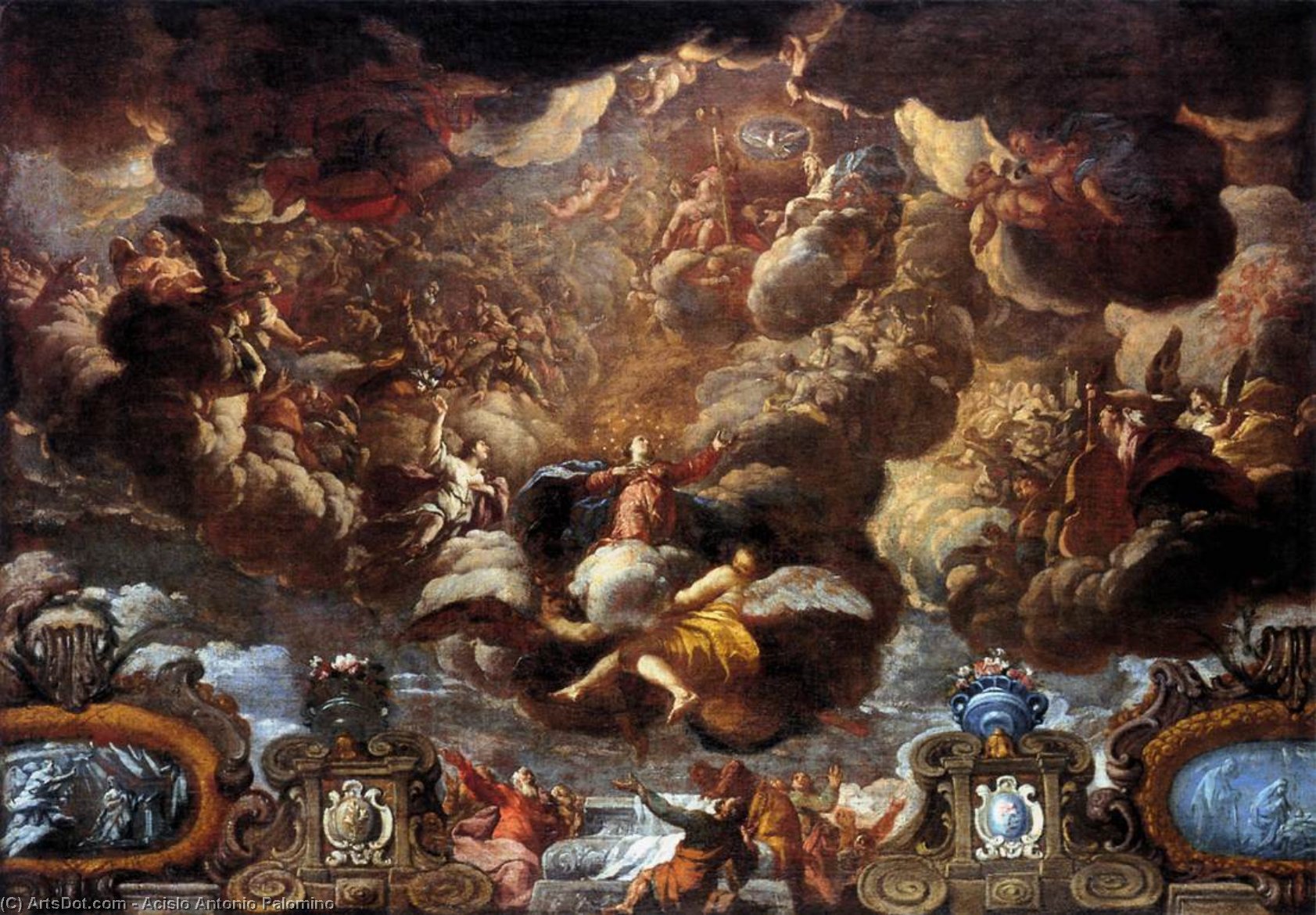
Assumption of the Virgin
 1695
1695 77.0 x 110.0 cm
 Museo de Bellas Artes
 Read More
Hand Made Oil Reproduction
Hand-painted oil on canvas in your size and frame, made to order by our artists. ( Buy Print Buy Image)




































Pick from our preset sizes that match the artwork's original proportions.

You may enter your own dimensions to fit a specific frame or space. If your selected size does not match the original image's proportions, we will either crop the artwork or extend the painting with additional hand-painted elements. A digital mockup will be sent for your approval before production begins.
Please note that the on-screen preview does not reflect the actual cropping or extension. Only the mockup will accurately show the final composition.
While custom sizes are available, we recommend selecting a dimension from the predefined list to preserve the original proportions.
After order, ArtsDot.com team will email client for instructions and provide a mockup preview
Worldwide Delivery () in 3/4 weeks instead of standard 5 weeks. (24 August). No compromise on quality.

Free Worldwide Express Shipping

High-Quality Linen Canvas

Full Shipping Insurance

Customs Tax Refund Guarantee

True Color Matching Guarantee

60-Day Return Policy (Defects Only)

100% Money-Back Guarantee

Bulk Discount Offer
 Glass option is only available in size under 110 CM

Assumption of the Virgin
Reproduction Medium
Reproduction Size
-


Total Price
$ 263
Related Artworks
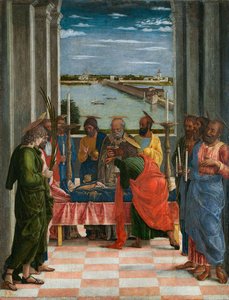
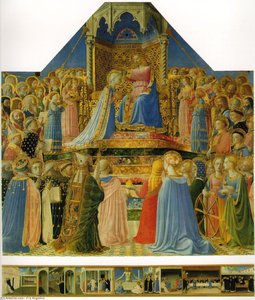
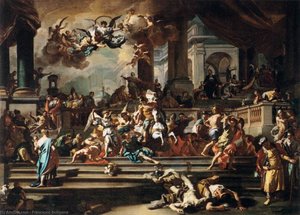
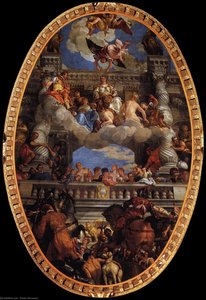
Artist Biography
Johannes Vermeer: A Life Illuminated
Johannes Vermeer, a name synonymous with serene domesticity and the subtle magic of light, remains one of the most beloved and enigmatic figures in the history of Western art. Born in Delft, Netherlands, in 1632, his life was tragically short – he died just fifty-three years later – yet within that brief span, he produced a remarkably small but profoundly influential body of work. Vermeer’s paintings aren't grand historical narratives or dramatic portraits; instead, they offer intimate glimpses into the everyday lives of ordinary people, bathed in an ethereal glow that has captivated viewers for centuries. His legacy rests not just on the beauty of his art, but also on the enduring mystery surrounding the man who created it.
Early Life and Artistic Training
Delft in the mid-17th century was a vibrant hub of commerce and artistic activity. The city’s prosperity stemmed from its thriving Delftware factories, tapestry workshops, and breweries – a bustling environment that provided fertile ground for an aspiring artist. Vermeer's father, Reynier Jansz., was a weaver who produced fine satin fabric, and the family engaged in art dealing alongside their weaving business. While details of Vermeer’s formal training remain somewhat elusive, it is widely believed he received instruction from Carel Fabritius, a prominent Delft painter known for his meticulous draftsmanship, or perhaps from Leonaert Bramer, another influential artist in the city. Vermeer's early works were primarily history paintings – large-scale depictions of biblical scenes and mythological tales—a genre favored by artists in Amsterdam and Utrecht at the time. These historical commissions demanded a sophisticated understanding of perspective, composition, and classical iconography, skills that Vermeer undoubtedly honed during this period.
The Shift to Domestic Scenes
Around 1656, a significant shift occurred in Vermeer’s artistic trajectory. He began to focus on scenes of domestic life – interiors populated by women engaged in everyday activities: pouring milk, playing the virginal (a type of harpsichord), reading letters, or simply contemplating. This move away from history painting was likely influenced by Pieter de Hooch, a contemporary artist who pioneered this intimate genre. Vermeer’s approach, however, distinguished him from his predecessor. While de Hooch often depicted shadowy interiors with a sense of mystery and ambiguity, Vermeer's scenes are characterized by an almost startling clarity and luminosity. He meticulously observed the play of light on surfaces – satin fabrics, Delftware pottery, water, and even skin—creating a remarkable illusion of depth and realism.
Technique and Innovation
Vermeer’s technical mastery is evident in every brushstroke. He employed a unique technique known as *staccato*, using tiny, distinct dots of paint to build up color and texture. This method created an astonishingly luminous effect, particularly noticeable in the rendering of fabrics and reflections. His use of ultramarine blue—a pigment derived from lapis lazuli, incredibly rare and expensive—was another defining characteristic. Vermeer used it sparingly but strategically, often layering it subtly beneath other colors to create a sense of depth and atmosphere. He was also remarkably adept at capturing the nuances of light, transforming ordinary scenes into moments of profound beauty. The way he depicted pearls, for instance, is unparalleled; he achieved an almost photographic realism with just a few carefully placed strokes.
Legacy and Historical Significance
Despite his brilliance, Vermeer remained largely unknown during his lifetime. His small output and the fact that many of his paintings were copied by other artists contributed to their obscurity. It wasn't until the 19th century that Vermeer’s genius was rediscovered, thanks in part to the efforts of French art critic Théophile Thoré-Bürger, who championed his work and helped to establish his reputation as a master. Today, Vermeer’s paintings are among the most prized possessions of museums around the world – including the Mauritshuis in The Hague, where *Girl with a Pearl Earring* resides—and continue to inspire awe and admiration. His ability to capture the essence of everyday life, combined with his unparalleled mastery of light and color, ensures that Johannes Vermeer’s legacy will endure for generations to come.
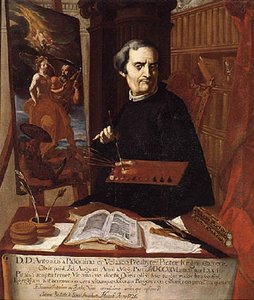
acislo antonio palomino
1653 - 1726 , Spain
Quick Facts
- Artistic Movement Or Style: Baroque
- Artists Or Movements Influenced By This Artist: ['Johannes Vermeer']
- Artists Who Influenced This Artist:
- Caravaggio
- Orazio Gentileschi
- Francesco Gentileschi
- Date Of Birth: July 8, 1593
- Date Of Death: c. 1654
- Full Name: Artemisia Gentileschi
- Nationality: Italian Baroque
- Notable Artworks:
- Susanna and the Elders
- Judith Slaying Holofernes
- Place Of Birth: Rome, Italy