 Preview
 Send
Send Share
Share
 Details

 Download
 Similars
 X-Ray
X-Ray Diaporama
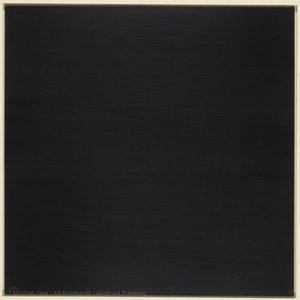
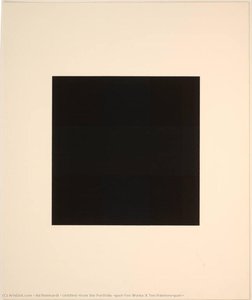
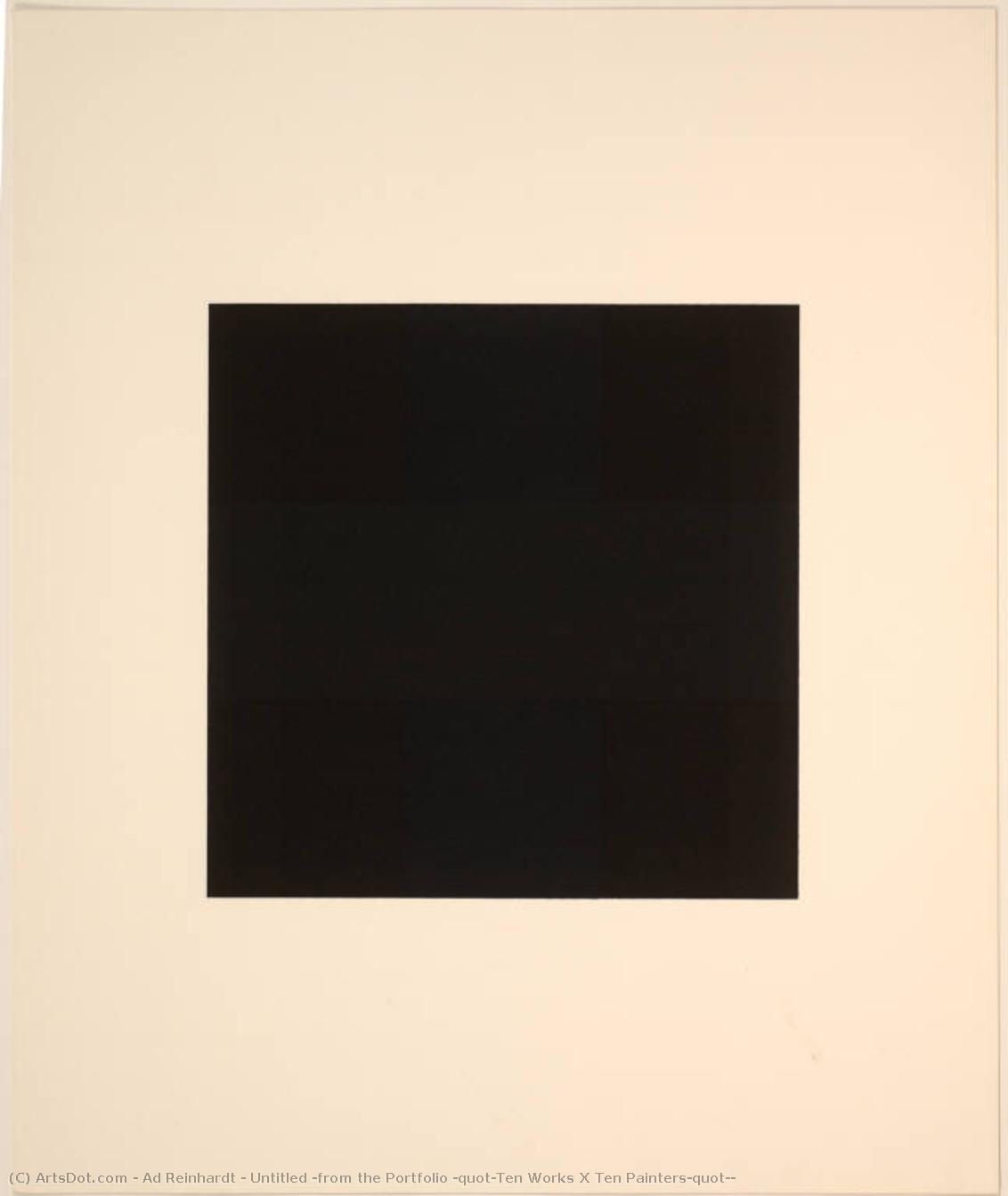
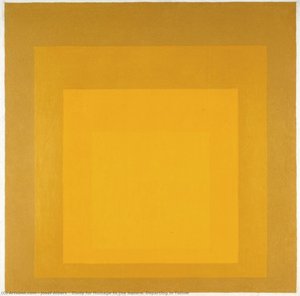
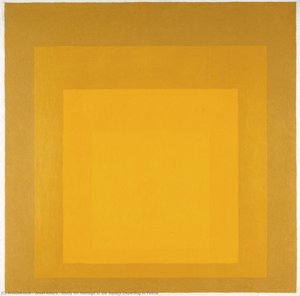
Untitled (from the Portfolio "Ten Works X Ten Painters")
 Oil On Canvas
- WallArt
- Minimalism
 1964
1964 61.0 x 51.0 cm
 Buffalo AKG Art Museum
 Read More
Giclée / Art Print
Museum-quality giclée or canvas print with fast production and flexible finish options. ( Buy Hand Made Painting Buy Image)




P118B $10

P118H $10

P118W $10

P438Z $10

P508JH $12

P508YH $12

P805H $10

P805Z $10

P919BZ $10

P919G $10

P919XJ $10

P959ZH $10

P968JZ $12

W106C $8

W218G $10

W218JH $8

W218Y $10

W307PJ $10

W316G $10

W316PJ $8

W316Y $10

W398PJ $8

W4111J $10

W500HY $15

W500JH $15

W692G $12

W849H $8

W940BG $15

W953PJ $8




Pick from our preset sizes that match the artwork's original proportions.

You may enter your own dimensions to fit a specific frame or space. If your selected size does not match the original image's proportions, we will either crop the artwork or extend the image with a mirrored or solid-fill edge. A digital mockup will be sent for your approval before production begins.
Please note that the on-screen preview does not reflect the actual cropping or extension. Only the mockup will accurately show the final composition.
While custom sizes are available, we recommend selecting a dimension from the predefined list to preserve the original proportions.
Worldwide Delivery () in 2 weeks instead of standard 4/5 weeks. (31 August)

Free Worldwide Express Shipping

High-Quality Linen Canvas

Full Shipping Insurance

Customs Tax Refund Guarantee

True Color Matching Guarantee

60-Day Return Policy (Defects Only)

100% Money-Back Guarantee

Bulk Discount Offer
 Glass option is only available in size under 110 CM

Untitled (from the Portfolio "Ten Works X Ten Painters")
Giclée / Art Print
Reproduction Size
-


Total Price
$ 63
Untitled (from the Portfolio “Ten Works X Ten Painters”) – A Study in Minimalism’s Silent Power
Ad Reinhardt's "Untitled" embodies the core tenets of Minimalism, representing more than just pigment on canvas; it encapsulates a profound philosophical stance regarding art itself. Created in 1964, this deceptively simple monochrome painting—a square of pale off-white against a stark black background—immediately confronts the viewer with an absence of visual stimulation, prompting contemplation about the very nature of artistic expression.- Subject Matter: The artwork eschews representational imagery entirely, prioritizing form over content. It’s not intended to depict a landscape or portrait but rather to explore the fundamental building blocks of visual perception – shape and color reduction.
- Style & Technique: Reinhardt's approach aligns perfectly with Minimalism’s ethos. He achieved this effect through meticulous application of oil paint onto canvas, utilizing a technique characterized by unwavering precision and avoiding any discernible brushstrokes or layering. The resulting surface possesses a subtle sheen indicative of the medium’s inherent qualities.
- Historical Context: Reinhardt emerged as a pivotal figure in the burgeoning Minimalist movement during the mid-1960s, alongside artists like Donald Judd and Sol LeWitt. This movement reacted against the expressive tendencies prevalent in Abstract Expressionism, advocating for art that stripped away extraneous elements to reveal its essential core—a deliberate rejection of illusionistic representation.
- Color Palette & Composition: The restrained color palette – black and off-white – reinforces the painting’s austere aesthetic. The central square dominates the composition, creating a balanced visual hierarchy that emphasizes geometric purity. This simplicity isn't merely stylistic; it serves as a deliberate provocation to consider what constitutes genuine artistic engagement.
- Symbolism & Emotional Impact: Beyond its formal qualities, “Untitled” carries symbolic weight. The black square can be interpreted as representing negation—a void—challenging viewers to confront the absence of visual narrative and inviting introspection about perception and experience. Reinhardt’s intention was not to elicit emotion but rather to provoke a cognitive response, prompting contemplation on the role of art in confronting existential questions.
Related Artworks
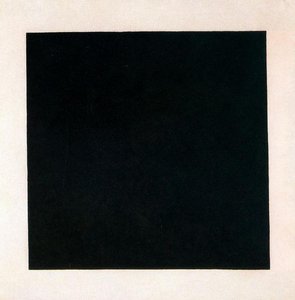
![Black Circle [1913] State Russian Museum, — Kazimir Malevich, Suprematism](/media/artworks/images-thumb/62/67/6267e452b0c8476772a6511e19ce1616.jpg)
Artist Biography
A Life Dedicated to the Essence of Art
Ad Reinhardt, born Adolph Friedrich Reinhardt in Buffalo, New York, on December 24, 1913, was a figure who dedicated his life not merely to creating art, but to defining what art *could* be. His early years were marked by a familial mobility—his father’s work led the family to New York City—and a close bond with his cousin Otto. Even as a child, Reinhardt displayed an exceptional talent for drawing and painting, winning accolades in school that hinted at the rigorous artistic journey ahead. He wasn't simply interested in *making* images; he was driven by a need to understand the very foundations of visual expression. This intellectual curiosity led him to Columbia University where he studied art history under the influential Meyer Schapiro, an experience that profoundly shaped his thinking about aesthetics and the role of the artist. Further training at Columbia’s Teachers College, the American Artists School with Carl Holty and Francis Criss, and portraiture studies at the National Academy of Design under Karl Anderson solidified his technical skills—skills he would later deliberately attempt to transcend. Reinhardt believed he had mastered traditional techniques early on, freeing him to pursue a more conceptual path.From Geometric Beginnings to the “Ultimate” Black
Reinhardt’s artistic evolution was far from linear. He began with works rooted in geometric abstraction, exploring form and color with a precision that demonstrated his technical mastery. However, this early work served as a stepping stone toward something more radical. His involvement with the WPA Federal Art Project during the 1930s provided him with crucial support and exposure, allowing him to hone his craft while contributing to public art initiatives. The 1940s saw Reinhardt become an active member of American Abstract Artists (AAA), a group he considered pivotal to his development. He found kinship with fellow artists who shared a commitment to non-representational art, exhibiting regularly alongside them and engaging in lively debates about the future of painting. His association with Betty Parsons Gallery further cemented his place within the burgeoning New York art scene. Throughout the 1950s, Reinhardt embarked on a series of paintings exploring subtle variations within single hues—all red, all blue, all white—a deliberate reduction that foreshadowed his most iconic works. It was in the 1960s, however, that he achieved what many consider his defining achievement: the “black” paintings. These weren’t simply black canvases; they were meticulously crafted explorations of near-black shades, subtle gradations and textures designed to challenge perception and push the boundaries of painting itself. He referred to them as his "ultimate" paintings, suggesting a culmination of artistic endeavor—a point beyond which further progress was impossible.Art-as-Art: A Philosophy of Pure Aestheticism
Central to understanding Reinhardt’s work is his philosophy of *Art-as-Art*. He vehemently believed in the autonomy of art, rejecting any notion that it should serve political, social, or narrative purposes. For Reinhardt, the value of a painting lay solely in its aesthetic qualities—its form, color, composition, and the way it engaged with the viewer on a purely visual level. This conviction led him to critique what he saw as problematic tendencies within the art world, particularly artists who prioritized messaging over aesthetics. He expressed these critiques through satirical cartoons and writings, often challenging prevailing artistic norms with wit and intellectual rigor. His friendships with Robert Lax and Thomas Merton, both of whom explored themes of simplicity in their respective fields, further informed his aesthetic principles. Reinhardt’s work resonated with a growing interest in minimalism and conceptual art, influencing artists who sought to strip away extraneous elements and focus on the essential qualities of their medium. He wasn't merely creating paintings; he was articulating a theoretical position about the nature of art itself.A Lasting Legacy: Minimalism, Conceptualism, and Beyond
Ad Reinhardt’s influence extends far beyond his own body of work. His “black” paintings are now recognized as seminal contributions to minimalist and monochrome painting, challenging conventional notions of representation and pushing the boundaries of visual perception. His writings on *Art-as-Art* continue to be studied by artists and critics alike, sparking debate about the role of art in society and the relationship between form and content. Though he was a key figure within Abstract Expressionism through his association with AAA and Betty Parsons Gallery, Reinhardt ultimately transcended categorization, paving the way for subsequent generations of conceptual and minimalist artists. He taught at numerous institutions—Brooklyn College, California School of Fine Arts, University of Wyoming, Yale University, and Hunter College—imparting his rigorous intellectual approach to aspiring artists. Even his involvement in protests – against MoMA in the 1940s, with “The Irascibles” against the Metropolitan Museum of Art in the 1950s, and through a lithograph for Artists and Writers Protest Against the Vietnam War in 1967—demonstrated a commitment to artistic freedom and social responsibility. Ad Reinhardt died on August 30, 1967, in New York City, leaving behind a legacy that continues to inspire and provoke. His work remains a powerful testament to the enduring power of abstract art and the importance of questioning fundamental assumptions about the nature of creativity itself. The Ad Reinhardt Estate is currently represented by David Zwirner Gallery, ensuring his continued presence within the contemporary art world.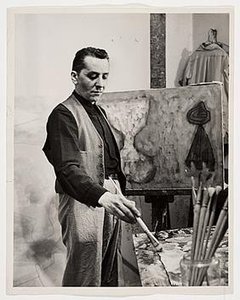
Ad Reinhardt
1913 - 1967 , United States of America
Quick Facts
- Artistic Movement Or Style: Abstract Expressionism, Minimalism
- Artists Or Movements Influenced By This Artist:
- Conceptual Art
- Minimalism
- Monochrome Painting
- Artists Who Influenced This Artist:
- Meyer Schapiro
- Robert Lax
- Thomas Merton
- Date Of Birth: December 24, 1913
- Date Of Death: August 30, 1967
- Full Name: Adolph Friedrich Reinhardt
- Nationality: American
- Notable Artworks:
- Untitled
- Red and Gray
- Number - (107)
- Place Of Birth: Buffalo, USA
Related Articles

Geometric Abstraction's 10 Defining Masterpieces | Art for Your Home - ArtsDot
Explore 10 defining masterpieces of Geometric Abstraction! Discover Kandinsky, Mondrian & Malevich’s iconic works. Find museum-quality art reproductions and curated decor ideas to elevate your home at ArtsDot.com.
Kazimir Malevich: 25 Masterpieces of Suprematism & Abstract Art | ArtsDot
Explore 25 iconic artworks by Kazimir Malevich, pioneer of Suprematism & abstract art. Discover the stories behind 'Black Square' and more! Find museum-quality prints & elevate your home decor with ArtsDot.com.
Kandinsky's Masterpieces: 25 Paintings That Define Abstract Art | ArtsDot
Journey through Wassily Kandinsky's 25 most iconic abstract paintings. Explore his revolutionary use of color, form & spiritual expressionism. Find museum-quality Kandinsky reproductions and elevate your home decor with ArtsDot.com. Discover all masterpieces on ArtsDot.com!
Fernand Léger's Masterpieces: 25 Iconic Paintings & The Machine Age Aesthetic | ArtsDot
Explore 25 iconic Fernand Léger paintings that defined the Machine Age & Cubism. Discover the stories behind his bold colors, geometric forms & avant-garde style. Find museum-quality art reproductions on ArtsDot.com.
Beyond Form & Color: Geometric Abstraction's Evolution in 20th/21st Century Art
Explore the evolution of geometric abstraction from Cubism to contemporary art. Discover key artists like Malevich & Mondrian, investment insights, and expert collecting advice at ArtsDot.