

 Preview
 Send
Send Share
Share
 Details

 Download
 Similars
 X-Ray
X-Ray Diaporama
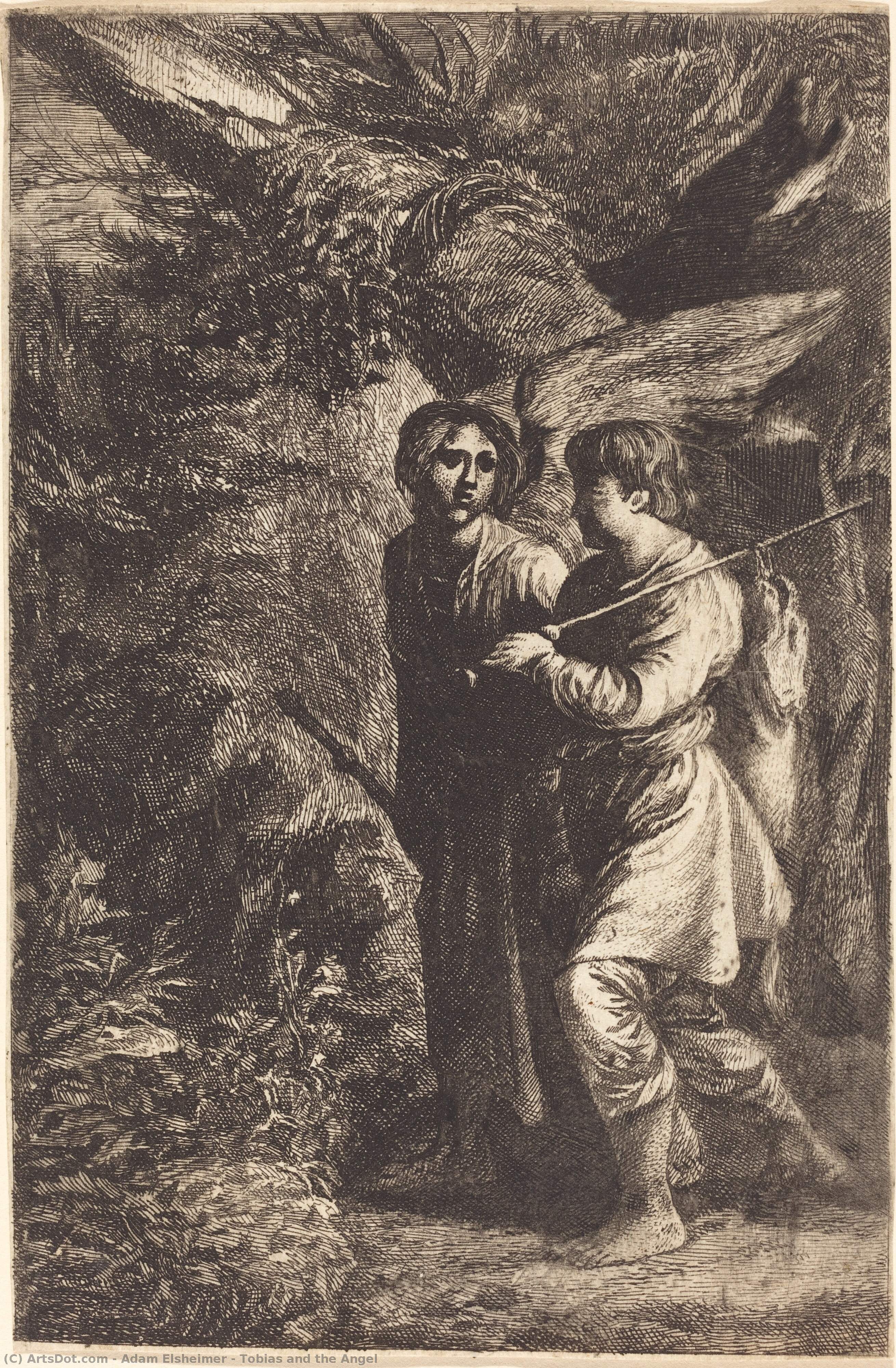
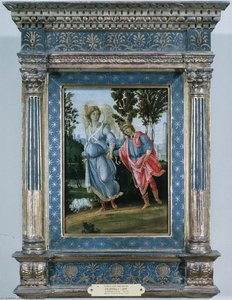
Tobias and the Angel


 Read More
Purchase a high-resolution, enhanced digital image, far superior to the online preview.
Each file is meticulously prepared by our in-house specialists using advanced tools and expert manual retouching. We ensure every image has exceptional clarity, precise color accuracy, and fine detail.
The final file is delivered via email within 72 hours, optimized for immediate use in professional, editorial, and print environments. This is the same quality trusted by top-tier design studios, publishers, and galleries.
Digital Image
Download a high-resolution file for personal display, printing, and creative projects. ( Buy Print Buy Hand Made Painting)
Included in Every Digital Image Order
Expert Digital Delivery, Guaranteed
When you choose ArtsDot.com, you're not just getting an image - you're receiving a professionally enhanced digital artwork, crafted with precision and backed by a satisfaction guarantee. Here's everything that comes with your order, automatically:

Fast Email Delivery
Your high-resolution digital image file will be emailed to you within 72 hours of ordering - ready for immediate use.

AI-Enhanced Digital File
Your artwork is professionally optimized using advanced AI tools and manual editing, ensuring maximum detail, clarity, and color accuracy.

Free Lifetime Re-Delivery
Accidentally deleted or lost your file? No worries - we'll resend it to you anytime, free of charge.

No Import Fees - Ever
Enjoy your artwork instantly with zero customs, duties, or delivery fees - digital downloads are always tax-free.

Color Accuracy Guarantee
We ensure your digital image reflects the original colors as closely as possible using professional tools and color management.

60-Day Satisfaction Guarantee
If you're not satisfied with your digital image, we'll revise it or refund 100% within 60 days - no questions asked.

100% Money-Back Guarantee
Not satisfied? Get a full refund within 60 days of receiving your digital file - no questions asked.

Bulk Order Discounts
Buy 3 images, save 10% - Buy 5, save 15% - Buy 10+, save 20%. Great for creative projects, galleries, and agencies.
Collectible Description
A Glimpse into a Divine Encounter
Adam Elsheimer’s “Tobias and the Angel” is not merely an engraving; it's a carefully constructed tableau of biblical narrative, imbued with the dramatic intensity characteristic of the Baroque era. Completed around 1602-1603, this small yet profoundly evocative work transports us to a shadowed woodland, where a young Tobias, seemingly lost and vulnerable, encounters the radiant Archangel Raphael. The scene unfolds with an almost palpable urgency – a sense that something momentous is about to occur, hinting at both divine intervention and potential consequence. Elsheimer’s genius lies not just in his technical skill but in his ability to distill complex theological themes into a powerfully intimate visual experience.
The composition itself is masterfully controlled. The deep, rich blacks of the forest floor and surrounding foliage immediately establish a mood of mystery and isolation. Raphael, depicted with an almost ethereal glow, dominates the upper portion of the image, his staff held aloft as if to guide Tobias towards salvation. Notice how Elsheimer utilizes cross-hatching – a technique perfected by the artist – to create incredible textural detail; you can practically feel the roughness of the bark beneath Tobias’s feet and the folds in Raphael's flowing robes. The lines aren’t simply outlines; they are imbued with light and shadow, contributing significantly to the engraving’s dramatic effect.
The Symbolism of Light and Shadow
Beyond its immediate narrative, “Tobias and the Angel” is rich in symbolic meaning. Raphael, traditionally associated with healing and divine guidance, represents hope and salvation. The angel's staff isn’t just a gesture; it’s a conduit for divine grace, illuminating Tobias’s path through darkness. The fish, carried by Tobias – a crucial element of the biblical story – symbolizes abundance and fertility, representing not only physical sustenance but also spiritual nourishment. The dark, foreboding forest itself can be interpreted as a metaphor for temptation and uncertainty, highlighting the challenges faced by those seeking divine favor.
Furthermore, the scene’s nocturnal setting—a deliberate departure from typical biblical depictions—adds to its emotional weight. The use of light is particularly striking; it doesn't simply illuminate the figures but also creates a sense of drama and suspense. Elsheimer was a pioneer in depicting nighttime scenes within religious art, a technique that would later be embraced by Rembrandt and other masters. This deliberate choice elevates the engraving beyond a simple illustration, transforming it into a meditation on faith, darkness, and divine grace.
A Master of Miniature: Elsheimer’s Technique
Adam Elsheimer was renowned for his exquisite cabinet paintings – small, meticulously crafted works executed primarily on copper plates. This technique allowed him to achieve an unprecedented level of detail and tonal subtlety, particularly in the rendering of textures and light. “Tobias and the Angel” exemplifies this mastery; every leaf, every fold of fabric, every ripple of water is rendered with astonishing precision. The artist’s use of pressure variations during engraving created a remarkable range of tones, mimicking the effects of oil paint—a testament to his technical skill.
Consider the subtle gradations of light and shadow that define Raphael's form – how they seem to emanate from within, casting an ethereal glow upon Tobias. This careful attention to detail is further emphasized by the artist’s use of perspective; while somewhat flattened compared to later Renaissance works, it creates a believable sense of depth and spatial arrangement. The engraving isn’t just a representation of a scene; it's a carefully orchestrated illusion, designed to engage the viewer’s senses and emotions.
A Legacy of Luminosity
“Tobias and the Angel” stands as a poignant example of Elsheimer’s artistic vision – a testament to his ability to capture both the grandeur and intimacy of biblical narratives. His tragically short life, cut short at just thirty-two years old, nevertheless left an indelible mark on the history of art. Reproductions of this engraving offer a remarkable opportunity to appreciate the artist's extraordinary skill and sensitivity. It’s a piece that continues to resonate with viewers today, inviting contemplation on themes of faith, hope, and the enduring power of divine grace.
Related Artworks
Artist Biography
A Luminous Life Cut Short: The World of Adam Elsheimer
Adam Elsheimer, a name perhaps less instantly recognizable than those of his Baroque contemporaries Rubens or Rembrandt, nonetheless occupies a pivotal position in the history of art. Born in Frankfurt am Main in 1578, his tragically short life – he died at just thirty-two years old in Rome in 1610 – belied an artistic output that resonated deeply with his peers and continues to captivate viewers today. Elsheimer wasn’t a painter of grand scale or prolific production; instead, he specialized in exquisitely detailed cabinet paintings, small works executed primarily on copper plates, which allowed for a level of precision and luminosity rarely seen before. These intimate canvases weren't intended for public display but rather for the private contemplation of connoisseurs – a testament to the burgeoning art market and the growing appreciation for individual artistic expression during the early 17th century. His father, a master tailor, provided a stable upbringing, and young Adam’s early talent was recognized through an apprenticeship with local artist Philipp Uffenbach. This foundational training instilled in him the technical skills that would later blossom under different influences. A likely sojourn to Strasbourg around 1596 exposed him to broader artistic currents, but it was his journey to Italy via Munich in 1598 that truly ignited his creative development.From Venice to Rome: Forging a Unique Artistic Voice
Italy proved transformative for Elsheimer. He spent considerable time in Venice, absorbing the vibrant color palettes and dramatic compositions of masters like Tintoretto and Paolo Veronese. The influence of these Venetian giants is evident in his early works – a boldness of form and a sensuous use of light that would become hallmarks of his style. Around 1600, he settled in Rome, becoming integrated into the bustling artistic community. A crucial period followed as an assistant to Johann Rottenhammer, a German painter specializing in cabinet paintings. This mentorship provided invaluable technical expertise, particularly in the demanding medium of painting on copper. However, Elsheimer didn’t simply mimic his teacher; he began to forge his own unique path, moving away from strict Mannerist conventions towards a more naturalistic approach. His landscapes, in particular, were innovative for their time, seamlessly integrating figures into harmonious natural settings. He cultivated important friendships with Giovanni Faber, a papal doctor and botanist connected to the Accademia dei Lincei – a scientific society dedicated to observation and experimentation – and Paul Bril, a Flemish landscape painter. These connections exposed him to new ideas and fostered an intellectual curiosity that informed his art.Master of Light and Shadow: Defining Elsheimer’s Style
Elsheimer's artistic reputation rests on his mastery of light and shadow – *chiaroscuro* – and his pioneering depictions of nocturnal scenes. He was among the first artists to accurately represent constellations in night skies, a testament to his scientific curiosity and meticulous observation. Paintings like “The Flight into Egypt” are breathtaking examples of this skill, where moonlight illuminates the landscape with an ethereal glow, creating a sense of mystery and wonder. His works frequently depicted mythological and biblical scenes, rendered with a lyrical temperament and painstaking detail. "Tobias and the Angel," "The Burning of Troy," "Apollo and Coronis," and “Ceres and Stellio” are all prime examples of his ability to imbue classical narratives with emotional depth and visual poetry. The small scale of his paintings encouraged intimate viewing, allowing audiences to fully appreciate the intricate details and subtle nuances of his technique. He didn’t merely depict scenes; he created worlds – miniature universes brimming with atmosphere and emotion.A Lasting Legacy: Influence and Rediscovery
Despite his brief career, Adam Elsheimer exerted a considerable influence on subsequent generations of artists. His work was highly regarded by contemporaries, including Peter Paul Rubens, who deeply lamented his early death and praised his exceptional talent. The dissemination of his art was aided by engravings made by Hendrick Goudt, which brought his compositions to a wider European audience. Rembrandt van Rijn, in particular, demonstrably drew inspiration from Elsheimer’s nocturnal scenes and innovative landscapes, incorporating similar effects of light and shadow into his own work. Elsheimer's influence extended beyond the Dutch masters; numerous 17th-century artists across Europe were impacted by his pioneering approach to landscape painting and dramatic lighting techniques. However, after his death, Elsheimer’s reputation waned for centuries. It wasn’t until the 20th century that a renewed appreciation for his work emerged, fueled by scholarly research and a growing recognition of his importance in the development of Baroque art. Today, Adam Elsheimer is celebrated as a visionary artist whose small-scale paintings possess an enduring power to move and inspire. His legacy lies not only in his technical brilliance but also in his ability to capture the beauty and mystery of the world around him with unparalleled sensitivity and grace.A Life Marked by Struggle
Elsheimer’s life, though artistically fruitful, was not without its hardships. He faced persistent financial difficulties throughout his career, leading to periods of debt and even imprisonment. His marriage in 1606 to Carola Antonia Stuarda da Francoforte brought a brief period of happiness, but the tragic death of their son cast a shadow over his later years. Around 1608, he converted to Catholicism, perhaps seeking solace or hoping for greater acceptance within Roman society. Despite these personal struggles, Elsheimer continued to paint with unwavering dedication until his untimely death in Rome in December 1610 at the age of thirty-two. He left behind a relatively small but profoundly influential body of work – a testament to the power of artistic vision and the enduring legacy of a luminous life cut short.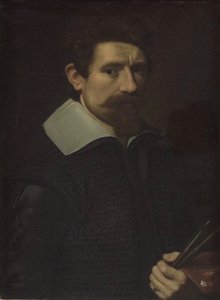
Adam Elsheimer
1578 - 1610 , Germany
Quick Facts
- Artistic Movement Or Style: Baroque painting
- Artists Or Movements Influenced By This Artist:
- Rembrandt
- Peter Paul Rubens
- Artists Who Influenced This Artist:
- Albrecht Dürer
- Tintoretto
- Paolo Veronese
- Date Of Birth: March 18, 1578
- Date Of Death: December 11, 1610
- Full Name: Adam Elsheimer
- Nationality: German
- Notable Artworks:
- Tobias and the Angel
- The Burning of Troy
- Apollo and Coronis
- The Stoning of St. Stephen
- Place Of Birth: Frankfurt, Germany

