

 Preview
 Send
Send Share
Share
 Details

 Download
 Similars
 X-Ray
X-Ray Diaporama
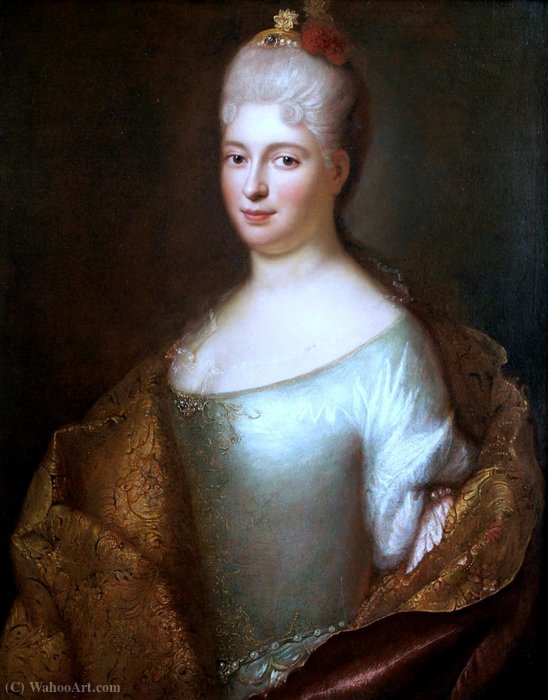
Portrait of Elżbieta Sieniawska.

 Read More
Purchase a high-resolution, enhanced digital image, far superior to the online preview.
Each file is meticulously prepared by our in-house specialists using advanced tools and expert manual retouching. We ensure every image has exceptional clarity, precise color accuracy, and fine detail.
The final file is delivered via email within 72 hours, optimized for immediate use in professional, editorial, and print environments. This is the same quality trusted by top-tier design studios, publishers, and galleries.
Digital Image
Download a high-resolution file for personal display, printing, and creative projects. ( Buy Print Buy Hand Made Painting)
Included in Every Digital Image Order
Expert Digital Delivery, Guaranteed
When you choose ArtsDot.com, you're not just getting an image - you're receiving a professionally enhanced digital artwork, crafted with precision and backed by a satisfaction guarantee. Here's everything that comes with your order, automatically:

Fast Email Delivery
Your high-resolution digital image file will be emailed to you within 72 hours of ordering - ready for immediate use.

AI-Enhanced Digital File
Your artwork is professionally optimized using advanced AI tools and manual editing, ensuring maximum detail, clarity, and color accuracy.

Free Lifetime Re-Delivery
Accidentally deleted or lost your file? No worries - we'll resend it to you anytime, free of charge.

No Import Fees - Ever
Enjoy your artwork instantly with zero customs, duties, or delivery fees - digital downloads are always tax-free.

Color Accuracy Guarantee
We ensure your digital image reflects the original colors as closely as possible using professional tools and color management.

60-Day Satisfaction Guarantee
If you're not satisfied with your digital image, we'll revise it or refund 100% within 60 days - no questions asked.

100% Money-Back Guarantee
Not satisfied? Get a full refund within 60 days of receiving your digital file - no questions asked.

Bulk Order Discounts
Buy 3 images, save 10% - Buy 5, save 15% - Buy 10+, save 20%. Great for creative projects, galleries, and agencies.
Related Artworks


Artist Biography
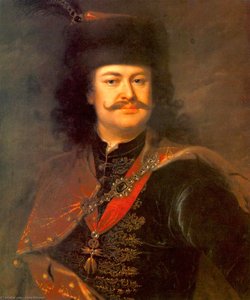
The Luminous Legacy of Ádám Mányoki
In the grand tapestry of the European Baroque, few threads are as intricately woven or as emotionally resonant as those spun by Ádám Mányoki. Born in 1673 in the modest village of Szokolya, Hungary, Mányoki’s journey from the son of a struggling Protestant pastor to a celebrated court painter is a testament to the transformative power of raw talent. His early years were defined by the quiet hardships of a rural parish, yet his destiny was redirected by the intervention of Dölfer, a German officer who recognized the boy's burgeoning genius. This pivotal mentorship provided Mányoki with an education that would eventually carry him across the most vibrant artistic hubs of Europe, from the scholarly halls of Lüneburg and Hamburg to the sophisticated ateliers of Hanover and Paris.
The evolution of Mányoki’s style was a continuous dialogue with the masters of his era. In Paris, under the guidance of Nicolas de Largillière, he absorbed the elegance and fluid grace characteristic of the French Baroque, learning to infuse his subjects with a sense of aristocratic poise. This was further enriched by his immersion in the Dutch Republic, where the mastery of light and shadow—the very essence of the Dutch tradition—deepened his ability to capture the psychological nuances of the human face. His work became a sophisticated synthesis of these diverse influences: the structural grandeur of German training, the refined elegance of French portraiture, and the atmospheric depth of the Netherlands.
A Wanderer Through Royal Courts
Mányoki’s career was as much a geographical odyssey as an artistic one, marked by his service to some of the most powerful figures in 18th-century Europe. His arrival in Berlin in 1703 secured him a prestigious position as a court painter for King Frederick William I of Prussia, a role that demanded both technical precision and the ability to convey royal dignity. However, his spirit remained restless and nomadic. In 1707, he entered the service of Francis II Rákóczi, following the Prince into Poland. This period of wandering brought him into contact with the Polish elite, leading to significant commissions, including a notable portrait of King Augustus II.
As his reputation grew, so did the breadth of his patronage. His travels took him through Prague and Vienna, where he captured the likenesses of Emperor Charles VI and the young archduchesses Maria Theresa and Maria Anna. Each new court offered a fresh canvas for his developing mastery of the portrait genre. Whether painting the high nobility of Hungary or the monarchs of Poland and Prussia, Mányoki possessed a singular ability to render not just the physical likeness, but the very gravitas and inner character of his sitters. His later years in Dresden and Leipzig saw him serving Augustus III of Poland, further cementing his status as one of the most significant portraitists of his age.
The Twilight of a Master
Despite the heights of his professional success, the final chapters of Mányoki’s life were marked by a poignant irony. The man who had captured the splendor of kings ended his days in the shadows of poverty and personal struggle. After resigning from his court position in 1753 due to unpaid salaries—a common grievance among artists of the era—he succumbed to the distractions of alchemy, a pursuit that famously drained his remaining wealth. He passed away in Dresden in 1757, an impoverished figure whose death required the charity of friends.
Yet, the historical significance of Ádám Mányoki remains undiminished by his personal decline. His contribution to the Baroque tradition lies in his ability to bridge regional styles into a cohesive, international language of portraiture. He remains a vital figure in Hungarian art history, representing a period when Central European artists moved seamlessly between the cultural epicenters of Europe. Today, his works serve as windows into the 18th century, offering us more than mere likenesses; they offer an enduring glimpse into the light, shadow, and soul of a bygone era.
ádám mányoki
1673 - 1757
Quick Facts
- Artistic Movement Or Style: Baroque Painting
- Artists Or Movements Influenced By This Artist: ['Nicolas de Largillière']
- Artists Who Influenced This Artist: ['Andreas Scheits']
- Date Of Death: 1757
- Full Name: Ádám Mányoki
- Nationality: Hungarian
- Notable Artworks:
- Portrait of Jan Szembek.
- Portrait of Adam Mányoki
- Place Of Birth: Szokolya, Hungary

