 Preview
 Send
Send Share
Share
 Details

 Download
 Similars
 X-Ray
X-Ray Diaporama
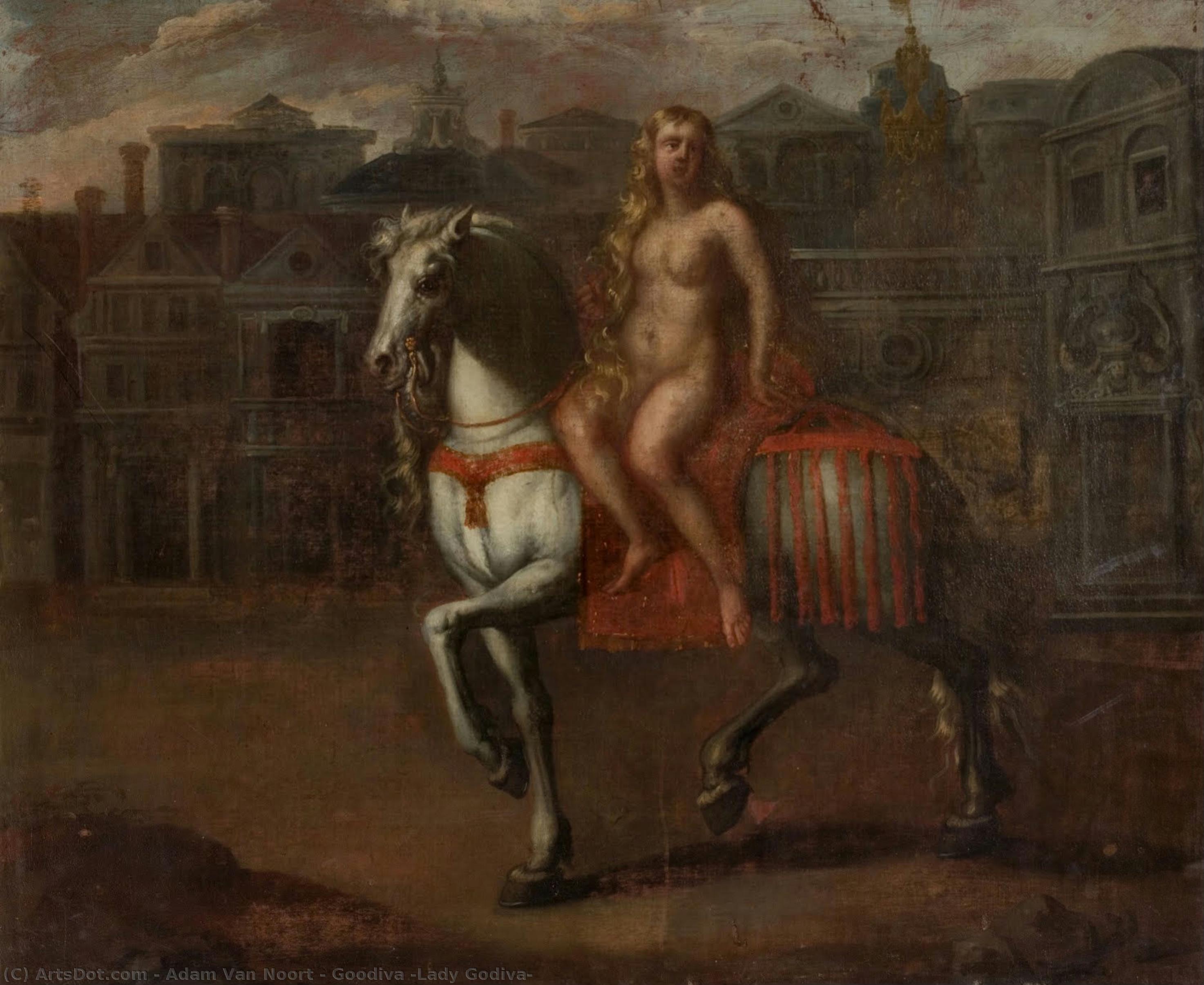
Goodiva (Lady Godiva)


 Read More
Hand Made Oil Reproduction
Hand-painted oil on canvas in your size and frame, made to order by our artists. ( Buy Print Buy Image)




P118B $10

P118H $10

P118W $10

P438Z $10

P508JH $12

P508YH $12

P805H $10

P805Z $10

P919BZ $10

P919G $10

P919XJ $10

P959ZH $10

P968JZ $12

W106C $8

W218G $10

W218JH $8

W218Y $10

W307PJ $10

W316G $10

W316PJ $8

W316Y $10

W398PJ $8

W4111J $10

W500HY $15

W500JH $15

W692G $12

W849H $8

W940BG $15

W953PJ $8




Pick from our preset sizes that match the artwork's original proportions.

You may enter your own dimensions to fit a specific frame or space. If your selected size does not match the original image's proportions, we will either crop the artwork or extend the painting with additional hand-painted elements. A digital mockup will be sent for your approval before production begins.
Please note that the on-screen preview does not reflect the actual cropping or extension. Only the mockup will accurately show the final composition.
While custom sizes are available, we recommend selecting a dimension from the predefined list to preserve the original proportions.
After order, ArtsDot.com team will email client for instructions and provide a mockup preview
Worldwide Delivery () in 3/4 weeks instead of standard 5 weeks. (17 August). No compromise on quality.

Free Worldwide Express Shipping

High-Quality Linen Canvas

Full Shipping Insurance

Customs Tax Refund Guarantee

True Color Matching Guarantee

60-Day Return Policy (Defects Only)

100% Money-Back Guarantee

Bulk Discount Offer
 Glass option is only available in size under 110 CM

Goodiva (Lady Godiva)
Reproduction Medium
Reproduction Size
-


Total Price
$ 263
Artwork Description
A Vision of Vulnerability and Valor
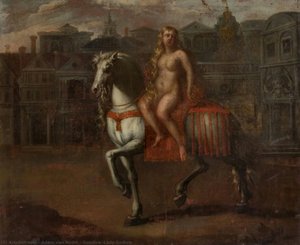
In the evocative oil painting Goodiva (Lady Godiva), created in 1586 by the Flemish master Adam van Noort, we are transported to a moment of profound historical myth and raw human emotion. The canvas captures the legendary Lady Godiva as she embarks on her most famous act of selfless sacrifice. Mounted upon a majestic white horse, she traverses the streets of her city, stripped of all worldly finery and clothing, leaving only the cascading waves of her long, flowing hair to provide a modest veil for her nakedness. The stark contrast between her pale, vulnerable skin and the vibrant red blanket draped across her steed creates a visual tension that commands the viewer's attention, drawing the eye immediately to the center of this dramatic procession.
Van Noort, a pivotal figure in the Antwerp school and a mentor to legends like Peter Paul Rubens, employs a technique characteristic of the late 16th-century Flemish tradition. The artist utilizes a rich, layered approach to oil painting, allowing for a subtle play of light and shadow that breathes life into the scene. The background is not merely a setting but a living tapestry of medieval architecture and the watchful, curious eyes of the townspeople. This depth of detail creates an immersive atmosphere, where the bustling energy of the urban landscape meets the quiet, internal resolve of the protagonist. For the collector or interior designer, this piece offers a sophisticated interplay of texture and tone, making it a centerpiece capable of anchoring a room with its historical gravity and painterly richness.
Symbolism and the Spirit of Sacrifice
Beyond the surface beauty of the composition lies a profound layer of symbolism that resonates through the centuries. The white horse serves as a symbol of purity and nobility, mirroring Lady Godiva's untainted intentions in her quest to alleviate the heavy taxation imposed upon her people. Her nudity is not an expression of shame, but rather a radical manifestation of truth and transparency; she has nothing left to hide, offering her very dignity as a ransom for the freedom of others. The red saddlecloth adds a touch of passion and the weight of the blood spilled in struggle, grounding the ethereal nature of her sacrifice in the harsh realities of political strife.
This masterpiece serves as an inspiring focal point for any curated collection, offering more than just aesthetic pleasure. It invites contemplation on themes of courage, empathy, and the strength found in vulnerability. When placed within a thoughtfully designed interior—perhaps as a conversation starter in a formal study or a dramatic accent in a contemporary gallery space—this reproduction brings with it an aura of timelessness. It is a work that speaks to the soul, reminding us of the enduring power of the human spirit to rise above adversity through acts of extraordinary grace.
Related Artworks
Artist Biography
The Master of Antwerp: The Life and Legacy of Adam van Noort
In the vibrant, bustling heart of 16th-century Antwerp, a city destined to become a cornerstone of the Flemish Baroque, the life of Adam van Noort unfolded amidst the scent of oil paints and the rhythmic scratch of charcoal. Born in 1561 into a lineage of creators, van Noort was a child of the Guild of Saint Luke, inheriting not just a name but a profound connection to the artistic traditions of Belgium. His early years were shaped by the guidance of his father, Lambert van Noort, a respected member of the local guild, whose mentorship laid the foundational stones for Adam's eventual ascent. Though the loss of his father necessitated seeking new masters to refine his craft, van Noort’s journey through the rigorous training of the era allowed him to emerge as a formidable master in his own right, officially joining the Guild of Saint Luke in 1587.
The career of Adam van Noort was marked by both professional prestige and the complexities of civic life. His ascent within the artistic community was undeniable; he served as the dean of the Guild of Saint Luke from 1597 until 1602, a position of immense responsibility that placed him at the helm of Antwerp's creative engine. While his tenure was not without controversy—facing accusations regarding the management of guild accounts and materials—his personal prosperity remained remarkably robust. The acquisition of various properties in Antwerp serves as a testament to a man who, despite administrative turbulence, navigated the economic landscape of the Spanish Netherlands with significant success, securing a legacy of stability and influence.
A Pedagogue of Greatness
While van Noort’s own brushwork was accomplished, his most enduring contribution to the annals of art history lies in the shadows cast by his students. He occupies a unique position in the lineage of the Flemish Baroque, acting as the bridge between the late Renaissance traditions and the explosive energy of the 17th century. Most famously, he served as a teacher to Peter Paul Rubens, the titan of Baroque art. Although Rubens’ time under van Noort's tutelage was brief—lasting only a little over a year—the encounter between such monumental talents remains a fascinating chapter in art history, even if Rubens would eventually transcend his teacher's stylistic boundaries to redefine European painting.
Even more profound was his connection to Jacob Jordaens. Unlike the fleeting influence on Rubens, van Noort’s bond with Jordaens was deeply personal and stylistic; Jordaens married van Noort’s daughter, Elisabeth, weaving the two artists together through both blood and brush. This familial tie ensured that the nuances of van Noort's technique—his mastery of chiaroscuro and his ability to imbue scenes with a certain fleshy sensuality—would permeate Jordaens' work, helping to shape the very fabric of the Flemish Baroque movement.
Artistic Vision and Historical Significance
The works produced by Adam van Noort are characterized by a profound command over narrative and light. Primarily focused on history paintings, his canvases sought to capture the grandeur of biblical and mythological tales, utilizing dramatic contrasts of light and shadow to evoke emotion and movement. His portraits, too, reflect the dignity and burgeoning realism of the era, capturing the essence of the Antwerp elite with a meticulous eye for detail.
To understand the significance of van Noort is to understand the evolution of Flemish art itself. His ability to blend the structured compositions of his predecessors with the emerging dramatic flair of the Baroque provided a vital training ground for the next generation. Through his roles as a master, a dean, and a father, he helped cultivate an environment where light, shadow, and human emotion could coalesce into the masterpieces that still captivate collectors and historians today. His legacy is not merely found in the pigments on a canvas, but in the very breath of the Baroque masters who followed in his footsteps.
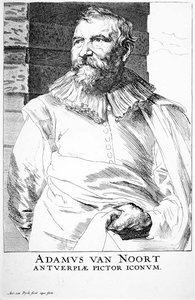
Adam van Noort
1561 - 1641 , Belgium
Quick Facts
- Artistic Movement Or Style: Baroque Painting
- Artists Or Movements Influenced By This Artist:
- Peter Paul Rubens
- Jacob Jordaens
- Artists Who Influenced This Artist: ['Hendrik van Balen I']
- Date Of Birth: 1561/62
- Date Of Death: 1641
- Full Name: adam van noort
- Nationality: Flemish
- Notable Artworks:
- Goodiva (Lady Godiva)
- Study of little child
- Place Of Birth: Antwerp, Belgium
Related Articles
Van Gogh's Masterpieces: Explore 25 Iconic Paintings & Art for Your Home
Journey through Vincent van Gogh's 25 most iconic paintings! Explore 'Starry Night', 'Sunflowers,' and more—discover the stories, techniques & emotions behind these Post-Impressionist masterpieces. Find museum-quality art reproductions for your home at ArtsDot.com.

White on Canvas: 10 Masterpieces & Timeless Elegance for Your Home Decor
Explore 10 iconic white paintings by Monet, Whistler & Rothko! Discover the stories behind these serene masterpieces and their impact on art history. Find museum-quality reproductions for your home decor at .

Rembrandt's Masterpieces: Explore 25 Iconic Paintings & Prints | ArtsDot
Journey through Rembrandt van Rijn's 25 most iconic paintings & etchings. Explore Dutch Golden Age masterpieces, dramatic chiaroscuro, and timeless portraits. Find museum-quality art reproductions to elevate your home decor on ArtsDot.com.

Early Netherlandish Masters: 10 Paintings That Revolutionized Art & Decor
Journey into the world of Early Netherlandish painting! Explore 10 masterpieces by Jan van Eyck, Rogier van der Weyden & more. Discover stunning detail, symbolism & Renaissance art for your home decor. Find museum-quality reproductions on ArtsDot.com
Early Netherlandish Masters: 10 Paintings That Revolutionized Art & Decor
Journey into the Early Netherlandish Renaissance! Explore 10 iconic paintings by Jan van Eyck, Rogier van der Weyden & more. Discover stunning detail, symbolism, and oil painting techniques. Find museum-quality art reproductions for your home at ArtsDot.com.