

 Preview
 Send
Send Share
Share
 Details

 Download
 Similars
 X-Ray
X-Ray Diaporama
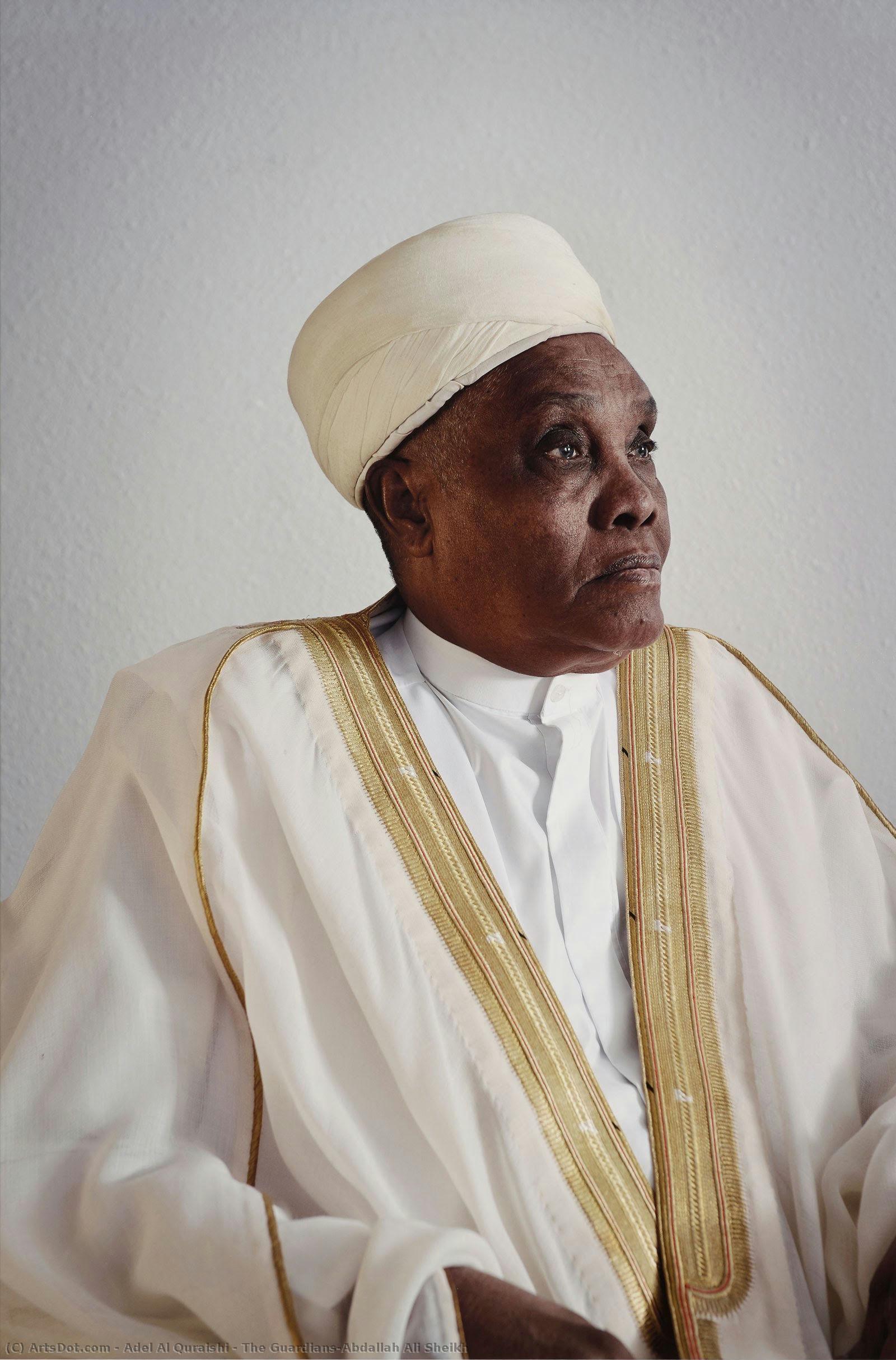
The Guardians-Abdallah Ali Sheikh
 2014
2014 111.0 x 74.0 cm
 The Ramzi and Saeda Dalloul Art Foundation
 Read More
Purchase a high-resolution, enhanced digital image, far superior to the online preview.
Each file is meticulously prepared by our in-house specialists using advanced tools and expert manual retouching. We ensure every image has exceptional clarity, precise color accuracy, and fine detail.
The final file is delivered via email within 72 hours, optimized for immediate use in professional, editorial, and print environments. This is the same quality trusted by top-tier design studios, publishers, and galleries.
Digital Image
Download a high-resolution file for personal display, printing, and creative projects. ( Buy Print Buy Hand Made Painting)
Included in Every Digital Image Order
Expert Digital Delivery, Guaranteed
When you choose ArtsDot.com, you're not just getting an image - you're receiving a professionally enhanced digital artwork, crafted with precision and backed by a satisfaction guarantee. Here's everything that comes with your order, automatically:

Fast Email Delivery
Your high-resolution digital image file will be emailed to you within 72 hours of ordering - ready for immediate use.

AI-Enhanced Digital File
Your artwork is professionally optimized using advanced AI tools and manual editing, ensuring maximum detail, clarity, and color accuracy.

Free Lifetime Re-Delivery
Accidentally deleted or lost your file? No worries - we'll resend it to you anytime, free of charge.

No Import Fees - Ever
Enjoy your artwork instantly with zero customs, duties, or delivery fees - digital downloads are always tax-free.

Color Accuracy Guarantee
We ensure your digital image reflects the original colors as closely as possible using professional tools and color management.

60-Day Satisfaction Guarantee
If you're not satisfied with your digital image, we'll revise it or refund 100% within 60 days - no questions asked.

100% Money-Back Guarantee
Not satisfied? Get a full refund within 60 days of receiving your digital file - no questions asked.

Bulk Order Discounts
Buy 3 images, save 10% - Buy 5, save 15% - Buy 10+, save 20%. Great for creative projects, galleries, and agencies.
Related Artworks



Artist Biography
Robert Rauschenberg: A Life in Flux and Collage
Born Milton Ernest Rauschenberg in Port Arthur, Texas, on October 22, 1925, Robert Rauschenberg’s artistic journey was one of constant experimentation and a deliberate blurring of boundaries. His early life, shaped by a fundamentalist Christian upbringing and a move to Boca Raton, Florida, instilled in him a deep appreciation for both the sacred and the mundane – a duality that would become central to his work. He initially pursued a degree in architecture at the University of Texas at Austin but quickly found himself drawn to painting, ultimately earning an MFA from the Royal College of Art in London. This shift marked not just a change of medium, but a fundamental rethinking of what art could be – a rejection of traditional notions of representation and a passionate embrace of process and chance.
Rauschenberg’s early career was defined by his “Combine” paintings, beginning around 1954. These groundbreaking works weren't simply paintings; they were collages incorporating found objects—everything from tires and sandpaper to photographs and magazine clippings – directly onto the canvas. Influenced by Dadaism and Surrealism, Rauschenberg sought to dismantle the hierarchy between painting and sculpture, creating hybrid forms that challenged viewers’ perceptions of reality. The “Monograms,” created in 1954-1962, further explored this concept, utilizing silkscreen techniques to transfer images—often of his own body or everyday objects—onto canvas. These works were not intended as finished products but rather as starting points for subsequent explorations, embodying Rauschenberg’s philosophy of “open painting.”
The Canyon and the Dawn of Pop
1959 saw the creation of *Canyon*, a monumental work that solidified Rauschenberg's position at the forefront of American art. This massive canvas, measuring over 20 feet by 30 feet, was built up layer upon layer using a variety of materials—paint, cardboard, fabric, and found objects—creating a complex, textured surface reminiscent of a geological landscape. *Canyon* is often considered a pivotal work in the transition from Abstract Expressionism to Pop Art, demonstrating Rauschenberg’s willingness to engage with popular culture and everyday imagery. The painting's scale and materiality were deliberately confrontational, inviting viewers to contemplate the relationship between art and life.
Around the same time, Rauschenberg began his “Bed” series (1958-1962), a particularly provocative body of work that placed a real bed directly within a gallery space. These installations were not merely reproductions; they were immersive experiences that forced viewers to confront the intimacy and vulnerability of domestic life. The "Bed" paintings, documented through photographs, became iconic images of the era, reflecting the growing interest in exploring the boundaries between art and reality.
Autobiography: A Monumental Print
In 1968, Rauschenberg created *Autobiography*, a monumental print that stands as perhaps the most ambitious statement of his artistic philosophy. Commissioned by Marion Javits, wife of Senator Jacob Javits, the sixteen-and-a-half-foot tall work utilized a billboard press to create three sheets of paper, each containing fragments of Rauschenberg’s life and art—personal photographs, X-rays, maps, and textual references. The print's sprawling composition reflects Rauschenberg’s desire to synthesize his entire artistic career into a single, unified statement. The use of indexical images – direct traces of the artist’s experience – underscored the importance of process and documentation in his work.
Late Career and Legacy
Throughout the 1970s and beyond, Rauschenberg continued to experiment with a wide range of media, including papermaking, tapestry, and performance art. He remained committed to exploring the intersection of art and life, often incorporating found objects and everyday materials into his work. His later works, such as *Snow*, a massive installation created in 1982 using thousands of white feathers, demonstrated his continued fascination with scale and materiality. Rauschenberg’s influence on subsequent generations of artists is undeniable; he helped to dismantle traditional artistic categories and paved the way for new forms of expression. He received numerous accolades throughout his career, including the National Medal of Arts in 1993 and the Leonardo da Vinci World Award of Arts in 1995.
Robert Rauschenberg died on May 12, 2008, leaving behind a vast and complex body of work that continues to challenge and inspire. His legacy lies not only in his innovative techniques but also in his unwavering commitment to experimentation, chance, and the blurring of boundaries between art and life.
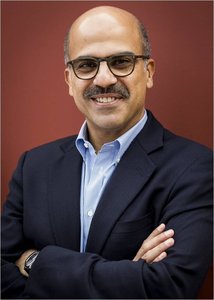
adel al quraishi
1968 - , Saudi Arabia
Quick Facts
- Artistic Movement Or Style:
- Assemblage
- Pop Art
- Neo-Dada
- Artists Or Movements Influenced By This Artist:
- Andy Warhol
- Minimalism
- Artists Who Influenced This Artist:
- Jackson Pollock
- Jasper Johns
- Date Of Birth: October 22, 1925
- Date Of Death: May 12, 2008
- Full Name: Robert Rauschenberg
- Nationality: American
- Notable Artworks:
- Canyon
- Monogram
- Autobiography
- Place Of Birth: Port Arthur, Texas

