 Preview
 Send
Send Share
Share
 Details

 Download
 Similars
 X-Ray
X-Ray Diaporama
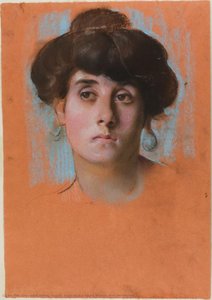
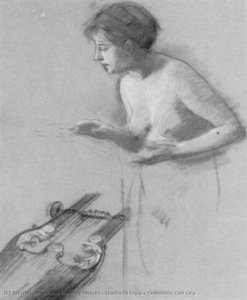
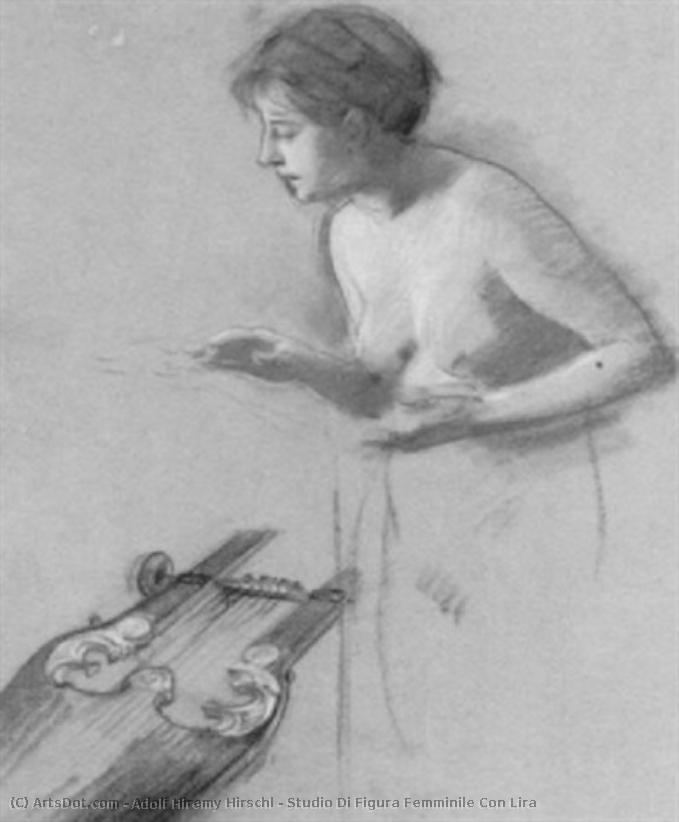
Studio Di Figura Femminile Con Lira
 Realism
 33.0 x 26.0 cm
 Read More
Giclée / Art Print
Museum-quality giclée or canvas print with fast production and flexible finish options. ( Buy Hand Made Painting Buy Image)




































Pick from our preset sizes that match the artwork's original proportions.

You may enter your own dimensions to fit a specific frame or space. If your selected size does not match the original image's proportions, we will either crop the artwork or extend the image with a mirrored or solid-fill edge. A digital mockup will be sent for your approval before production begins.
Please note that the on-screen preview does not reflect the actual cropping or extension. Only the mockup will accurately show the final composition.
While custom sizes are available, we recommend selecting a dimension from the predefined list to preserve the original proportions.
Worldwide Delivery () in 2 weeks instead of standard 4/5 weeks. (27 August)

Free Worldwide Express Shipping

High-Quality Linen Canvas

Full Shipping Insurance

Customs Tax Refund Guarantee

True Color Matching Guarantee

60-Day Return Policy (Defects Only)

100% Money-Back Guarantee

Bulk Discount Offer
 Glass option is only available in size under 110 CM

Studio Di Figura Femminile Con Lira
Giclée / Art Print
Reproduction Size
-


Total Price
$ 63
Related Artworks

Artist Biography
Adolf Hirémy-Hirschl: A Viennese Visionary Lost in Time
The story of Adolf Hirémy-Hirschl is one of profound brilliance momentarily eclipsed by the shifting tides of art history. Born on January 31, 1860, in Temesvár, Hungary, this Jewish artist would eventually become a central, if tragic, figure in the late nineteenth and early twentieth-century Viennese art world. His journey began with a move to Vienna, where he immersed himself in the rigorous academic traditions of the Akademie der bildenden Künste. Under the guidance of masters like Anton Hansekampf, Hirémy-Hirschl developed a technical precision that would become his hallmark, a skill first brought to international attention through his early success with works such as “Farewell: Scene from Hannibal Crossing the Alps.” This early triumph signaled the arrival of a painter capable of handling monumental scale and deep emotional resonance.
The trajectory of his soul and brush changed forever in 1882, when a transformative pilgrimage to Rome introduced him to the timeless grandeur of classical antiquity. This period was not merely an educational excursion but a spiritual awakening; the humanist ideals of ancient Rome seeped into his very marrow, inspiring a lifelong obsession with historical and mythological narratives. It was during this era that he produced some of his most ambitious, though often tragically lost, works. His “The Plague in Rome” (1884) stands as a testament to this period—a sprawling, visceral canvas that captured the harrowing reality of the Black Death with a psychological depth that moved even his most skeptical critics. Through his eyes, the ancient world was not a static relic but a living, breathing stage for human suffering and triumph.
The Struggle Between Tradition and Modernity
As the fin de siècle approached, Vienna became a crucible of artistic revolution. The rise of the Vienna Secession, led by the provocative Gustav Klimt, presented a formidable challenge to artists like Hirémy-Hirschl who remained anchored in academic realism and historical grandeur. While the Secessionists embraced decorative abstraction and new symbolic languages, Hirémy-Hirschl found himself navigating a complex middle ground. He sought to embrace the expressive, often haunting fervor of Symbolism without abandoning the meticulous draughtsmanship and anatomical accuracy he had mastered. This tension between the old world and the new defined much of his later output, as he wrestled with how to represent the allegorical weight of human experience in an increasingly fragmented modern age.
His career was marked by significant accolades, including the prestigious Imperial Prize in 1891, yet the very success that brought him acclaim also contributed to his eventual obscurity. As stylistic preferences shifted toward the avant-garde, much of his work—particularly his large-scale history paintings—fell out of the public eye. In a move that reflected both personal and professional transitions, he eventually moved to Rome in 1904, becoming an eminent member of the expatriate art community. There, he continued to produce works of immense scale, such as the monumental polyptych “Sic Transit…” (1912), which explored the fall of the Roman Empire and the rise of Christianity with a breathtaking, epic scope.
A Legacy Reclaimed from the Shadows
The true depth of Hirémy-Hirschl’s contribution to art remained hidden for decades following his death in Rome in 1933. Because many of his heirs retained possession of his studio and smaller works until the early 1980s, a significant portion of his oeuvre was effectively lost to history. However, the rediscovery of his drawings, watercolors, and oil sketches has allowed modern scholars to appreciate the full breadth of his talent. Beyond his famous historical canvases, he was a master of light and shadow in landscapes and a gifted draughtsman capable of rendering classical drapery with almost tactile realism.
Today, we look back at Adolf Hirémy-Hirschl not merely as a relic of the academic tradition, but as a vital bridge between the classical past and the symbolic future. His work serves as a poignant reminder of the power of historical narrative and the enduring impact of the Roman spirit on the European imagination. To study his art is to witness:
- The mastery of academic realism applied to the most dramatic human tragedies.
- A profound connection to antiquity that breathed life into mythological subjects.
- The technical brilliance of a painter who could navigate both the monumental and the intimate.
- A resilient artistic spirit that sought meaning in the intersection of history, myth, and symbolism.
Quick Facts
- Artistic Movement Or Style: Symbolist Art
- Artists Or Movements Influenced By This Artist: ['Romantic Art']
- Artists Who Influenced This Artist:
- Gustav Klimt
- Vienna Secessionists
- Date Of Death: 1933
- Full Name: Adolf Hirémy-Hirschl
- Nationality: Hungarian
- Notable Artworks:
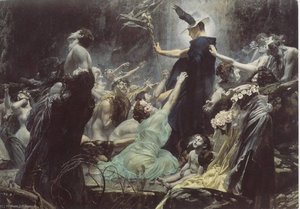
- Souls on the Banks of the Acheron
- Hermes Psychopomps
- A Standing Draped Figure
- Place Of Birth: Temesvár, Hungary