 Preview
 Send
Send Share
Share
 Details

 Download
 Similars
 X-Ray
X-Ray Diaporama
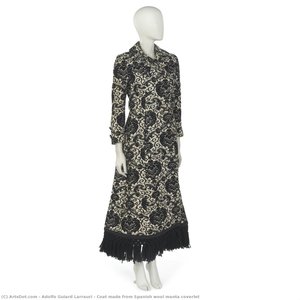
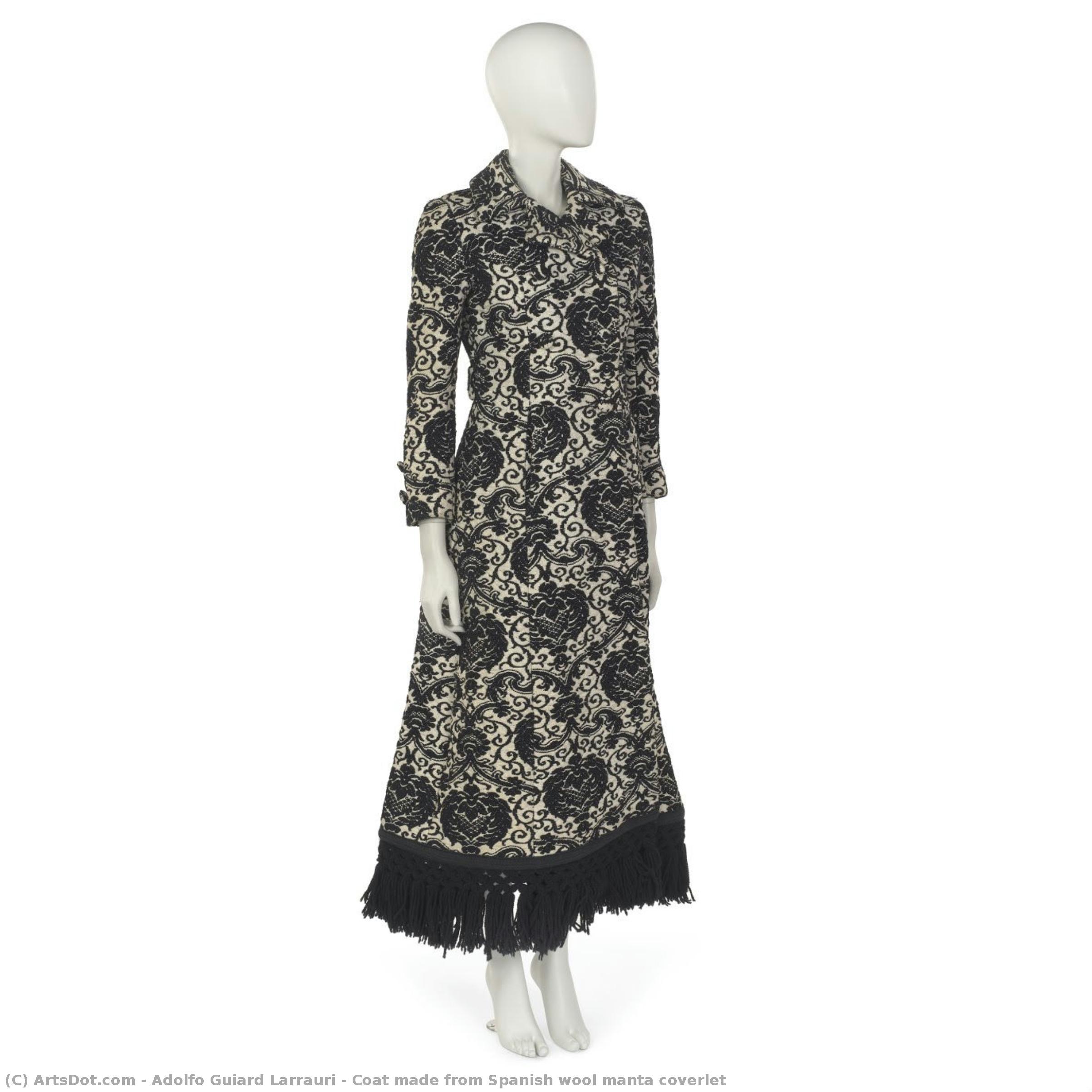
Coat made from Spanish wool manta coverlet


 Read More
Hand Made Oil Reproduction
Hand-painted oil on canvas in your size and frame, made to order by our artists. ( Buy Print Buy Image)




































Pick from our preset sizes that match the artwork's original proportions.

You may enter your own dimensions to fit a specific frame or space. If your selected size does not match the original image's proportions, we will either crop the artwork or extend the painting with additional hand-painted elements. A digital mockup will be sent for your approval before production begins.
Please note that the on-screen preview does not reflect the actual cropping or extension. Only the mockup will accurately show the final composition.
While custom sizes are available, we recommend selecting a dimension from the predefined list to preserve the original proportions.
After order, ArtsDot.com team will email client for instructions and provide a mockup preview
Worldwide Delivery () in 3/4 weeks instead of standard 5 weeks. (26 August). No compromise on quality.

Free Worldwide Express Shipping

High-Quality Linen Canvas

Full Shipping Insurance

Customs Tax Refund Guarantee

True Color Matching Guarantee

60-Day Return Policy (Defects Only)

100% Money-Back Guarantee

Bulk Discount Offer
 Glass option is only available in size under 110 CM

Coat made from Spanish wool manta coverlet
Reproduction Medium
Reproduction Size
-


Total Price
$ 263
Artwork Description
Related Artworks

Artist Biography
Adolfo Guiard Larrauri: A Pioneer of Basque Impressionism
Born in Bilbao, Spain, in 1860, Adolfo Guiard Larrauri emerged as a significant figure in the late 19th and early 20th-century art world – a painter deeply rooted in his Basque heritage yet profoundly influenced by the burgeoning currents of Impressionism. His life, marked by both artistic ambition and personal hardship, ultimately shaped an oeuvre characterized by vibrant landscapes, intimate depictions of Basque rural life, and a subtle but undeniable modernity that predates many of his contemporaries.
Guiard’s early years were steeped in the traditions of his family – his father, Alphonse Guiard, was a successful photographer who had migrated from France. This exposure to visual arts at a young age undoubtedly fostered an appreciation for observation and representation. Despite facing challenges after his father's studio burned during the Third Carlist War, a pivotal moment that disrupted their financial stability, Guiard’s mother recognized his artistic talent and provided him with his first set of watercolors – a gesture that ignited his lifelong passion. Formal training began with Antonio Lecuona, a prominent costumbrista painter known for capturing scenes of everyday Spanish life, providing Guiard with a foundational understanding of depicting the realities of his surroundings.
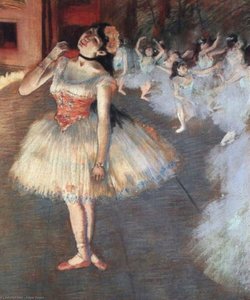
At sixteen, he embarked on a transformative journey to Paris, the epicenter of artistic innovation at the time. There, under the tutelage of Léon Glaize at the Académie Colarossi, Guiard honed his skills and was exposed to the revolutionary ideas of Impressionism. He found himself in the orbit of luminaries like Degas, whose influence is palpable in Guiard’s later works – a focus on capturing fleeting moments, an interest in light and color, and a willingness to experiment with unconventional brushstrokes. This Parisian sojourn proved crucial, not just for his technical development but also for his artistic identity.
The Basque Landscape and Rural Life
Upon returning to Bilbao around 1886, Guiard established a workshop in Bakio, a coastal town renowned for its stunning landscapes and close-knit community. This location became the heart of his creative output for several years. He began to dedicate himself primarily to painting the Basque countryside – rolling hills, dramatic coastlines, and the traditional rural life of the region. These weren’t simply picturesque scenes; Guiard sought to capture the essence of Basque identity, portraying the dignity and resilience of its people within their natural environment.
His subjects often included shepherds tending their flocks, farmers working the land, and women engaged in domestic activities – all rendered with a remarkable sensitivity to detail and an appreciation for the subtle nuances of light. He frequently incorporated elements of *costumbrismo*, a genre that aimed to document and celebrate Spanish customs and traditions, but Guiard’s approach was distinct. He avoided sentimentality, instead presenting a realistic yet imbued with a quiet dignity.
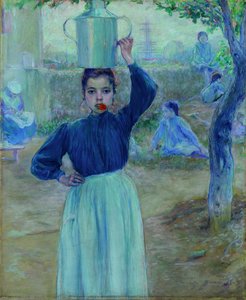
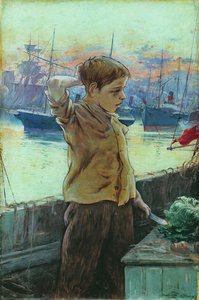
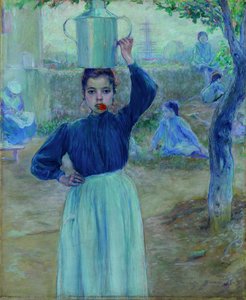
Notable works such as “El Cho (The Ship’s Boy)” exemplify this style – a vibrant depiction of a young boy playing on the beach, capturing not just his physical appearance but also the joy and innocence of childhood. Similarly, paintings like "A Shepherdess" showcase his ability to convey both the beauty of the landscape and the quiet strength of its inhabitants.
Influences and Artistic Development
Guiard’s artistic journey was shaped by a complex interplay of influences. While deeply rooted in Impressionism, he also absorbed elements from Costumbrismo, reflecting the Spanish tradition of depicting everyday life. The influence of Ramon Martí Alsina, his mentor during his formative years in Barcelona, is evident in Guiard's use of color and composition. However, it was perhaps Degas who exerted the most profound impact, particularly regarding his focus on capturing movement and fleeting moments.
Crucially, Guiard’s work evolved over time. Initially, he faced criticism for his unconventional approach, with some critics dismissing his paintings as lacking in technical polish. However, by the early 1900s, his reputation began to grow, particularly through exhibitions in Paris and Bilbao. The recognition of Miguel de Unamuno, a prominent Spanish writer and intellectual, further bolstered his standing within the artistic community.
Legacy and Historical Significance
Adolfo Guiard Larrauri’s contribution to Basque art is undeniable. He stands as one of the pioneers of modern painting in the region, bridging the gap between traditional landscape painting and the emerging trends of Impressionism and early Modernism. His work offers a unique window into the cultural identity of the Basque people – their connection to the land, their traditions, and their way of life.
Despite facing periods of obscurity during his lifetime, Guiard’s legacy has been increasingly recognized in recent decades. Retrospectives at the Bilbao Fine Arts Museum have brought renewed attention to his oeuvre, solidifying his place as a significant figure in Spanish art history. His paintings continue to be exhibited and appreciated for their beauty, their emotional resonance, and their insightful portrayal of Basque life.
His work is a testament to the power of observation, the importance of cultural heritage, and the enduring appeal of capturing the essence of a place and its people through art.
adolfo guiard larrauri
1860 - 1916 , Spain
Quick Facts
- Artistic Movement Or Style: Impressionism
- Artists Who Influenced This Artist: ['Ramon Martí Alsina']
- Date Of Birth: 1860 Bilbao, Spain
- Date Of Death: 1916
- Full Name: Adolfo Guiard Larrauri
- Nationality: Spanish
- Notable Artworks:
- El cho (The Ship’s Boy)
- Coat made from Spanish wool manta coverlet
- Place Of Birth: Bilbao, Spain