 Preview
 Send
Send Share
Share
 Details

 Download
 Similars
 X-Ray
X-Ray Diaporama
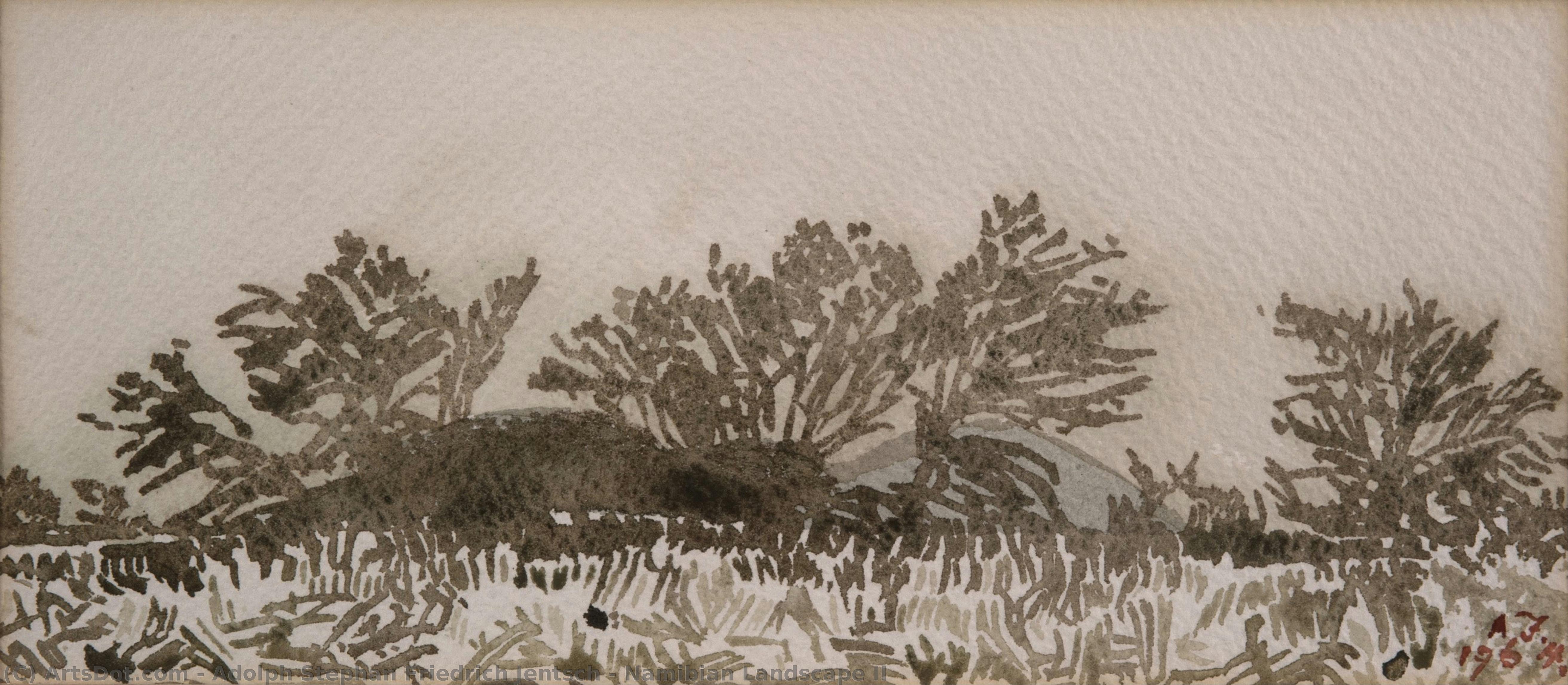
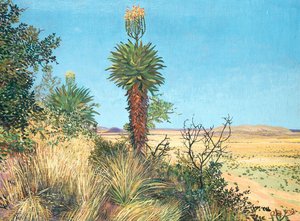
Namibian Landscape II
 1964
1964 13.0 x 32.0 cm
 University of Pretoria Museums
 Read More
Giclée / Art Print
Museum-quality giclée or canvas print with fast production and flexible finish options. ( Buy Hand Made Painting Buy Image)




































Pick from our preset sizes that match the artwork's original proportions.

You may enter your own dimensions to fit a specific frame or space. If your selected size does not match the original image's proportions, we will either crop the artwork or extend the image with a mirrored or solid-fill edge. A digital mockup will be sent for your approval before production begins.
Please note that the on-screen preview does not reflect the actual cropping or extension. Only the mockup will accurately show the final composition.
While custom sizes are available, we recommend selecting a dimension from the predefined list to preserve the original proportions.
Worldwide Delivery () in 2 weeks instead of standard 4/5 weeks. (22 August)

Free Worldwide Express Shipping

High-Quality Linen Canvas

Full Shipping Insurance

Customs Tax Refund Guarantee

True Color Matching Guarantee

60-Day Return Policy (Defects Only)

100% Money-Back Guarantee

Bulk Discount Offer
 Glass option is only available in size under 110 CM

Namibian Landscape II
Giclée / Art Print
Reproduction Size
-


Total Price
$ 63
Collectible Description
Related Artworks




Artist Biography
Vincent van Gogh: A Life Painted in Light and Shadow
Vincent van Gogh, a name synonymous with passionate intensity and groundbreaking artistic vision, remains one of the most recognizable figures in art history. Born in 1853 in Groot-Zundert, Netherlands, his life was tragically short – just thirty-seven years – yet within that brief span, he produced over two thousand works: paintings, drawings, and prints that continue to captivate audiences with their raw emotion, vibrant colors, and innovative techniques. More than simply a painter, Van Gogh was a revolutionary who fundamentally altered the course of Western art, paving the way for Expressionism and profoundly influencing generations of artists to come.
Van Gogh’s early life offered little indication of the turbulent artistic journey that lay ahead. He initially pursued studies in theology at the Protestant Theological Seminary in Amsterdam, but quickly found himself disillusioned with the rigid structure and lack of connection to the world outside. Following a brief stint as an art dealer in The Hague, he attempted to sell religious images in Paris, a period marked by financial instability and personal struggles. It was during this time that he began to seriously dedicate himself to painting, initially producing dark, somber works reflecting his own feelings of isolation and despair. These early pieces, characterized by muted tones and a sense of melancholy, foreshadowed the emotional depth that would become a hallmark of his later work.
A pivotal moment in Van Gogh’s artistic development occurred in 1886 when he moved to Paris and encountered the vibrant Impressionist and Post-Impressionist circles. He befriended artists like Henri de Toulouse-Lautrec, Émile Bernard, and Paul Gauguin, absorbing their techniques and experimenting with brighter colors and looser brushstrokes. Gauguin’s influence was particularly significant; Van Gogh adopted Gauguin's emphasis on capturing the essence of a subject rather than meticulously rendering every detail. This shift is vividly illustrated in his series of *Sunflowers*, painted during this period – bold, luminous depictions of simple flowers that radiate with an almost palpable energy.
In 1888, seeking a more tranquil environment and hoping to establish an artist’s colony, Van Gogh moved to Arles in the south of France. This period proved to be both incredibly productive and profoundly challenging for him. He painted some of his most iconic works during this time, including *The Yellow House*, *Bedroom in Arles*, and numerous landscapes bathed in the golden light of Provence. However, he also struggled with mental illness, culminating in a severe psychotic episode that resulted in the infamous mutilation of his ear. Despite these personal struggles, Van Gogh continued to paint relentlessly, driven by an almost obsessive need to capture the beauty and intensity of the world around him.
The Language of Color and Brushstroke
Van Gogh’s artistic style is instantly recognizable for its distinctive use of color and brushwork. He employed a vibrant palette – intense yellows, blues, greens, and reds – often applying paint in thick, swirling strokes that created a sense of movement and texture. This technique, known as impasto, not only added visual interest but also conveyed the artist’s emotional state, imbuing his paintings with an almost palpable energy. Unlike the smooth surfaces favored by many of his contemporaries, Van Gogh deliberately left visible brushstrokes, allowing them to contribute to the overall composition and express his subjective experience.
He was fascinated by color theory, studying the works of Eugène Delacroix and exploring how colors interact with each other. He believed that color could evoke powerful emotions and used it to create a sense of atmosphere and mood in his paintings. His use of complementary colors – such as blue and orange or red and green – created dynamic contrasts and heightened visual impact. Furthermore, Van Gogh’s approach to depicting light was revolutionary. Rather than simply reflecting the natural light, he sought to capture its essence, transforming ordinary scenes into luminous expressions of emotion.
Key Works and Influences
Among Van Gogh's most celebrated works are *The Starry Night* (1889), a swirling depiction of the night sky above Saint-Rémy; *Wheatfield with Crows* (1890), a brooding landscape filled with ominous shadows; and *Self-Portrait with Bandaged Ear* (1889), a poignant reflection on his own suffering. His series of portraits, including those of *The Postman Joseph Roulin*, capture the dignity and humanity of ordinary people. His landscapes, particularly those painted in Arles and Saint-Rémy, are characterized by their vibrant colors, dynamic brushwork, and emotional intensity.
Beyond Impressionism and Post-Impressionism, Van Gogh was influenced by Japanese prints, which he collected avidly and studied with great interest. The flattened perspective, bold outlines, and simplified forms of these prints profoundly impacted his own artistic style. He also drew inspiration from the works of religious painters like Hieronymus Bosch and Rembrandt, incorporating elements of symbolism and emotional intensity into his paintings.
A Legacy of Passion and Innovation
Despite dying in relative obscurity at the age of 37, Vincent van Gogh’s legacy has grown exponentially over time. His work was largely ignored during his lifetime but gained recognition posthumously, becoming one of the most beloved and influential in art history. His paintings are now housed in major museums around the world, attracting millions of visitors each year. Van Gogh's innovative use of color, brushwork, and emotional expression paved the way for Expressionism and profoundly influenced countless artists who followed.
More than just a painter, Van Gogh was a visionary whose life and work embody themes of passion, struggle, and the relentless pursuit of beauty. His story continues to resonate with audiences today, reminding us of the power of art to express the deepest emotions and transform our understanding of the world around us.
adolph stephan friedrich jentsch
1888 - 1977 , Germany
Quick Facts
- Artistic Movement Or Style: Post-Impressionism
- Artists Or Movements Influenced By This Artist:
- Expressionism
- Post-Impressionism
- Artists Who Influenced This Artist:
- Eugène Delacroix
- Edgar Degas
- Paul Gauguin
- Date Of Birth: March 30, 1853
- Date Of Death: July 29, 1890
- Full Name: Vincent Willem van Gogh
- Nationality: Dutch
- Notable Artworks:
- Sunflowers
- Bedroom in Arles
- Starry Night
- Wheatfield with Crows
- Place Of Birth: Ghent, Belgium