 Preview
 Send
Send Share
Share
 Details

 Download
 Similars
 X-Ray
X-Ray Diaporama
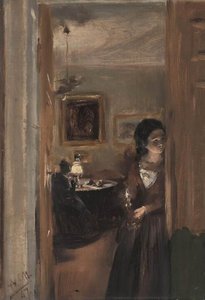
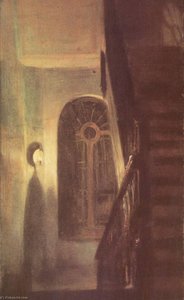
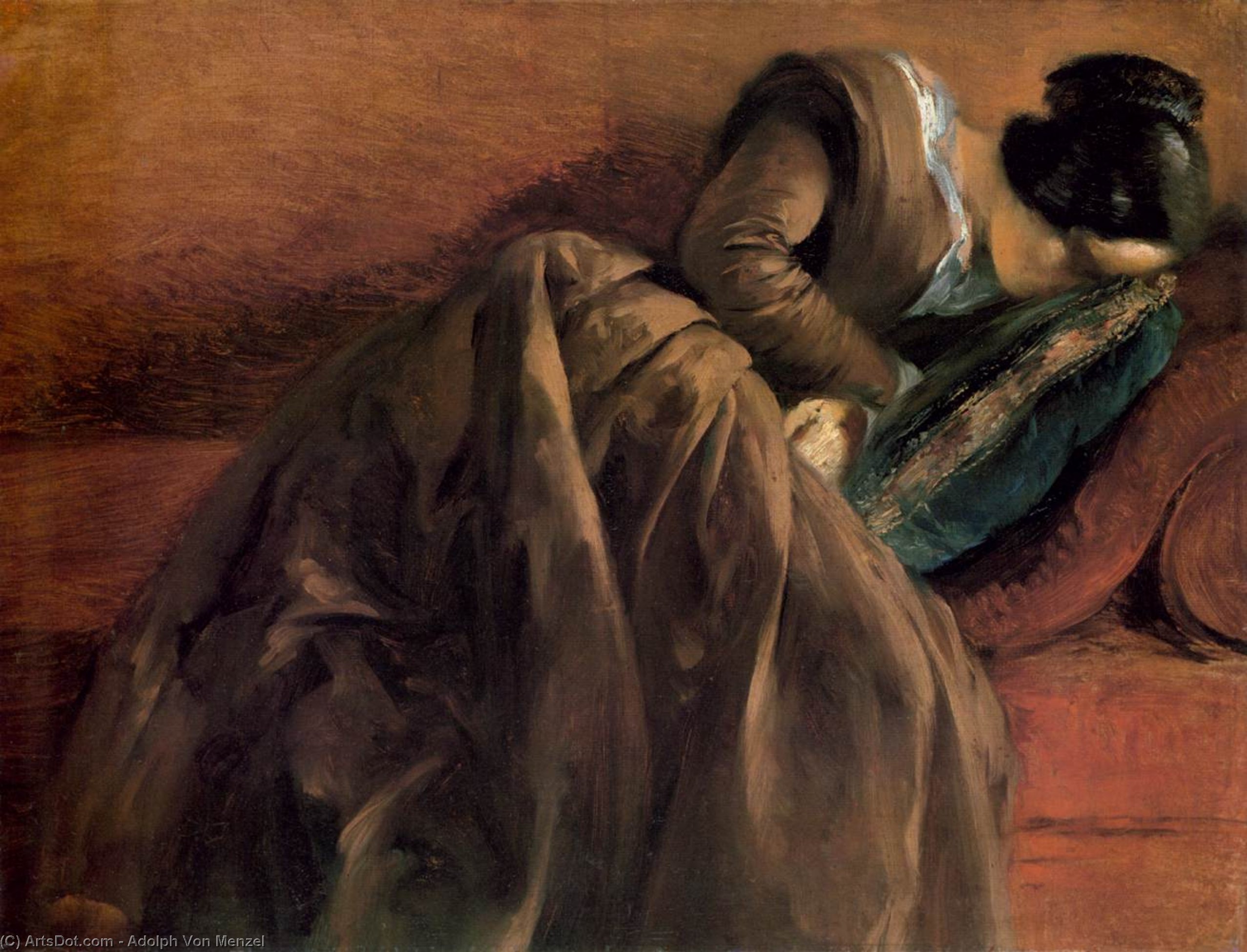
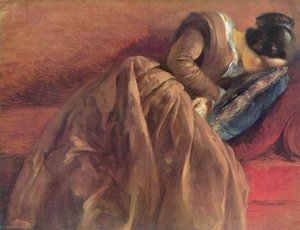
Sister Emily Sleeping
 Oil On Canvas
- WallArt
- Contemporary Realism
 1848
1848- 19th Century
 47.0 x 60.0 cm
 Hamburger Kunsthalle
 Read More
Hand Made Oil Reproduction
Hand-painted oil on canvas in your size and frame, made to order by our artists. ( Buy Print Buy Image)




P118B $10

P118H $10

P118W $10

P438Z $10

P508JH $12

P508YH $12

P805H $10

P805Z $10

P919BZ $10

P919G $10

P919XJ $10

P959ZH $10

P968JZ $12

W106C $8

W218G $10

W218JH $8

W218Y $10

W307PJ $10

W316G $10

W316PJ $8

W316Y $10

W398PJ $8

W4111J $10

W500HY $15

W500JH $15

W692G $12

W849H $8

W940BG $15

W953PJ $8




Pick from our preset sizes that match the artwork's original proportions.

You may enter your own dimensions to fit a specific frame or space. If your selected size does not match the original image's proportions, we will either crop the artwork or extend the painting with additional hand-painted elements. A digital mockup will be sent for your approval before production begins.
Please note that the on-screen preview does not reflect the actual cropping or extension. Only the mockup will accurately show the final composition.
While custom sizes are available, we recommend selecting a dimension from the predefined list to preserve the original proportions.
After order, ArtsDot.com team will email client for instructions and provide a mockup preview
Worldwide Delivery () in 3/4 weeks instead of standard 5 weeks. (26 August). No compromise on quality.

Free Worldwide Express Shipping

High-Quality Linen Canvas

Full Shipping Insurance

Customs Tax Refund Guarantee

True Color Matching Guarantee

60-Day Return Policy (Defects Only)

100% Money-Back Guarantee

Bulk Discount Offer
 Glass option is only available in size under 110 CM

Sister Emily Sleeping
Reproduction Medium
Reproduction Size
-


Total Price
$ 263
Artwork Description
A Sanctuary of Stillness: The Intimacy of Menzel’s Vision
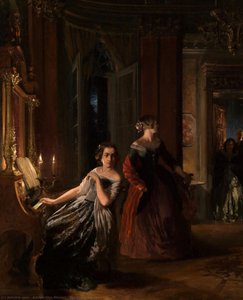
In the quietude of a dimly lit room, Adolph von Menzel captures a moment that feels as though time itself has paused to catch its breath. Sister Emily Sleeping is not merely a portrait; it is an invitation into a private, domestic sanctuary. The scene unfolds with a profound sense of vulnerability and tenderness, depicting two women sharing a space of deep connection. One figure rests in the gentle embrace of sleep, her form draped in soft blues, while her companion sits beside her, a silent guardian of this peaceful repose. There is an undeniable weight to the silence within the frame, a heavy, comforting stillness that speaks to the enduring strength of familial or platonic bonds. For the discerning collector, this piece offers more than just visual beauty; it provides an emotional anchor, a window into a mid-19th-century world where intimacy was found in the smallest, most unadorned gestures.
The technical mastery on display in this work reflects Menzel’s roots in the meticulous world of lithography. His approach to Realism is characterized by an unflinching devotion to detail and a sophisticated command of texture. As your eyes wander across the canvas, you can almost feel the weight of the heavy fabrics and the cool smoothness of the room's surfaces. Menzel employs a muted, somber palette—dominated by earthy browns, deep greys, and melancholic blues—to sculpt the light and shadow within the composition. This use of chiaroscuro does not merely illuminate the subjects; it creates an atmosphere of psychological depth, pulling the viewer into the shadows alongside the figures. The subtle nuances in facial expressions and the careful rendering of the room's elements, from the soft couch to the steady presence of a nearby clock, ground the ethereal moment in a tangible, breathing reality.
Historical Resonance and the Beauty of the Everyday
To understand the impact of this painting, one must look to the era of its creation. Painted in 1848, a year of significant social upheaval across Europe, Menzel’s work stands as a quiet rebellion against the grand, often idealized narratives of his time. While many of his contemporaries sought to depict heroic legends or romanticized landscapes, Menzel turned his gaze inward, toward the unvarnished truth of human experience. He eschewed the sentimental embellishments prevalent in Romanticism, choosing instead to find the extraordinary within the ordinary. This dedication to portraying life with honesty and precision helped define German Realism, making him a titan of his era.
For those looking to integrate such a masterpiece into a contemporary interior, Sister Emily Sleeping offers a unique versatility. Its subdued tones and contemplative mood make it an exquisite centerpiece for a study, a library, or a serene bedroom setting. It does not demand attention through loud colors or jarring compositions; rather, it commands respect through its quiet dignity and the way it harmonizes with sophisticated, understated decor. A high-quality reproduction of this work allows the soul of Menzel’s realism to breathe within a modern home, providing a sense of historical continuity and a perennial source of calm inspiration.
Related Artworks

Artist Biography
A Life Etched in Realism: The World of Adolph von Menzel
Adolph Friedrich Erdmann von Menzel, a name synonymous with German Realism, was more than just a painter; he was a visual chronicler of 19th-century life. Born on December 8, 1815, in Breslau (now Wrocław, Poland), his journey began not amidst the hallowed halls of artistic academies, but within the practical world of his father’s lithographic workshop. This early immersion in reproduction and detail would profoundly shape his aesthetic sensibilities. Though initially intended for a professorial path by his father, young Adolph's passion for art proved undeniable, leading to brief studies at the Berlin Academy of Art in 1833 before embracing a largely self-taught approach. He quickly distinguished himself through meticulous draftsmanship and an uncanny ability to capture the essence of everyday scenes, initially through lithography, but soon expanding into painting and etching—media he would master with unparalleled skill. Menzel’s life was one dedicated to observation, to translating the world around him onto canvas and paper with a precision that bordered on photographic realism, yet always imbued with a subtle emotional depth.From Historical Grandeur to Intimate Moments
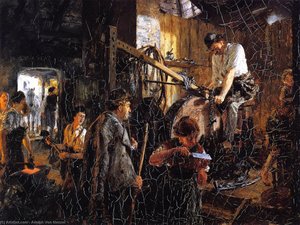
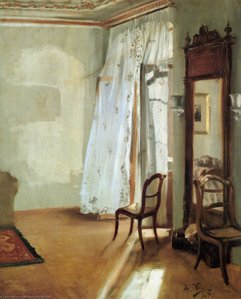
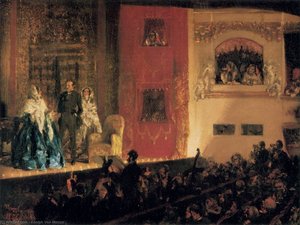
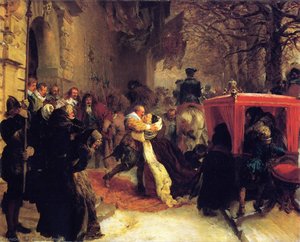
Menzel's artistic output was remarkably diverse, spanning historical paintings, genre scenes, portraits, and landscapes. Early success came through his illustrations for historical works, notably those depicting the reign of Frederick the Great, showcasing a dedication to accuracy and narrative detail that resonated with a burgeoning national pride in Prussia. These large-scale compositions established him as a leading history painter, satisfying public demand for patriotic imagery during a period of significant political and social change. However, it was his later work—the seemingly unassuming genre paintings and intimate studies of modern life—that truly cemented his legacy. The Iron Rolling Mill, completed between 1872 and 1875, stands as a monumental achievement, not merely for its scale but for its unflinching depiction of industrial labor. It’s a scene teeming with energy and grit, capturing the raw power and human cost of the burgeoning Industrial Revolution. This wasn't romanticized industry; it was honest, visceral, and profoundly modern in its approach. Alongside grand historical narratives, Menzel found beauty and significance in quieter moments: a glimpse through a French window, a scene in a palace garden, or a simple portrait revealing character through subtle gestures and expressions.Influences and Artistic Development
While largely self-taught, Menzel was not immune to artistic influences. He admired the Dutch Masters—their mastery of light and shadow, their ability to elevate everyday life to artful significance—and elements of this influence can be seen in his compositions and use of color. However, he forged a distinctly German path, rejecting the overt romanticism prevalent in some contemporary circles in favor of a more objective, analytical approach. His work resonated with French artists as well; Edgar Degas, famously, deeply admired Menzel’s skill, even copying his works and declaring him “the greatest living master.” This mutual respect highlights a shared commitment to realism and observation, despite differing national contexts. Menzel's development wasn't linear. He continually experimented with technique and subject matter, moving from the grand historical canvases of his early career to the more intimate and psychologically nuanced scenes that characterized his later work. His etching skills were particularly noteworthy, allowing for a level of detail and tonal range that further enhanced his realistic style.Legacy and Historical Significance
Adolph von Menzel’s impact on German art is undeniable. He bridged the gap between traditional historical painting and modern realism, paving the way for future generations of artists to explore new subjects and techniques. His posthumous reputation rests not only on his paintings but also on his extensive graphic work—drawings and etchings that reveal a remarkable sensitivity and observational skill. He was knighted in 1898, becoming Adolph von Menzel, a recognition of his immense contribution to the cultural landscape of Germany. His influence extended beyond painting, impacting illustration and printmaking as well. Museums across Germany—the Museum Georg Schäfer and the Städtische Galerie im Lenbachhaus among them—proudly display his works, ensuring that his vision continues to inspire. Menzel’s art serves as a powerful reminder of the beauty and complexity inherent in everyday life, and his dedication to capturing reality with honesty and precision ensures his enduring place as one of the most important German artists of the 19th century. His work remains relevant today, offering insights into a pivotal period of social and industrial transformation, and reminding us of the power of art to illuminate the human condition.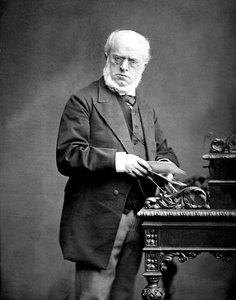
Adolph von Menzel
1815 - 1905 , Poland
Quick Facts
- Artistic Movement Or Style: Realism
- Artists Or Movements Influenced By This Artist: ['Edgar Degas']
- Date Of Birth: December 8, 1815
- Date Of Death: February 9, 1905
- Full Name: Adolph Friedrich Erdmann von Menzel
- Nationality: German
- Notable Artworks:
- Iron Rolling Mill
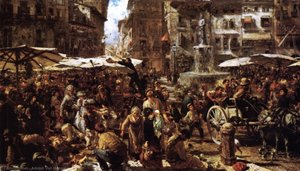
- Market-place at Verona
- German Kanzelpredigt
- Place Of Birth: Wrocław, Poland
Related Articles

Slate Blue Masterpieces: 10 Iconic Paintings & Timeless Home Decor Ideas
Immerse yourself in the captivating world of slate blue! Explore 10 iconic paintings by Monet, Van Gogh & Renoir. Discover their stories, techniques & find museum-quality art reproductions for your home at .
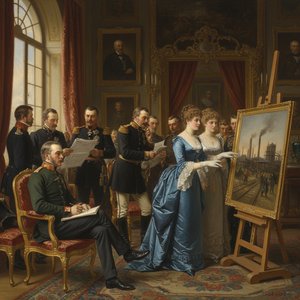
Adolph von Menzel: Realism, Prussian Society & the Painterly Chronicle of a Changing Era
Explore the life & work of Adolph von Menzel, a leading German Realist painter. Discover his detailed depictions of Prussian society, innovative techniques, and lasting influence on art history. Hand-painted reproductions available at ArtsDot.

Giclée Prints: Archival Quality & Aesthetic Nuances for the Discerning Collector
Explore the world of giclée prints with ArtsDot. Learn about archival quality, aesthetic nuances & investment potential. Expert guidance for discerning art collectors seeking museum-quality reproductions and lasting value.
The Allure of Azure: Exploring the Symbolic & Aesthetic Depths of Blue in Art History
Explore the rich history of blue in art! Discover its symbolism, from ancient pigments to modern masterpieces by Kandinsky & Seurat. Uncover the psychological impact and cultural meanings behind this captivating hue.
Romantic Realism's Finest: 10 Masterpieces for Your Home | ArtsDot
Explore 10 defining masterpieces of Romantic Realism! Discover Courbet, Millet & Daumier's powerful paintings—capturing emotion and social realities. Find museum-quality reproductions for your home at ArtsDot.com.