 Preview
 Send
Send Share
Share
 Details

 Download
 Similars
 X-Ray
X-Ray Diaporama
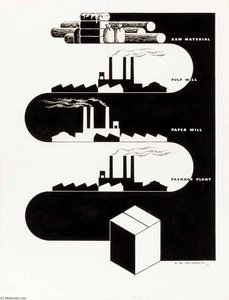
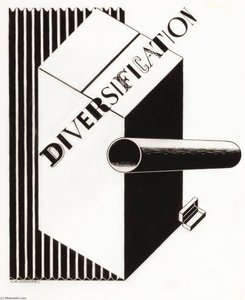
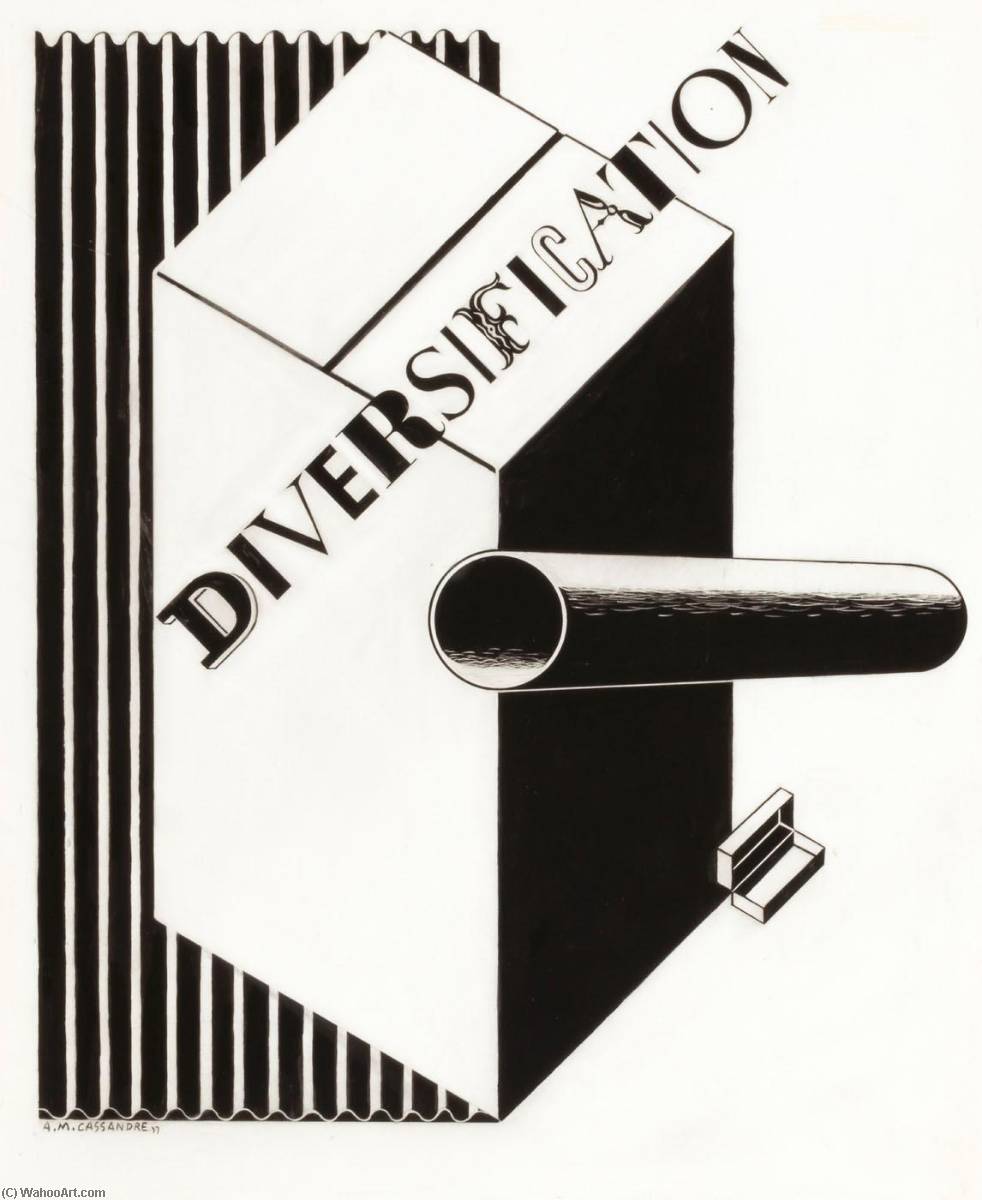
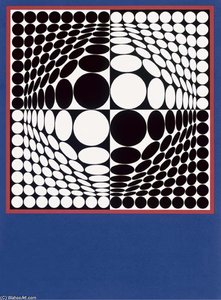
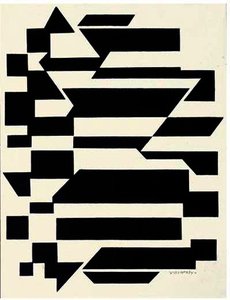
Diversification, from the Early Series
 1937
1937 39.0 x 32.0 cm
 Read More
Hand Made Oil Reproduction
Hand-painted oil on canvas in your size and frame, made to order by our artists. ( Buy Print Buy Image)




































Pick from our preset sizes that match the artwork's original proportions.

You may enter your own dimensions to fit a specific frame or space. If your selected size does not match the original image's proportions, we will either crop the artwork or extend the painting with additional hand-painted elements. A digital mockup will be sent for your approval before production begins.
Please note that the on-screen preview does not reflect the actual cropping or extension. Only the mockup will accurately show the final composition.
While custom sizes are available, we recommend selecting a dimension from the predefined list to preserve the original proportions.
After order, ArtsDot.com team will email client for instructions and provide a mockup preview
Worldwide Delivery () in 3/4 weeks instead of standard 5 weeks. (25 August). No compromise on quality.

Free Worldwide Express Shipping

High-Quality Linen Canvas

Full Shipping Insurance

Customs Tax Refund Guarantee

True Color Matching Guarantee

60-Day Return Policy (Defects Only)

100% Money-Back Guarantee

Bulk Discount Offer
 Glass option is only available in size under 110 CM

Diversification, from the Early Series
Reproduction Medium
Reproduction Size
-


Total Price
$ 263
Related Artworks




Artist Biography
The Architect of the Modern Eye
Adolphe Jean-Marie Mouron, known to the world by the evocative pseudonym Cassandre, was far more than a mere graphic designer; he was a visionary who redefined the visual language of the twentieth century. Born in 1901 in Kharkov, Russia—a city rich with the complex textures of Ukrainian history—his early life provided a diverse cultural palette that would later color his sophisticated compositions. His journey eventually led him to the heart of Paris, where he immersed himself in the rigorous training of the École des Beaux-Arts and the Académie Julian. It was within this vibrant Parisian atmosphere, amidst the clatter of a rapidly modernizing world, that Cassandre began to synthesize the fragmented geometries of Cubism with the dreamlike, irrational logic of Surrealism.
His artistic evolution was marked by an uncanny ability to bridge the gap between fine art and commercial necessity. As the 1920s gave way to the 1930s, Cassandre emerged as a titan of the Art Deco movement. He did not simply create advertisements; he constructed visual monuments. His work for legendary brands such as Renault and Citroën transformed the streetscape into an open-air gallery, where bold lines and striking contrasts commanded the attention of a public increasingly captivated by speed, machinery, and luxury. Through his mastery of the airbrush and a keen understanding of perspective, he captured the kinetic energy of a new era, making the static medium of the poster feel as dynamic as a speeding locomotive.
Typography as Emotion and Form
Perhaps Cassandre’s most enduring legacy lies in his revolutionary approach to typography, where letters were treated not merely as carriers of meaning, but as sculptural elements within a composition. He understood that in the age of mass communication, type must possess both clarity and character. His typographic innovations—most notably the groundbreaking Bifur (1929), the sleek sans-serif Acier Noir (1935), and the versatile Peignot (1937)—became the very heartbeat of Art Deco aesthetics. These typefaces were engineered to convey emotion, rhythm, and modernity, ensuring that even before a viewer read a single word, they felt the spirit of the message.
This seamless integration of text and image reached its zenith in his travel posters for clients like the Compagnie Internationale des Wagons-Lits. In these works, the typography dances alongside stylized landscapes and streamlined vessels, creating a unified sensory experience. His ability to manipulate space allowed him to create "moving" advertisements, such as his celebrated designs for the Dubonnet wine company, which were specifically crafted to be legible and impactful to passengers in moving vehicles. This foresight cemented his reputation as a pioneer of functional, high-impact graphic design.
A Legacy of Symbolism and Structure
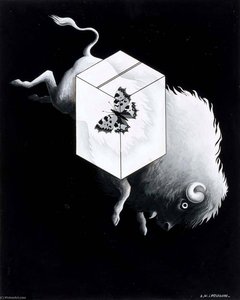
Beyond the commercial triumphs, Cassandre’s deeper body of work reveals a profound preoccupation with symbolism and the human condition. In pieces such as Paradox from his Early Series, he utilized surrealist juxtapositions—such as a bison bearing a heavy box while being approached by a delicate butterfly—to explore themes of strength, burden, and transformation. His ability to weave complex narratives through stark, geometric silhouettes allowed him to touch upon universal truths, much like the masters of Cubism and Surrealism who inspired him.
The historical significance of Cassandre cannot be overstated. He was a bridge between the avant-garde movements of the early century and the structured graphic design of the modern age. His influence extended from the prestigious halls of the Museum of Modern Art in New York to the high-fashion pages of Harper's Bazaar. Even today, his work remains a touchstone for designers seeking to balance aesthetic beauty with communicative power. He left behind a world that looked different because of him—a world where geometry, type, and image converged to celebrate the breathtaking momentum of modern life.
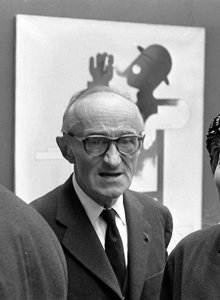
adolphe jean-marie mouron cassandre
1901 - 1968
Quick Facts
- Artistic Movement Or Style: Cubism & Surrealism
- Artists Or Movements Influenced By This Artist: ['Art Deco']
- Artists Who Influenced This Artist:
- Pablo Picasso
- Georges Braque
- Date Of Birth: January 24, 1901
- Date Of Death: June 17, 1968
- Full Name: Adolphe Jean-Marie Mouron Cassandre
- Nationality: French
- Notable Artworks:
- Paradox
- Diversification
- Versatility
- Place Of Birth: Kharkov Governorate, Russia