 Preview
 Send
Send Share
Share
 Details

 Download
 Similars
 X-Ray
X-Ray Diaporama
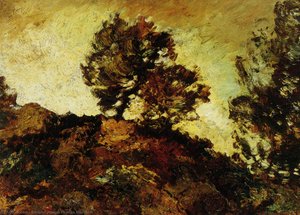
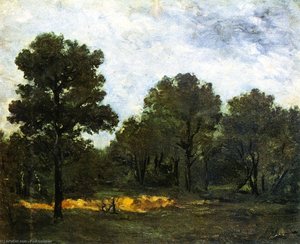
Rocky Landscape
 Oil On Canvas
- WallArt
- Romanticism
 19th Century
 45.0 x 65.0 cm
 Read More
Hand Made Oil Reproduction
Hand-painted oil on canvas in your size and frame, made to order by our artists. ( Buy Print Buy Image)




P118B $10

P118H $10

P118W $10

P438Z $10

P508JH $12

P508YH $12

P805H $10

P805Z $10

P919BZ $10

P919G $10

P919XJ $10

P959ZH $10

P968JZ $12

W106C $8

W218G $10

W218JH $8

W218Y $10

W307PJ $10

W316G $10

W316PJ $8

W316Y $10

W398PJ $8

W4111J $10

W500HY $15

W500JH $15

W692G $12

W849H $8

W940BG $15

W953PJ $8




Pick from our preset sizes that match the artwork's original proportions.

You may enter your own dimensions to fit a specific frame or space. If your selected size does not match the original image's proportions, we will either crop the artwork or extend the painting with additional hand-painted elements. A digital mockup will be sent for your approval before production begins.
Please note that the on-screen preview does not reflect the actual cropping or extension. Only the mockup will accurately show the final composition.
While custom sizes are available, we recommend selecting a dimension from the predefined list to preserve the original proportions.
After order, ArtsDot.com team will email client for instructions and provide a mockup preview
Worldwide Delivery () in 3/4 weeks instead of standard 5 weeks. (16 August). No compromise on quality.

Free Worldwide Express Shipping

High-Quality Linen Canvas

Full Shipping Insurance

Customs Tax Refund Guarantee

True Color Matching Guarantee

60-Day Return Policy (Defects Only)

100% Money-Back Guarantee

Bulk Discount Offer
 Glass option is only available in size under 110 CM

Rocky Landscape
Reproduction Medium
Reproduction Size
-


Total Price
$ 263
Artwork Description
A Symphony of Light and Earth: The Soul of Rocky Landscape
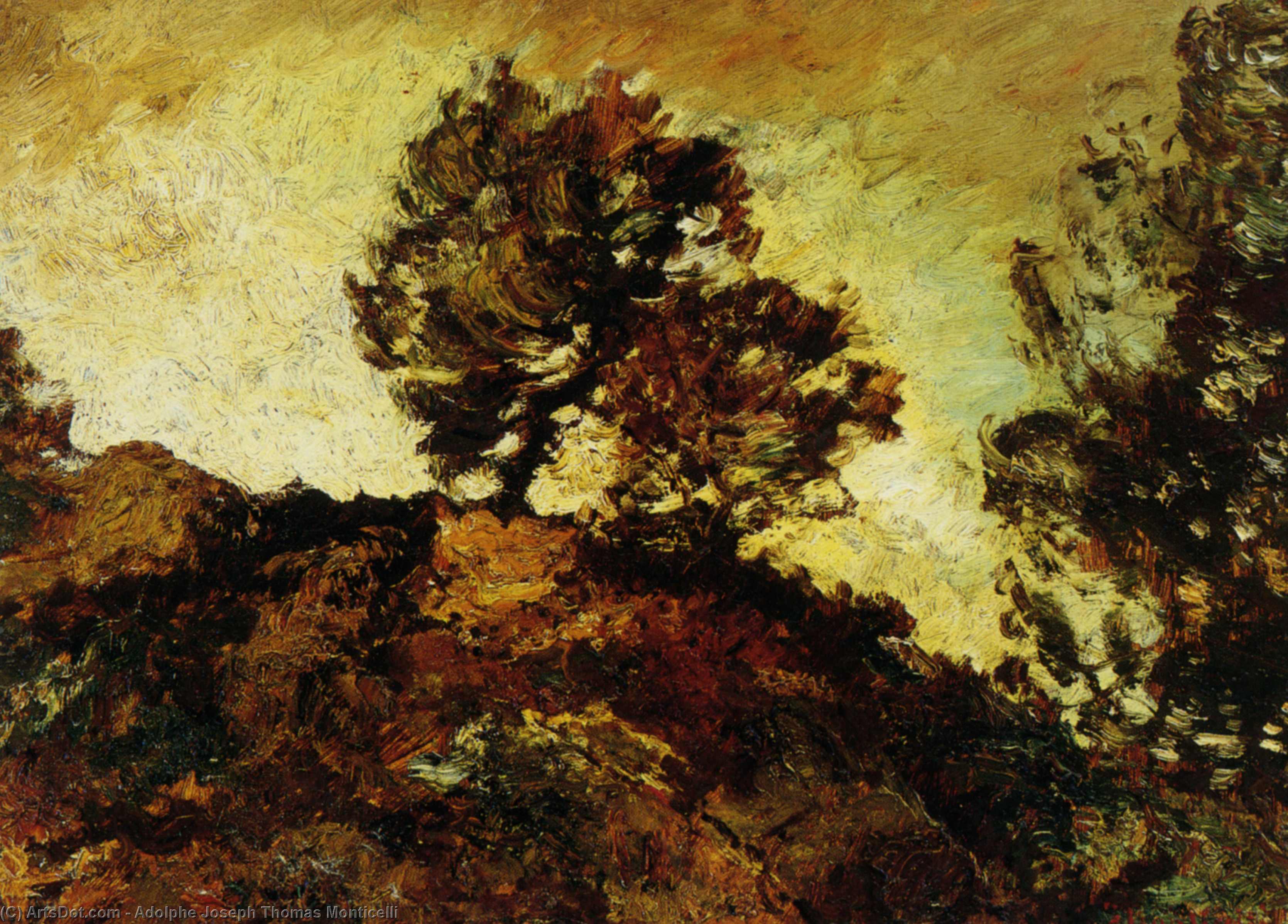
In the evocative realm of Adolphe Joseph Thomas Monticelli, nature is not merely observed but felt through a visceral application of color and texture. His masterpiece, Rocky Landscape, serves as a breathtaking window into the Romantic spirit, where the boundaries between the physical world and emotional experience begin to blur. At first glance, the viewer is greeted by a landscape dominated by a majestic, central tree, its silhouette etched against a warm, hazy sky that seems to pulse with the dying embers of a sunset. This is not a clinical study of botany, but rather an impressionistic dance of light and shadow, where the ruggedness of the rocky terrain meets the ethereal softness of the atmosphere.
< تجرب The Art of Texture and Impressionistic VisionTo behold this work is to witness the precursor to modernism. Monticelli, a pivotal figure standing on the threshold of Impressionism, utilizes a technique that favors the tactile over the precise. The painting is characterized by loose, energetic brushstrokes that create a palpable sense of movement across the canvas. Through the thick, layered application of oil paint, the artist achieves a scintillating effect, where light appears to catch on the ridges of the pigment itself. This impasto-like quality lends a three-dimensional depth to the undulating hills and rocky formations, inviting the eye to wander through a landscape that feels as much like a memory as it does a physical place. The color palette—a rich tapestry of ochre, gold, burnt umber, and deep sienna—works in harmony to evoke a sense of warmth and timelessness.
The influence of the great Romantic masters, such as Eugène Delaroche, is subtly woven into the fabric of this piece, yet Monticelli’s unique ability to manipulate light suggests a visionary much closer to the later works of Vincent van Gogh. The way the sunlight filters through the branches, casting dramatic shadows and highlighting the rugged textures of the earth, demonstrates a profound mastery of atmospheric perspective.
Symbolism and the Emotional Resonance of Solitude
Beyond its technical brilliance, Rocky Landscape carries a profound emotional weight that speaks to the human condition. The solitary tree, standing firm amidst the weathered rocks and wild thickets, serves as a powerful symbol of resilience and enduring strength. It stands as a silent sentinel against the vastness of the sky, embodying a sense of quiet contemplation and perhaps even a touch of melancholy. For the collector or the interior designer, this painting offers more than mere decoration; it provides an anchor of tranquility and depth.
The composition, which draws the viewer's gaze upward toward the luminous heavens, evokes a feeling of transcendence. It is a piece that invites one to pause, to breathe, and to reconnect with the primal beauty of the natural world. Whether placed in a grand gallery or as a focal point in a sophisticated living space, this reproduction of Monticelli’s genius brings with it an aura of historical significance and an invitation to dream. Owning such a work is an opportunity to possess a fragment of the Romantic era—a piece of history that continues to illuminate the modern soul with its vibrant, golden glow.
Related Artworks

Artist Biography
A Life Bathed in Light: The Enigmatic World of Adolphe Monticelli
Adolphe Joseph Thomas Monticelli, born in Marseille in 1824, occupies a fascinating and somewhat solitary position on the cusp of Impressionism. Though he predated the full flowering of that revolutionary movement and never formally aligned himself with its tenets, his innovative approach to color, texture, and light profoundly influenced artists like Vincent van Gogh and Paul Cézanne, cementing his legacy as a crucial precursor to modern art. Monticelli’s life was one of quiet dedication and relative obscurity, a striking contrast to the posthumous acclaim that would finally recognize his genius. He began his artistic journey at the École Municipale de Dessin in Marseille, diligently honing fundamental skills before venturing to Paris in 1846. There, he immersed himself in the academic tradition under Paul Delaroche at the prestigious École des Beaux-Arts, meticulously copying Old Masters within the hallowed halls of the Louvre. However, it wasn’t mere replication that fueled his artistic development; Monticelli was deeply moved by the vibrant oil sketches of Eugène Delacroix, a master of Romantic color and expressive brushwork—an early exposure to both classical technique and Romantic fervor that laid the foundation for his unique style.The Blossoming of a Unique Vision
A pivotal moment in Monticelli’s artistic evolution arrived with his encounter with Narcisse Diaz, a member of the Barbizon School, in 1855. Their shared passion for landscape painting led to frequent collaborations in the Fontainebleau Forest, where they painted *en plein air*, capturing the fleeting effects of light and atmosphere. While influenced by the Barbizonians’ commitment to direct observation, Monticelli quickly diverged from their more naturalistic approach. He began cultivating a style characterized by rich, almost jewel-toned colors and an extraordinary textural complexity. Inspired by Antoine Watteau's elegant *fêtes galantes*, he often depicted courtly scenes, still lifes, portraits, and Orientalist themes, imbuing them with a dreamlike quality. His technique involved applying thick layers of paint in small, distinct strokes—a method that created a scintillating surface alive with light and shadow. This wasn't merely about representation; it was about evoking an emotional response through the sheer physicality of the paint itself. He didn’t blend colors traditionally but allowed them to vibrate against each other, creating a luminous effect that anticipated Impressionist principles. Seascape near Marseille, for example, demonstrates his mastery of light and atmosphere, while Ladies in a Garden showcases his vibrant color palette and textured brushwork.A Prolific Output Amidst Poverty and Obscurity
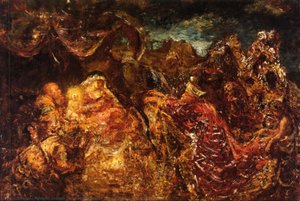
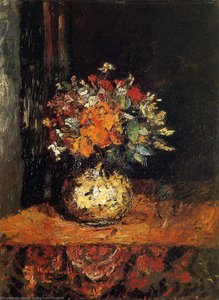
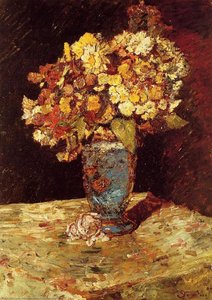
Despite his prodigious output, Monticelli lived in near-poverty for much of his life. He returned to Marseille in 1870, continuing to paint prolifically but selling his works for meager sums. His dedication to art was absolute; he seemed indifferent to financial success or public recognition, content to pursue his artistic vision regardless of external validation. This isolation allowed him to refine his style without compromise, resulting in a body of work remarkably consistent in its quality and originality. Even religious themes, as seen in The Adoration of the Magi, are rendered with a distinctive sensuality and emotional depth. His still lifes, such as Still Life with Wild and Garden Flowers, reveal an exquisite sensitivity to form and color, transforming everyday objects into captivating visual experiences. He painted for a future he believed in, once remarking that he was painting for thirty years hence—anticipating an appreciation that would arrive long after his passing.A Lasting Legacy: Influencing Generations
Monticelli’s influence on subsequent generations of artists is undeniable. Vincent van Gogh, upon discovering his paintings in Paris in 1886, was immediately captivated by their expressive power and innovative technique. He adopted a brighter palette and more impastoed brushwork, directly inspired by Monticelli's example. Paul Cézanne also befriended Monticelli in the 1860s, recognizing the older artist’s unique vision and incorporating elements of his style into his early works. While some critics have expressed reservations about his work, dismissing it as overly decorative or lacking intellectual depth, Monticelli's contribution to art history is now widely acknowledged. He stands as a pivotal figure in the transition from Romanticism to Impressionism—a precursor whose innovative techniques and expressive use of color paved the way for the radical artistic developments of the 20th century. His paintings continue to enchant viewers with their luminous beauty and enduring emotional resonance, solidifying his place as a master of light, texture, and poetic vision.Key Characteristics of Monticelli’s Style
- Rich Color Palette: Employing jewel-toned hues and vibrant combinations.
- Impasto Technique: Applying thick layers of paint to create texture and depth.
- Luminous Effects: Utilizing unmixed colors that vibrate against each other, anticipating Impressionist principles.
- Dreamlike Quality: Imbuing scenes with a sense of fantasy and poetic vision.
- Diverse Subject Matter: Depicting courtly scenes, still lifes, portraits, and Orientalist themes.
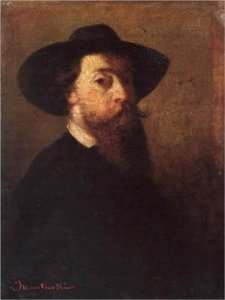
Adolphe Joseph Thomas Monticelli
1824 - 1886 , France
Quick Facts
- Artistic Movement Or Style: Romanticism, Pre-Impressionism
- Artists Or Movements Influenced By This Artist:
- Vincent van Gogh
- Paul Cézanne
- Impressionism
- Artists Who Influenced This Artist:
- Eugène Delacroix
- Antoine Watteau
- Narcisse Diaz
- Date Of Birth: October 14, 1824
- Date Of Death: June 29, 1886
- Full Name: Adolphe Joseph Thomas Monticelli
- Nationality: French
- Notable Artworks:
- Seascape near Marseille
- Ladies in a Garden
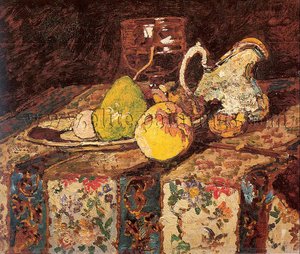
- Still Life with Flowers
- Place Of Birth: Marseille, France
Related Articles

Romantic Landscapes: 10 Masterpieces for Your Home | ArtsDot
Journey through 10 Romantic landscape masterpieces by Friedrich, Turner & Cole. Explore emotional art, sublime nature scenes & iconic 19th-century paintings. Find museum-quality reproductions for your home at ArtsDot.com – discover the full collection online!

Beyond the Horizon: 10 Landscape Masterpieces for Your Home Decor
Journey through 10 breathtaking landscape paintings by Monet, Van Gogh & more! Explore iconic artworks, artistic techniques & find inspiration for your home decor. Museum-quality reproductions at ArtsDot.com. Discover all masterpieces on ArtsDot.com

Evoking Nature's Sublime: A Comprehensive Exploration of 19th-Century Landscape Painting
Explore the captivating world of 19th-century landscape painting! Discover renowned artists like Friedrich & Monet, key movements, and find the perfect artwork to bring nature's serenity into your home. Expert insights at ArtsDot.
From Canvas to Legacy: A Detailed Examination of Handmade Oil Reproduction Techniques for Galleries and Hospitality Environments
Discover exquisite handmade oil painting reproductions & custom portraits crafted by skilled artists. Elevate your space with museum-quality art – affordable luxury, guaranteed authenticity & expert consultation.
Romantic Realism's Finest: 10 Masterpieces for Your Home | ArtsDot
Explore 10 defining masterpieces of Romantic Realism! Discover Courbet, Millet & Daumier's powerful paintings—capturing emotion and social realities. Find museum-quality reproductions for your home at ArtsDot.com.