 Preview
 Send
Send Share
Share
 Details

 Download
 Similars
 X-Ray
X-Ray Diaporama
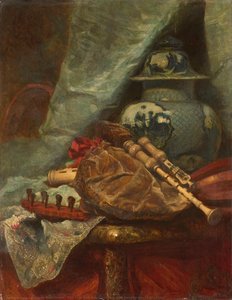
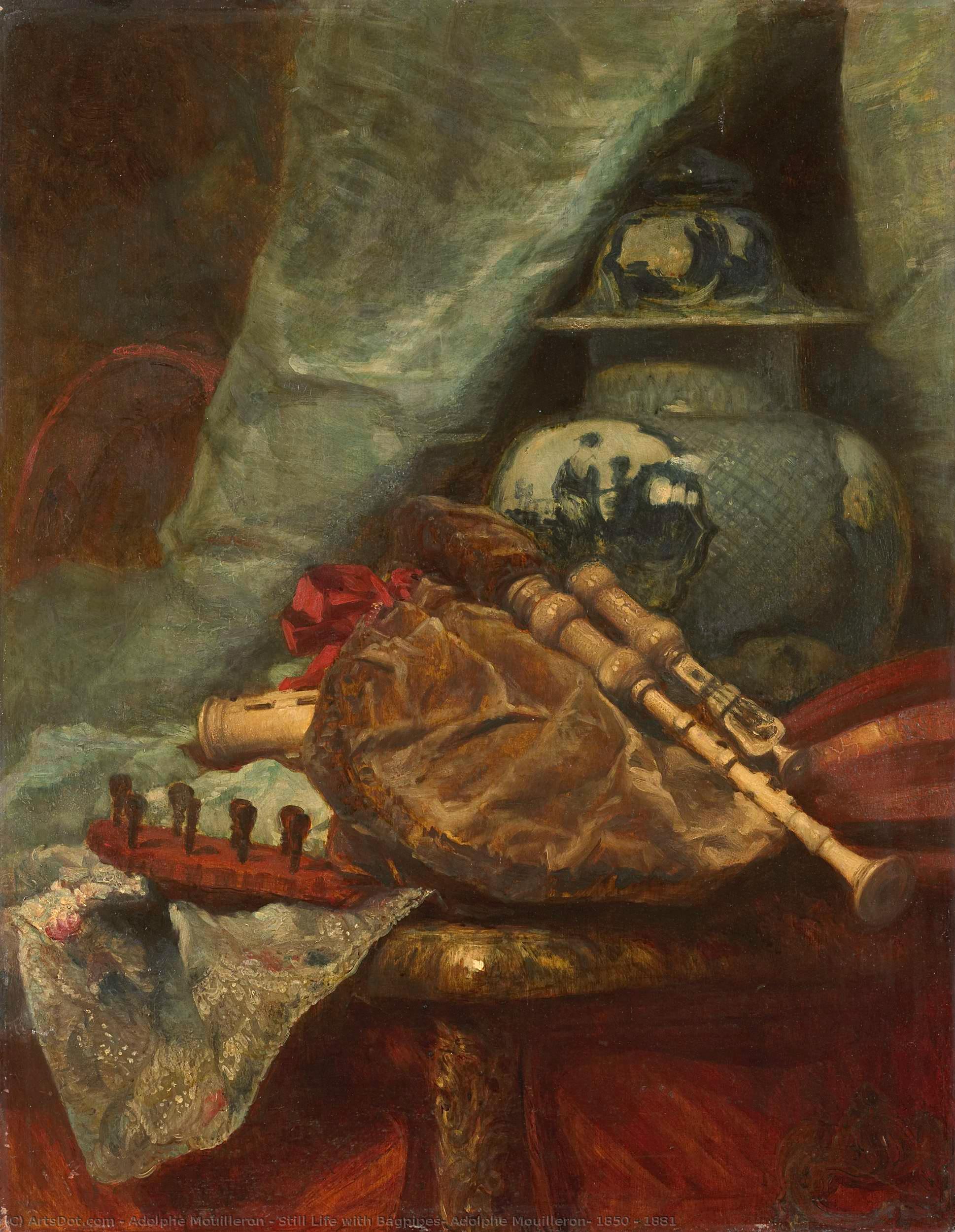
Still Life with Bagpipes, Adolphe Mouilleron, 1850 - 1881
 1881
1881 70.0 x 54.0 cm
 Read More
Hand Made Oil Reproduction
Hand-painted oil on canvas in your size and frame, made to order by our artists. ( Buy Print Buy Image)




































Pick from our preset sizes that match the artwork's original proportions.

You may enter your own dimensions to fit a specific frame or space. If your selected size does not match the original image's proportions, we will either crop the artwork or extend the painting with additional hand-painted elements. A digital mockup will be sent for your approval before production begins.
Please note that the on-screen preview does not reflect the actual cropping or extension. Only the mockup will accurately show the final composition.
While custom sizes are available, we recommend selecting a dimension from the predefined list to preserve the original proportions.
After order, ArtsDot.com team will email client for instructions and provide a mockup preview
Worldwide Delivery () in 3/4 weeks instead of standard 5 weeks. (23 August). No compromise on quality.

Free Worldwide Express Shipping

High-Quality Linen Canvas

Full Shipping Insurance

Customs Tax Refund Guarantee

True Color Matching Guarantee

60-Day Return Policy (Defects Only)

100% Money-Back Guarantee

Bulk Discount Offer
 Glass option is only available in size under 110 CM

Still Life with Bagpipes, Adolphe Mouilleron, 1850 - 1881
Reproduction Medium
Reproduction Size
-


Total Price
$ 263
Artwork Description
Related Artworks








Artist Biography
Adolphe Mouilleron: A Pioneer of Amsterdam Impressionism
Born in Paris in 1820, Adolphe Mouilleron’s artistic journey began amidst the vibrant atmosphere of the French Salon, where he first exhibited his work in 1846. Initially recognized for both his paintings and groundbreaking lithographs, Mouilleron quickly established himself as a significant figure within the burgeoning art scene. However, it was his relocation to Amsterdam around 1856 that truly cemented his legacy, transforming him into a pivotal force behind the development of what would become known as Amsterdam Impressionism – a movement characterized by its loose brushwork, emphasis on capturing fleeting moments of light and atmosphere, and a distinctly modern sensibility.
Mouilleron’s association with St. Lucas, an influential artists' society founded in Amsterdam, played a crucial role in fostering this new artistic direction. Through St. Lucas, he cultivated a collaborative environment that encouraged experimentation and challenged traditional academic conventions. He also established the “Amsterdamse Joffers,” a group of young artists who embraced his innovative approach to painting, further propelling the movement forward. His influence extended beyond these informal groups; Mouilleron served as a professor at the Royal Academy of Amsterdam (Rijksakademie van Beeldende Kunsten), where he instilled in his students a cosmopolitan perspective and a commitment to pushing artistic boundaries – a stimulus that profoundly impacted the development of modern art within the Netherlands.
Early Life and Artistic Training
Adolphe Mouilleron’s early life was steeped in Parisian artistic culture. While specific details about his formal training are somewhat scarce, it's understood he received instruction in traditional academic painting techniques before venturing into lithography. This foundation proved invaluable as he transitioned to the more experimental world of printmaking, mastering the intricate process and utilizing it to capture the essence of his observations with remarkable detail and sensitivity.
His early works demonstrate a clear influence from Realism, particularly in his depictions of genre scenes – everyday life, portraits, and landscapes. However, even within these realistic renderings, Mouilleron began to subtly incorporate elements that would later define his Impressionistic style: an interest in capturing the effects of light and atmosphere, and a willingness to depict subjects in unconventional ways.
The Rise of Amsterdam Impressionism
Mouilleron’s arrival in Amsterdam marked a turning point not only for his own career but also for the city's artistic landscape. He quickly became associated with a group of artists who shared his desire to break free from the constraints of academic painting and explore new ways of representing the world. These “Amsterdamse Joffers” – including Isaac van Gessner, Anton Mauve, and Louis Rodolphe Serrurier – were drawn to Mouilleron’s innovative approach and eagerly adopted his techniques.
Crucially, Mouilleron wasn't simply a follower; he was an active participant in shaping the movement. He encouraged experimentation with color, brushwork, and composition, advocating for a more direct and subjective approach to artmaking. His lithographs, in particular, became highly influential, demonstrating how printmaking could be used to capture the fleeting qualities of light and atmosphere – a hallmark of Impressionism.
Lithography and Artistic Technique
Mouilleron’s mastery of lithography was central to his artistic practice. He skillfully employed various techniques within the medium, including drypoint, etching, and aquatint, to create nuanced tonal effects and textures. His prints are characterized by their remarkable detail, subtle gradations of color, and a sense of immediacy that captures the essence of the subjects he depicted.
Beyond lithography, Mouilleron’s paintings also reflected his technical expertise. He developed a distinctive style marked by loose brushwork, vibrant colors, and an emphasis on capturing the effects of light. His still lifes, in particular, are renowned for their atmospheric quality and their ability to evoke a sense of mood and emotion.
Legacy and Historical Significance
Adolphe Mouilleron’s impact on the development of art in Amsterdam and beyond is undeniable. He played a pivotal role in establishing Amsterdam Impressionism as a significant artistic movement, fostering a spirit of innovation and experimentation that profoundly influenced subsequent generations of artists. His work at the Rijksakademie van Beeldende Kunsten helped to cultivate a cosmopolitan attitude toward art and promoted a forward-thinking approach to artistic education.
While often overshadowed by more prominent figures in the Impressionist movement, Mouilleron’s contributions deserve recognition as foundational to the development of modern art. His legacy continues to inspire artists today, demonstrating the power of observation, experimentation, and a willingness to challenge conventional norms.
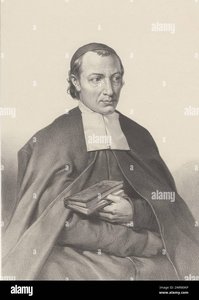
Adolphe Mouilleron
1820 - 1881 , France
Quick Facts
- Artistic Movement Or Style: Amsterdam Impressionism
- Artists Or Movements Influenced By This Artist: ['St. Lucas Association']
- Artists Who Influenced This Artist: ['Adolph von Menzel']
- Date Of Birth: 1820 Paris France
- Date Of Death: 1881
- Full Name: Adolphe Mouilleron
- Nationality: French
- Notable Artworks:
- Still Life with Bagpipes
- L'Orage (The Storm)
- Place Of Birth: Paris France