 Preview
 Send
Send Share
Share
 Details

 Download
 Similars
 X-Ray
X-Ray Diaporama
ADOLPHE YVON (1817 1893)
 Read More
Hand Made Oil Reproduction
Hand-painted oil on canvas in your size and frame, made to order by our artists. ( Buy Print Buy Image)




































Pick from our preset sizes that match the artwork's original proportions.

You may enter your own dimensions to fit a specific frame or space. If your selected size does not match the original image's proportions, we will either crop the artwork or extend the painting with additional hand-painted elements. A digital mockup will be sent for your approval before production begins.
Please note that the on-screen preview does not reflect the actual cropping or extension. Only the mockup will accurately show the final composition.
While custom sizes are available, we recommend selecting a dimension from the predefined list to preserve the original proportions.
After order, ArtsDot.com team will email client for instructions and provide a mockup preview
Worldwide Delivery () in 3/4 weeks instead of standard 5 weeks. (17 August). No compromise on quality.

Free Worldwide Express Shipping

High-Quality Linen Canvas

Full Shipping Insurance

Customs Tax Refund Guarantee

True Color Matching Guarantee

60-Day Return Policy (Defects Only)

100% Money-Back Guarantee

Bulk Discount Offer
 Glass option is only available in size under 110 CM

ADOLPHE YVON (1817 1893)
Reproduction Medium
Reproduction Size
-


Total Price
$ 263
Related Artworks
Artist Biography
Adolphe Yvon: A Master of Napoleonic Drama
Adolphe Yvon (1817-1893) stands as a pivotal figure in 19th-century French art, particularly renowned for his dramatic and meticulously researched depictions of the Napoleonic Wars. Born in Eschweiler, France, Yvon’s artistic journey began with a formal education at the École des Beaux-Arts in Paris, where he honed his skills under the tutelage of Paul Delaroche – an influence that profoundly shaped his approach to historical painting. Unlike many artists of his era who focused on idealized beauty or mythological subjects, Yvon dedicated himself to capturing the brutal realities and strategic complexities of military campaigns, establishing a unique niche within the academic tradition.
Yvon’s early career was marked by religious works, but it was around 1846 that he transitioned to historical scenes, quickly gaining recognition for his ability to render battlefields with astonishing detail and emotional intensity. The Battle of Koulikowo in Russia served as a crucial turning point, demonstrating his burgeoning talent for capturing the chaos and heroism of warfare. This shift reflected a broader trend within French art at the time – a renewed interest in commemorating historical events, particularly those connected to France’s imperial past. His meticulous approach involved extensive research, often culminating in lengthy journeys to battlefields, as exemplified by his six-week expedition to Crimea in 1856 to document the Siege of Sevastopol.
The Crimean Chronicle and Artistic Recognition
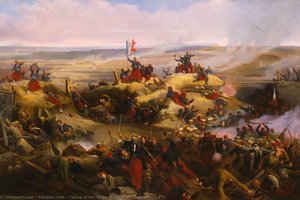
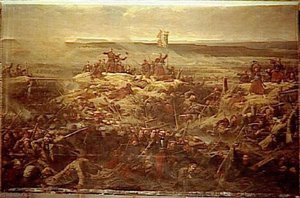
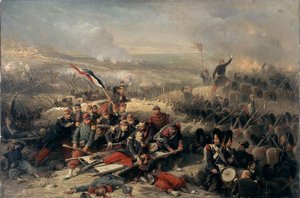
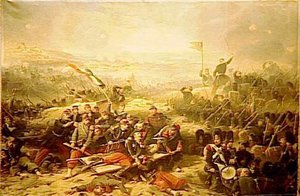
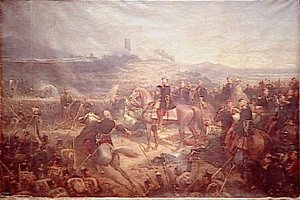
Perhaps Yvon's most celebrated work, “La Prise de la tour de Malakoff le 8 septembre 1855,” stands as a testament to his artistic prowess. Commissioned by the French government following the pivotal capture of this fortress during the Crimean War, the painting – measuring an impressive six meters by nine meters – vividly portrays the climactic moment of the assault. The sheer scale of the work underscores its significance and reflects the immense national pride surrounding France’s military successes. Beyond simply depicting a battle, Yvon sought to convey the strategic importance of the capture and the courage of the soldiers involved. His meticulous attention to detail, from the uniforms and weaponry to the expressions on the faces of the combatants, created an immersive experience for the viewer.
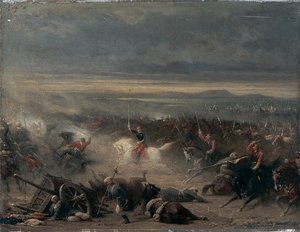
Following “La Prise de la tour de Malakoff,” Yvon continued his exploration of Napoleonic themes, producing works such as "La Gorge de Malakoff" and "La courtine de Malakoff," further solidifying his reputation as a leading interpreter of military history. In 1867, Emperor Napoleon III recognized Yvon’s contributions by appointing him an officer of the Légion d'honneur – a prestigious honor bestowed upon individuals who have demonstrated exceptional service to France. This recognition not only acknowledged his artistic achievements but also underscored his role as a patriotic artist dedicated to glorifying French military history.
A Teacher and Influencer
Beyond his own prolific output, Yvon played a significant role in shaping the next generation of French artists. He served as the leading teacher of drawing at the École des Beaux-Arts from 1863 to 1883, imparting his technical skills and artistic vision to countless students. Notable pupils included António Soares dos Reis and Henrique Pousão, demonstrating the international reach of Yvon’s influence. The American art scene also benefited from his instruction; Christian Schussele, Alfred Wordsworth Thompson, William Sartain, and J. Alden Weir all studied under him, absorbing his techniques and approach to historical painting.
Yvon's teaching methods were particularly notable for their emphasis on compositional sketches and detailed studies of subjects like “The Assassination of Julius Caesar.” His instructions – specifying the precise positioning of figures and even describing the effect of blood staining a statue – reveal a meticulous and highly analytical approach to artistic creation. This dedication to detail, combined with his profound understanding of military history and strategic planning, cemented Yvon’s legacy as both a skilled painter and an influential educator.
Beyond the Battlefield: Portraits and American Connections
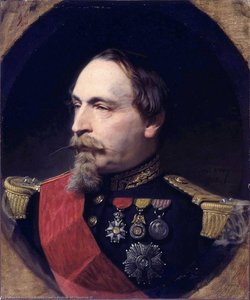
While primarily known for his battle scenes, Yvon also ventured into portraiture, notably painting Emperor Napoleon III in 1868. Although this particular portrait remains unlocated, it further demonstrates the breadth of his artistic interests and his connections to the highest levels of French society. His commission from American collector Alexander Stewart to paint “The Reconciliation of the North and the South” (a lost work) highlights a fascinating transatlantic connection. The project, undertaken in 1870, reflects an interest in capturing the complexities of post-war reconciliation – a theme that resonated with the broader social and political landscape of the time.
Furthermore, Yvon’s engagement with American artists like J. Alden Weir underscores the exchange of artistic ideas across continents. His willingness to provide compositional sketches for his students, such as the detailed study of Caesar's assassination, exemplifies a collaborative approach to art-making and a commitment to fostering creativity within his studio. Adolphe Yvon’s career represents not only a remarkable achievement in 19th-century French painting but also a significant contribution to the development of artistic education and the transmission of historical narratives through visual imagery.
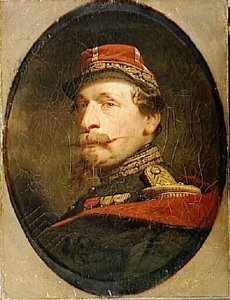
adolphe yvon
1817 - 1893
Quick Facts
- Artistic Movement Or Style: Napoleonic Art
- Artists Or Movements Influenced By This Artist: ['École des Beaux-Arts']
- Artists Who Influenced This Artist: ['Paul Delaroche']
- Date Of Birth: 1817
- Date Of Death: 1893
- Full Name: Adolphe Yvon
- Nationality: French
- Notable Artworks:
- La Prise de la tour de Malakoff
- La Gorge de Malakoff
- La courtine de Malakoff
- Genius of America
- Place Of Birth: Eschweiler, France