 Preview
 Send
Send Share
Share
 Details

 Download
 Similars
 X-Ray
X-Ray Diaporama
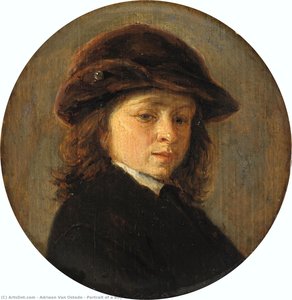
Portrait of a Scholar
 Oil
Oil- WallArt
- Baroque
 1665
1665- Early Modern
 19.0 x 18.0 cm
 Rijksmuseum
 Read More
Hand Made Oil Reproduction
Hand-painted oil on canvas in your size and frame, made to order by our artists. ( Buy Print Buy Image)




P118B $10

P118H $10

P118W $10

P438Z $10

P508JH $12

P508YH $12

P805H $10

P805Z $10

P919BZ $10

P919G $10

P919XJ $10

P959ZH $10

P968JZ $12

W106C $8

W218G $10

W218JH $8

W218Y $10

W307PJ $10

W316G $10

W316PJ $8

W316Y $10

W398PJ $8

W4111J $10

W500HY $15

W500JH $15

W692G $12

W849H $8

W940BG $15

W953PJ $8




Pick from our preset sizes that match the artwork's original proportions.

You may enter your own dimensions to fit a specific frame or space. If your selected size does not match the original image's proportions, we will either crop the artwork or extend the painting with additional hand-painted elements. A digital mockup will be sent for your approval before production begins.
Please note that the on-screen preview does not reflect the actual cropping or extension. Only the mockup will accurately show the final composition.
While custom sizes are available, we recommend selecting a dimension from the predefined list to preserve the original proportions.
After order, ArtsDot.com team will email client for instructions and provide a mockup preview
Worldwide Delivery () in 3/4 weeks instead of standard 5 weeks. (29 August). No compromise on quality.

Free Worldwide Express Shipping

High-Quality Linen Canvas

Full Shipping Insurance

Customs Tax Refund Guarantee

True Color Matching Guarantee

60-Day Return Policy (Defects Only)

100% Money-Back Guarantee

Bulk Discount Offer
 Glass option is only available in size under 110 CM

Portrait of a Scholar
Reproduction Medium
Reproduction Size
-


Total Price
$ 263
A Window into Seventeenth Century Thought
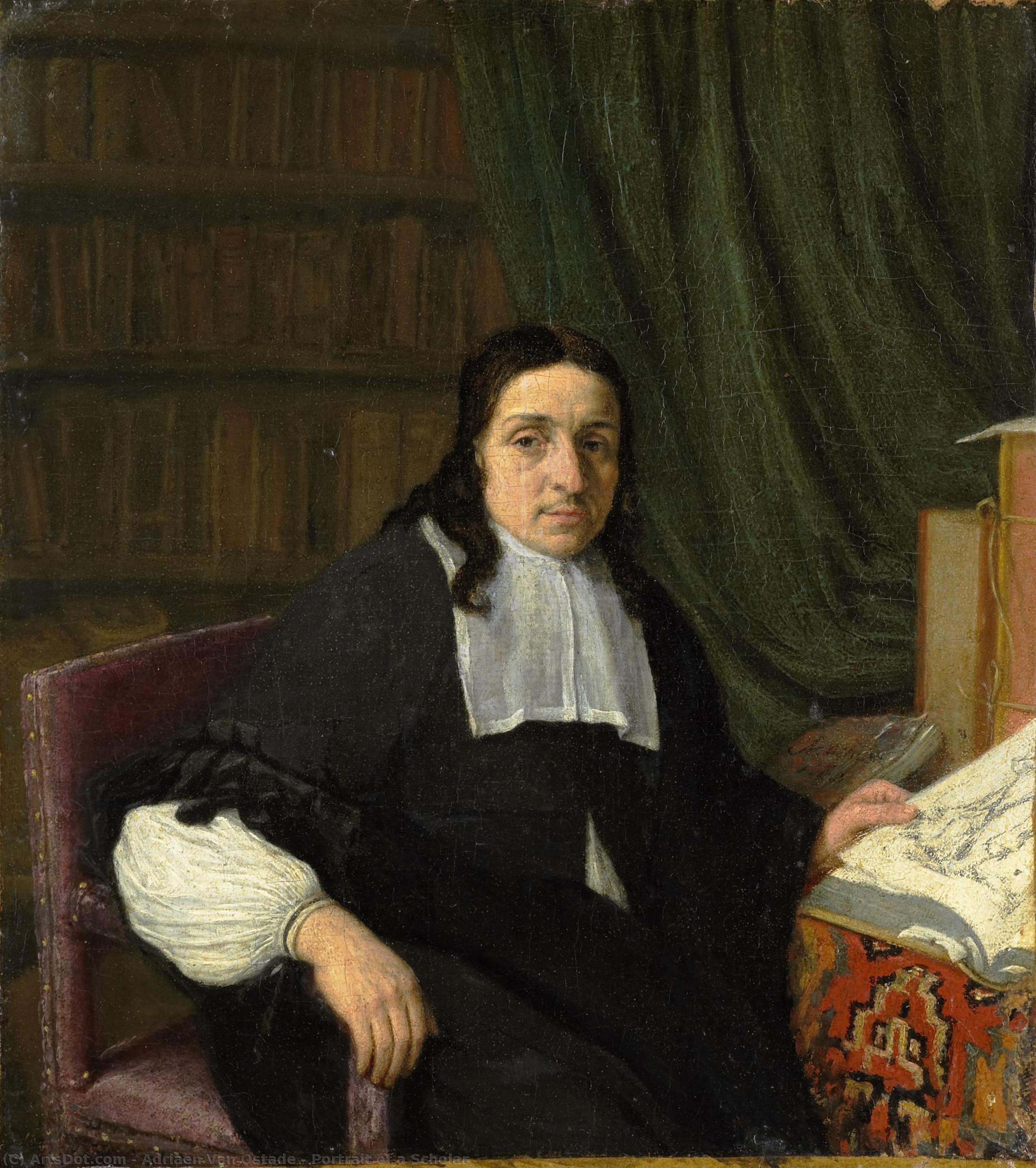
In the quiet intimacy of Adriaen van Ostade’s 1665 masterpiece, "Portrait of a Scholar," we are invited to step across the threshold of time and into the intellectual heart of the Dutch Golden Age. Measuring a modest 19 x 18 cm, this unassuming canvas possesses a profound gravity that far exceeds its physical dimensions. The painting presents us with a man seated in contemplative repose, his gaze directed toward the viewer with an air of unwavering focus and serious intent. He is framed by a bookshelf overflowing with volumes—a deliberate compositional choice that serves as a silent testament to the burgeoning humanist ideals of Haarlem during this era. As we observe him, we do not merely see a likeness; we encounter a snapshot of a mind at work, captured in a moment of profound scholarly dedication.
The technical brilliance of Van Ostade lies in his ability to marry remarkable realism with subtle psychological depth. While many of his contemporaries, such as the legendary Frans Hals, were celebrated for their flamboyant and energetic brushwork, Van Ostade chose a path of meticulous observation. His technique is rooted in a painstaking attention to detail that brings an astonishing level of textural accuracy to the canvas. One can almost feel the weight of the man's dark clothing and the crispness of his white collar, or trace the weathered spines of the books nestled within the wooden shelves. This precision does not merely serve a decorative purpose; it anchors the subject in a tangible reality, making the scholar's intellectual pursuit feel immediate and deeply authentic to the modern observer.
Symbolism and the Spirit of the Golden Age
Beyond its formal beauty, "Portrait of a Scholar" is rich with the symbolic language of the seventeenth century. The overflowing bookshelf acts as a powerful metaphor for the era's thirst for knowledge, erudition, and wisdom. In the Dutch Republic, a period defined by unprecedented prosperity through trade and innovation, the pursuit of learning was a highly esteemed virtue. Every volume depicted by Van Ostade represents a piece of the larger humanist puzzle—the belief that through study and philosophical inquiry, one could understand the complexities of the world. The scholar's very posture, characterized by a sense of stillness and inward reflection, embodies this dedication to the life of the mind.
For the discerning collector or interior designer, this painting offers more than just a historical artifact; it provides an emotional anchor for a sophisticated space. The muted tones and the focused, somber atmosphere evoke a sense of quiet dignity and intellectual curiosity. Whether placed in a private library, a study, or a curated gallery setting, a high-quality reproduction of this work brings a layer of historical resonance and contemplative calm to any environment. It is a piece that invites the viewer to pause, to reflect, and to find inspiration in the enduring legacy of human thought and the timeless beauty of Dutch genre painting.
Related Artworks

Artist Biography
Adriaen van Ostade: A Life in Dutch Genre Painting
Early Life and Training
- Born: 1610 in Haarlem, Netherlands.
- Van Ostade came from a family of artists; his father, Jan van Ostade, was a tapestry weaver. This artistic environment likely fostered his early interest in visual arts.
- Initial Training: He and his brother, Isaack Jansz van Ostade, were initially pupils of Frans Hals, a celebrated Dutch Golden Age painter known for his lively portraits and genre scenes.
- However, their time with Hals was relatively brief. They soon diverged from Hals’s style, developing their own distinct approaches to painting.
Artistic Development and Style
- Early Works (1630s): Van Ostade's early paintings often imitated Hals’s loose brushwork, but he gradually refined his technique.
- He began to focus on genre scenes – depictions of everyday life, particularly those involving peasants and working-class individuals.
- Distinctive Style: His style is characterized by meticulous detail, a subtle use of light and shadow (chiaroscuro), and an emphasis on realistic portrayals of his subjects.
- He skillfully captured the textures of clothing, objects, and environments, creating a sense of authenticity in his work.
- Subject Matter: Common themes included tavern scenes, village fairs, peasant interiors, and depictions of rural life.
Major Works and Achievements
- Saying Grace (c. 1660): This painting, housed at the Cleveland Museum of Art, is considered one of his masterpieces. It exemplifies his ability to imbue even humble subjects with dignity and poetic beauty.
- A Laughing Peasant (1634): A small but captivating work in the Kremer Collection, Amsterdam, showcasing his skill in capturing expressive faces and gestures.
- Tavern Scenes: Van Ostade produced numerous tavern scenes, offering glimpses into the social lives of 17th-century Dutch people. These paintings often depict lively gatherings with drinking, smoking, and music.
- Landscape Paintings: While primarily known for his genre works, he also created landscapes, often featuring rustic settings and figures engaged in everyday activities.
Influences and Legacy
- Frans Hals’s Influence: His initial training under Frans Hals provided a foundation in Dutch painting techniques and genre subject matter.
- Comparison with David Teniers the Younger: Art historians often compare Van Ostade's work to that of David Teniers the Younger, another prominent genre painter. However, their paintings reflect different regional characteristics – Van Ostade focused on Holland, while Teniers depicted Brabant.
- Impact on Later Artists: Van Ostade’s emphasis on naturalism and everyday life paved the way for later artistic movements like Impressionism and Realism. His attention to light and shadow also influenced Baroque painting.
- Historical Significance: He is considered a key figure in Dutch Golden Age painting, providing valuable insights into the lives and customs of 17th-century Dutch society.
Later Life and Death
- Guild Membership: Van Ostade became a member of the Haarlem Guild of St. Luke in 1634, signifying his recognition as a professional artist.
- Continued Success: He enjoyed continued success throughout his career, receiving commissions from wealthy patrons and establishing himself as a respected painter.
- Death: Adriaen van Ostade died in Haarlem in 1685. His works continue to be admired for their realism, charm, and historical significance.
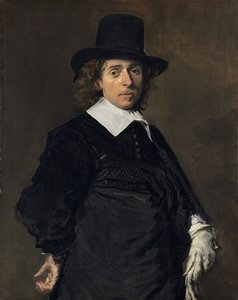
Adriaen van Ostade
1610 - 1685 , Netherlands
Quick Facts
- Birth_Date: 1610
- Birth_Place: Haarlem, Netherlands
- Death_Date: 1685
- Influenced_By: Frans Hals
- Movement: Dutch Golden Age painting
- Name: Adriaen van Ostade
- Nationality: Dutch
- Notable_Works:
- Saying Grace
- A Laughing Peasant
Related Articles

Golden Age Reflections: Dutch Baroque Painting & Cultural Innovation
Explore the Dutch Golden Age of painting! Discover key artists like Vermeer & ter Borch, their innovative techniques, and the rich cultural context behind these Baroque masterpieces. Learn about collecting & appreciating this iconic art period.

Dutch Masters: 10 Golden Age Paintings That Still Inspire |
Journey into the Dutch Golden Age! Explore 10 iconic paintings by Rembrandt, Vermeer & Hals. Discover the stories behind these Baroque masterpieces and find museum-quality art reproductions to elevate your home decor on .

Dutch Baroque Masters: 10 Paintings That Shaped an Era | ArtsDot
Journey through the Golden Age with our guide to the Top 10 Dutch Baroque masterpieces! Explore iconic paintings by Rembrandt, Vermeer & Frans Hals. Find museum-quality art reproductions and elevate your home decor at ArtsDot.com.

Illuminating Innovation: Exploring the Dutch Golden Age of Painting
Explore the Dutch Golden Age of painting with ArtsDot. Discover Rembrandt, Vermeer & other Masters. Learn about key characteristics, iconic artworks, and lasting influence. Expert insights for collectors & enthusiasts.
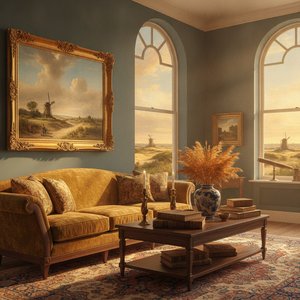
Golden Light & Dutch Skies: Bringing the Magic of Dutch Golden Age Landscapes into Your Home
Transform your home with the breathtaking light of Dutch Golden Age landscapes. Discover how hand-painted oil reproductions of masterworks like Ruisdael and Vermeer bring timeless elegance, atmosphere, and soulful texture to modern interiors. Elevate your space with museum-quality art.