

 Send
Send Share
Share
 Details

 Download
 Similars
 Diaporama
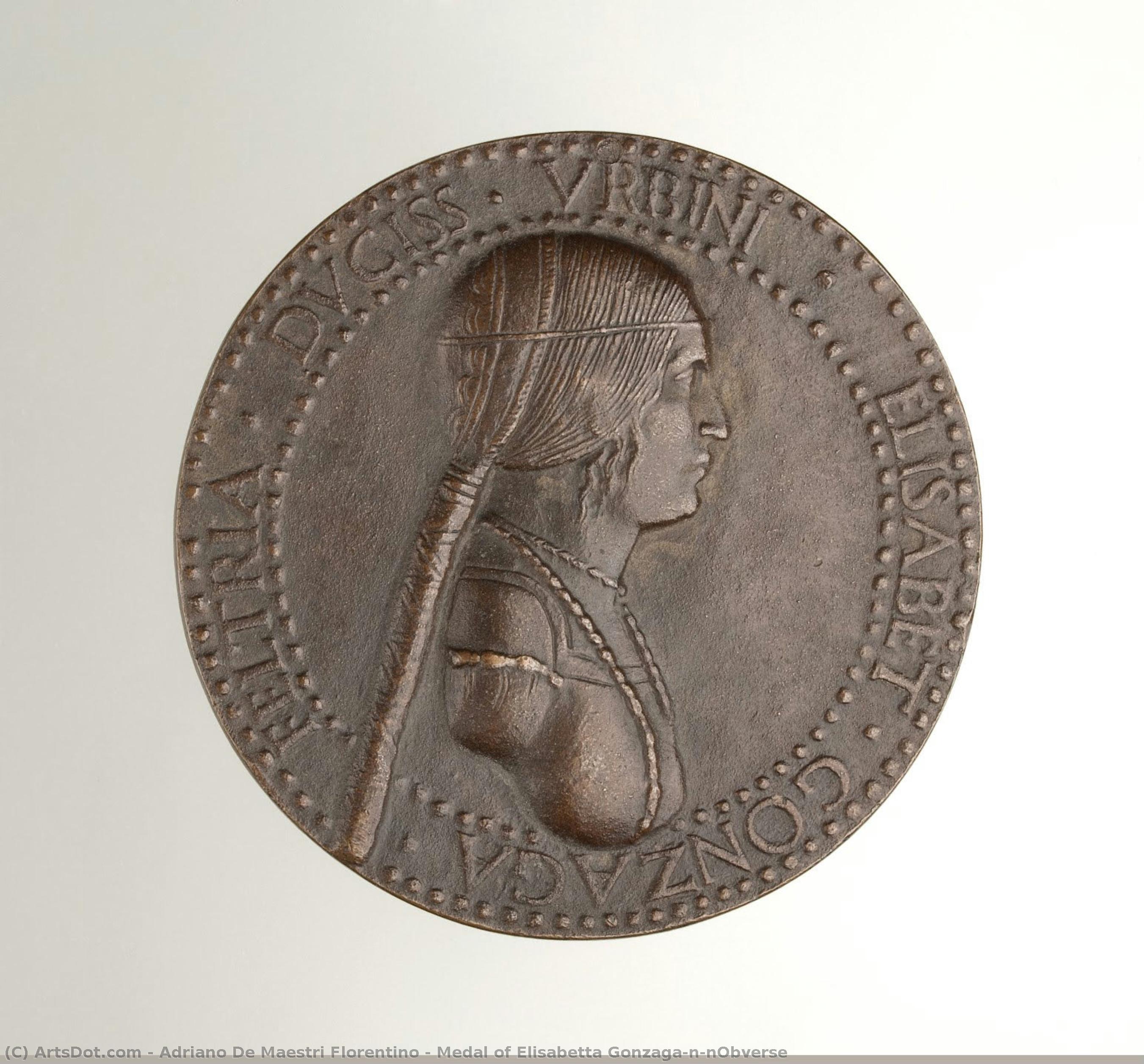
Medal of Elisabetta Gonzaga\n\nObverse


 Read More
Purchase a high-resolution, enhanced digital image, far superior to the online preview.
Each file is meticulously prepared by our in-house specialists using advanced tools and expert manual retouching. We ensure every image has exceptional clarity, precise color accuracy, and fine detail.
The final file is delivered via email within 72 hours, optimized for immediate use in professional, editorial, and print environments. This is the same quality trusted by top-tier design studios, publishers, and galleries.
Digital Image
Download a high-resolution file for personal display, printing, and creative projects. ( Buy Print Buy Hand Made Painting)
Included in Every Digital Image Order
Expert Digital Delivery, Guaranteed
When you choose ArtsDot.com, you're not just getting an image - you're receiving a professionally enhanced digital artwork, crafted with precision and backed by a satisfaction guarantee. Here's everything that comes with your order, automatically:

Fast Email Delivery
Your high-resolution digital image file will be emailed to you within 72 hours of ordering - ready for immediate use.

AI-Enhanced Digital File
Your artwork is professionally optimized using advanced AI tools and manual editing, ensuring maximum detail, clarity, and color accuracy.

Free Lifetime Re-Delivery
Accidentally deleted or lost your file? No worries - we'll resend it to you anytime, free of charge.

No Import Fees - Ever
Enjoy your artwork instantly with zero customs, duties, or delivery fees - digital downloads are always tax-free.

Color Accuracy Guarantee
We ensure your digital image reflects the original colors as closely as possible using professional tools and color management.

60-Day Satisfaction Guarantee
If you're not satisfied with your digital image, we'll revise it or refund 100% within 60 days - no questions asked.

100% Money-Back Guarantee
Not satisfied? Get a full refund within 60 days of receiving your digital file - no questions asked.

Bulk Order Discounts
Buy 3 images, save 10% - Buy 5, save 15% - Buy 10+, save 20%. Great for creative projects, galleries, and agencies.
A Glimpse into Renaissance Splendor
In the delicate, weathered bronze of the Medal of Elisabetta Gonzaga, we find more than just a commemorative token; we encounter a poignant fragment of Italian history frozen in metal. This exquisite piece captures the likeness of one of the most influential women of the Renaissance, Elisabetta Gonzaga, whose life was a tapestry of high nobility and sudden, dramatic upheaval. The obverse presents a striking portrait of the Duchess of Urbino, her features rendered with a classical dignity that commands immediate attention. Her hair, intricately detailed, flows with a lifelike grace, while the subtle crown atop her head serves as a silent testament to her sovereign status. To gaze upon this medal is to feel the weight of an era where lineage and legacy were etched into every facet of existence.
The artistry of the piece invites a deep exploration of technique and attribution. While traditional scholarship once linked this work to the Florentine medallist Adriano de’ Maestri around 1495, closer inspection reveals a more complex narrative. The masterful execution—specifically the way a delicate plait cuts through the surrounding legend—suggests a later, perhaps more emotionally charged, origin in the early 16th century. Some scholars now look toward the workshop of Bartolomeo Melioli, whose style captures a certain atmospheric tension. This ambiguity only adds to the medal's allure, transforming it from a mere portrait into a historical mystery that continues to captivate art historians and collectors alike.
Symbolism and the Fickle Hand of Fate
Beyond the surface beauty of the Duchess’s portrait lies a profound layer of symbolism that speaks to the fragility of power. The reverse of the medal presents a hauntingly beautiful scene: a semi-nude female figure holding reins beneath a flaming ball. This imagery, paired with a legend regarding fickle fortune, is believed to be an allegorical reflection of Elisabetta’s personal tragedies. Following the conquest of Urbino by Cesare Borgia in 1502, the Duchess faced significant financial and political losses. The flaming ball and the controlled reins serve as powerful metaphors for the volatility of life during the Italian Wars—a reminder that even the most stable empires can be consumed by the flames of political ambition.
For the discerning collector or interior designer, this medal offers a sophisticated focal point that transcends simple decoration. It is an object of intellectual depth, perfect for spaces that celebrate history, classical antiquity, or the dramatic nuances of human emotion. Whether presented as a standalone study in a curated gallery setting or integrated into a collection of Renaissance antiquities, the Medal of Elisabetta Gonzaga provides a conversation piece that bridges the gap between the tangible beauty of bronze and the intangible echoes of a lost Renaissance world.
Related Artworks

Artist Biography
Gerard David: A Master of Early Netherlandish Portraiture
Gerard David, born around 1460 in Oudewater, Netherlands, and tragically dying in Bruges circa 1523, stands as a pivotal figure in the burgeoning world of early Netherlandish painting. While often overshadowed by his more flamboyant contemporaries like Jan van Eyck and Rogier van der Weyden, David’s meticulous technique, profound understanding of human psychology, and innovative approach to portraiture cemented his place as one of the most significant artists of his era. His career unfolded primarily in Bruges, a vibrant commercial center and artistic hub that attracted talent from across Europe, shaping David's style and exposing him to diverse influences. He wasn’t merely a painter; he was a respected guild master, a skilled illuminator, and a key player in the city’s thriving art market – a testament to his considerable reputation and influence.Early Life and Influences: A Foundation of Skill
Information regarding David's formative years remains somewhat sparse, shrouded in the typical gaps of historical records for artists of that period. However, it is believed he spent his early artistic training under Cristoforo Solari, a prominent Milanese painter who instilled in him a strong foundation in technique and perspective. This initial exposure to Italian Renaissance principles – particularly the meticulous detail and realistic representation championed by Leonardo da Vinci – undoubtedly shaped David’s approach. Crucially, David later encountered and was profoundly influenced by Antonello da Messina, whose innovative use of color, light, and atmospheric perspective revolutionized painting in Venice. David absorbed these lessons, adapting them to his own distinctive style while retaining a distinctly Northern European sensibility. The influence of Hugo van der Goes, known for his dramatic compositions and emotional intensity, is also evident in David’s later works, particularly those depicting religious narratives.A Portraitist of Distinction: Defining His Artistic Style
David's artistic style is characterized by a remarkable balance between realism and elegance. Unlike the often overtly theatrical compositions favored by some of his contemporaries, David’s portraits possess a quiet dignity and understated sophistication. He meticulously rendered every detail – from the texture of fabrics to the subtle nuances of facial expression – with an almost obsessive precision. His use of color was restrained yet masterful, creating a harmonious and balanced visual experience. A key element of his style is his ability to convey psychological depth within his portraits; he didn’t simply depict likenesses but sought to capture the inner lives and personalities of his subjects. This is particularly evident in his numerous depictions of civic dignitaries and wealthy patrons, where he skillfully reveals their status, character, and aspirations. His work stands apart through a remarkable sense of spatial recession and atmospheric perspective, creating a believable illusion of depth within the confines of the canvas.Notable Works: Religious Scenes and Portraiture
David’s oeuvre encompasses a diverse range of subjects, but he is perhaps best known for his religious paintings, particularly those depicting the Virgin Mary and scenes from the life of Christ. The *Polyptych of the Misericordia*, completed between 1460 and 1469, showcases his early mastery of technique and his ability to create complex, layered compositions. The *Judgment of Cambyses*, a pair of unsettling paintings depicting the brutal execution of Sisamnes, exemplifies David’s willingness to tackle challenging themes with unflinching realism. These works demonstrate his command of dramatic lighting and his capacity to evoke powerful emotions in the viewer. Beyond religious scenes, David produced numerous portraits – including those of Dukes of Urbino and members of the Florentine nobility – that are considered masterpieces of their genre. The *Portrait of a Young Man*, often referred to as the “Young Man,” is particularly celebrated for its psychological insight and exquisite detail.Legacy and Historical Significance
Despite his considerable talent and influence, David’s legacy was somewhat obscured for centuries after his death. His works were frequently copied, sometimes without attribution, leading to a blurring of the lines between his original creations and imitations. However, in the 19th century, scholars began to reassess David's importance, recognizing him as one of the foremost artists of the Early Netherlandish school. Today, his paintings are treasured for their technical brilliance, psychological depth, and enduring beauty. Gerard David’s meticulous approach to portraiture, combined with his innovative use of perspective and color, profoundly influenced generations of subsequent painters, solidifying his place as a pivotal figure in the development of Western art. His work continues to captivate viewers with its quiet dignity, subtle nuances, and profound understanding of the human condition.
adriano de maestri florentino
1460 - 1532 , Italy
Quick Facts
- Artistic Movement Or Style: Early Renaissance
- Artists Or Movements Influenced By This Artist: ['Correggio']
- Artists Who Influenced This Artist:
- Leonardo da Vinci
- Antonello da Messina
- Date Of Birth: c. 1460
- Date Of Death: c. 1524
- Full Name: Andrea Solari
- Nationality: Italian
- Notable Artworks:
- Madonna with Green Cushion
- Ecce Homo (Poldi-Pezzoli)
- Place Of Birth: Milan, Lombardy

