 Preview
 Send
Send Share
Share
 Details

 Download
 Similars
 X-Ray
X-Ray Diaporama
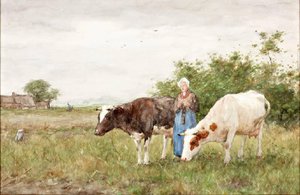
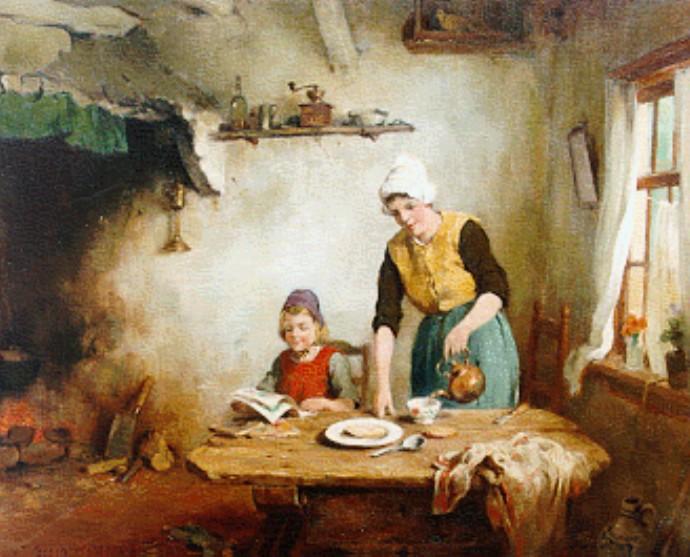
Cup of Tea
 Read More
Giclée / Art Print
Museum-quality giclée or canvas print with fast production and flexible finish options. ( Buy Hand Made Painting Buy Image)




































Pick from our preset sizes that match the artwork's original proportions.

You may enter your own dimensions to fit a specific frame or space. If your selected size does not match the original image's proportions, we will either crop the artwork or extend the image with a mirrored or solid-fill edge. A digital mockup will be sent for your approval before production begins.
Please note that the on-screen preview does not reflect the actual cropping or extension. Only the mockup will accurately show the final composition.
While custom sizes are available, we recommend selecting a dimension from the predefined list to preserve the original proportions.
Worldwide Delivery () in 2 weeks instead of standard 4/5 weeks. (22 August)

Free Worldwide Express Shipping

High-Quality Linen Canvas

Full Shipping Insurance

Customs Tax Refund Guarantee

True Color Matching Guarantee

60-Day Return Policy (Defects Only)

100% Money-Back Guarantee

Bulk Discount Offer
 Glass option is only available in size under 110 CM

Cup of Tea
Giclée / Art Print
Reproduction Size
-


Total Price
$ 63
Related Artworks





Artist Biography
Adrianus Johannes Groenewegen: A Dutch Painter of Rural Serenity
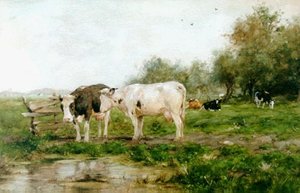
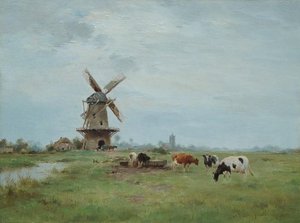
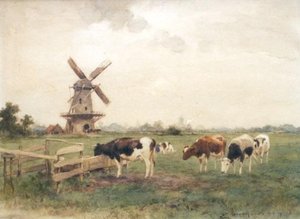
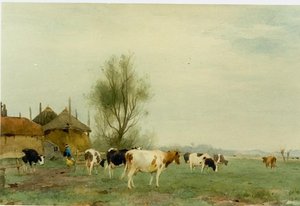
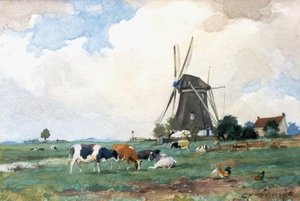
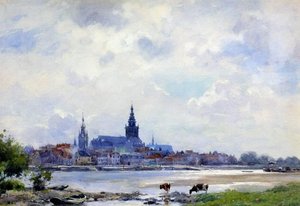
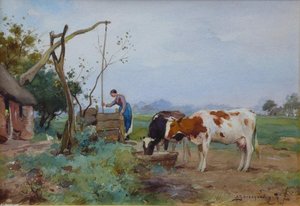
Adrianus Johannes Groenewegen (1874-1963) stands as a quietly significant figure in 19th and early 20th-century Dutch art, a master of capturing the serene beauty of his homeland’s rural landscapes. Often overshadowed by the more flamboyant figures of the Hague School, Groenewegen’s work possesses a distinct charm – a gentle realism imbued with an atmospheric quality that evokes a profound sense of peace and connection to the land. His paintings aren't grand pronouncements; they are intimate glimpses into the daily rhythms of Dutch farm life, rendered with a meticulous attention to detail and a subtle understanding of light and color.
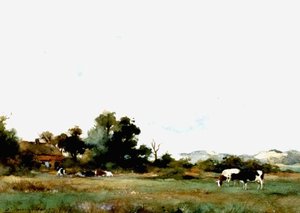
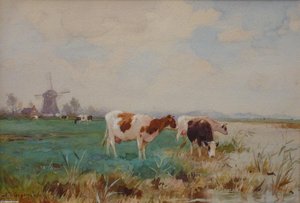
Born in Rotterdam, Groenewegen’s artistic journey began at the Rotterdam Academy of Fine Arts. However, he soon sought a more immersive experience, relocating to The Hague in 1898 – a pivotal move that profoundly shaped his artistic development. It was here, amidst the burgeoning art scene and the influence of the Hague School, that Groenewegen truly found his voice. He developed a particular fascination with depicting quintessential Dutch landscapes: rolling fields dotted with grazing cattle, charming farmsteads nestled amongst verdant meadows, and the ever-present, evocative light characteristic of the region. Unlike some of his contemporaries who favored dramatic compositions or bold brushstrokes, Groenewegen’s style is characterized by its restraint and subtlety – a deliberate choice that allows the inherent beauty of the subject matter to shine through.
The Language of Light and Color
Groenewegen's artistic technique is deeply rooted in observation and a sensitive understanding of light. He was particularly adept at capturing the shifting qualities of daylight, employing delicate gradations of color to convey the warmth of sunrise or the cool hues of twilight. His palette is generally muted – dominated by earthy tones of browns, greens, and blues – yet he skillfully layered these colors to create a remarkable sense of depth and atmosphere. He frequently utilized loose brushstrokes, creating an impressionistic effect that blurred the boundaries between objects and their surroundings, contributing to the paintings’ dreamlike quality. The use of atmospheric perspective—making distant elements paler and less distinct—is particularly noteworthy, reinforcing the feeling of vastness and openness in his landscapes.
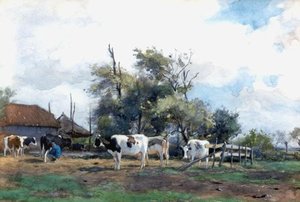
Furthermore, Groenewegen's work demonstrates a keen awareness of detail, meticulously rendering the textures of haystacks, thatched roofs, and the coats of livestock. However, he never allows this attention to detail to overwhelm the overall composition; instead, it serves to enhance the sense of realism and immediacy. His depictions of cattle are particularly striking – capturing their movements, expressions, and the way they interact with the landscape in a remarkably lifelike manner.
Themes and Influences
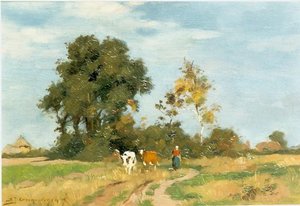
Groenewegen’s paintings primarily explore themes of rural life, tradition, and the relationship between humanity and nature. He frequently depicted scenes of daily farm activities – milking cows, harvesting crops, tending to livestock – offering viewers a glimpse into the rhythms of rural existence. His work reflects a deep appreciation for the simple pleasures of country life and a nostalgic longing for a bygone era. While he was undoubtedly influenced by the Hague School’s emphasis on realism and landscape painting, Groenewegen developed his own distinct style, characterized by its quiet elegance and understated beauty.
It's important to note that Groenewegen’s work aligns with the broader trends of Dutch art at the time – a shift away from the grand historical narratives of earlier periods towards a greater focus on domestic subjects and everyday life. His paintings can be seen as part of a larger movement toward a more intimate and personal approach to artistic expression.
Legacy and Recognition
Despite not achieving widespread fame during his lifetime, Adrianus Johannes Groenewegen’s work has gained increasing recognition in recent decades. His paintings are now held in prominent collections both in the Netherlands and abroad, including those of British, American, and Canadian collectors. His ability to capture the essence of Dutch rural life with such sensitivity and grace ensures that his legacy as a significant artist will continue to grow.
Groenewegen’s paintings offer a valuable window into a bygone era – a time when life moved at a slower pace, and the rhythms of nature dictated the daily routines of countless people. His work serves as a reminder of the enduring beauty of the Dutch landscape and the importance of preserving its cultural heritage.
adrianus johannes groenewegen
1874 - 1963 , Netherlands
Quick Facts
- Artistic Movement Or Style: Hague School
- Artists Or Movements Influenced By This Artist: ['']
- Artists Who Influenced This Artist: ['']
- Date Of Birth: 1874
- Date Of Death: 1963
- Full Name: Adrianus Johannes Groenewegen
- Nationality: Dutch
- Notable Artworks:
- Farmstead at Haarlem
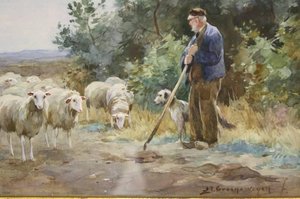
- Shepherd and flock
- Melktijd
- Rural Landscape
- Place Of Birth: Rotterdam, Netherlands