 Preview
 Send
Send Share
Share
 Details

 Download
 Similars
 X-Ray
X-Ray Diaporama
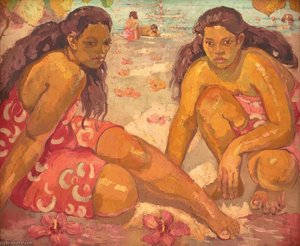
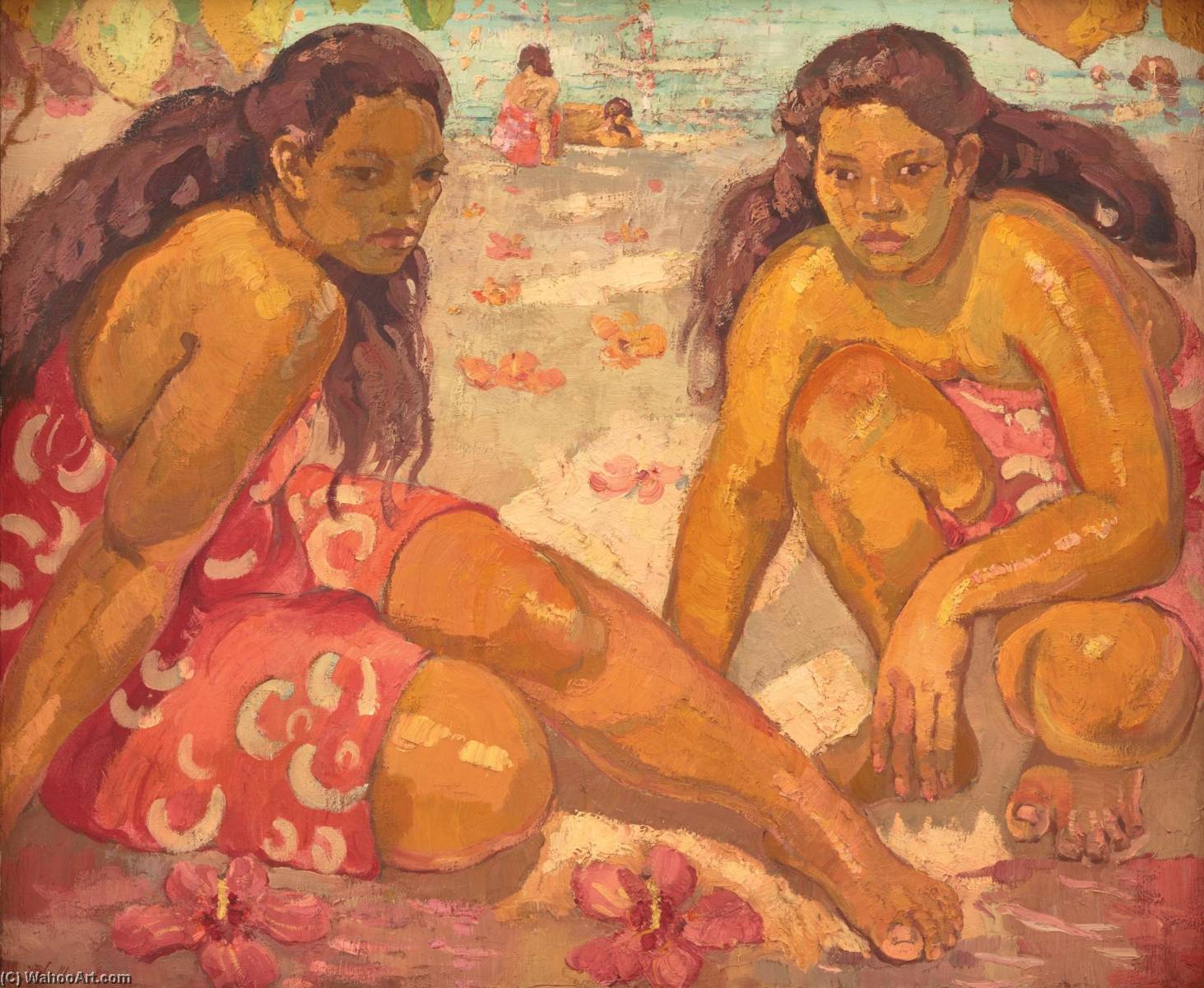
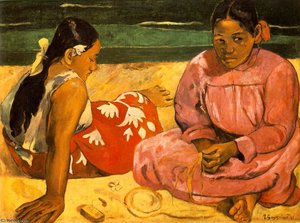
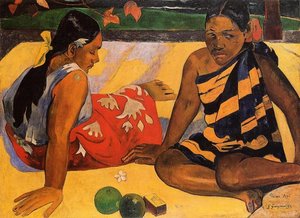
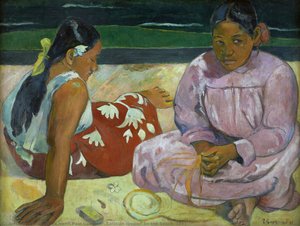
Two Women on the Beach, Tahiti
 101.0 x 122.0 cm
 Read More
Giclée / Art Print
Museum-quality giclée or canvas print with fast production and flexible finish options. ( Buy Hand Made Painting Buy Image)




































Pick from our preset sizes that match the artwork's original proportions.

You may enter your own dimensions to fit a specific frame or space. If your selected size does not match the original image's proportions, we will either crop the artwork or extend the image with a mirrored or solid-fill edge. A digital mockup will be sent for your approval before production begins.
Please note that the on-screen preview does not reflect the actual cropping or extension. Only the mockup will accurately show the final composition.
While custom sizes are available, we recommend selecting a dimension from the predefined list to preserve the original proportions.
Worldwide Delivery () in 2 weeks instead of standard 4/5 weeks. (16 August)

Free Worldwide Express Shipping

High-Quality Linen Canvas

Full Shipping Insurance

Customs Tax Refund Guarantee

True Color Matching Guarantee

60-Day Return Policy (Defects Only)

100% Money-Back Guarantee

Bulk Discount Offer
 Glass option is only available in size under 110 CM

Two Women on the Beach, Tahiti
Giclée / Art Print
Reproduction Size
-


Total Price
$ 63
Related Artworks
Artist Biography
A Life Embraced by the Island of Gods
Adrien-Jean Le Mayeur de Merprès, born in Ixelles, Brussels, in 1880, was a Belgian painter whose artistic journey led him to an unexpected and profound connection with Bali, Indonesia. Initially trained in architecture at the insistence of his father – himself a respected seascape artist – Le Mayeur ultimately succumbed to the allure of painting, a passion that would define his life’s work. His early style reflected the Impressionist tradition, characterized by a keen sensitivity to light and atmospheric effects. However, it was not until he embarked on extensive travels after World War I, where he served as an army painter and photographer, that his unique artistic voice began to emerge. He journeyed through France, Italy, Turkey, Morocco, Tunisia, Madagascar, Burma, India, and Cambodia, seeking new landscapes and a distinctive light to capture on canvas.The Enchantment of Bali
In 1932, at the age of 52, Le Mayeur arrived in Singaraja, Bali, by boat. He soon settled in Denpasar, captivated by the island’s vibrant culture—a world still largely untouched by modernity. The traditional way of life, the intricate temple rituals, and the graceful local dances ignited his imagination. It was a landscape not merely of physical beauty but of spiritual resonance. Le Mayeur rented a house in Banjar Kelandis, where he encountered Ni Wayan Pollok Tjoeglik, a 15-year-old Legong dancer who would become his muse, wife, and the central figure in much of his celebrated artwork. Their meeting was pivotal; she embodied the essence of Balinese grace and became the heart of his artistic expression.A Blossoming Partnership and Artistic Style
Le Mayeur’s paintings depicting Ni Pollok quickly gained recognition after a successful exhibition in Singapore in 1933. Returning to Bali, he purchased land in Sanur beach and built a home that also served as his studio. Here, Ni Pollok, along with her friends, regularly posed for him, their beauty inspiring a prolific period of creativity. The couple married in 1935, solidifying a partnership that was both personal and artistic. Le Mayeur’s style, deeply influenced by Impressionism, is distinguished by its bright, vivid palette and the masterful capture of tropical light. His canvases evoke the golden hues of Balinese sunsets, the lushness of the surrounding flora, and the serene beauty of Balinese women. While his technique remained relatively simple, he possessed an extraordinary ability to distill the essence of his surroundings, creating works that are both vibrant and timeless.Preserving a Legacy
The Japanese occupation during World War II presented immense challenges. Le Mayeur was placed under house arrest but continued to paint relentlessly, utilizing whatever materials were available—even rice sacks—to express his artistic vision. After the war, his reputation steadily grew, attracting visitors eager to witness his work and experience the warmth of his hospitality. In 1956, a visit from Bahder Djohan, the Indonesian Minister for Education and Culture, proved transformative. Impressed by Le Mayeur’s dedication to capturing Balinese culture, the minister proposed transforming their home into a museum—a testament to the artist's profound connection with the island. Le Mayeur wholeheartedly embraced this idea, working diligently to expand his collection and enhance the quality of his paintings. In 1957, he formally donated his house and its contents to Ni Pollok, who in turn gifted them to the Indonesian government, ensuring the preservation of his artistic legacy for generations to come. Though Le Mayeur returned to Belgium in 1958 due to illness and passed away shortly after, his spirit continues to live on within the walls of the Museum Le Mayeur, a sanctuary dedicated to his life, art, and enduring love for Bali.Historical Significance
Adrien-Jean Le Mayeur de Merprès stands as a unique figure in the history of Western artists who found inspiration in Southeast Asia. He wasn’t merely an observer; he immersed himself in Balinese culture, forging deep connections with its people and traditions. His paintings offer invaluable insights into the Bali of the 1930s and 40s—a world on the cusp of change. His work is celebrated not only for its aesthetic beauty but also for its sensitive portrayal of a vanishing way of life. The Museum Le Mayeur, preserved as it was during his lifetime, provides a rare glimpse into the artistic process and the intimate relationship between an artist and his muse. Le Mayeur’s legacy extends beyond the canvas; he championed Balinese culture at a time when it faced increasing external pressures, leaving behind a body of work that continues to inspire awe and appreciation for the Island of Gods.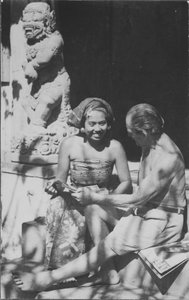
Quick Facts
- Artistic Movement Or Style: World Goes Pop
- Artists Or Movements Influenced By This Artist: ['Influences include various pop art figures']
- Artists Who Influenced This Artist: ['Influenced by diverse artists within the World Goes Pop movement']
- Date Of Death: Living
- Notable Artworks: ['Various works featured in The World Goes Pop exhibition']
- Place Of Birth: WahooArt