 Preview
 Send
Send Share
Share
 Details

 Download
 Similars
 X-Ray
X-Ray Diaporama
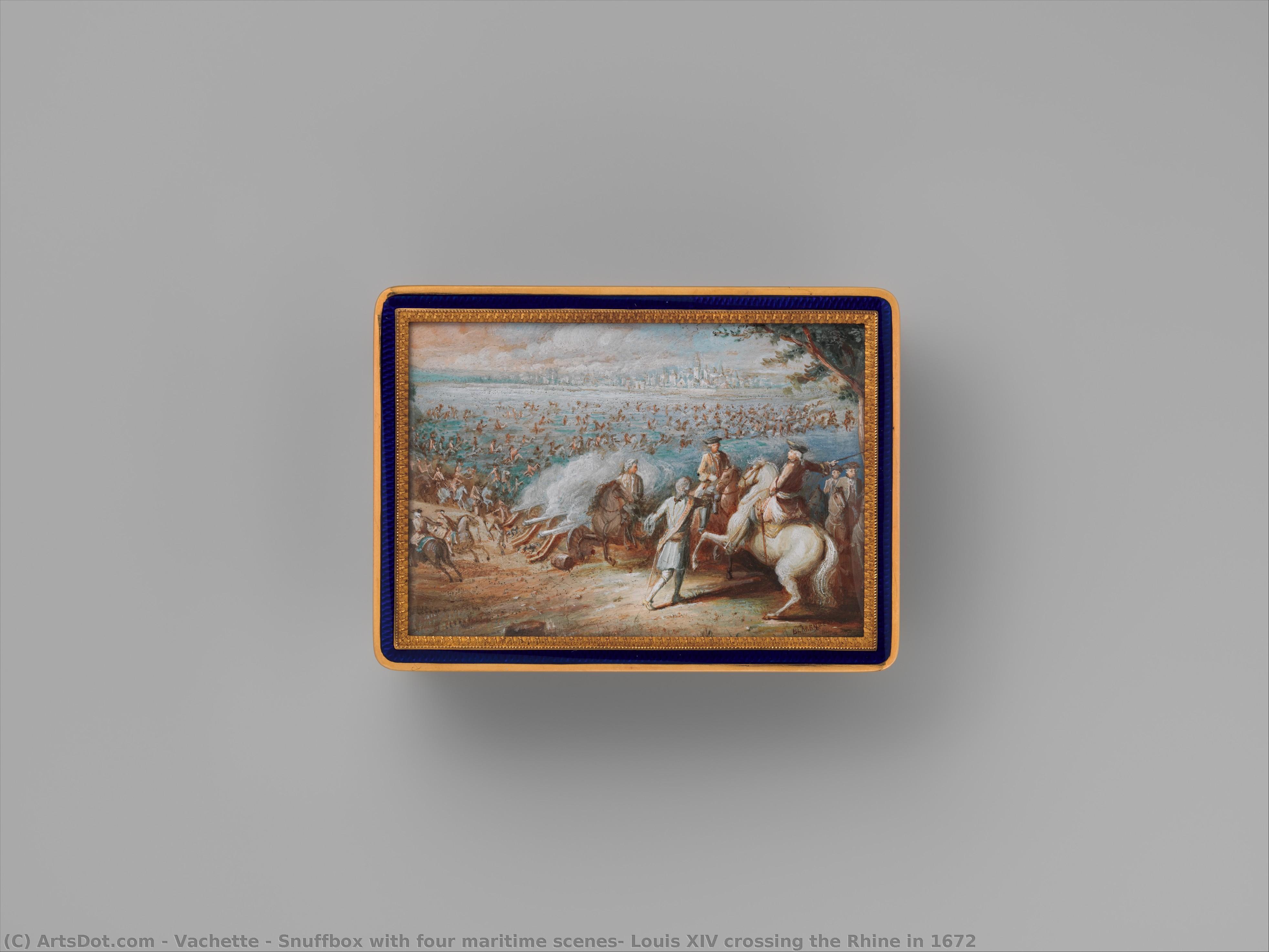
Snuffbox with four maritime scenes; Louis XIV crossing the Rhine in 1672
 1838
1838 7.0 x 5.0 cm
 Read More
Hand Made Oil Reproduction
Hand-painted oil on canvas in your size and frame, made to order by our artists. ( Buy Print Buy Image)




































Pick from our preset sizes that match the artwork's original proportions.

You may enter your own dimensions to fit a specific frame or space. If your selected size does not match the original image's proportions, we will either crop the artwork or extend the painting with additional hand-painted elements. A digital mockup will be sent for your approval before production begins.
Please note that the on-screen preview does not reflect the actual cropping or extension. Only the mockup will accurately show the final composition.
While custom sizes are available, we recommend selecting a dimension from the predefined list to preserve the original proportions.
After order, ArtsDot.com team will email client for instructions and provide a mockup preview
Worldwide Delivery () in 3/4 weeks instead of standard 5 weeks. (26 August). No compromise on quality.

Free Worldwide Express Shipping

High-Quality Linen Canvas

Full Shipping Insurance

Customs Tax Refund Guarantee

True Color Matching Guarantee

60-Day Return Policy (Defects Only)

100% Money-Back Guarantee

Bulk Discount Offer
 Glass option is only available in size under 110 CM

Snuffbox with four maritime scenes; Louis XIV crossing the Rhine in 1672
Reproduction Medium
Reproduction Size
-


Total Price
$ 463
Artwork Description
Related Artworks






Artist Biography
The Gilded Dawn of a Master Craftsman
In the heart of the Enlightenment, where the streets of Paris pulsed with intellectual and artistic fervor, the name Adrien Jean Maximilien Vachette emerged as a beacon of exquisite craftsmanship. Born in the quiet village of Cauffry in 1753, his journey led him to the vibrant epicenter of French luxury. Under the rigorous tutelage of the esteemed goldsmith Pierre-François Drais, Vachette mastered the delicate alchemy of precious metals. His early years, spent near the bustling Pont Neuf, were not merely about learning a trade but about absorbing the very essence of Parisian elegance. This period of apprenticeship laid the foundation for a career defined by an almost supernatural precision, as he learned to transform raw gold into vessels of social prestige and artistic wonder.A Symphony of Gold and Tortoiseshell
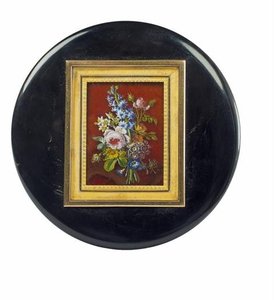
What truly set Vachette apart from his contemporaries was his daring departure from the standard repertoire of gems and enamels. While others sought the brilliance of diamonds, Vachette looked toward the organic, finding profound beauty in the intricate patterns of tortoiseshell. By marrying the luster of gold with the deep, swirling textures of this exotic material, he created objects that were tactile masterpieces. His snuffboxes, étuis, and jewelry cases became more than mere accessories; they were sensory experiences. These items, often featuring maritime scenes or delicate portrait miniatures, served as essential social props in the ritualistic world of eighteenth-century Europe. Through his hands, the natural world was refined into a language of luxury that spoke to the highest echelons of society, from the royal courts to the ambitious merchant classes.Sacred Artistry and the Miraculous Medal
Beyond the secular splendor of his decorative boxes, Vachette’s legacy is forever etched in the annals of religious devotion. He possessed a rare ability to translate spiritual fervor into tangible form, most notably through his design for the Miraculous Medal. Following the profound visions of Saint Catherine Labouré, Vachette captured the essence of the Blessed Virgin Mary in a medium that could be carried close to the heart. This was not merely jewelry; it was an emblem of faith that resonated with millions. Between 1832 and 1836 alone, his production of these medals reached unprecedented heights, demonstrating how a master of the decorative arts could also serve as a conduit for the divine, bridging the gap between the earthly opulence of gold and the ethereal grace of religious iconography.An Eternal Impression on the Decorative Arts
The influence of Adrien Jean Maximilien Vachette extends far beyond his death in 1839. His workshop, which at various times collaborated with luminaries like Marie-Etienne Nitot and the firm of Ouizille and Lemoine, became a crucible for future talent. Students such as Jean-Valentin Morel carried his meticulous standards into a new era of jewelry design. Today, his work remains a cornerstone of prestigious collections, held within the hallowed halls of:- The Louvre in Paris
- The Victoria and Albert Museum in London
- The Metropolitan Museum of Art in New York
To look upon a Vachette piece is to witness the zenith of French goldsmithing—a testament to a man who could command both the strength of gold and the delicate mystery of the natural world, leaving behind a legacy that continues to shimmer with historical significance.
adrien jean maximilien vachette
1753 - 1839 , France
Quick Facts
- Artistic Movement Or Style: Decorative Arts
- Artists Or Movements Influenced By This Artist: ['Jean Honoré Fragonard']
- Artists Who Influenced This Artist: ['Pierre-François Drais']
- Date Of Birth: 1753
- Date Of Death: 1839
- Full Name: Adrien Jean Maximilien Vachette
- Nationality: French
- Notable Artworks:
- Snuffbox with four maritime scenes
- Miraculous Medal
- Place Of Birth: Cauffry, France