 Preview
 Send
Send Share
Share
 Details

 Download
 Similars
 X-Ray
X-Ray Diaporama
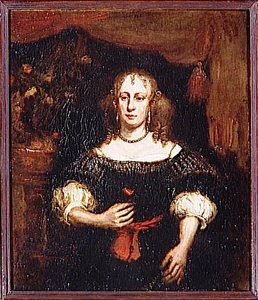
PORTRAIT DE FEMME


 Read More
Hand Made Oil Reproduction
Hand-painted oil on canvas in your size and frame, made to order by our artists. ( Buy Print Buy Image)




P118B $10

P118H $10

P118W $10

P438Z $10

P508JH $12

P508YH $12

P805H $10

P805Z $10

P919BZ $10

P919G $10

P919XJ $10

P959ZH $10

P968JZ $12

W106C $8

W218G $10

W218JH $8

W218Y $10

W307PJ $10

W316G $10

W316PJ $8

W316Y $10

W398PJ $8

W4111J $10

W500HY $15

W500JH $15

W692G $12

W849H $8

W940BG $15

W953PJ $8




Pick from our preset sizes that match the artwork's original proportions.

You may enter your own dimensions to fit a specific frame or space. If your selected size does not match the original image's proportions, we will either crop the artwork or extend the painting with additional hand-painted elements. A digital mockup will be sent for your approval before production begins.
Please note that the on-screen preview does not reflect the actual cropping or extension. Only the mockup will accurately show the final composition.
While custom sizes are available, we recommend selecting a dimension from the predefined list to preserve the original proportions.
After order, ArtsDot.com team will email client for instructions and provide a mockup preview
Worldwide Delivery () in 3/4 weeks instead of standard 5 weeks. (17 August). No compromise on quality.

Free Worldwide Express Shipping

High-Quality Linen Canvas

Full Shipping Insurance

Customs Tax Refund Guarantee

True Color Matching Guarantee

60-Day Return Policy (Defects Only)

100% Money-Back Guarantee

Bulk Discount Offer
 Glass option is only available in size under 110 CM

PORTRAIT DE FEMME
Reproduction Medium
Reproduction Size
-


Total Price
$ 263
Artwork Description
A Glimpse of Baroque Dignity: Aert de Gelder’s “Portrait of a Young Woman”
Within the hushed halls of the Art Institute of Chicago resides a captivating portrait, "Portrait of a Young Woman" by Aert de Gelder – a work that transcends mere likeness and offers a poignant glimpse into the sensibilities of 17th-century Dutch art. Painted around 1680-1700, this piece isn’t merely a depiction of a young woman; it's an embodiment of the Baroque era’s fascination with psychological depth, dramatic lighting, and the subtle complexities of human emotion. De Gelder, a student deeply influenced by Rembrandt’s later style – a lineage he carried into the 18th century – masterfully captures a sense of quiet contemplation within this intimate composition.
The painting immediately draws the eye to its subject: a young woman seated with an air of dignified reserve. Her gaze is direct, almost challenging, yet tempered by a hint of melancholy. The choice of clothing—a rich, crimson cloak or shawl draped elegantly over her shoulders—immediately speaks to status and wealth, hallmarks of aristocratic portraiture prevalent during the period. The subtle variations in color within the fabric, rendered with meticulous brushstrokes, suggest luxurious textures and a deep understanding of material quality – a testament to de Gelder’s technical skill. The overall palette is restrained, dominated by earth tones—browns, reds, and creams—creating a sense of subdued elegance that contrasts beautifully with the vibrant hue of her garment.
The Rembrandt Legacy: Style and Technique
De Gelder's artistic identity is inextricably linked to Rembrandt’s. He wasn’t simply copying his mentor; he was absorbing and reinterpreting the master’s techniques, particularly his signature use of *chiaroscuro* – the dramatic interplay of light and shadow. Notice how the artist skillfully employs this technique to sculpt the woman's form, creating a sense of volume and depth without resorting to harsh contrasts. The lighting, originating from an unseen source on the left, gently illuminates her face and upper body, while the background remains shrouded in relative darkness, further emphasizing her presence.
The brushwork itself is remarkably detailed yet subtly blended. Close inspection reveals a layering of paint—a technique known as *impasto* – that adds texture to the fabric folds and skin tones. This meticulous approach contributes significantly to the painting’s overall sense of realism, while simultaneously conveying a feeling of warmth and immediacy. The composition is relatively simple, focusing on the figure within a shallow space, but this restraint allows de Gelder to concentrate his attention on capturing the nuances of her expression and posture.
Symbolism and Emotional Resonance
Beyond its technical brilliance, “Portrait of a Young Woman” resonates with deeper symbolic meaning. The woman’s serious expression—a subtle hint of sadness in her eyes—suggests a quiet dignity and perhaps even a touch of melancholy. This isn't a frivolous depiction of youthful beauty; it’s an exploration of inner life and emotional complexity, reflecting the Baroque era’s interest in portraying human psychology with unprecedented depth. The gesture of her hand, partially concealed within the folds of her garment, adds to this sense of intimacy and invites the viewer to contemplate her thoughts and feelings.
The painting's historical context is crucial to understanding its significance. Created during a period of relative stability in Dutch society, it likely served as a commission for an aristocratic family, intended to commemorate a young woman’s coming-of-age or perhaps simply to celebrate her beauty and status. De Gelder’s ability to capture both the outward appearance and the inner character of his subject speaks volumes about the artistic standards of the time.
A Timeless Masterpiece: Reproduction and Beyond
Reproductions of “Portrait of a Young Woman” offer an exceptional opportunity to bring this remarkable artwork into your home or office. ArtsDot’s hand-painted reproductions faithfully recreate de Gelder's masterful technique, capturing the subtle nuances of light, shadow, and color with stunning accuracy. Whether you are an art enthusiast, a collector seeking a piece of Dutch Golden Age history, or simply someone who appreciates exquisite beauty, this portrait is sure to captivate your senses and evoke a profound emotional response.
Explore more about Aert de Gelder and his work on the ArtsDot website: https://www.wahoart.com/en/art/aert-de-gelder-portrait-de-femme-AQSS8T-en/
Related Artworks



Artist Biography
The Echo of a Master: Aert de Gelder's Devotion to the Rembrandt Spirit
To stand before the works of Aert de Gelder is to encounter an echo—a vibrant, passionate resonance of one of history’s greatest masters. Though his earthly journey was tragically brief, De Gelder carved out a significant niche in the annals of Dutch art, forever linked by devotion to the profound chiaroscuro and emotional depth of Rembrandt van Rijn. Born in Dordrecht around 1645, his life seems almost too short to encompass such an intense artistic output. Yet, within those fleeting years, he absorbed the very essence of a master’s technique, channeling it into a body of work that speaks volumes about human drama and spiritual fervor.
His training was not merely academic; it was an immersion. Studying in Rembrandt's own studio between 1661 and 1663 placed him at the epicenter of artistic innovation. This apprenticeship proved formative, allowing him to absorb not just brushstrokes, but a philosophy—a way of seeing the inherent drama in everyday moments and sacred narratives alike.
Mastering the Late Rembrandt Style
De Gelder’s signature style is inseparable from the late period brilliance of his mentor. It is a style characterized by an almost palpable emotional charge. His canvases do not simply depict scenes; they breathe them into existence, drawing the viewer into moments of profound contemplation or intense action. Whether tackling grand biblical narratives or intimate character studies, the human element remains paramount.
Consider the dramatic sweep of pieces like "The Baptism of Christ" or the charged tension captured in "Ahimelech Giving the Sword of Goliath to David." These works are not merely illustrations; they are meditations on faith and conflict. De Gelder possessed a remarkable gift for narrative storytelling, using light and shadow—that signature Rembrandtian technique—to guide the eye and deepen the emotional resonance of every figure.
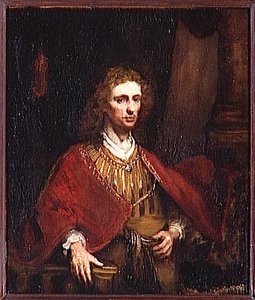
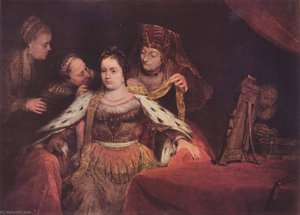
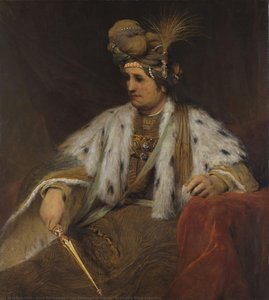
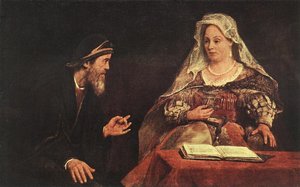
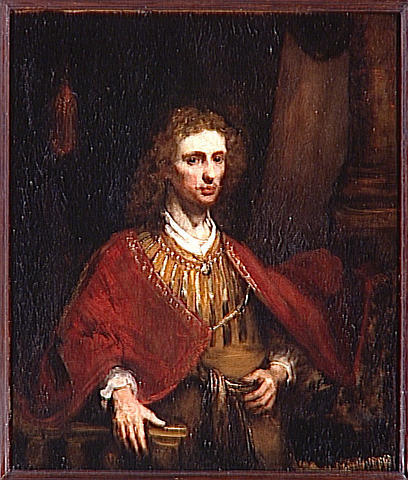
His portraiture further attests to this mastery. In works such as "Esther and Mordecai" or his depiction of "King David," one senses not just likeness, but soul. He had an uncanny ability to convey the inner turmoil, quiet dignity, or triumphant spirit residing within his sitters.
Historical Significance and Legacy
Aert de Gelder’s career serves as a fascinating bridge in art history. His adherence to the emotionalism and narrative weight of the Dutch Golden Age masters allowed him to maintain a powerful connection to that era's zenith, even as artistic tastes began to shift toward the 18th century. He acted as a custodian of Rembrandt’s legacy, ensuring that his dramatic vocabulary remained vibrant.
His enduring significance lies in this continuation. He proved that one could build upon the monumental achievements of a master without simply mimicking them; rather, he internalized the spirit and adapted it. The fact that institutions like the Rijksmuseum house his pieces underscores his place within the canon of Dutch genius, solidifying his reputation alongside giants like Jan Lievens.
To view De Gelder’s art is to witness devotion made visible—a commitment to capturing the sublime drama inherent in the human condition, all filtered through the unforgettable lens of Rembrandt's unparalleled vision.
aert de gelder
1645 - 1645 , Netherlands
Quick Facts
- Artistic Movement Or Style: Rembrandt's late style
- Artists Who Influenced This Artist: ['rembrandt van rijn']
- Date Of Birth: 1645
- Date Of Death: 1645
- Full Name: aert de gelder
- Nationality: Dutch
- Notable Artworks:
- The baptism of christ
- King David
- Place Of Birth: Dordrecht, Netherlands
Related Articles

Rembrandt's Masterpieces: Explore 25 Iconic Paintings & Prints | ArtsDot
Journey through Rembrandt van Rijn's 25 most iconic paintings & etchings. Explore Dutch Golden Age masterpieces, dramatic chiaroscuro, and timeless portraits. Find museum-quality art reproductions to elevate your home decor on ArtsDot.com.

Dutch Baroque Masters: 10 Paintings That Shaped an Era | ArtsDot
Journey through the Golden Age with our guide to the Top 10 Dutch Baroque masterpieces! Explore iconic paintings by Rembrandt, Vermeer & Frans Hals. Find museum-quality art reproductions and elevate your home decor at ArtsDot.com.

Demandes Commerciales
APS ofrece reproducciones de bellas artes y encargos personalizados desde 2004. Confían en nosotros corporaciones, hoteles y coleccionistas selectos para obras de arte de calidad museística, servicio discreto y soluciones artísticas completas. ¡Póngase en contacto con nosotros para obtener un presupuesto personalizado!

Goya's Masterpieces: Explore 25 Iconic Paintings & Art Prints | ArtsDot
Delve into the world of Francisco Goya with ArtsDot. Explore 25 iconic paintings – from 'The Third of May' to his haunting Black Paintings. Discover the stories, techniques & emotions behind these Spanish masterpieces. Find museum-quality art reproductions for your home at ArtsDot.com!

Golden Age Reflections: Dutch Baroque Painting & Cultural Innovation
Explore the Dutch Golden Age of painting! Discover key artists like Vermeer & ter Borch, their innovative techniques, and the rich cultural context behind these Baroque masterpieces. Learn about collecting & appreciating this iconic art period.