 Preview
 Send
Send Share
Share
 Details

 Download
 Similars
 X-Ray
X-Ray Diaporama
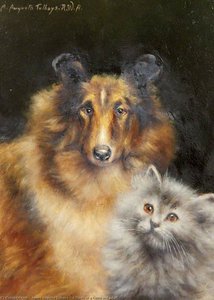
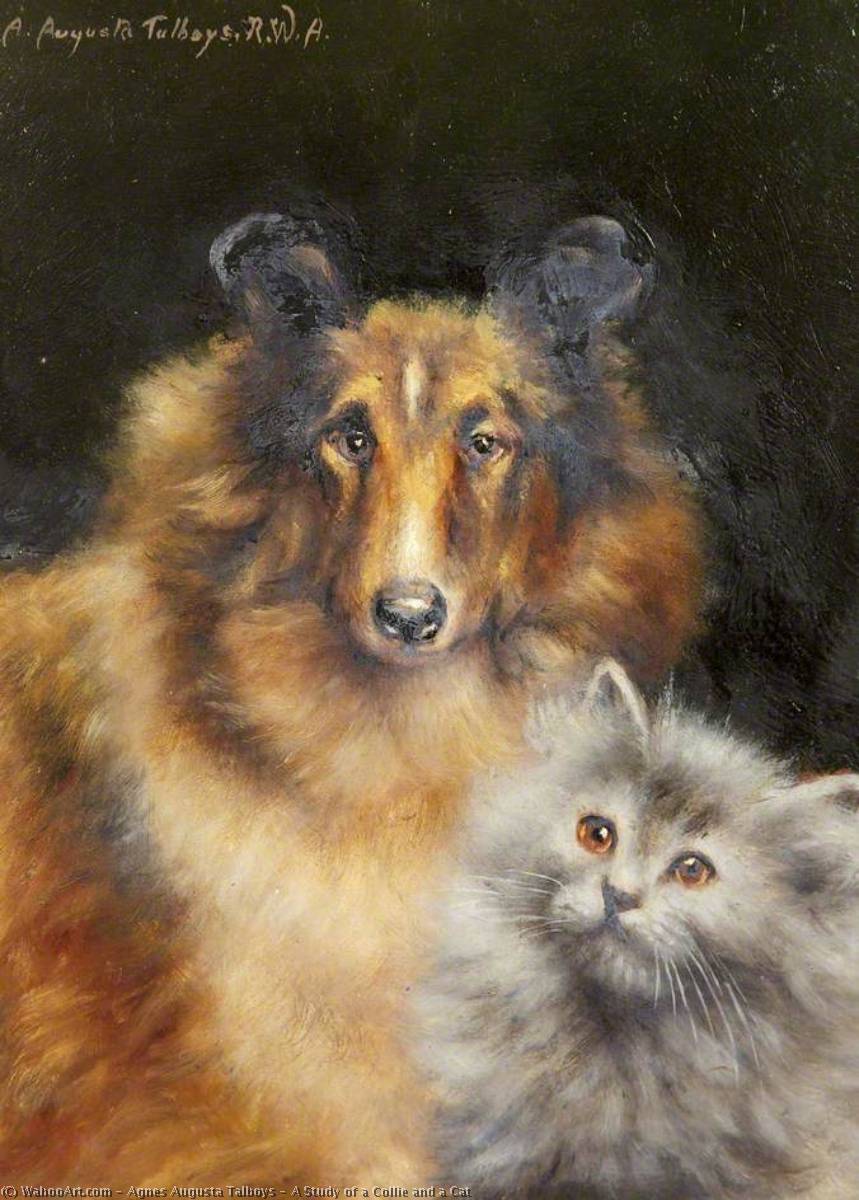
A Study of a Collie and a Cat
 25.0 x 17.0 cm
 Royal West of England Academy
 Read More
Giclée / Art Print
Museum-quality giclée or canvas print with fast production and flexible finish options. ( Buy Hand Made Painting Buy Image)




































Pick from our preset sizes that match the artwork's original proportions.

You may enter your own dimensions to fit a specific frame or space. If your selected size does not match the original image's proportions, we will either crop the artwork or extend the image with a mirrored or solid-fill edge. A digital mockup will be sent for your approval before production begins.
Please note that the on-screen preview does not reflect the actual cropping or extension. Only the mockup will accurately show the final composition.
While custom sizes are available, we recommend selecting a dimension from the predefined list to preserve the original proportions.
Worldwide Delivery () in 2 weeks instead of standard 4/5 weeks. (24 August)

Free Worldwide Express Shipping

High-Quality Linen Canvas

Full Shipping Insurance

Customs Tax Refund Guarantee

True Color Matching Guarantee

60-Day Return Policy (Defects Only)

100% Money-Back Guarantee

Bulk Discount Offer
 Glass option is only available in size under 110 CM

A Study of a Collie and a Cat
Giclée / Art Print
Reproduction Size
-


Total Price
$ 63
Related Artworks








Artist Biography
A Gentle Hand: The Life and Art of Agnes Augusta Talboys
Agnes Augusta Talboys, a name perhaps less celebrated than some of her Victorian contemporaries, nevertheless occupies a significant place in the history of British animal painting and charming domestic portraiture. While biographical details remain somewhat elusive – a common fate for women artists of the 19th century – her work speaks volumes about her keen observation skills, technical proficiency, and a deeply felt affection for the creatures and people she depicted. Born into an era defined by strict social conventions, Talboys carved out a successful career as a professional artist, specializing in subjects that resonated with the burgeoning middle class: beloved pets, idyllic rural scenes, and intimate family portraits. Her paintings weren’t grand historical narratives or dramatic landscapes; instead, they offered glimpses into the warmth of home life, capturing fleeting moments of tenderness and companionship. This focus, while seemingly modest, proved remarkably popular, establishing her as a sought-after artist throughout her lifetime.Early Influences and Artistic Development
The precise details of Talboys’ early training are not fully documented, but it is reasonable to assume she received instruction in the traditional academic style prevalent at the time. The Victorian art world was dominated by institutions like the Royal Academy, which emphasized meticulous realism and a strong understanding of anatomy. However, Talboys' work reveals a distinct sensibility that moves beyond mere technical accuracy. There’s a softness in her brushwork, a delicate use of color, and an almost palpable empathy for her subjects that suggests she was not solely bound by academic constraints. It is likely she studied the works of earlier animal painters like Edwin Landseer, whose romantic depictions of dogs were immensely popular, but Talboys developed a uniquely intimate style. Her early pieces often featured studies of farm animals and rural landscapes, demonstrating a strong foundation in observation and draftsmanship. As her career progressed, she increasingly focused on domestic scenes, particularly portraits of pets – cats, dogs, birds, and other small creatures – within the context of their homes and families.The Charm of Domesticity: Talboys’ Signature Style
Talboys' most recognizable works are undoubtedly her charming portraits of animals and people in intimate settings. She possessed a remarkable ability to capture not just the physical likeness of her subjects but also their individual personalities and the emotional bonds they shared with their owners. Her paintings often depict pets nestled amongst family members, playing in gardens, or simply enjoying quiet moments of companionship. These weren’t merely representations of animals; they were celebrations of domesticity, affection, and the simple joys of life. Her technique was characterized by a delicate watercolor style, employing soft washes of color and meticulous attention to detail. She skillfully rendered textures – the sheen of fur, the softness of feathers, the intricate patterns of fabrics – creating paintings that are both visually appealing and emotionally resonant. The compositions are typically balanced and harmonious, with a focus on natural light and a sense of warmth and intimacy. She frequently used a muted palette, favoring earth tones and subtle shades that contribute to the overall feeling of nostalgia and tranquility.A Lasting Legacy: Historical Significance and Continued Appeal
While Talboys may not have achieved the same level of fame as some of her male counterparts, her work offers valuable insights into Victorian society and the changing role of animals in people’s lives. The growing popularity of pet portraits during this period reflects a broader trend towards sentimentalism and an increasing emphasis on domestic comfort.- Her paintings provide a glimpse into the material culture of the Victorian middle class, showcasing the interiors of their homes and the objects they valued.
- They also reveal a growing affection for animals as companions rather than simply utilitarian creatures.
- Talboys’ success as a professional artist demonstrates the opportunities available to women in the art world, albeit within certain limitations.