

 Preview
 Send
Send Share
Share
 Details

 Download
 Similars
 X-Ray
X-Ray Diaporama
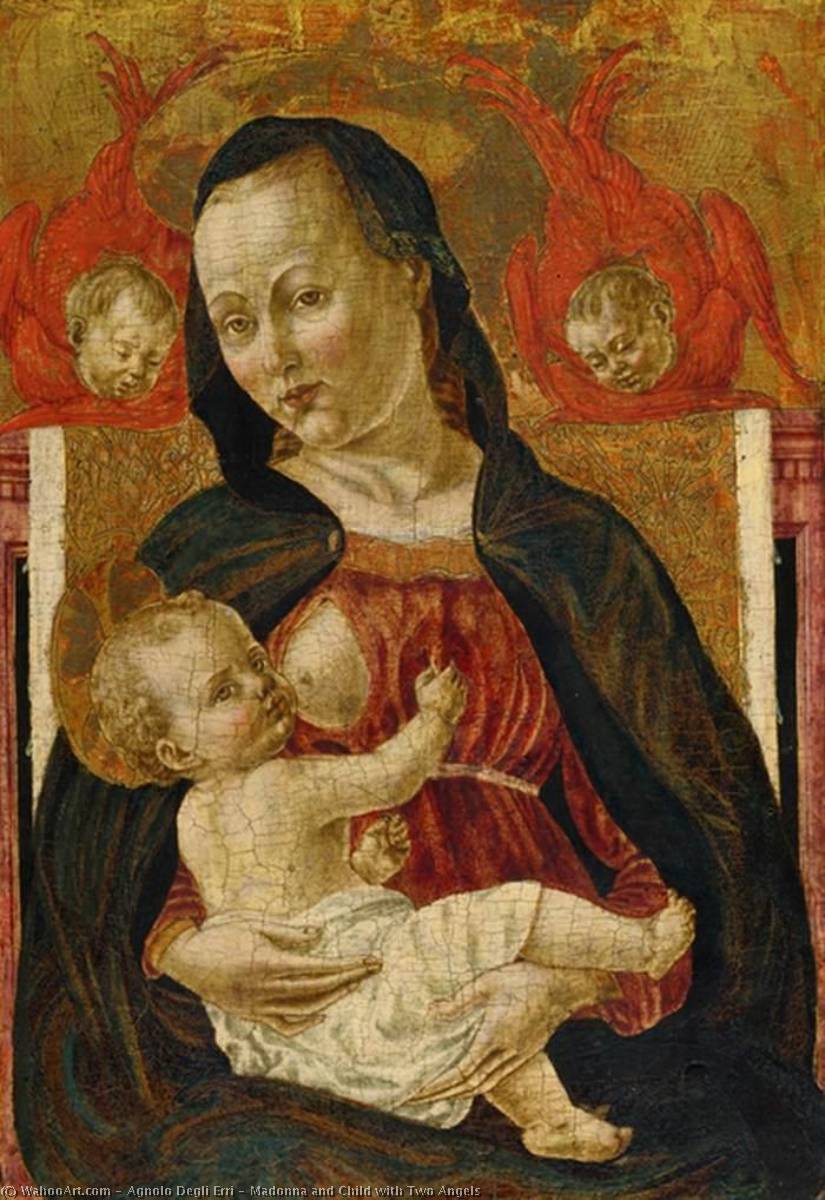
Madonna and Child with Two Angels
 1470
1470 44.0 x 31.0 cm
 Read More
Purchase a high-resolution, enhanced digital image, far superior to the online preview.
Each file is meticulously prepared by our in-house specialists using advanced tools and expert manual retouching. We ensure every image has exceptional clarity, precise color accuracy, and fine detail.
The final file is delivered via email within 72 hours, optimized for immediate use in professional, editorial, and print environments. This is the same quality trusted by top-tier design studios, publishers, and galleries.
Digital Image
Download a high-resolution file for personal display, printing, and creative projects. ( Buy Print Buy Hand Made Painting)
Included in Every Digital Image Order
Expert Digital Delivery, Guaranteed
When you choose ArtsDot.com, you're not just getting an image - you're receiving a professionally enhanced digital artwork, crafted with precision and backed by a satisfaction guarantee. Here's everything that comes with your order, automatically:

Fast Email Delivery
Your high-resolution digital image file will be emailed to you within 72 hours of ordering - ready for immediate use.

AI-Enhanced Digital File
Your artwork is professionally optimized using advanced AI tools and manual editing, ensuring maximum detail, clarity, and color accuracy.

Free Lifetime Re-Delivery
Accidentally deleted or lost your file? No worries - we'll resend it to you anytime, free of charge.

No Import Fees - Ever
Enjoy your artwork instantly with zero customs, duties, or delivery fees - digital downloads are always tax-free.

Color Accuracy Guarantee
We ensure your digital image reflects the original colors as closely as possible using professional tools and color management.

60-Day Satisfaction Guarantee
If you're not satisfied with your digital image, we'll revise it or refund 100% within 60 days - no questions asked.

100% Money-Back Guarantee
Not satisfied? Get a full refund within 60 days of receiving your digital file - no questions asked.

Bulk Order Discounts
Buy 3 images, save 10% - Buy 5, save 15% - Buy 10+, save 20%. Great for creative projects, galleries, and agencies.
Collectible Description
Composition and Style
The painting depicts the Virgin Mary holding her child while surrounded by two angels. The woman in the painting appears to be nursing the baby, with one hand on the child's chest. The image also features an infant being held by its mother, and another baby being held by an angel. The overall composition of the painting is quite intricate and detailed, showcasing the artist's skill and attention to detail. Tempera was a popular medium during the Early Renaissance, and Agnolo Degli Erri masterfully utilized it to create this captivating piece. The use of tempera allowed for vibrant colors and delicate details, which are evident in the painting's intricate design.Similar Works and Artists
Other notable artists from the same period, such as Sandro Botticelli, also created stunning works featuring the Madonna and Child. For example, Botticelli's Madonna and Child and Two Angels (1468-1470) is a prime example of Early Renaissance art. You can find more information about this painting on ArtsDot.com.- Carlo Crivelli's Saint Mary Magdalene (1470) is another notable work from the same period, showcasing the artist's exceptional skill in capturing dramatic scenes.
- The Museo Poldi Pezzoli in Milan, Italy, houses a stunning collection of Renaissance art, including works by Lazzaro Bastiani.
The Madonna and Child with Two Angels by Agnolo Degli Erri is a captivating piece that showcases the artist's skill and attention to detail. With its intricate composition and beautiful use of tempera, this painting is a must-see for art enthusiasts. You can find more information about this painting and other works by Agnolo Degli Erri on ArtsDot.com.
Related Artworks





Artist Biography
Agnolo degli Erri: A Modenese Master of the Quattrocento
Agnolo degli Erri (c. 1440 – 1482) stands as a pivotal, yet often understated, figure within the vibrant artistic landscape of Modena during the late Quattrocento. His life and work represent a fascinating confluence of Gothic traditions, emerging Renaissance ideals, and the unique cultural context of his home city. While overshadowed by some of his more flamboyant contemporaries, Erri’s contributions to Modenese painting are significant, particularly in his depictions of religious scenes and altarpieces that offer glimpses into the devotional practices and artistic sensibilities of the era.
Born around 1440 in Modena, Agnolo degli Erri was part of a family deeply involved in the city’s art scene. His brothers, Bartolomeo and Bartolomeo Bonascia, were also painters, forming a collaborative workshop that significantly shaped the artistic output of Modena during this period. The precise details of his early training remain somewhat elusive, but it's believed he honed his skills within the established traditions of Italian Gothic painting, absorbing influences from masters like Gentile da Fabriano and Lorenzo Ghiberti. Early works likely focused on devotional panels and altarpieces for local churches, establishing a foundation in tempera technique and narrative composition.
Key Works and Artistic Style
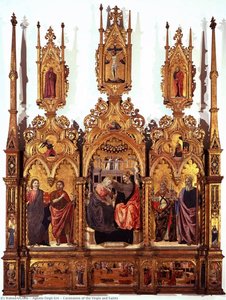
Erri’s oeuvre is relatively modest compared to some of his peers, yet each piece reveals a distinctive artistic voice. He is most prominently associated with the magnificent Triptych of the Coronation of the Virgin, created between 1462 and 1466 for the Galleria Estense in Modena. This monumental work, likely undertaken in collaboration with his brother Bartolomeo, showcases Erri’s skill in depicting complex religious narratives and his ability to imbue figures with a sense of emotional depth. The triptych's rich colors, intricate details, and dynamic composition exemplify the high standards of Modenese painting at the time.
Beyond the Coronation of the Virgin, Erri is also credited with several altarpieces, including an impressive depiction of Saint Peter from the church of San Domenico in Modena (now housed in the Galleria Nazionale di Parma). These works demonstrate his mastery of perspective and spatial arrangement, as well as his talent for capturing the solemnity and reverence associated with religious subjects. Furthermore, a series of paintings depicting scenes from the lives of the saints—attributed to him by art historian Roberto Longhi—highlights his engagement with popular devotional themes.
Influences and Artistic Development
Erri’s artistic development was undoubtedly shaped by the prevailing trends of the Quattrocento in Italy, but he also possessed a unique sensibility that distinguished his work. He drew inspiration from both Gothic traditions – particularly the rich color palettes and decorative elements characteristic of Italian Gothic painting – and the emerging Renaissance ideals of naturalism and humanism. His style is often described as restrained and direct, prioritizing clarity of composition and emotional impact over elaborate ornamentation.
Notably, Erri’s work reflects a strong connection to the artistic practices of his region. He shared stylistic affinities with other Modenese painters like Bartolomeo Bonascia and Cristoforo Lendinara, suggesting a collaborative environment within the city's art scene. However, unlike the more flamboyant Mannerist styles that began to emerge in Florence during this period, Erri’s work remained firmly rooted in the traditions of the Quattrocento, offering a glimpse into the quieter, yet equally compelling, artistic developments taking place in Modena.
Legacy and Historical Significance
Despite his relatively small body of surviving works, Agnolo degli Erri holds an important place in Modenese art history. He represents a crucial link between the Gothic traditions of the 15th century and the burgeoning Renaissance style that would soon dominate Italian painting. His contributions to the decoration of the Estense court and the churches of Modena helped to shape the visual identity of the city during a period of significant cultural and political change.
Erri’s legacy is further cemented by his association with his brother, Bartolomeo degli Erri, whose work often shares stylistic similarities. Together, they formed one of the most influential painting workshops in Modenese art, leaving behind a rich artistic heritage that continues to fascinate scholars and enthusiasts today. His paintings serve as valuable documents of a vibrant period in Italian art history, offering insights into the religious beliefs, social customs, and artistic practices of 15th-century Modena.
agnolo degli erri
1440 - 1482
Quick Facts
- Artistic Movement Or Style: Gothic Italian Painting
- Artists Or Movements Influenced By This Artist:
- Cosmè Tura
- Francesco del Cossa
- Artists Who Influenced This Artist:
- Jacopo Bellini
- Bartolomeo degli Erri
- Date Of Birth: 1440
- Date Of Death: 1482
- Full Name: Agnolo degli Erri
- Nationality: Italian
- Notable Artworks:
- Coronation of the Virgin
- Scenes from Saints
- Saint Peter altarpiece
- Place Of Birth: Modena, Italy

