- Home

- Digital Image
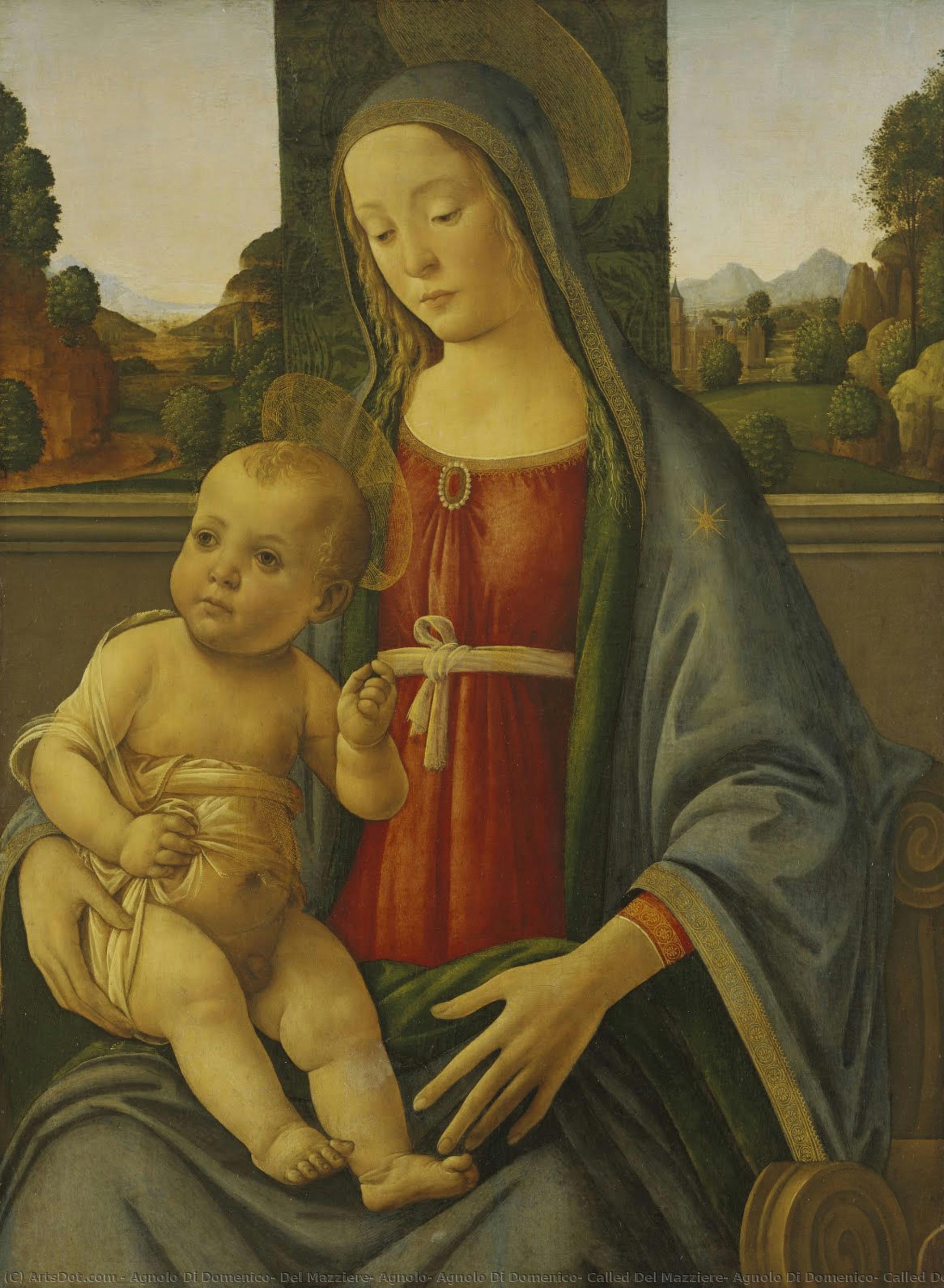
- Agnolo Di Domenico, Del Mazziere, Agnolo, Agnolo Di Domenico, Called Del Mazziere, Agnolo Di Domenico, Called Del Mazziere (Master Of Santo Spirito)
 Preview
 Send
Send Share
Share
 Details

 Download
 Similars
 X-Ray
X-Ray Diaporama
Madonna and Christ Child

 Read More
Purchase a high-resolution, enhanced digital image, far superior to the online preview.
Each file is meticulously prepared by our in-house specialists using advanced tools and expert manual retouching. We ensure every image has exceptional clarity, precise color accuracy, and fine detail.
The final file is delivered via email within 72 hours, optimized for immediate use in professional, editorial, and print environments. This is the same quality trusted by top-tier design studios, publishers, and galleries.
Digital Image
Download a high-resolution file for personal display, printing, and creative projects. ( Buy Print Buy Hand Made Painting)
Included in Every Digital Image Order
Expert Digital Delivery, Guaranteed
When you choose ArtsDot.com, you're not just getting an image - you're receiving a professionally enhanced digital artwork, crafted with precision and backed by a satisfaction guarantee. Here's everything that comes with your order, automatically:

Fast Email Delivery
Your high-resolution digital image file will be emailed to you within 72 hours of ordering - ready for immediate use.

AI-Enhanced Digital File
Your artwork is professionally optimized using advanced AI tools and manual editing, ensuring maximum detail, clarity, and color accuracy.

Free Lifetime Re-Delivery
Accidentally deleted or lost your file? No worries - we'll resend it to you anytime, free of charge.

No Import Fees - Ever
Enjoy your artwork instantly with zero customs, duties, or delivery fees - digital downloads are always tax-free.

Color Accuracy Guarantee
We ensure your digital image reflects the original colors as closely as possible using professional tools and color management.

60-Day Satisfaction Guarantee
If you're not satisfied with your digital image, we'll revise it or refund 100% within 60 days - no questions asked.

100% Money-Back Guarantee
Not satisfied? Get a full refund within 60 days of receiving your digital file - no questions asked.

Bulk Order Discounts
Buy 3 images, save 10% - Buy 5, save 15% - Buy 10+, save 20%. Great for creative projects, galleries, and agencies.
Related Artworks








Artist Biography
The Enigmatic Brush of Agnolo Di Domenico, Called Del Mazziere
Agnolo Di Domenico, known to art history as Agnolo Del Mazziere – or sometimes simply “Master of Santo Spirito” due to the concentration of his work within that Florentine church – remains a fascinatingly elusive figure in the early Renaissance. Born sometime in the first half of the 15th century, likely in Florence itself, his life is shrouded in ambiguity, documented more through his paintings than through biographical accounts. Unlike many of his contemporaries who benefited from extensive patronage records and workshop chronicles, Del Mazziere’s existence is pieced together from stylistic analysis, archival fragments relating to commissions, and the inherent narratives within his art. This lack of concrete detail only adds to the mystique surrounding this skilled painter whose work bridges the gap between the International Gothic style and the burgeoning realism of the early Renaissance. He wasn't a flamboyant innovator like Masaccio or Donatello; rather, he was a refined craftsman who absorbed the prevailing artistic currents and translated them into works characterized by delicate beauty, lyrical grace, and a profound sense of spiritual devotion.Early Influences and Artistic Development
Del Mazziere’s formative years were undoubtedly shaped by the vibrant artistic milieu of Florence under the early Medici rulers. The city was already a crucible of new ideas, witnessing the rediscovery of classical antiquity and the development of linear perspective. While his precise training remains unknown – no documented apprenticeship survives – scholars generally agree that he initially absorbed the elegant forms and decorative details characteristic of the International Gothic style prevalent in Lorenzo Monaco’s workshop. This influence is readily apparent in his early works, such as fragments of frescoes depicting scenes from the life of Saint John the Baptist. However, Del Mazziere didn't simply replicate these established conventions; he began to subtly infuse them with a growing naturalism and an increasing attention to anatomical accuracy.- Lorenzo Monaco: The influence of Monaco’s refined style is visible in the delicate drapery and elegant figures of Del Mazziere's early works.
- Gentile da Fabriano: Some scholars suggest a possible connection to Gentile da Fabriano, whose opulent color palettes and narrative skill may have also impacted Del Mazziere’s development.
- Early Renaissance Humanism: The growing humanist movement in Florence likely influenced his approach to depicting religious figures with greater emotional depth and individuality.
The Santo Spirito Cycle: A Testament to Devotion
Del Mazziere’s most significant achievement – and the source of his epithet “Master of Santo Spirito” – is undoubtedly the extensive fresco cycle he executed within the refectory of the monastery of Santo Spirito in Florence. Commissioned between 1446 and 1450, this monumental work depicts scenes from the life of Saint Philip Benizi, a prominent figure in the Servite order. The frescoes are remarkable for their harmonious composition, delicate color palettes, and profound sense of spiritual tranquility. Unlike many contemporary depictions of religious subjects that emphasize dramatic narratives or emotional intensity, Del Mazziere’s cycle focuses on conveying a quiet, contemplative piety. The figures within the Santo Spirito frescoes possess an understated dignity and grace, their expressions reflecting inner devotion rather than outward displays of emotion. The architectural settings are rendered with meticulous detail, creating a convincing sense of space and atmosphere. Furthermore, Del Mazziere’s masterful use of light and shadow enhances the overall effect of serenity and spiritual depth. The cycle is not merely a series of isolated scenes; it functions as a cohesive narrative environment designed to inspire contemplation and devotion within the monastic community.Technique and Style: A Synthesis of Tradition and Innovation
Del Mazziere’s technical skill was considerable, though often understated. He employed a refined fresco technique characterized by precise draftsmanship, delicate modeling, and harmonious color blending. His palette favored soft, luminous tones – blues, golds, and rose hues – creating an atmosphere of ethereal beauty. While he embraced the principles of linear perspective, his application was subtle and restrained, prioritizing clarity and harmony over strict mathematical accuracy.- Fresco Technique: His mastery of fresco allowed for durable and vibrant depictions that have endured for centuries.
- Tempera on Panel: He also worked extensively in tempera on panel, producing smaller devotional works characterized by intricate detail and refined craftsmanship.
- Emphasis on Linearity: Del Mazziere’s style is distinguished by its elegant linearity, evident in the graceful contours of his figures and drapery.