 Preview
 Send
Send Share
Share
 Details

 Download
 Similars
 X-Ray
X-Ray Diaporama
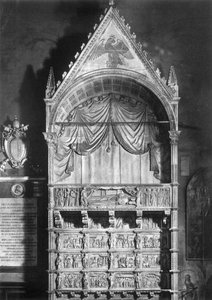
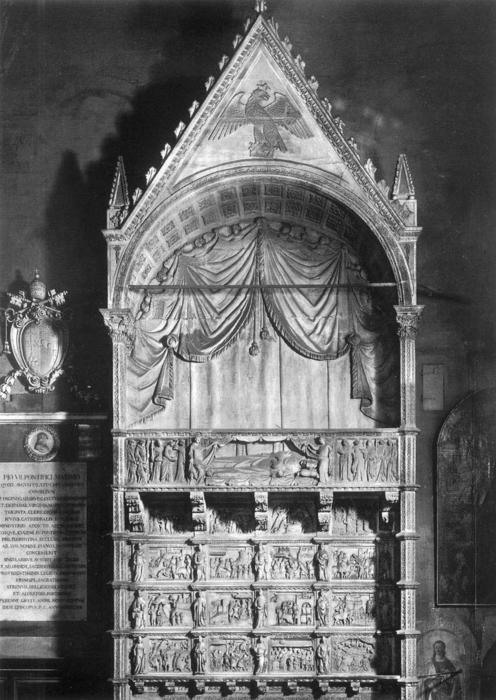
Monument to Bishop Guido Tarlati


 Read More
Hand Made Oil Reproduction
Hand-painted oil on canvas in your size and frame, made to order by our artists. ( Buy Print Buy Image)




































Pick from our preset sizes that match the artwork's original proportions.

You may enter your own dimensions to fit a specific frame or space. If your selected size does not match the original image's proportions, we will either crop the artwork or extend the painting with additional hand-painted elements. A digital mockup will be sent for your approval before production begins.
Please note that the on-screen preview does not reflect the actual cropping or extension. Only the mockup will accurately show the final composition.
While custom sizes are available, we recommend selecting a dimension from the predefined list to preserve the original proportions.
After order, ArtsDot.com team will email client for instructions and provide a mockup preview
Worldwide Delivery () in 3/4 weeks instead of standard 5 weeks. (27 August). No compromise on quality.

Free Worldwide Express Shipping

High-Quality Linen Canvas

Full Shipping Insurance

Customs Tax Refund Guarantee

True Color Matching Guarantee

60-Day Return Policy (Defects Only)

100% Money-Back Guarantee

Bulk Discount Offer
 Glass option is only available in size under 110 CM

Monument to Bishop Guido Tarlati
Reproduction Medium
Reproduction Size
-


Total Price
$ 288
Related Artworks






Artist Biography
Early Life and Artistic Foundations
Agostino di Siena, born around 1285 in the heart of Tuscany, emerged as a pivotal figure in the transition from late Gothic to early Renaissance sculpture. While biographical details remain somewhat fragmented, we know he was deeply rooted in the Sienese artistic tradition—a city fiercely proud of its independent spirit and distinct aesthetic voice. Giorgio Vasari, the celebrated Renaissance art historian, initially placed Agostino within the orbit of Giovanni Pisano’s workshop, suggesting a formative apprenticeship under this master sculptor. However, modern scholarship proposes a more nuanced lineage, positing that his early training likely occurred with Camaino di Crescentino, father to Tino di Camaino, another influential figure in Sienese sculpture. This alternative perspective highlights the strong local networks and familial connections that characterized artistic development during this period.
Agostino’s family background was itself steeped in artistry; his sons, Giovanni and Domenico, would also pursue careers as sculptors and master builders, continuing a legacy of craftsmanship passed down through generations. His marriage to Lagina di Nese, possibly sister to the Pistoian sculptor Cellino di Nese, further solidified these professional ties. This familial environment fostered not only technical skill but also an understanding of the practical demands of artistic commissions—a crucial aspect for an artist who would frequently collaborate with others on large-scale projects.
Collaborations and the Cenotaph of Guido Tarlati
Agostino di Siena’s career was marked by a remarkable propensity for collaboration. He rarely worked in isolation, instead partnering with fellow artists to tackle ambitious undertakings that demanded diverse expertise. One of his most significant achievements—and one that firmly established his reputation—was the cenotaph of Guido Tarlati in Arezzo Cathedral, completed in 1330 alongside Agnolo di Ventura. This monumental tomb stands as a testament to their combined talents and represents a high point of Gothic sculpture in Italy.
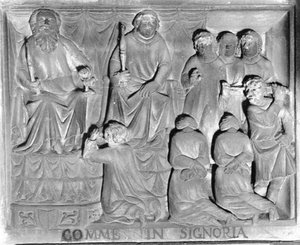
The *Tomb of Bishop Guido Tarlati* is not merely a funerary monument; it’s a complex narrative cycle rendered in marble, depicting scenes from the bishop's life and emphasizing his virtues. Agostino is generally credited with the primary design and execution of the sculptural elements, while Agnolo likely contributed to the architectural framework and decorative details. The work showcases a masterful command of relief carving, with figures possessing a dynamic energy and expressive intensity. While Vasari’s accounts often emphasize individual genius, the Tarlati Monument underscores the importance of collective effort in medieval artistic production.
Architectural Engagements and Civic Commissions
Beyond sculpture, Agostino di Siena also played an active role in architectural projects within his native city. He is documented as being involved in several commissions from the Sienese commune, including work on the Porta Romana (Roman Gate) and the iconic Torre del Mangia—the towering bell tower that dominates the Siena skyline. These engagements suggest a versatility that extended beyond purely artistic concerns; he possessed an understanding of structural engineering and the logistical challenges inherent in large-scale construction.
His involvement in these civic projects highlights the close relationship between art, architecture, and urban development in medieval Siena. The city’s governing bodies actively sought to enhance its prestige through ambitious building programs, and artists like Agostino were instrumental in realizing these visions. Documentation also links him to fortifications at Massa Marittima, further demonstrating his adaptability and willingness to take on diverse architectural challenges.
Style and Legacy
Agostino di Siena’s style represents a fascinating synthesis of influences. He absorbed elements from Giovanni Pisano's dramatic compositions but tempered them with softer, more decorative motifs characteristic of northern European sculpture. His work is characterized by a refined technique, expressive figures, and a keen attention to detail. While his sculptures are not overtly flamboyant or experimental, they possess a quiet dignity and emotional resonance that sets them apart.
His exact date of death remains unknown, though records indicate he was no longer living as of June 27, 1347—a period marked by the devastating impact of the Black Death. Despite this tragic interruption, Agostino di Siena left an indelible mark on Sienese art and architecture. His collaborations produced some of the most iconic monuments of the Gothic era, and his influence can be seen in the work of subsequent generations of sculptors. He embodies a spirit of artistic innovation rooted in tradition, collaboration, and a deep commitment to civic pride.
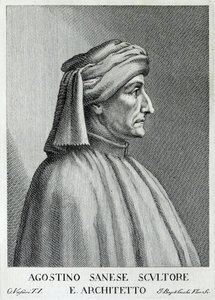
agostino di giovanni
1285 - 1347 , Italy
Quick Facts
- Artistic Movement Or Style: Gothic architecture/sculpture
- Artists Who Influenced This Artist:
- Giovanni Pisano
- Camaino di Crescentino
- Date Of Birth: 1285
- Date Of Death: 1347
- Full Name: Agostino di Giovanni
- Nationality: Italian
- Notable Artworks: ['Tomb of Guido Tarlati']
- Place Of Birth: Siena, Italy